
The Mongolian Death Worm is a legendary creature said to lurk beneath the sands of the Gobi Desert. It’s described as a 2 to 5-foot-long creature capable of delivering deadly electric shocks or acidic sprays. Stories warn travelers about its lethal abilities and mysterious presence, sparking ongoing debate about whether it’s myth or a rare, undiscovered animal. If you want to uncover more about this intriguing desert predator, there’s much more to explore below.
Key Takeaways
- The Mongolian Death Worm is a legendary desert creature reputed to deliver lethal electric shocks and acidic sprays.
- It inhabits the arid Gobi Desert, with descriptions of 2 to 5 feet long and a reddish hue.
- Legends warn travelers of its deadly abilities, blending myth with possible sightings in Mongolian folklore.
- Scientific evidence for its existence is lacking, and harsh desert conditions make its survival unlikely.
- The creature remains a mysterious symbol of desert danger, inspiring curiosity and skepticism worldwide.
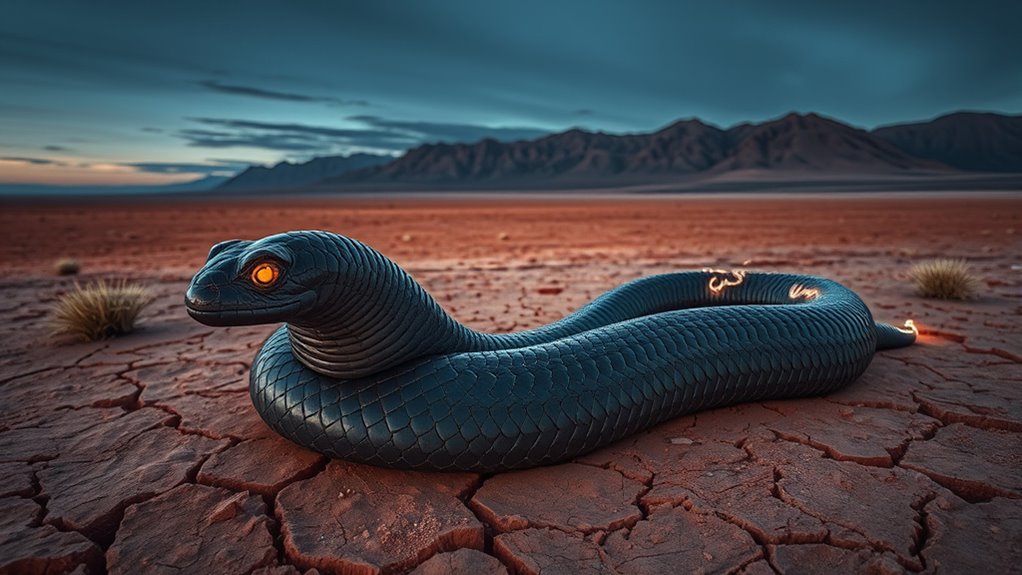
Have you ever heard of the legendary Mongolian Death Worm? If not, you’re not alone. This creature has fascinated explorers, skeptics, and cryptozoologists for decades, sparking intense cryptozoology debates about whether it’s real or just a myth rooted in desert folklore. The worm is said to inhabit the harsh, arid deserts of Mongolia, particularly the Gobi Desert, where legends paint it as an enormous, sinister predator lurking beneath the sand. Descriptions often depict it as being about two to five feet long, with a thick, reddish hue, capable of delivering deadly electric shocks or acidic sprays to anything that dares to come close. But despite these vivid tales, there’s little concrete evidence to confirm its existence, fueling ongoing debates among scientists and enthusiasts alike.
In the domain of desert folklore, stories of the Mongolian Death Worm have been passed down for generations. Locals warn travelers to steer clear of certain areas, claiming the worm can kill with a single touch or bolt of electricity. These stories have been woven into the cultural fabric of the region, blending myth and reality in a way that makes the creature an enduring symbol of the desert’s mysterious danger. Many believe that such stories originated from actual encounters or sightings, magnified over time by the desert’s vast emptiness and the human tendency to create legends to explain the unexplainable. These tales often serve as cautionary stories, warning outsiders of the desert’s deadly secrets or as explanations for strange phenomena observed in the barren landscape.
Scientists and cryptozoologists continue to debate whether the Mongolian Death Worm could be a real creature or just an elaborate myth. Some argue that the harsh environment and extreme conditions make the survival of such a creature unlikely, yet others suggest that undiscovered species could still exist in the remote corners of the world. The creature’s alleged ability to produce electric shocks is particularly intriguing, as it hints at possible biological mechanisms similar to electric eels or certain species of electric fish, though no such evidence has been found in the desert. The lack of definitive proof keeps the debate alive, with some researchers considering it a fascinating case of folklore influencing perceptions of the natural world. As it stands, the legend of the Mongolian Death Worm remains a enthralling mystery that blurs the line between myth and reality, inviting curiosity and skepticism alike. Moreover, advances in digital asset management and scientific research techniques could someday shed light on such cryptids, bridging the gap between legend and scientific discovery.
Frequently Asked Questions
Has Anyone Successfully Captured or Observed the Worm Alive?
No, no one has successfully captured or observed the Mongolian Death Worm alive. Researchers and wildlife enthusiasts have attempted to document it through stunt photography and wildlife documentaries, but the worm remains elusive. Its harsh desert environment makes sightings rare, and no definitive proof exists. Despite ongoing efforts, the worm’s secretive nature keeps it hidden, leaving many to wonder if it’s just a legendary creature rather than an observable species.
Are There Any Scientific Studies Confirming Its Existence?
There are no scientific studies confirming the Mongolian Death Worm’s existence. Despite numerous cryptid sightings and folklore traditions, researchers haven’t found conclusive evidence. You might come across stories and legends that describe encounters, but these remain anecdotal. Scientists continue to explore desert folklore, but until verified by rigorous research, the worm remains a fascinating mystery rather than an established creature.
What Are the Survival Adaptations of the Mongolian Death Worm?
Imagine a desert ghost, blending seamlessly with its surroundings. You’d notice its desert camouflage, helping it hide from predators and prey alike. When threatened, it uses electrical defense, releasing a jolt to deter attackers. These survival adaptations make the Mongolian death worm a master of the arid terrain, allowing it to evade danger and hunt effectively in the harsh desert environment.
Could the Worm Be Related to Other Desert-Dwelling Creatures?
You might wonder if the Mongolian death worm is related to other desert predators or mysterious creatures. While its unique features set it apart, some speculate it shares connections with bizarre desert wildlife that evolved to survive extreme conditions. Like other mysterious creatures, it likely developed specialized adaptations for desert survival, but its exact lineage remains uncertain. Its elusive nature fuels curiosity about how desert predators evolve in such harsh environments.
Is There Any Cultural Significance or Folklore Tied to the Worm?
Imagine a shadow cast over the endless sands—this is how Mongolian folklore views the worm, a symbol of desert mystery. In desert mythology, it’s seen as a fierce guardian or a cursed creature lurking beneath the dunes. The legend stirs fears and fascination, making the worm a potent part of cultural stories that warn, protect, or explain the harsh desert environment you’d dare to explore.
Conclusion
As you imagine wandering the scorching, endless Gobi Desert, the air hums with tension. Suddenly, a flash of crimson slips beneath the cracked earth—your heart pounds as you realize you’re eyeing the legendary Mongolian Death Worm. Its electric tremors ripple through the sand, silent yet deadly. You feel the desert’s fierce, hidden predator watching, waiting—reminding you that some mysteries remain buried deep beneath the fiery sands, forever elusive and dangerous.