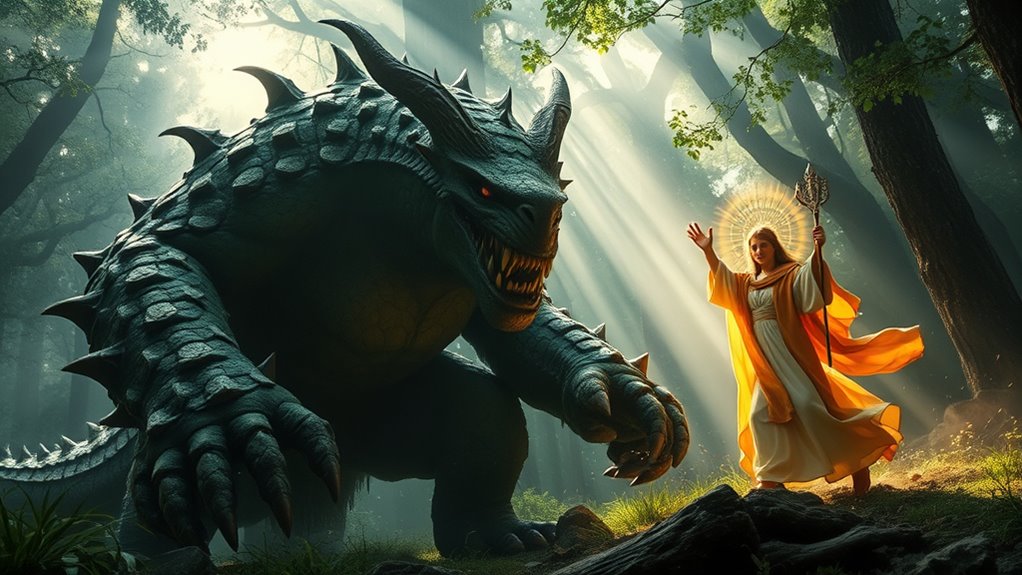

In the battle between saints and monsters like the Tarasque, you see a powerful symbol of chaos versus order, where divine faith triumphs over evil. These stories often depict saints overcoming fearsome creatures through virtue, faith, and divine intervention, representing moral lessons about spiritual strength. The monsters embody chaos, vices, or spiritual challenges, while their defeat highlights the importance of faith and divine grace. Keep exploring to discover more about these mythic conflicts and their deeper meanings.
Key Takeaways
- The Tarasque symbolizes divine intervention and faith conquering chaos in medieval legend and iconography.
- Saintly figures, like Saint Martha, triumph over monsters, representing moral victory and spiritual resilience.
- Artistic depictions emphasize monsters as allegories for vice or chaos subdued by divine virtue.
- Battles between saints and monsters convey moral lessons about virtue, divine grace, and spiritual triumph.
- Legends use mythological symbolism to illustrate the eternal struggle between good and evil.
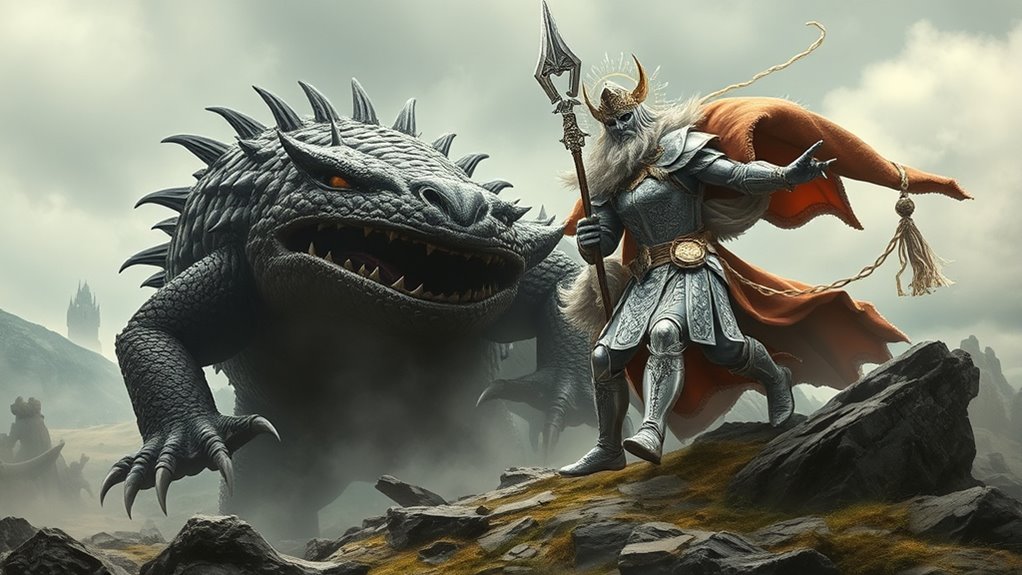
In the domain of myth and legend, saintly monsters captivate our imaginations by embodying a fascinating blend of divine virtue and fearsome power. These stories often feature creatures that appear to threaten communities, only to be subdued through faith, divine intervention, or heroism. The Tarasque, for example, stands as a quintessential symbol of this duality, its myth woven deeply into medieval iconography and mythological symbolism. As you explore these tales, you’ll notice how artists and storytellers depict these monsters not merely as beasts but as embodiments of moral lessons, divine justice, or spiritual trials. Medieval iconography often shows these creatures with symbolic elements—such as halos or sacred objects—highlighting their connection to holiness despite their fearsome appearance. This visual language reinforces the idea that good can emerge from chaos, and monsters serve as tests of faith or morality. Additionally, symbolic attributes in these depictions serve to deepen the moral and spiritual significance of the stories. The mythological symbolism behind these creatures extends beyond their physical form. They often represent the chaos of the natural world, human vices, or spiritual challenges. When a saint or hero confronts and defeats such a monster, it’s not just a physical victory but a metaphor for overcoming sin, ignorance, or evil. The Tarasque, in particular, symbolizes destructive chaos tamed through divine intervention—its monstrous form a mirror of chaos that’s subdued by faith and divine authority. These stories resonate because they reflect universal themes: the struggle between good and evil, the triumph of virtue, and the power of divine grace. You’ll find that in medieval art, saints are often depicted standing triumphantly over monsters, emphasizing their role as divine agents. The use of mythological symbolism in these depictions makes the stories more than mere legends; they become visual sermons that communicate spiritual truths.
As you explore into saintly monster battles, you’ll notice a recurring motif: the transformation of chaos into order through divine or heroic effort. The monsters, while terrifying, are often portrayed with symbolic attributes that signal their deeper significance. Medieval iconography captures this beautifully, illustrating the monsters as both literal and allegorical figures. When a saint battles a beast like the Tarasque, it’s a visual representation of faith conquering chaos, evil subdued by divine power. These stories serve as moral allegories, reminding believers of the importance of virtue, faith, and divine grace in overcoming life’s monsters—whether they are external threats or internal struggles. Ultimately, these legends aren’t just about monsters; they’re about the eternal human journey of spiritual victory and moral resilience.
Frequently Asked Questions
Are There Modern Equivalents to Saintly Monster Battles?
Yes, modern equivalents to saintly monster battles exist in popular culture, like superhero stories and fantasy films. These narratives often symbolize spiritual battles and feature mythical creature symbolism, representing good versus evil. You see characters confronting powerful monsters or dark forces, echoing ancient spiritual battle stories. These stories help you explore themes of faith, courage, and morality, making them relevant today while echoing the timeless essence of saintly monster battles.
How Do Different Cultures Interpret Saintly Monster Stories?
Did you know that over 70% of cultures worldwide have stories featuring saintly monsters? You’ll find that interpretations of these stories vary widely, showing rich cultural variations. In some societies, mythical symbolism represents moral lessons or spiritual protection, while others see monsters as allegories for societal fears. You interpret these stories differently based on your cultural background, highlighting how diverse beliefs shape the way you understand saintly monster tales.
What Symbolism Do These Monsters Represent in Religious Contexts?
In religious contexts, monsters often symbolize symbolic duality, representing both good and evil forces. You see them embody spiritual warfare, where battling these creatures reflects the struggle between divine virtue and sin. These stories remind you of the ongoing conflict within and around you, emphasizing the importance of faith and moral strength. Monsters serve as powerful symbols of the tension between chaos and order, urging you to choose righteousness amid spiritual challenges.
Have Any of These Stories Been Adapted Into Popular Media?
You might see these stories adapted into popular media, like movies or video games. For example, a fantasy film could depict a monster inspired by the Tarasque, blending medieval art and folklore variations. Such adaptations often reimagine these tales, making them accessible and exciting for modern audiences. These stories continue to inspire new works, showing how ancient legends can evolve into contemporary entertainment while preserving their symbolic meanings.
What Lessons Do These Battles Convey About Morality and Faith?
These battles teach you important moral lessons about courage, faith, and compassion. They show that unwavering faith can help you overcome even the fiercest challenges, reinforcing your trust in divine protection. By facing monsters with moral integrity, you learn that faith isn’t just belief but a source of strength. These stories inspire you to stay true to your values, demonstrating how morality and faith work together to conquer adversity.
Conclusion
As you stand before these saintly monsters, remember they’re more than just legends—they’re echoes of your own inner battles. Like the Tarasque, sometimes fear and chaos threaten to swallow you whole, but faith and courage can tame even the wildest beast. Every victory over these myths is a reminder that within you lies a strength capable of transforming darkness into light. Embrace your battles; they’re the stories that define your true heroism.