In the Seminole myth, the stikini resembles a giant, menacing owl that embodies primal chaos and societal fears. Unlike the traditional wise owl, these creatures are cannibalistic predators that threaten natural order and safety. They symbolize how familiar protectors can turn terrifying when driven by instinct and desperation. If you keep exploring, you’ll discover how these mythic owls reflect deep-rooted fears and the darker side of nature’s mysteries.
Key Takeaways
- The Stikini are Seminole mythic spirits often depicted as giant, cannibalistic owls embodying primal fears and chaos.
- They symbolize the dark, destructive side of nature, contrasting with traditional wise owl symbolism.
- The Stikini are believed to prey on humans, representing societal fears of loss of control and primal instinct.
- These mythic owls serve as warnings about respecting natural and spiritual boundaries.
- Their imagery reflects broader themes of chaos, danger, and the breakdown of societal order in Seminole folklore.
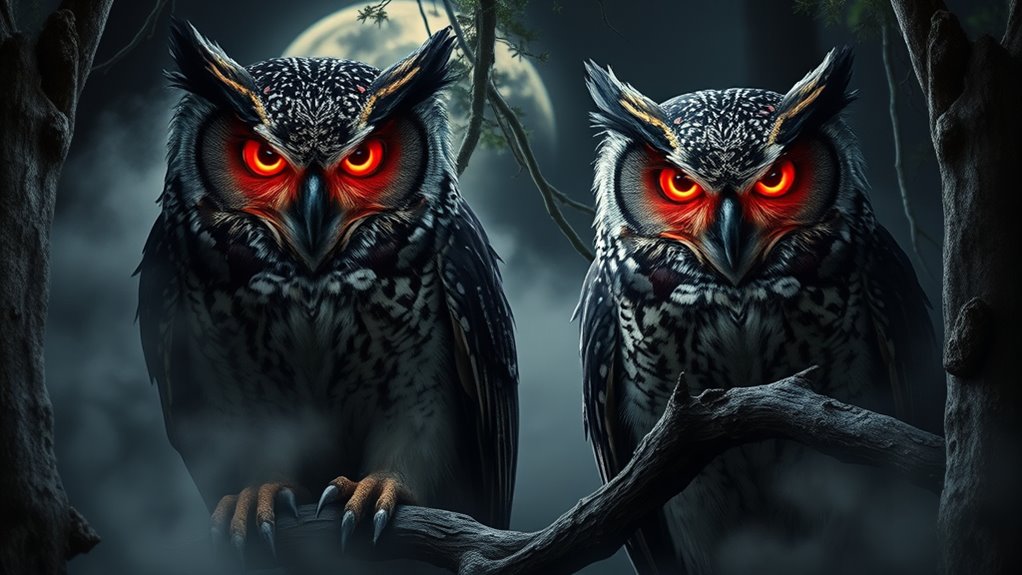
Have you ever wondered what would happen if giant owls turned cannibalistic? It’s a chilling thought, but one that taps into deep-rooted symbolism and mythic fears. Owl symbolism has long been associated with wisdom, mystery, and the supernatural, yet in many cultures, these creatures also represent darker aspects—mythical predators lurking in the shadows. When you picture a giant owl, it might symbolize an ominous force watching silently from above, embodying both knowledge and danger. If these majestic creatures were to become cannibalistic, their image would shift from wise guardians to terrifying predators that threaten everything around them.
In folklore, owls are often depicted as messengers between worlds, guides that help interpret the unseen. But when they turn into mythical predators, that role twists into something far more sinister. Imagine a creature that not only preys on smaller animals but has become large enough to threaten humans. The myth of giant cannibal owls would spread quickly, feeding fears of an apex predator that defies natural order. These owls would symbolize chaos and primal fear, embodying the dark side of nature’s predators. Instead of silent watchers, they become relentless hunters, a nightmare come alive in the darkness.
The idea of cannibalism among these mythical predators complicates their symbolism even further. It suggests a breakdown of natural hierarchy, a creature driven by instinct and desperation rather than wisdom. If you encountered such an owl, it might represent the primal fear of being hunted by something once thought to be benign or protective. The transformation from wise owl to ravenous cannibal underscores how myth can distort reality, turning symbols of insight into symbols of predation and chaos. This shift would make the owl a metaphor for destructive forces lurking beneath the surface of what we believe to be familiar and safe. Additionally, the symbolism of these creatures highlights how myths serve to reflect our deepest fears and societal anxieties about nature’s unpredictability.

Wild Goose Owl Figurine, Bronze, Athena, Mythological Animal, Classic Style
Bronze Coated Resin
As an affiliate, we earn on qualifying purchases.
As an affiliate, we earn on qualifying purchases.
Frequently Asked Questions
Are There Any Eyewitness Accounts of These Giant Owls?
You might find some owl sightings and folklore testimonies claiming encounters with these giant cannibal owls, but there’s no verified eyewitness account. People share stories of strange, enormous owls in the woods, often dismissed as folklore, yet some believe these sightings stem from real encounters. While intriguing, these testimonies lack concrete evidence, making the existence of such giant owls more myth than confirmed reality.
How Do the Stikini Legends Differ Among Seminole Communities?
You’ll find that the Stikini legends vary across Seminole communities due to cultural variations and regional differences. Some communities emphasize their role as cautionary spirits, warning against certain behaviors, while others focus on their supernatural power and spiritual significance. These stories adapt over time, reflecting local traditions and beliefs. As a result, each community’s version of the myth offers unique insights into their cultural identity and values.
What Are the Symbolic Meanings Behind the Owl’s Cannibal Traits?
You see, the cannibal traits of the owl symbolize danger and taboo in the myth. These qualities serve as warnings about respecting spiritual boundaries and the consequences of crossing them. The cannibal symbolism emphasizes the owl’s role as a powerful, fearsome guardian, reminding you of the importance of balance between the spiritual and physical worlds. It’s a vivid symbol of the darker aspects of nature and human behavior.
Are There Similar Mythological Creatures in Other Native American Cultures?
Imagine scrolling through ancient scrolls on your tablet—similar mythological parallels exist across Native American cultures. You’ll find owl symbolism representing wisdom and mystery, but also darker traits like death or transformation. Cultures like the Navajo and Apache have mythological creatures with owl traits, sometimes linked to spirits or supernatural events. These parallels highlight shared themes, showing how different tribes interpret the owl’s role in their stories and spiritual beliefs.
How Have These Legends Influenced Local Folklore and Traditions?
You see how these legends influence local folklore and traditions by shaping cultural rituals and folklore symbolism. They often serve as warnings or lessons, inspiring stories, dances, or ceremonies that reinforce community values. These myths create a shared identity, connecting people to their history and environment. As a result, the stories of creatures like the Stikini become integral to cultural practices, passing down traditions and preserving cultural heritage through generations.

WONDER GARDEN Owl Statue Decor, Outdoor Resin Owl Figurine Sculpture for Home Outside Porch Patio Lawn Yard Decorations or Housewarming Gifts
A Symbol Of Wisdom And Courage: The owl played an important role as a mascot, symbolizing wisdom, bravery…
As an affiliate, we earn on qualifying purchases.
As an affiliate, we earn on qualifying purchases.
Conclusion
As you walk through the whispers of Seminole myth, remember the Stikini’s story is a dark mirror reflecting fears of the unknown. These giant cannibal owls are like shadowy guardians of ancient secrets, silently watching from the darkness. Their myth warns you to respect the unseen forces lurking just beyond your sight. In the end, they’re a reminder that some mysteries are better left undisturbed, like stars hidden behind a midnight veil.
ASGIFT Black Obsidian Owl Necklace Natural Crystal Animal Talisman Protection Pendant Adjustable Rope Cute Owl Amulet Necklaces Spiritual Jewelry for Men Women
MATERIAL: The owl pendant is made of natural obsidian and hand-carved, so each owl pendant is a unique…
As an affiliate, we earn on qualifying purchases.
As an affiliate, we earn on qualifying purchases.

Ice King Bear Wild Animal Small Stuffed Animals Zoo Family Plush Toy (Owl 6 Inches)
Baby Owl Stuffed Animal
As an affiliate, we earn on qualifying purchases.
As an affiliate, we earn on qualifying purchases.