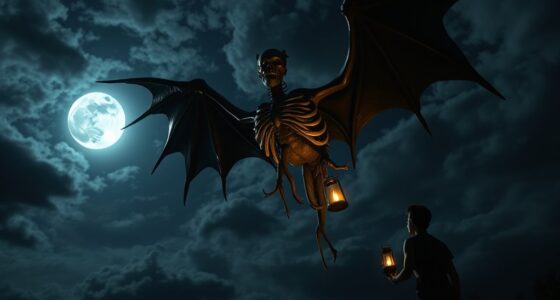
The Romanian strigoi are legendary vampires and restless spirits rooted in centuries of folklore, embodying fears of death, the unknown, and unresolved issues. These revenants often return from the grave with curses or tragic backgrounds, sometimes seeking vengeance or causing harm. Traditional practices, rituals, and symbols were used to protect communities from their influence. If you keep exploring, you’ll uncover how these myths have evolved and their lasting cultural impact today.
Key Takeaways
- The Strigoi are undead spirits from Romanian folklore, embodying fears of death, curses, and the supernatural.
- They are often depicted as revenants returning from the grave with malevolent intentions.
- Traditional rituals and symbols aimed to protect communities from the threat of the Strigoi.
- Modern adaptations depict them as vampires or tragic, cursed beings in horror media.
- The legend of the Strigoi reflects cultural beliefs about life, death, and the supernatural in Romania.

Romania’s folklore is famous for its chilling tales of vampires and revenants, creatures that blur the line between life and death. Among these legends, the strigoi stands out as a haunting embodiment of these fears, rooted in centuries of medieval folklore. You might imagine the strigoi as a restless spirit, a revenant that returns from the grave to haunt the living. Historically, these stories served to explain inexplicable deaths or strange happenings, reinforcing community bonds through shared superstitions. In medieval folklore, the idea of the vampire wasn’t just about bloodsucking monsters; it reflected deeper anxieties about death, disease, and the unknown. Over time, these legends evolved, shaping a complex cultural narrative that persists even today. Additionally, traditional healing practices and rituals have historically been used to ward off or exorcise these spirits, demonstrating the importance of cultural beliefs in maintaining community safety. Modern adaptations of the Romanian vampire myth have helped keep the story alive, transforming ancient fears into contemporary horror. Films, books, and TV series have reimagined the strigoi, often emphasizing their supernatural powers or tragic origins. Yet, despite these updates, the core symbolism remains intact—an undead creature driven by dark forces, often linked with unresolved issues or curses. As you explore these stories, you’ll notice how they blend tradition with innovation, making the myth accessible to modern audiences while honoring its historical roots. This blending creates a fascinating cultural tapestry, allowing the legend to adapt without losing its essence.
In many ways, the modern portrayal of the Romanian vampire continues to echo its medieval origins, emphasizing themes of death, rebirth, and the fear of the unknown. You might see the strigoi depicted as a tragic figure, cursed to wander the night, or as a malevolent force seeking vengeance. These stories often incorporate traditional beliefs—such as the importance of specific rituals to ward off vampires or the significance of certain symbols in protection. Whether in old folktales or new media, the idea persists that the strigoi is more than just a monster; it’s a reflection of human fears rooted in history and culture.
Understanding the evolution from medieval folklore to modern adaptations allows you to appreciate how deeply embedded these legends are in Romanian culture. They serve as a bridge between past and present, illustrating how fears of death and the unknown continue to shape storytelling. Ultimately, the Romanian vampire, or strigoi, remains a powerful symbol—an enduring myth that captures the imagination and reveals the universal anxiety about what lies beyond life.

Vampire Costume Halloween Adult Men Costumes Victorian Gothic 5Pcs Deluxe Set Shirt Cloak Cane Cosplay Party Plus Size
Luxurious Vampire Costume: This vampire costume men features a striking dark red stand-up collar cape, elegantly edged with…
As an affiliate, we earn on qualifying purchases.
As an affiliate, we earn on qualifying purchases.
Frequently Asked Questions
How Do Romanian Villagers Traditionally Protect Against Strigoi?
To protect against strigoi, Romanian villagers often use wooden stakes to pierce the heart of the suspected revenant, preventing it from rising again. They also hang garlic amulets around the neck or above the doorways, as garlic’s strong scent is believed to ward off evil spirits. These traditional methods help keep the strigoi at bay, ensuring safety and peace within the community.
Are There Modern-Day Sightings of Romanian Vampires?
You might hear about modern vampire sightings in Romania, but they’re mostly urban legends rather than real events. These stories often pop up around small villages or during spooky festivals, fueling local folklore. While some claim to see strange figures at night, there’s no solid proof of actual vampires today. Most people see these tales as part of cultural tradition, blending myth with modern fascination.
What Rituals Are Performed to Prevent a Loved One From Becoming a Strigoi?
To prevent a loved one from becoming a strigoi, you perform protective charms and specific burial rites. You might place garlic or holy objects near their body or under their pillow, believing these ward off evil spirits. You also guarantee proper burial rites, such as avoiding disturbances to the grave or performing rituals that honor the deceased, which help keep the spirit at peace and prevent it from returning as a revenant.
How Do Romanian Folklore Beliefs About Vampires Compare to Western Legends?
Like shadows in twilight, Romanian folklore about vampires feels more personal and ritualistic than Western legends. You’ll find folk rituals designed to ward off supernatural creatures, emphasizing community and tradition. Western vampires often appear as mysterious, solitary figures, while Romanian stories focus on protecting loved ones through specific customs. Both cultures share fears of the undead, but Romanian beliefs involve active rituals, making their vampires feel more rooted in everyday life.
Are There Any Famous Romanian Vampire Legends or Stories?
You’ll find that Romanian vampire legends are rich with famous vampire stories, like the tale of the Strigoi, which are believed to return from the dead to haunt the living. These legends are deeply rooted in Romanian culture, making them uniquely enthralling. Unlike Western legends, Romanian vampire stories often emphasize the spiritual and supernatural aspects, giving them a distinct and eerily fascinating character that has intrigued people for generations.

COPPERTIST.WU Crimson Vampire Figurine Statue Ornament Craft Collection for Home Living Room Office (Crimson Vampire w Accessory)
Inspired by Bram Stoker’s Dracula, Crimson Vampire reimagines the classic vampire not as a feral monster, but as…
As an affiliate, we earn on qualifying purchases.
As an affiliate, we earn on qualifying purchases.
Conclusion
As you walk through the quiet Romanian village, you might notice a shadow flicker just beyond your sight—a reminder that the strigoi’s presence lingers in every whispered legend and ancient stone. It’s no coincidence that the past feels so close, as if the revenants remain watching, waiting silently. You realize, sometimes history and myth blend seamlessly, and in this land, the line between the living and the dead is truly blurred.

AzureGreen Wicca Protection Spiritual Amulet Pendant
This amulet is a powerful aid in keeping evil spirits. Made in USA. Has cord.
As an affiliate, we earn on qualifying purchases.
As an affiliate, we earn on qualifying purchases.

Romanian History: A Captivating Guide to the History of Romania and Vlad the Impaler (History of European Countries)
As an affiliate, we earn on qualifying purchases.
As an affiliate, we earn on qualifying purchases.