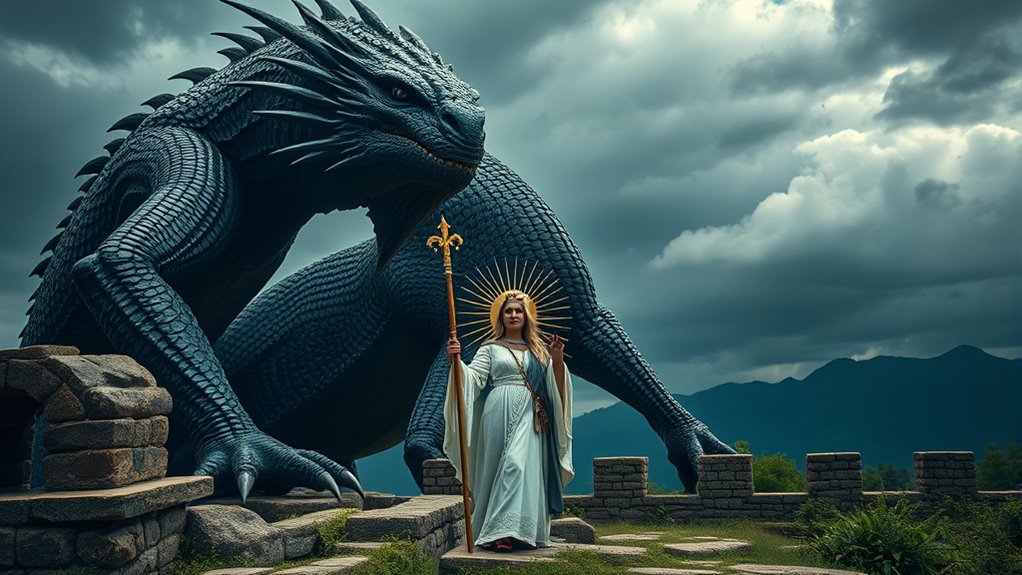

The legend of the Tarasque tells how Saint Martha used her faith and cleverness to tame this fierce French dragon, symbolizing chaos and primal fears. Instead of fighting with brute strength, she trusted divine grace, demonstrating how spiritual virtues can subdue wild forces. This story reflects the medieval belief that faith restores order and harmony. If you explore further, you’ll uncover more about the myth’s deeper symbolism and cultural significance.
Key Takeaways
- The Tarasque is a legendary French dragon symbolizing chaos, defeated through Saint Martha’s faith and cleverness.
- Saint Martha’s confrontation with the Tarasque highlights divine intervention and spiritual virtues over brute strength.
- The legend reflects medieval beliefs that faith can tame wild, chaotic forces threatening society.
- The victory signifies the triumph of divine grace and moral resourcefulness in overcoming primal dangers.
- The story symbolizes the ongoing battle between civilization and chaos, emphasizing spiritual strength’s importance.
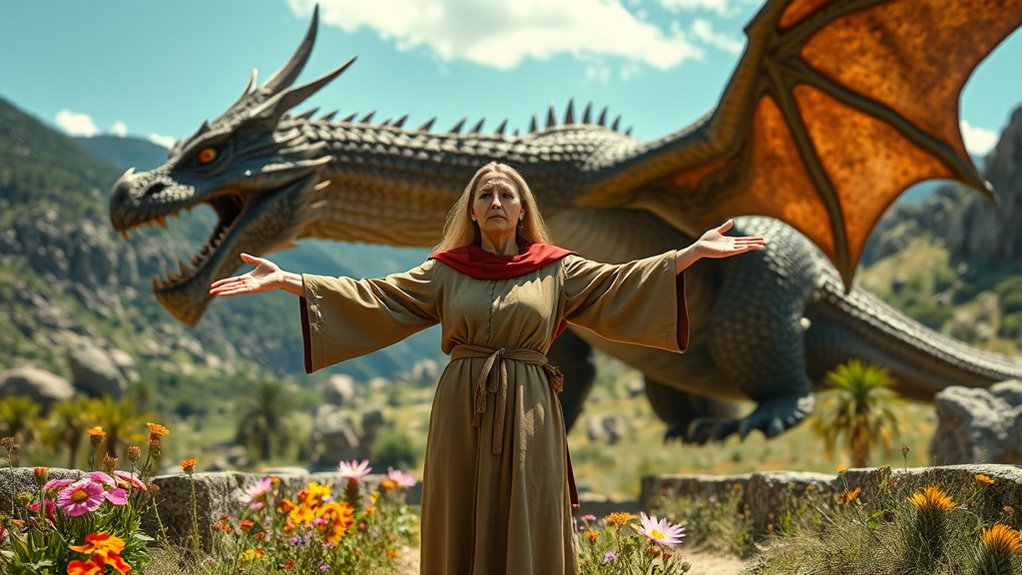
The Tarasque is a legendary dragon from French folklore that has captivated imaginations for centuries. As you delve into its story, you’ll find it woven into medieval legends that highlight both fear and awe. This creature, with its formidable body, scaly hide, and terrifying visage, embodies the mythological symbolism of chaos versus order. In the tales passed down through generations, the Tarasque is often depicted as a destructive force threatening the town of Nîmes, releasing havoc upon the land and its people. Its fierce appearance and destructive nature serve as a reflection of the primal fears faced by early societies, where monsters symbolized chaos that needed to be tamed or defeated. When you explore the legend of Saint Martha’s confrontation with the beast, you’ll see how this story is not just about a hero vanquishing a monster but also about the triumph of faith and divine intervention over chaos. Saint Martha, depicted as a figure of compassion and divine power, approaches the Tarasque not with brute strength but through faith and cleverness. This aligns with medieval legends that often emphasize spiritual virtues over mere physical might. The mythological symbolism in her victory highlights the idea that divine grace can tame even the most savage creatures, transforming chaos into harmony. As you visualize her confronting the beast, it becomes clear that her act is symbolic of the broader medieval belief that faith can conquer the most terrifying forces of nature and chaos. Additionally, the story reflects the medieval understanding of resources and tools as essential in overcoming formidable challenges, demonstrating that spiritual and moral resources are as vital as physical ones. The story of the Tarasque’s defeat by Saint Martha also carries layers of meaning about civilization’s relationship with nature. The beast, representing wild, untamed forces, is subdued through spiritual authority, illustrating the medieval view that faith and moral virtue are essential to maintaining social order. This narrative reinforces the idea that monsters, while terrifying, are ultimately symbols of the chaos that must be controlled to ensure peace and stability. As you reflect on this myth, you see how the legend encapsulates a worldview where divine intervention restores balance, and mythological symbolism underscores the importance of spiritual strength in overcoming chaos. The story remains a powerful metaphor for the ongoing struggle between civilization and the primal, wild forces that threaten it, making the Tarasque an enduring figure in French cultural memory.
Frequently Asked Questions
What Is the Origin of the Tarasque Legend?
You might wonder about the myth origin of the Tarasque legend. It developed in medieval France, blending local folklore and religious stories. As the legend grew, it depicted a fearsome dragon terrorizing the region, eventually defeated by Saint Martha’s faith and courage. This legend development helped symbolize good triumphing over evil, reinforcing moral lessons and local identity, making the Tarasque a legendary symbol in French culture.
How Is the Tarasque Depicted in Art and Culture?
You see the Tarasque depicted in art and culture through vibrant artistic representations that emphasize its mythical symbolism. Artists often portray it as a fierce, armored dragon with a massive, scaly body and formidable claws, highlighting its legendary power. In cultural references, you might find it symbolizing chaos and strength, inspiring sculptures, paintings, and even festivals that celebrate its mythic role in regional history.
Are There Any Annual Festivals Celebrating Saint Martha and the Tarasque?
Yes, you can experience annual festivals celebrating Saint Martha and the Tarasque. During these festivals, you’ll find lively parades, colorful costumes, and vibrant religious ceremonies. Locals and visitors alike participate in processions, often featuring a puppet or sculpture of the Tarasque, symbolizing the dragon’s defeat. These festivals honor Saint Martha’s bravery and bring the community together in joyful celebration, blending tradition, faith, and cultural pride.
What Symbolic Meanings Are Associated With the Tarasque?
You know what they say, “every cloud has a silver lining,” and the Tarasque’s symbolism reflects a powerful transformation. It represents overcoming chaos through faith and courage. Mythological symbolism surrounding the creature highlights themes of renewal, protection, and divine victory. Its fierce appearance reminds you that even the most formidable challenges can be tamed, symbolizing hope and resilience in the face of adversity.
How Has the Story Influenced Local Traditions in Provence?
Your understanding of medieval folklore and local mythology reveals how the story of the Tarasque influences Provence traditions. You’ll notice annual festivals celebrating Saint Martha, where locals reenact her victory, symbolizing protection and faith. These traditions strengthen community bonds and preserve cultural heritage, blending myth with daily life. The legend’s enduring presence in Provence highlights its role in shaping regional identity and fostering a sense of shared history.
Conclusion
As you imagine the legendary beast lying defeated, a quiet hush settles over the land. The shadows fade, but the story isn’t over—you sense that beneath the calm, something still stirs. Could the Tarasque rise again? Or has Saint Martha’s courage truly tamed the monster forever? The future remains uncertain, and as you stand there, you can’t help but wonder if this victory is just the beginning of an even greater legend.