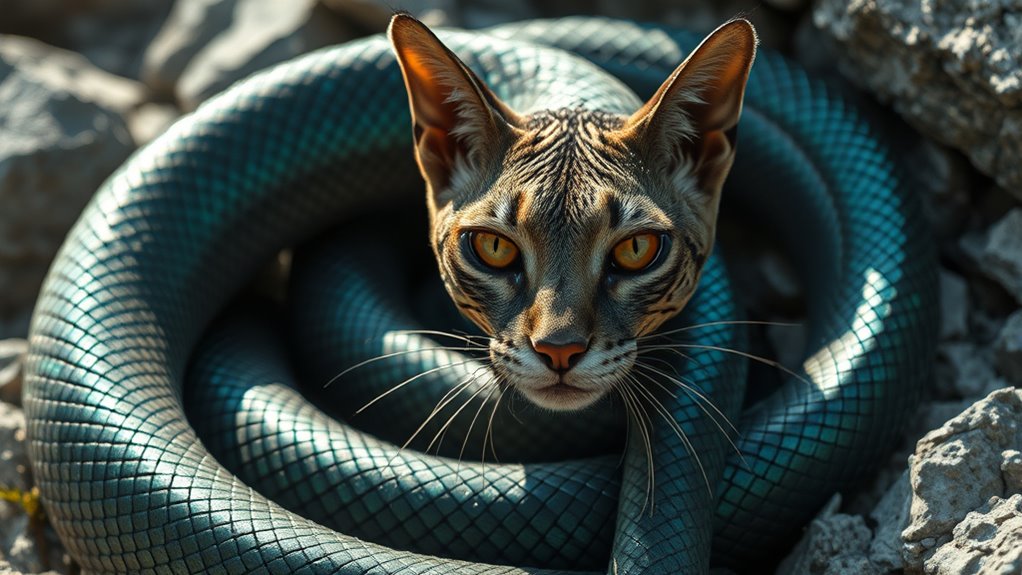

The Tatzelwurm is a mysterious alpine creature known for its serpentine body and cat-like face, reported in European mountain legends for centuries. Sightings describe a scaled, snake-like form with sharp eyes and sometimes fire-breathing abilities. Many believe it’s a cryptid inspired by local folklore, while skeptics suggest misidentifications of real animals. Curious about the origins of this intriguing myth and the evidence behind it? Keep exploring to uncover more about this fascinating legend.
Key Takeaways
- The Tatzelwurm is a legendary alpine creature described as a serpentine being with a feline-like head.
- Sightings often involve a scaled body, sharp eyes, and sometimes fire-spitting abilities.
- Its legend is rooted in European folklore, with reports from hunters and mountain locals.
- Skeptics suggest sightings are misidentifications or hallucinations, with no confirmed scientific evidence.
- The creature symbolizes the mystery of unexplored nature and the enduring fascination with cryptids.
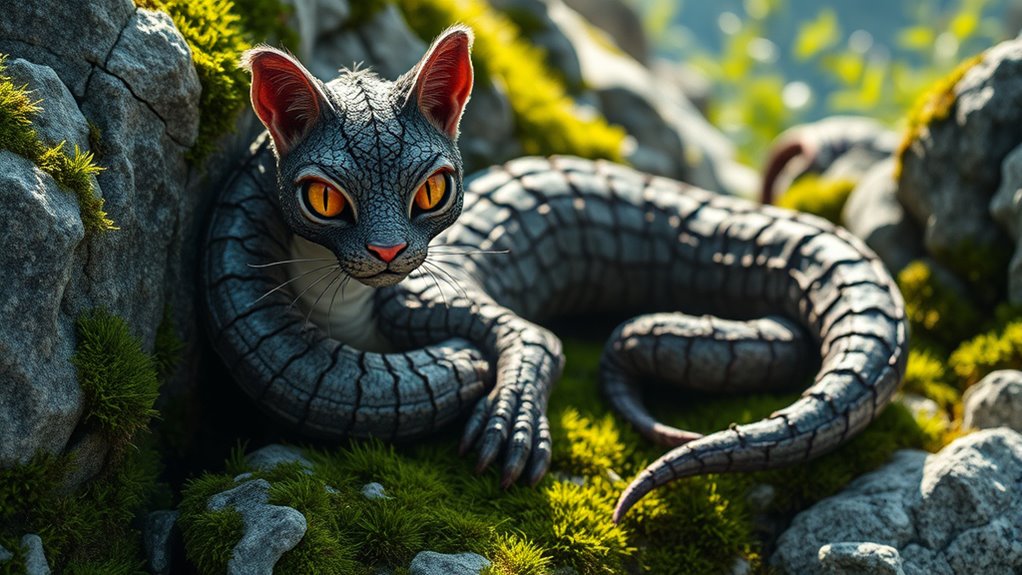
Deep in the alpine regions of Europe, legends speak of a mysterious creature known as the Tatzelwurm, often described as a lizard with a cat’s face. This enigmatic being has fascinated locals and explorers alike for centuries, fueling stories that blend myth and reality. As you explore the world of mythical creatures, the Tatzelwurm stands out as a compelling example of cryptozoology origins—those tales and sightings that suggest the existence of animals beyond scientific verification. Its legend is rooted in a mixture of folklore, eyewitness accounts, and fringe investigations, making it a captivating subject for anyone interested in the mysteries of the natural world.
Legends of the Tatzelwurm blend folklore and sightings, fueling intrigue about this mysterious alpine cryptid.
The creature’s description varies from sighting to sighting, but most accounts agree on a long, serpentine body covered in scales and a head resembling that of a large cat, complete with sharp eyes and pointed ears. Some reports depict it as a more dragon-like creature, capable of spitting fire or venom, while others simply describe a strange, unseen presence lurking in the mountains. These descriptions have persisted over generations, fueling debates about whether the Tatzelwurm is a real animal, a cryptid, or a product of local storytelling. Its cryptozoology origins lie in these tales—early sightings that have been passed down, often lacking concrete evidence but rich in cultural significance.
You might wonder what fuels such myths. In the case of the Tatzelwurm, the rugged alpine terrain, with its hidden caves and remote valleys, provides an ideal backdrop for sightings. People venturing into the mountains have long reported strange tracks, unexplained noises, or fleeting glimpses of a creature that defies ordinary explanation. These stories often emerge from experienced hunters, mountaineers, or shepherds who are familiar with the landscape and its many mysteries. While skeptics dismiss these accounts as misidentifications or hallucinations, believers see them as clues to an undiscovered species lurking in the shadows of the Alps. Interestingly, the scientific inquiry into such creatures remains limited, often overshadowed by skepticism and the lack of physical evidence.
The allure of the Tatzelwurm lies in its ambiguous nature. Is it merely a myth born from collective imagination, or could there be a real creature that inspired these tales? Its cryptozoology origins suggest that, whether or not the creature exists, the stories themselves reveal much about human curiosity and our desire to uncover hidden truths. As you explore the legend further, it becomes clear that the Tatzelwurm embodies the enduring mystery of mythical creatures—symbols of the unknown waiting to be uncovered in the depths of our imagination and the world’s unexplored corners.
Frequently Asked Questions
Are There Any Recent Sightings of the Tatzelwurm?
There haven’t been any confirmed recent cryptid sightings of the tatzelwurm, but folklore origins keep the legend alive. You might come across stories from hikers or locals claiming strange tracks or fleeting shadows in the Alpine regions. While skeptics dismiss these as misidentifications, the legend persists, fueling curiosity about this mysterious creature. Keep an eye out during your mountain adventures—you never know when folklore might turn into a new sighting.
What Legends or Folklore Surround the Creature’s Origins?
You learn that legends say the tatzelwurm’s mythical origins trace back to Alpine folklore, where it symbolizes mystery and protection. Locals believe it embodies the wild, untamed mountain spirit, with cultural symbolism emphasizing fear and fascination. These stories often serve to warn or explain natural phenomena, blending myth and reality. Its mysterious presence continues to spark curiosity, making it a powerful symbol in regional legends and cultural identity.
Has Scientific Research Confirmed Its Existence?
You can’t believe everything you hear—especially with cryptid evidence. Scientific skepticism confirms that no solid proof exists for the Tatzelwurm’s existence. Despite numerous sightings and legends, researchers haven’t found credible evidence, so its status remains unconfirmed. Until verified by scientific research, the creature stays in the domain of folklore and myth. Keep an open mind, but rely on evidence rather than hearsay when exploring such mysteries.
What Habitats Does the Tatzelwurm Prefer?
You’ll find the tatzelwurm mainly in rugged mountain habitats, especially in the Alps, where its legend thrives. It prefers rocky crevices, caves, and steep slopes, blending into the alpine terrain. These creatures are deeply rooted in alpine legends, and their habitat reflects a preference for remote, difficult-to-access areas. If you explore these mountain regions, you might stumble upon the mysterious environment where the tatzelwurm is believed to dwell.
Are There Any Similar Cryptids in Other Regions?
Yes, you’ll find similar cryptids in other regions, inspired by regional myths and folklore comparisons. For example, in North America, the Wendigo echoes local legends of monstrous creatures. In Asia, the Nuckelavee resembles mythical beasts with eerie features. These creatures reflect cultural fears and stories, much like the tatzelwurm. Exploring regional myths reveals fascinating parallels across cultures, showing how humans use folklore to explain mysterious or frightening phenomena.
Conclusion
You might find it incredible that only about 20 sightings of the tatzelwurm have ever been reported, sparking curiosity and wonder. This mysterious creature’s blend of lizard and cat features makes it even more fascinating. As you imagine the possibility of such a creature lurking in the Alpine shadows, remember that some mysteries remain unsolved, fueling our fascination with the unknown. Keep dreaming—who knows what secrets the mountains still hold.