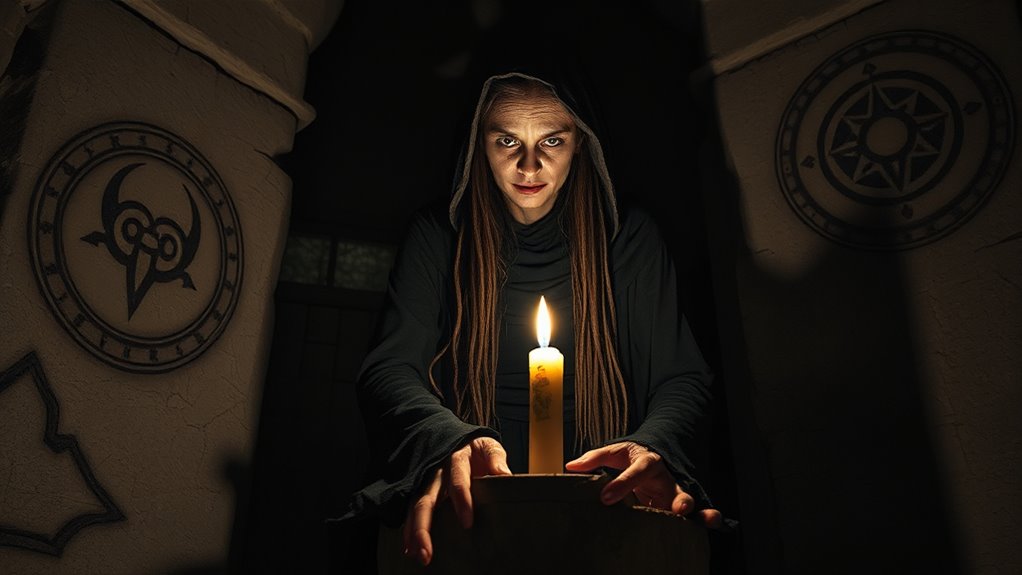

The Tlahuelpuchi is a legendary vampire-witch from Mexican folklore, often described as a female creature who transforms into a predator targeting children and pregnant women at night. Rooted in stories passed down orally, these tales blend indigenous beliefs with Spanish influences, serving as warnings about moral behavior and supernatural dangers. Many communities still share sightings or encounters, which keep the legend alive and influence local perceptions. Discover the fascinating history and cultural impact behind this haunting myth further.
Key Takeaways
- The Tlahuelpuchi is a female witch in Mexican folklore believed to transform into a vampire-like creature preying on children and pregnant women.
- Legends blend indigenous and Spanish influences, serving as moral warnings and cultural identity markers in rural communities.
- Modern sightings report strange silhouettes or eerie feelings near homes, often during festivals or times of misfortune.
- Interpretations of these encounters include traditional beliefs, collective anxiety, or media-influenced perceptions.
- The legend maintains cultural relevance, shaping community beliefs and continuing to fascinate through storytelling and folklore traditions.
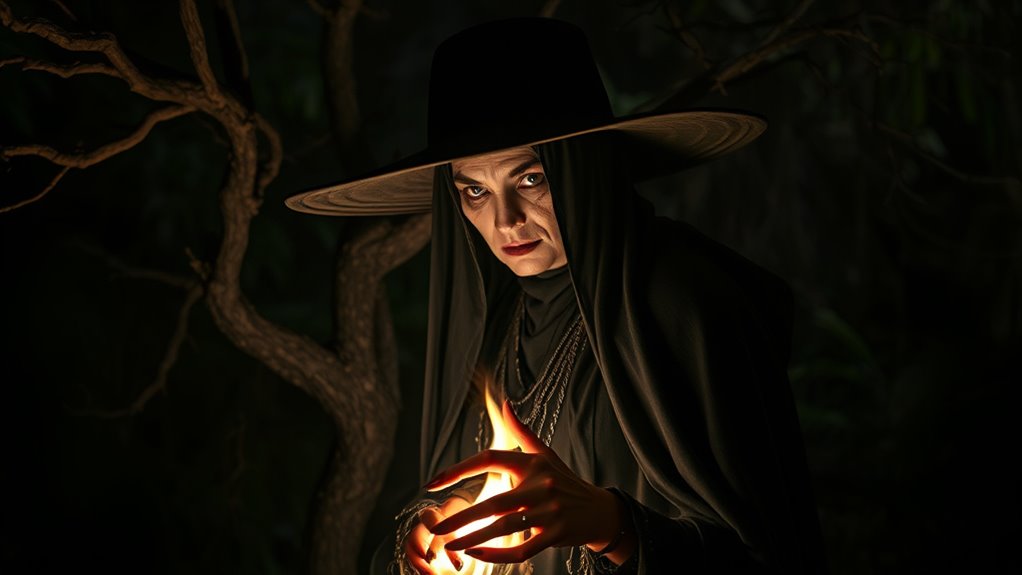
In the rural regions of Mexico, tales of the Tlahuelpuchi—vampire witches—have persisted for generations. These stories are deeply rooted in local folklore origins, blending indigenous beliefs with Spanish influences. According to tradition, the Tlahuelpuchi is a female witch with the ability to transform into a creature that preys on children and pregnant women, sucking their blood to sustain herself. These legends often serve as cautionary tales, warning communities about the dangers lurking in the night and the importance of moral conduct. Over centuries, these stories have been passed down orally, shaping a cultural identity that emphasizes the mysterious and supernatural. Despite their age, tales of the Tlahuelpuchi are not simply relics of the past. In recent years, there have been modern sightings, fueling ongoing fascination and fear. Some villagers claim to have seen strange figures lurking near their homes at night, often describing a woman with an unsettling presence or a silhouette that seems to glide just out of clear view. These sightings tend to increase during certain times of the year, especially around festivals or when people report illness or misfortune. Many believe that these modern encounters are echoes of the traditional folklore, reinforced by local beliefs and community stories. Others interpret them as manifestations of collective anxiety, fueled by media reports or personal fears. Interestingly, some researchers suggest that these sightings may also be influenced by cultural storytelling traditions that keep the legend alive. You might find it intriguing that these sightings aren’t always dismissed as mere superstition. Instead, they are often taken seriously, especially in small towns where folklore still holds sway. Some residents even claim to have encountered the Tlahuelpuchi themselves, describing a feeling of overwhelming dread or an inexplicable presence. These stories are reinforced by local healers and elders, who often advise caution and protective rituals. Whether you believe in supernatural beings or see these accounts as cultural expressions, the persistent stories of modern sightings continue to keep the legend alive. The enduring nature of these tales highlights how folklore origins can evolve yet remain relevant. They adapt to contemporary contexts, blending old superstitions with modern experiences. As long as communities continue to share stories of the Tlahuelpuchi—whether as warnings, cultural identity, or genuine encounters—the myth will persist. For many, these stories serve as a bridge between the past and present, reminding us of the power of folklore to shape perceptions, influence behavior, and keep the mystery alive in the collective consciousness.
Frequently Asked Questions
Are There Modern Sightings of Tlahuelpuchi in Mexico Today?
You might hear urban legends about Tlahuelpuchi still being spotted in Mexico today, though concrete evidence is scarce. These sightings often pop up in local folklore, fueling community stories and preservation of cultural beliefs. While modern encounters are rare and often dismissed as superstition, the legends persist, keeping the myth alive. If you explore rural areas, you might encounter stories that remind you how folklore continues to shape cultural identity.
How Do Communities Traditionally Protect Themselves From Tlahuelpuchi?
You can protect yourself from Tlahuelpuchi by using traditional charms like amulets or crosses, which are believed to ward off her influence. Community rituals, such as prayer vigils and collective ceremonies, also play a essential role in safeguarding the area. These practices strengthen spiritual defenses, creating a united front that discourages her from entering the community. Stay attentive to local customs to help keep yourself and others safe.
What Are the Common Legends or Stories Associated With Tlahuelpuchi?
In vampire folklore, stories tell of the Tlahuelpuchi as a witch who transforms into a vampire to hunt at night. You might hear legends about her shape-shifting abilities, her need for blood, and her vulnerabilities, like being burned or cursed. These tales are rooted in witchcraft traditions, warning communities to stay vigilant. Such stories often serve to explain strange happenings or to warn against stray children or pregnant women.
Is There Any Scientific Explanation for Tlahuelpuchi Legends?
Like shadows dancing in moonlight, scientific explanations cast doubt on tales of the Tlahuelpuchi. You may find biological explanations suggesting sleep paralysis or rare medical conditions that cause hallucinations, while psychological theories point to cultural fears and collective anxiety as fueling the legends. These insights show how the mind and body can conjure fears that feel as real as night itself, making legends a reflection of deeper human experiences.
How Has the Portrayal of Tlahuelpuchi Changed Over Time?
You’ve seen how the portrayal of tlahuelpuchi has evolved through cultural evolution and media influence. Over time, stories shifted from traditional folklore to more sensationalized depictions in movies, TV, and books. This media exposure shapes public perception, making tlahuelpuchi seem more supernatural or frightening. As culture changes, so does the character’s image, blending myth with modern storytelling, which keeps the legend alive but also alters its original meaning.
Conclusion
So, next time you hear whispers of the Tlahuelpuchi, remember they’re not just myth but a reflection of fears and beliefs that pulse through Mexican culture. Like shadows dancing in moonlight, their legend reminds us that darkness often hides truths we’re afraid to face. Embrace these stories, for they’re the night’s whispers, inviting us to explore the mysterious depths of our collective imagination and the stories we hold close.