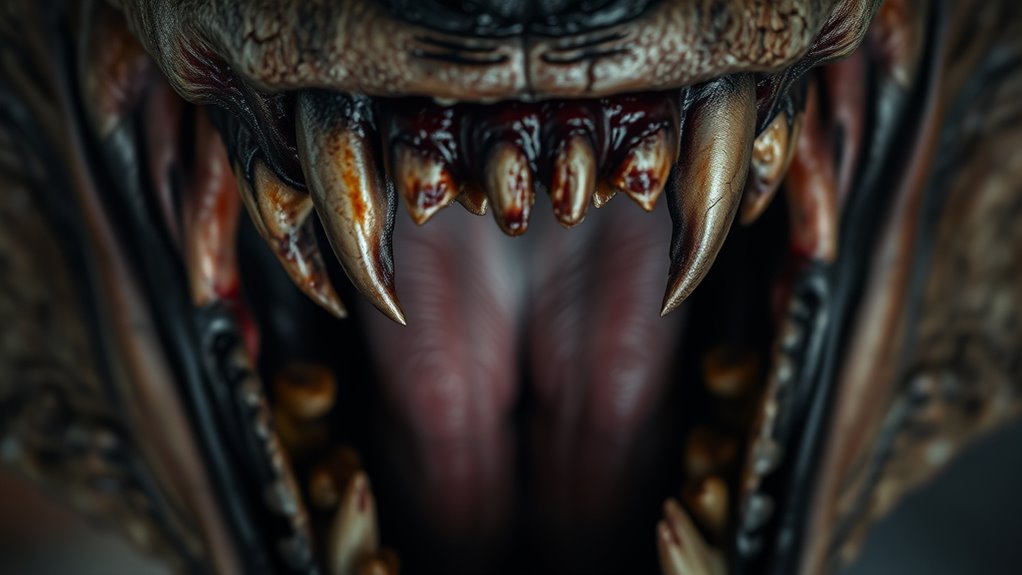

The monster’s mouth in myths symbolizes deep psychological fears and societal taboos around chaos, power, and moral boundaries. Cannibalism often represents the destruction of identity or transformation, acting as a metaphor for primal fears of annihilation. These stories embody collective anxieties about chaos threatening social order and serve as warnings against hubris. Exploring this symbolism helps you understand how myths project shared fears, and if you keep exploring, you’ll discover even more fascinating insights.

Prime made for students and young adults
- Fast, free delivery for dorm and study essentials
- Prime Video and Amazon Music included
- Member-only deals
Key Takeaways
- Cannibalism in myths symbolizes deep fears, social taboos, and psychological themes like chaos, power, and loss of identity.
- The Monster’s Mouth represents destructive inner forces and the collective unconscious’s hidden fears.
- Myths encode societal anxieties about boundary violations, serving as moral warnings and cultural signposts.
- Archetypes of cannibalistic figures embody primal fears of annihilation and chaos within the psyche.
- Projective identification explains how collective fears are expressed through mythic symbols like the Monster’s Mouth.
Throughout history, myths featuring cannibalism have served as powerful symbols that reveal deeper psychological fears and social anxieties. These stories often carry layered meanings rooted in cultural symbolism, representing more than just literal acts. Instead, they operate as metaphors for complex human experiences, fears, and societal concerns. When you explore these myths, you begin to see how cannibalism embodies psychological archetypes that resonate across different cultures and eras. It’s not simply about eating flesh; it’s about what that act signifies within the collective unconscious—power, taboo, destruction, or even transformation.
Cultural symbolism plays an essential role here. Cannibalistic myths often symbolize the violation of moral boundaries, the fear of losing one’s identity, or the chaos that threatens social order. For example, in some cultures, the act of consuming an enemy’s flesh signifies taking on their strength or spirit, a form of spiritual conquest. In others, it serves as a warning against hubris or excessive pride, suggesting that to cross certain societal lines invites destruction. These myths act as cultural signposts, warning members of society about the dangers of moral transgression, and they encode collective anxieties about the boundaries that define human community.
Simultaneously, these stories tap into deep-seated psychological archetypes that shape human understanding of self and other. Carl Jung’s theory suggests that myths are expressions of universal archetypes stored in the collective unconscious. Cannibalism, in this context, often symbolizes the primal fears of annihilation or the loss of individuality. When you encounter these myths, you see figures like the savage outsider or the monstrous villain—archetypes embodying chaos, fear, and the shadow self. These characters serve as projections of your own hidden fears and societal taboos. The monster’s mouth, in many myths, becomes a symbol of the destructive aspects within ourselves that we try to suppress or deny. Additionally, understanding how projective identification influences myth interpretation can deepen insight into collective fears.
As an affiliate, we earn on qualifying purchases.
Frequently Asked Questions
Are There Real Historical Cases of Myth-Inspired Cannibalism?
Yes, there are historical incidents that myth verification links to real cases of cannibalism inspired by myths. Some tribes or groups reportedly practiced cannibalism influenced by their cultural stories or legends. For instance, the Fore people of Papua New Guinea engaged in ritualistic cannibalism, which contributed to the spread of kuru disease. These cases blur the line between myth and reality, showing how cultural stories can shape extreme behaviors.
How Do Cultural Taboos Influence Mythological Portrayals of Cannibalism?
Cultural taboos act like invisible walls, shaping mythological stories of cannibalism that you see as dark shadows lurking in legends. These stories are crafted through cultural repression, reinforcing taboos by making cannibalism a terrifying, forbidden act. As you explore myths, you notice how societies use these narratives to reinforce moral boundaries, turning forbidden acts into symbols of chaos, consequently deepening the fear and reinforcing the taboo in collective consciousness.
What Psychological Factors Drive Fascination With Cannibalism in Stories?
You’re drawn to stories of cannibalism because of psychological intrigue and primal instincts that tap into your deep-seated fears and curiosities. These tales evoke a visceral reaction, stirring the primal urge to understand boundaries of human nature. Your fascination often stems from exploring themes of taboo, power, and survival, which challenge societal norms and awaken your innate instincts, making these stories both unsettling and compelling.
Do Mythological Cannibals Symbolize Societal Fears or Moral Lessons?
You might wonder if mythological cannibals are just scary stories, but they actually symbolize societal fears and moral allegories. These figures often challenge norms, warning us about greed, chaos, or moral decay lurking beneath civilization’s surface. Their terrifying acts serve as reminders of what we must guard against, making them powerful symbols that reflect our deepest anxieties and moral lessons, creating a chilling mirror of society’s unspoken fears.
How Has Modern Media Shaped Perceptions of Myth-Based Cannibalism?
Modern media shapes your perception of myth-based cannibalism through media stereotypes and sensationalism influence. You often see exaggerated portrayals that reinforce fears and misconceptions, making cannibals seem more monstrous and terrifying than myth or reality suggest. This sensationalism fuels paranoia and distorts historical or mythological truths, leading you to associate cannibalism with evil and chaos, rather than understanding its deeper symbolic or cultural meanings in myths.
As an affiliate, we earn on qualifying purchases.
Conclusion
So, next time you hear a myth about cannibals, remember it’s more than just horror stories; it’s a window into human psychology. These legends reveal deep fears, societal taboos, and our need to understand the unknown—kind of like trying to figure out if your smart fridge is secretly judging your snack choices. Cannibalism in myths isn’t just about monsters; it’s about what we fear and what we hide in our collective subconscious.
As an affiliate, we earn on qualifying purchases.
As an affiliate, we earn on qualifying purchases.
Halloween Picks
halloween
As an affiliate, we earn on qualifying purchases.