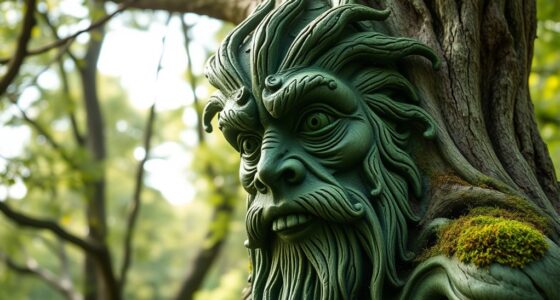
Monsters act as powerful metaphors for society’s deepest fears, often embodying anxieties about chaos, moral decay, or outsiders. They reflect cultural concerns across different regions and eras, symbolizing threats like disease, societal change, or future uncertainties. These creatures help society process complex fears indirectly and reveal collective worries about stability or moral erosion. If you continue exploring, you’ll uncover how these symbols shape our understanding of social anxieties throughout history.

Prime made for students and young adults
- Fast, free delivery for dorm and study essentials
- Prime Video and Amazon Music included
- Member-only deals
Key Takeaways
- Monsters symbolize societal fears of chaos, destruction, and moral decline, serving as visual metaphors for collective anxieties.
- Cultural variations in monsters reflect specific social concerns, such as disease in Western vampires or power in Eastern dragons.
- Monsters externalize fears of outsiders, immigration, or cultural change, helping society process complex issues indirectly.
- The evolving nature of monsters mirrors shifting societal values and fears about technology, morality, and future stability.
- As mirrors of societal fears, monsters enable exploration of social issues and reveal collective anxieties across generations.

Throughout history, monsters have served as powerful metaphors for the fears and anxieties that society struggles to articulate. You might not always realize it, but these creatures often embody deep-rooted cultural symbolism, representing everything from chaos and destruction to moral decay. When you see a monster in stories or myths, it’s not just a terrifying figure; it’s a reflection of societal anxieties—those collective worries about the unknown, the other, or the collapse of social order. These fears are hard to express directly, so they find form in monstrous figures that symbolize what society fears losing or confronting.
As you examine different cultures, you’ll notice how monsters symbolize specific social concerns. For example, in Western folklore, vampires often embody fears surrounding disease, death, and the erosion of moral boundaries. In Eastern traditions, dragons might represent chaos or power, but also societal stability depending on their depiction. Each cultural symbolism embedded in these monsters reveals what the society it originates from considers threatening. They act as visual language, expressing collective anxieties about morality, mortality, or societal change without explicitly stating them.
When you think about monsters as metaphors, you realize that they serve as a way for society to process complex fears indirectly. Instead of facing these issues head-on, people create stories where monsters embody those fears. For instance, the monstrous other in horror films often mirrors societal anxieties about outsiders, immigration, or cultural change. You see this in how monsters are used to symbolize what society deems dangerous or different, often reflecting xenophobia or social divisions. These representations allow society to externalize fears, making them manageable or understandable through storytelling.
Furthermore, monsters as metaphors help you understand how societal anxieties evolve over time. What was once perceived as a monstrous threat may shift as cultural values change. For example, fears of the unknown during the Middle Ages translated into fears of demons and witches, while modern fears might focus on technological monsters like AI or genetic engineering. In each case, the monsters serve as symbols of societal concerns, channeling collective worries about future stability, morality, or identity.
In essence, when you analyze monsters as metaphors, you uncover a mirror of societal anxieties shaped by cultural symbolism. These creatures aren’t just fictional horrors—they’re manifestations of what society fears losing or confronting. They allow you to explore complex social issues in a symbolic form, revealing how collective fears are constructed and communicated across generations. Monsters, thus, become powerful tools for understanding the hidden layers of societal fears that define different eras and cultures.
monster symbolism in mythology book
As an affiliate, we earn on qualifying purchases.
As an affiliate, we earn on qualifying purchases.
Frequently Asked Questions
How Do Cultural Differences Influence Monster Symbolism?
Cultural differences shape how you interpret monster symbolism by drawing on unique mythical origins and cultural symbolism. In some cultures, monsters symbolize chaos or evil, while in others, they represent protection or ancestral spirits. Your understanding of these creatures reflects societal fears, values, and history. By recognizing these cultural variations, you see that monsters serve as mirrors of collective identity, shaping and reflecting the diverse ways societies process their social fears through mythical origins.
Can Monsters Symbolize Internal Psychological Conflicts?
Did you know that over 60% of people experience internal conflicts they struggle to understand? Yes, monsters can symbolize your inner demons and psychological projections, reflecting your fears and unresolved issues. They serve as powerful metaphors for internal struggles, allowing you to confront and explore your psychological conflicts in a symbolic way. By personifying these inner demons, monsters help you process complex emotions you might otherwise suppress.
What Role Do Monsters Play in Societal Cohesion?
Monsters serve as mythical archetypes that reflect societal anxieties, helping you understand and process collective fears. They act as symbols of what’s feared or misunderstood, strengthening social cohesion by establishing shared narratives. When you face or discuss monsters, you reinforce cultural norms and values, creating a sense of unity. In this way, monsters become tools that help you and your community confront and manage societal tensions together.
How Do Modern Media Portray Monsters Differently Than Traditional Stories?
Modern media portray monsters differently by blending urban legends and technological fears, making them more relatable and immediate. Unlike traditional stories, where monsters symbolized primal fears, today’s depictions often reflect concerns about social issues and digital dangers. You see monsters lurking in social media, technology, and urban myths, creating a sense of realism. This shift helps you connect with fears rooted in contemporary life, making monsters feel more relevant and unsettling.
Are There Real-World Examples of Monsters Reflecting Political Fears?
Imagine a creature like Godzilla, but instead of a monster, it’s a symbol of political allegories reflecting societal anxieties. Throughout history, monsters have embodied fears of invasion, tyranny, or nuclear destruction—think Cold War paranoia. These representations reveal deep-rooted concerns, allowing society to confront fears indirectly. Today, films and literature continue this tradition, using monsters to critique political regimes and societal tensions, making the unfamiliar a mirror for our collective anxieties.
As an affiliate, we earn on qualifying purchases.
Conclusion
So, next time you see a monster in stories or films, remember it’s more than just a scare. These creatures symbolize our deepest social fears, making them easier to face. You might think they’re just fiction, but they reveal truths about ourselves and society. Instead of running from them, try understanding what they represent. After all, confronting fears—monsters included—can help you grow stronger and more aware of the world around you.
mythology and social fears literature
As an affiliate, we earn on qualifying purchases.
As an affiliate, we earn on qualifying purchases.
monster metaphors in storytelling
As an affiliate, we earn on qualifying purchases.
As an affiliate, we earn on qualifying purchases.
Fall Picks
fall essentials
As an affiliate, we earn on qualifying purchases.