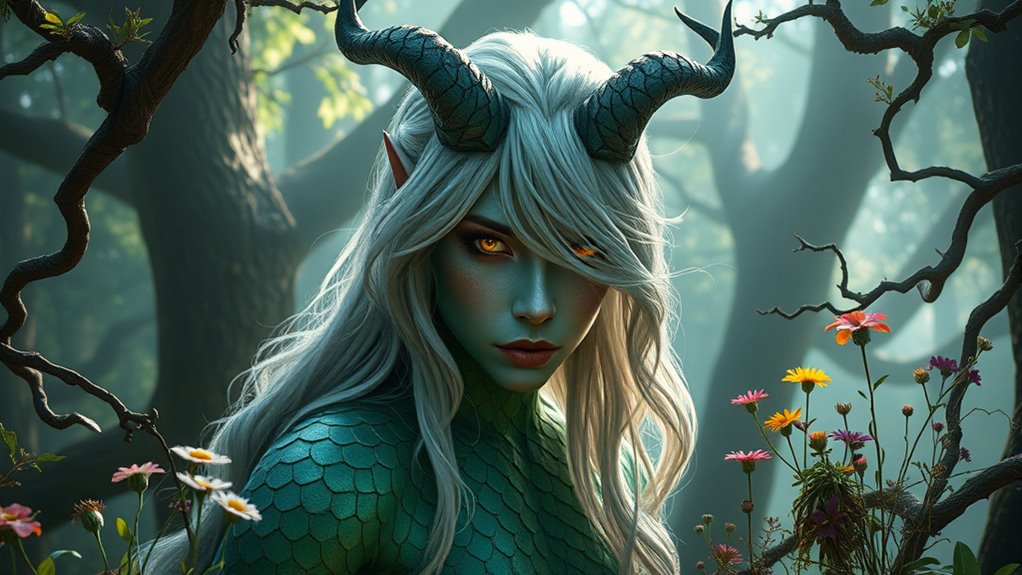

Female creatures of legend often reflect societal fears and hopes about gender roles. They are depicted as both alluring and threatening, embodying traits that symbolize female sexuality, independence, and power. These monsters challenge traditional roles, blending beauty with danger to reveal cultural anxieties. By exploring these myths, you’ll discover how legends mirror societal attitudes and fears about femininity—an intriguing story you won’t want to miss.
Key Takeaways
- Female monsters often embody traits of allure and danger, reflecting societal fears about female sexuality and independence.
- Legends depict female creatures as both nurturing and destructive, highlighting gendered stereotypes and societal anxieties.
- Mythical femininity in monsters symbolizes cultural fears of female power, emphasizing traits that are both seductive and threatening.
- Stories of female monsters serve as cultural mirrors, reinforcing stereotypes linking female strength with danger.
- The complex traits of female mythological monsters reveal ongoing societal struggles with gender roles and perceptions of femininity.
Have you ever wondered how monsters are shaped by gender? It’s a fascinating question, especially when you consider the ways mythical femininity influences the portrayal of female creatures of legend. Throughout history, stories have depicted women monsters in ways that emphasize certain traits, often reinforcing societal ideas about femininity and gender roles. These depictions aren’t random; they reflect cultural fears and expectations, giving rise to what you might call gendered monster traits. For example, many female monsters embody a blend of allure and danger, using their sexuality as a weapon or a trap. Their beauty isn’t just superficial but a form of power that can manipulate or deceive. This intertwining of attractiveness with menace creates a complex image rooted in gendered stereotypes, where femininity becomes both a strength and a vulnerability.
In myth and folklore, mythical femininity often manifests through monsters that are both alluring and threatening. These creatures might seduce victims into their lairs, embodying societal anxieties about female sexuality and independence. Think of the sirens from Greek mythology, whose enchanting voices lure sailors to their doom. They symbolize the idea that female beauty and charm can be dangerous, reinforcing the stereotype that women are inherently unpredictable or potentially destructive when they deviate from societal expectations. Similarly, figures like the Gorgon Medusa blend beauty with monstrosity, transforming a once-beautiful maiden into a creature whose gaze can turn people to stone. Such stories reflect a cultural tendency to equate female power with danger, embedding gendered traits into the very fabric of myth.
These gendered monster traits serve more than just storytelling purposes—they mirror societal fears about women’s autonomy and power. Female monsters often challenge the traditional roles prescribed to women, embodying traits that are both alluring and threatening. They can be nurturing but also destructive, embodying a duality that society has historically associated with femininity. This duality feeds into myths that portray women as either desirable or dangerous, never simply neutral or benign. The portrayal of female monsters as complex, multi-layered figures is a reflection of societal struggles with gender roles—fears of female independence, sexuality, and power. Understanding these gendered traits helps you see how legends and myths serve as cultural mirrors, shaping and reflecting perceptions of gender across generations.
Frequently Asked Questions
How Do Female Monsters Symbolize Societal Fears About Women?
You see, female monsters often symbolize societal fears about women through mythical allegories and gender symbolism. They embody anxieties about female power, independence, or sexuality, portraying women as dangerous or uncontrollable. These legends reflect cultural tensions, casting women as threats to social order. By doing so, they reveal underlying fears about gender roles, control, and societal stability, making female monsters powerful symbols of collective anxieties rooted in gender dynamics.
Are There Cultural Differences in Female Monster Representations Worldwide?
You’ll find that cultural variations and regional differences shape female monster representations worldwide. In some cultures, female monsters embody fears about morality or chaos, while in others, they symbolize power or vengeance. These regional differences reflect diverse societal values and histories, influencing how these creatures are depicted. So, across cultures, female monsters serve as mirrors, revealing unique fears and beliefs rooted in local traditions and social norms.
What Roles Do Female Monsters Play in Modern Popular Media?
You might think female monsters are just scary figures, but in modern media, they play diverse roles. They’re often portrayed as mythical seductresses, adding allure and complexity, or as maternal protectors, emphasizing nurturing strength. These characters challenge stereotypes, showing women as powerful, multifaceted figures. By breaking traditional molds, they reflect evolving gender roles, making stories richer and more relatable, and inviting audiences to see female monsters as symbols of strength and vulnerability.
How Have Female Monsters Evolved Over Different Historical Periods?
You see that female monsters have evolved through mythical transformations and archetypal symbolism over time. In ancient eras, they often embodied chaos or divine punishment, symbolizing nature’s power. During the Romantic period, they transformed into mysterious, often tragic figures representing forbidden knowledge. Today, they are more complex, blending empowerment with vulnerability, reflecting societal shifts. This evolution highlights how cultural values shape the portrayal of female monsters across different historical periods.
Do Female Monsters Challenge or Reinforce Gender Stereotypes?
You might see female monsters as symbols of monster empowerment, subtly challenging traditional gender stereotypes. These creatures often subvert gender roles by embodying strength, cunning, and independence, defying expectations of fragility or passivity. Their stories invite you to reconsider stereotypes, suggesting that female power can be both fearsome and admirable. In this way, female monsters serve as powerful icons of gender role subversion, encouraging a more nuanced understanding of gender dynamics.
Conclusion
As you explore these legends, you’ll see how female monsters often mirror society’s fears and desires, like mirrors reflecting hidden truths. They’re not just monsters—they’re stories stitched with gendered threads, shaping our understanding of power and vulnerability. Just as a river carves its path through rock, these creatures carve their place in myth and memory, reminding you that monsters, like us, are complex beings woven from the fabric of human imagination.