Fog creates a perfect cover for monsters by distorting shapes and muffling sounds, making viewers unsure of what’s real. It turns ordinary scenes into eerie landscapes full of mystery and danger. As you watch fog roll in, the atmosphere seems to open a gateway to supernatural tales, where creatures lurk just beyond sight. This weather condition has shaped countless legends passed down through generations. Keep exploring, and you’ll uncover how fog truly transforms the way we see monsters.
Key Takeaways
- Fog creates an eerie atmosphere that fuels stories of lurking monsters and supernatural beings.
- It acts as a natural veil, hiding creatures in shadows and distorting shapes to heighten fear.
- Cultural folklore uses fog to explain mysterious sightings, transforming ordinary weather into supernatural scenarios.
- Weather conditions like fog embed mystery into legends, encouraging imagination of monsters lurking just beyond sight.
- Fog amplifies feelings of danger and mystery, serving as a myth-making backdrop that sustains monster stories across generations.
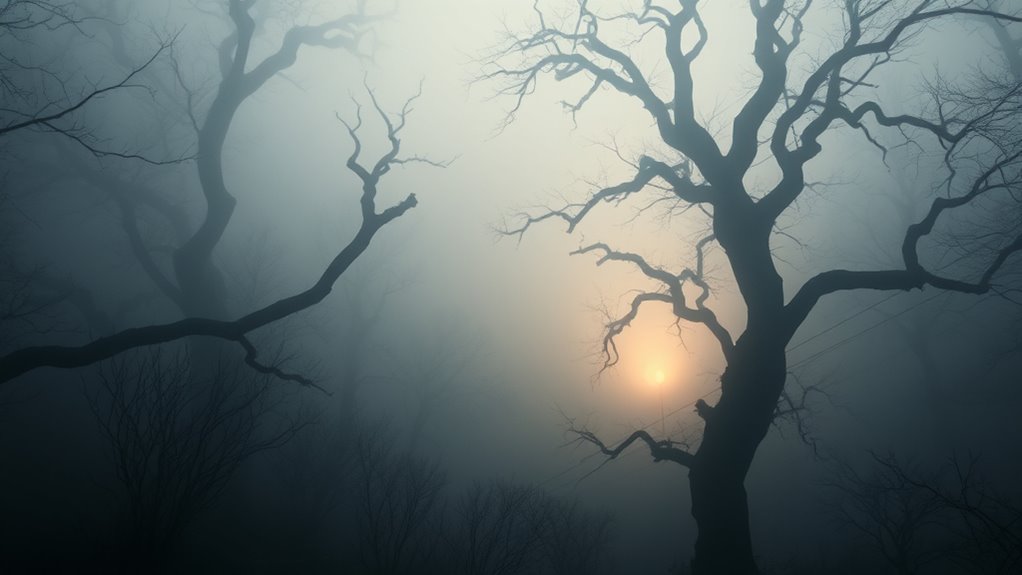
Have you ever wondered how weather influences the appearance and behavior of mythical monsters? It’s a fascinating idea, especially when you consider how many urban legends and folklore origins revolve around atmospheric conditions. The fog, in particular, has long been linked to mysterious creatures and supernatural tales. When thick fog rolls in, it doesn’t just obscure your view—it creates an eerie atmosphere that fuels stories of monsters lurking just out of sight. These stories often originate from folklore, where fog symbolizes the boundary between the known and the unknown, making it the perfect setting for supernatural encounters.
People have used fog to explain strange sightings for centuries, especially in rural areas where thick mists can settle overnight. In many urban legends, fog acts as a cloak for monsters who hide in the shadows, waiting for unsuspecting victims. This cloud of vapor distorts shapes and muffles sounds, making it easier for stories to grow more terrifying. When you can’t see clearly, your imagination runs wild. Shadows transform into monsters, and ordinary noises become the calls of otherworldly beings. Over time, these stories take root in cultural memory, becoming part of local folklore origins that persist across generations.
In folklore, fog often symbolizes mystery and danger, making it a natural setting for tales of monsters. Communities tell stories of spectral figures or terrifying beasts that emerge only in foggy conditions. These legends serve a dual purpose: they explain unexplained phenomena and act as cautionary tales. For example, a monster hiding in the fog might be used to warn children against wandering alone at night or to remind adults to stay vigilant in poor weather conditions. The idea is that fog isn’t just weather—it’s a supernatural veil that can transform the ordinary into the extraordinary. Additionally, weather conditions like fog can influence the perception of monsters, heightening the sense of fear and mystery in these stories.
Weather, especially fog, influences how these monsters are perceived and how stories are passed down. The eerie atmosphere created by fog makes it easier for legends to flourish, as the environment itself seems to breathe life into these myths. When fog blankets the landscape, it amplifies the sense of mystery and danger, encouraging storytellers to imagine monsters lurking just beyond sight. Over generations, these tales become woven into local folklore origins, reinforcing community fears and beliefs. The weather becomes an active participant in shaping the monsters of myth, turning the natural world into a stage for supernatural drama. So next time you see fog rolling in, remember—it’s not just weather; it’s a canvas for the stories and monsters we’ve crafted over centuries.
Frequently Asked Questions
Can Fog Be Used as a Weapon in Warfare?
Yes, fog can be used as a weapon in warfare by employing stealth tactics to conceal troop movements and equipment, giving you a strategic advantage. It also enhances psychological warfare, causing confusion and fear among enemies. By harnessing the natural cover of fog, you can surprise opponents, disrupt their coordination, and gain control of the battlefield without direct confrontation, making fog a powerful, if indirect, tool in military operations.
How Do Different Weather Conditions Influence Monster Sightings?
You’re more likely to see monsters during foggy conditions, as atmospheric illusions and visibility reduction heighten fear and misinterpretations. Studies show that fog increases the chance of visual misidentifications by up to 60%, making monsters seem more real. When weather creates atmospheric illusions, your mind fills in gaps, turning shadows and shapes into monsters. So, next time you’re in thick fog, be cautious—your fear might just be a trick of the weather.
Are There Scientific Explanations for Monsters Appearing in Fog?
Yes, there are scientific explanations for monsters appearing in fog. You might experience psychological effects like fear or anxiety, which heighten your perception of threats. Fog can cause sensory illusions, making familiar objects seem strange or threatening, especially in low visibility. These factors lead your mind to interpret ambiguous shapes as monsters, highlighting how weather influences perception and can trigger frightening illusions even when no real danger exists.
What Cultures Have Folklore Involving Monsters in Fog?
Did you know over 60 cultures have folklore about monsters in fog? You’ll find mythical creatures and spiritual legends in places like Japan’s Yurei spirits emerging in fog, or Scottish tales of the kelpie lurking in misty waters. These stories reflect how fog fuels fears and imagination, creating monsters that symbolize the unknown. Exploring these legends reveals how weather influences cultural myths, blending nature and spirituality in compelling ways.
How Does Climate Change Affect Fog Frequency and Monster Stories?
Climate change alters climate patterns, impacting fog formation and frequency. You might notice more persistent or unpredictable fog, which fuels local legends and monster stories. As warmer temperatures and changing humidity levels shift fog patterns, communities often adapt their folklore, creating new monsters or emphasizing existing ones. This connection shows how shifting weather conditions directly influence cultural tales, making fog-related legends more vivid and relevant in today’s changing climate.
Conclusion
As you walk through the fog, remember that weather can transform the ordinary into the monstrous. Just like storms reveal true colors, nature’s moods can awaken fears you never knew existed. Keep in mind, “A storm in a teacup,” reminds you that even small weather changes can unchain big, unseen monsters. Stay alert, respect the skies, and know that sometimes, the scariest things aren’t creatures but nature’s unpredictable power.