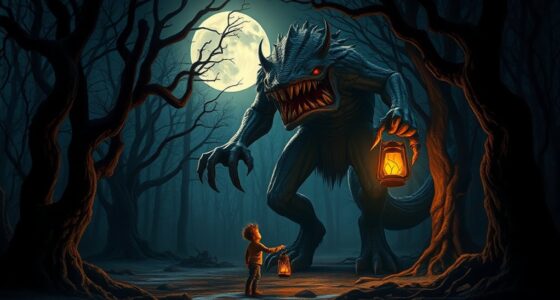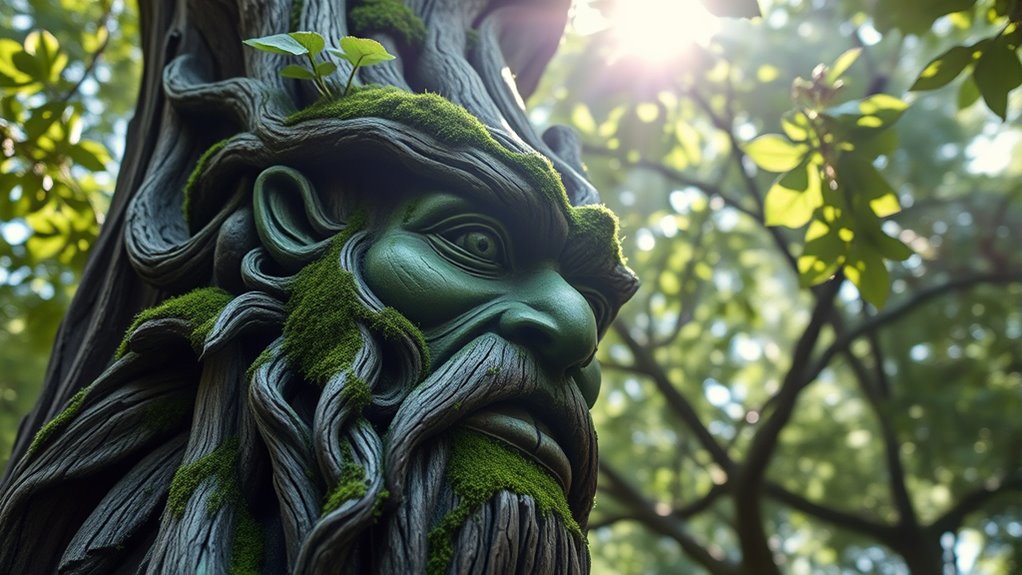

The Green Man, once a symbol of nature’s energy, rebirth, and fertility rooted in ancient pagan beliefs, has evolved over centuries into a compelling cultural icon. Traditionally carved into architecture and art, he represented renewal and resilience. Today, his image is embraced worldwide, inspiring modern art and design. However, in recent times, the Green Man has also gained a darker reputation, appearing in horror motifs. Exploring this transformation reveals a fascinating journey from sacred symbol to modern intrigue—if you look closer, you’ll discover more.
Key Takeaways
- The Green Man originated as a pagan symbol of nature, rebirth, and renewal, and has been incorporated into various cultural and spiritual traditions.
- Medieval artisans embedded the Green Man in architecture, symbolizing eternal life and the cycle of nature, blending myth with religious themes.
- In modern culture, the Green Man is often associated with vitality, resilience, and environmental symbolism, inspiring contemporary art and design.
- The motif’s transformation into horror arises when its natural, life-affirming imagery is twisted into frightening or sinister representations.
- Contemporary horror media reimagines the Green Man as a menacing or supernatural figure, contrasting its original symbolism of renewal with themes of decay and menace.
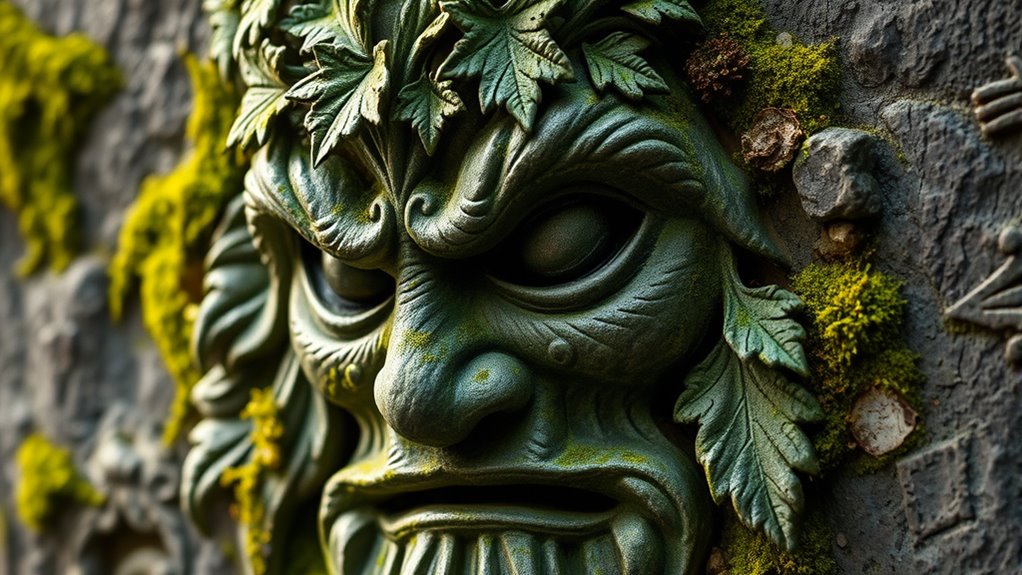
The Green Man motif is a centuries-old symbol found in architecture, art, and folklore that represents nature’s liveliness and rebirth. Its origins are shrouded in myth, blending pagan beliefs with local legends, making it a fascinating figure rooted in mythical origins. Many believe the Green Man embodies the cycle of growth and decay, symbolizing seasonal change and renewal. These stories often connect him to ancient fertility rituals, where he appears as a guardian of crops and natural abundance. Over time, the Green Man’s mythical origins have been woven into various cultural narratives, emphasizing his role as a protector of the natural world. His presence in ancient carvings, stained glass, and sculptures underscores his importance in early spiritual practices. You’ll find his face emerging from leafy patterns, often with foliage sprouting from his mouth or eyes, which highlights his close ties to nature’s vitality. These artistic representations serve as visual metaphors for the interconnectedness of humans and the environment. During the medieval period, artisans popularized the Green Man in church architecture, embedding him into the spiritual landscape as a symbol of rebirth and eternal life. His face became a recurring motif, carved into stone, wood, and glass, often blending seamlessly with natural elements. Such artistic representations made him more than just a myth; they turned him into a visual reminder of nature’s enduring power. The Green Man’s imagery was often used to inspire renewal, growth, and resilience, resonating deeply through centuries of cultural shifts. As you explore ancient churches and cathedrals, you’ll notice his face among the intricate stonework, a subtle nod to the cycle of life and death. Today, the Green Man continues to inspire artists and designers, who interpret his mythic roots through modern artistic representations. His image has transcended its pagan origins, becoming a symbol of renewal in contemporary culture. From murals to jewelry, the Green Man’s face often appears as a celebration of life’s perpetual rebirth. Understanding his mythical origins and artistic representations allows you to appreciate the layers of meaning embedded in this enduring symbol. The Green Man reminds us of nature’s resilience, a timeless emblem that has evolved from ancient folklore into a universal icon of renewal and vitality. Whether carved into stone or reimagined in modern art, his face continues to celebrate the eternal cycle of growth, death, and rebirth, echoing the enduring power of nature itself. Additionally, his widespread presence in medieval architecture demonstrates his significance across various historical periods and regions.
Frequently Asked Questions
How Did the Green Man Influence Contemporary Environmental Movements?
You see the Green Man as a powerful symbol in contemporary environmental movements. His ecological symbolism inspires sustainable activism by reminding you of nature’s essential role and the need to protect it. As a cultural icon, he encourages you to reconnect with the environment, promoting eco-friendly practices. His presence in art and activism helps you advocate for ecological balance and sustainability, making him a timeless emblem for environmental consciousness.
Are There Any Specific Cultures That Uniquely Depict the Green Man?
You’ll find that Celtic mythology uniquely depicts the Green Man, where ancient carvings reveal a face intertwined with foliage, symbolizing rebirth and nature’s power. In medieval carvings across Britain and Ireland, this figure emerges mysteriously, blending pagan roots with Christian influences. These intricate depictions evoke a sense of timeless magic, hinting at secrets nature once held. It’s a mesmerizing glimpse into a culture that revered the Green Man as a guardian of life itself.
What Are Common Symbols Associated With the Green Man in Art?
In art, you’ll often see the Green Man depicted with foliage motifs, like leaves and vines, symbolizing nature’s cycle. His face masks sometimes blend human features with plant elements, emphasizing his connection to the natural world. These symbols highlight rebirth, growth, and the earth’s vigor, making the Green Man a powerful representation of nature’s enduring spirit in various cultural artworks.
How Has the Green Man Been Adapted in Modern Architecture?
You see the Green Man adapted in modern architecture through intricate stone facades and decorative carvings that highlight nature’s connection. Architects incorporate his image to symbolize renewal, growth, and environmental consciousness. These carvings often feature leafy, vegetal designs, blending tradition with contemporary design. By integrating Green Man motifs into buildings, you create a striking visual that pays homage to ancient symbolism while emphasizing sustainability and harmony with nature.
What Psychological Themes Are Connected to the Green Man in Horror?
You feel that the green man in horror taps into deep psychological themes like nature symbolism and primal instincts. It evokes a connection to the wild, untamed aspects of the subconscious, reminding you of your primal fears and desires. This figure often symbolizes nature’s power and chaos, stirring feelings of awe or dread. Its presence challenges your sense of control, forcing you to confront primal instincts buried within your psyche.
Conclusion
You see the Green Man everywhere—on ancient carvings, modern murals, and even in horror stories. You recognize his roots in pagan tradition, his transformation through history, and his haunting presence in contemporary culture. You understand that he symbolizes renewal, nature, and mystery. You feel drawn to his duality—alive yet ghostly, sacred yet sinister—reminding you that beneath every mask, every myth, lies a story waiting to be uncovered, waiting to be understood, waiting to be embraced.