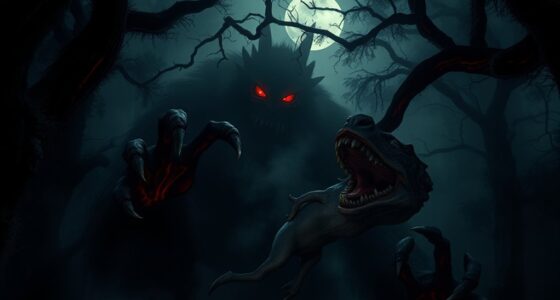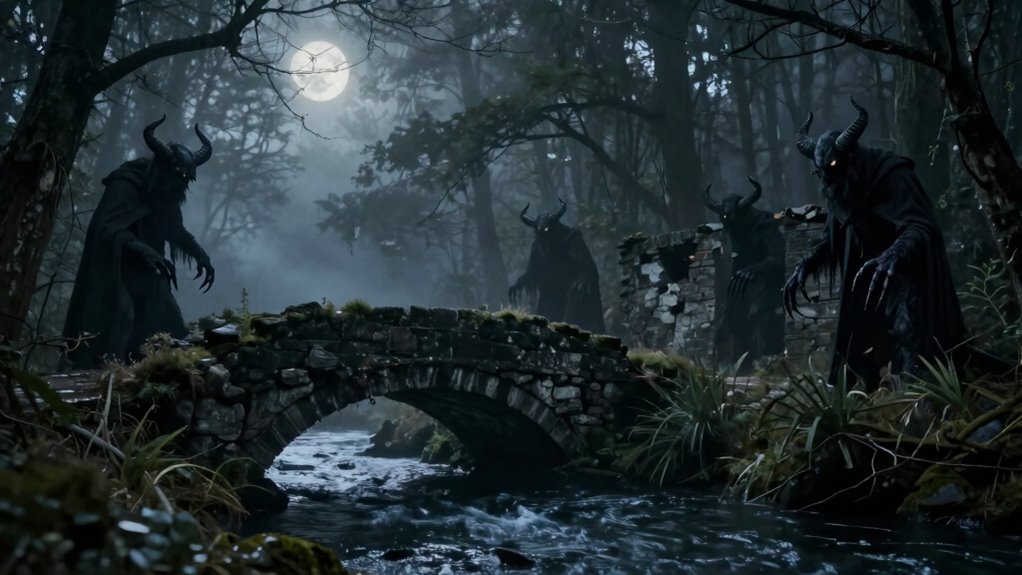

Many monsters guard borders, bridges, and forest edges because these places act as essential gateways between different worlds or domains. They serve as protectors, preventing chaos and dangerous entities from crossing into safe spaces. These guardians symbolize boundaries that shouldn’t be breached lightly, embodying caution, courage, and the need for respect. If you want to discover more about the significance of these monsters and their symbolic roles, keep exploring the deeper meanings behind these sacred thresholds.
Key Takeaways
- Monsters serve as protective guardians to prevent dangerous entities from crossing into safe, sacred, or controlled domains.
- They symbolize the importance of respecting boundaries, acting as warnings against crossing into unknown or risky territories.
- Guardianship reflects the role of monsters as liminal beings that mark transitions and enforce the significance of thresholds.
- Monsters challenge heroes, testing their courage and worth before they can cross into new realms or achieve growth.
- They maintain societal and cosmic order by safeguarding against chaos and ensuring harmony at vital boundary points.
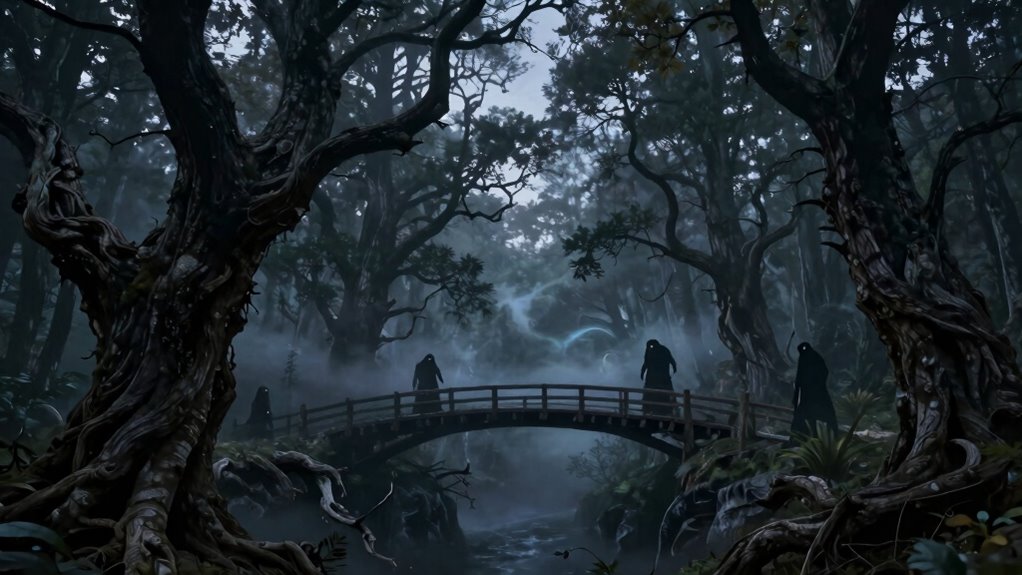
Monsters often guard borders, bridges, and forest edges because these places serve as vital thresholds between different worlds or domains. These locations act as gateways, where crossing from one realm to another holds significance—whether it’s a transition from safety to danger or from the known to the unknown. In many stories and myths, monsters serve as mythical guardians, standing sentinel at these boundaries to prevent unwelcome or dangerous entities from entering. Their presence isn’t random; it’s a form of symbolic protection, ensuring that the integrity of each domain remains intact. By guarding these edges, monsters embody the idea that certain spaces are sacred, dangerous, or in need of safeguarding from external threats.
The symbolic protection offered by these monsters is deeply rooted in cultural and mythological beliefs. They embody the fears and warnings of societies, acting as physical manifestations of boundaries that shouldn’t be crossed lightly. For example, a monster at a forest edge might symbolize the danger lurking in the wilderness—reminding travelers to respect nature’s power and mysteries. Similarly, a guardian at a bridge could represent the importance of crossing only when prepared, emphasizing that certain passages require careful consideration. These monsters reinforce the idea that some thresholds are sacred or dangerous, and only those deemed worthy or cautious can pass safely. Additionally, mythological symbolism helps explain why these guardian figures are so prevalent across different cultures and stories.
Furthermore, these monsters often have roles that extend beyond mere deterrence. They can serve as tests or challenges for heroes, pushing them to prove their worth or bravery before crossing into a new realm. This role underscores the importance of respecting boundaries and understanding the significance of transition points in life or myth. When you encounter such a guardian, it’s a reminder that crossing into new territory isn’t trivial; it requires courage, wisdom, or a special kind of preparation. The monsters, as mythical guardians, symbolize the protective barrier that keeps chaos at bay and maintains the order of worlds. Additionally, the concept of liminal spaces highlights how these thresholds are often associated with transformation and change, adding to their significance in myth and storytelling.
The idea of boundary markers in myth and culture further emphasizes the significance of these guardian figures, as they serve as tangible representations of the limits that should not be crossed lightly. In essence, the reason so many monsters guard borders, bridges, and forest edges is that these locations symbolize the liminal spaces where transformation, danger, and mystery converge. They are not just obstacles but symbols of the importance of respecting boundaries—whether physical, spiritual, or psychological. Their role as mythical guardians underscores the universal need to honor thresholds, acknowledging that crossing them involves risk, respect, and often, a test of character. This makes the presence of monsters at these crucial points both a warning and a reassurance: that boundaries are vital, and their protection is essential for the harmony of different worlds.

Pacific Trading 3.5 Inch Anubis Egyptian Guardian Mythological Statue Figurine
Dollhouse Miniature
As an affiliate, we earn on qualifying purchases.
As an affiliate, we earn on qualifying purchases.
Frequently Asked Questions
Are Real Monsters Ever Involved in Border Security?
Real monsters aren’t involved in border security. Mythical creatures and supernatural guardians belong to stories and legends, serving symbolic or cultural roles. While they make fascinating symbols of protection, actual border security relies on human agencies, technology, and policies. You won’t find mythical creatures patrolling borders, but their stories reflect humanity’s desire for safety and protection, illustrating how legends often symbolize real-world concerns.
How Do Monsters Choose Which Borders to Guard?
Monsters choose borders to guard based on cryptid sightings and folklore symbolism. You might notice they’re drawn to areas tied to legends or cultural stories, acting as protectors or guardians. These sites often hold symbolic significance, representing thresholds or boundaries. The monsters’ instinct or cultural lore guides them, making them natural guardians of borders, bridges, and forest edges where stories and traditions suggest powerful energy or spiritual importance.
Do Monsters Guard Only Specific Types of Borders?
You wonder if monsters guard only specific types of borders? Absolutely. These mythical creature symbolism and cultural boundary markers often determine their posts. They guard enchanted forests, sacred rivers, and mystical mountain passes—places teeming with ancient power. These borders hold deep cultural significance, and monsters serve as fierce protectors, ensuring no unworthy soul crosses. Their guardianship isn’t random; it’s rooted in the sacred and symbolic importance of these boundaries.
Are Monster Guards Hostile or Protective?
Monster guards can be both hostile and protective, acting as mythical guardians or symbolic protectors. They defend borders, bridges, and forest edges to keep out intruders or safeguard sacred spaces. Sometimes, they’re hostile to those who threaten their territory, but other times, they serve as protectors, guiding or warning travelers. Their role depends on the story or culture, embodying the complex balance between danger and protection.
What Legends or Myths Explain Monster Guarding Behavior?
Legends often depict mythical guardians as protectors rather than foes, explaining why legendary creatures guard borders, bridges, and forest edges. These stories portray monsters as guardians of sacred or valuable places, defending them from intruders. Myths like the Greek Chimera or the Norse Jotunn serve as symbolic protectors, emphasizing their role in safeguarding treasures, domains, or secrets. Their guarding behavior reflects ancient beliefs about balance, protection, and the importance of certain boundaries.

Guardian of Love – Buddy Rottweiler Welcome Statue with Reversible Sign, Decorative Dog Figurine for Indoor or Outdoor Use, Ideal for Garden, Patio, Entryway, Porch, and Dog Lover Home Decor
Enchanting Dimensions – Embracing an impressive stature, this Rottweiler statue stands proudly at 12.75 inches high, 11.5 inches…
As an affiliate, we earn on qualifying purchases.
As an affiliate, we earn on qualifying purchases.
Conclusion
Just like the guardians of ancient myths, monsters at borders, bridges, and forest edges remind us that crossing into the unknown often comes with risks. They stand as symbols of boundaries we’re reluctant to break, echoing the heroes who faced monsters to find growth. Remember, these creatures challenge us not just to fear, but to reflect—are the real monsters the fears we carry, or the boundaries we refuse to cross?

Car Door Sill Protector for Renault Symbol III 2013-2017,Sport Strips Pedal Protect Sills Trim Bumper Sticker Door Edge Guard Threshold Paint Guards Strip
【APPLICABLE MODELS】Car door sill protector is for Renault Symbol III 2013-2017.
As an affiliate, we earn on qualifying purchases.
As an affiliate, we earn on qualifying purchases.

HEINBOW Steampunk Dragon Statue Trinket Box Dragon Figurine Collectible Fantasy Medieval Décor Mythical Guardian Dragon Figurine Jewelry Box Tarot Box
【Dragon-themed Box】 A steampunk dragon-themed box for keepsakes, and jewelry. Featuring a dragon preparing to roast someone with…
As an affiliate, we earn on qualifying purchases.
As an affiliate, we earn on qualifying purchases.