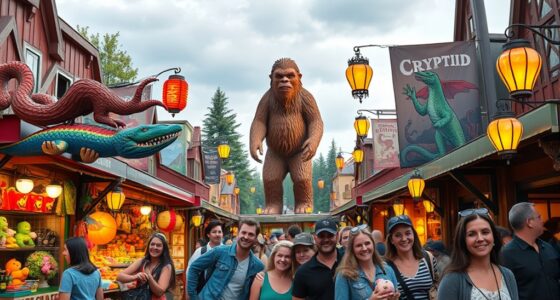
The monster meme shows how pop culture uses powerful visual symbols to influence beliefs and reflect societal issues. You see familiar images and motifs that evoke shared meanings, quickly communicating complex ideas like fear, chaos, or rejection. These visuals shape your perceptions by resonating emotionally and reflecting cultural tensions. As you explore further, you’ll discover how such memes not only mirror societal moods but also subtly guide collective beliefs and attitudes.
Key Takeaways
- Monster memes utilize cultural symbolism to evoke shared fears and societal tensions, shaping collective beliefs through visual shorthand.
- They employ rapid visual storytelling with exaggerated features to communicate complex ideas instantly.
- The evolution of monster memes reflects shifting societal attitudes, serving as social commentary and critique of norms.
- Decoding these memes enhances cultural literacy, influencing perceptions and reinforcing or challenging societal viewpoints.
- As a form of digital imagery, monster memes demonstrate pop culture’s role in shaping cultural narratives and collective beliefs.

The Monster Meme has taken social media by storm, capturing the imagination of audiences worldwide. Its viral spread isn’t just about funny images or clever captions; it’s about how this meme taps into deeper layers of cultural symbolism and visual storytelling. When you see the meme, you’re not just observing a monster; you’re witnessing a visual shorthand that communicates complex ideas about fears, societal norms, or even personal identity. This is the power of cultural symbolism embedded within the meme—familiar images or motifs that evoke shared meanings, allowing you to instantly connect with its message without needing lengthy explanations. The monster itself becomes a symbol, representing everything from anxiety and chaos to societal rejection or the unfamiliar, depending on the context in which it’s used. This symbolic language makes the meme more than just entertainment; it becomes a mirror reflecting collective beliefs and cultural tensions.
Through visual storytelling, the meme conveys its message with striking immediacy. Instead of lengthy narratives, it uses images, colors, and expressions to tell a story that you can interpret in seconds. This rapid communication plays a vital role in how pop culture influences your perceptions and beliefs. When you encounter variations of the monster meme, you’re engaging in a form of visual storytelling that shapes your understanding of current issues or social anxieties. It’s a powerful method because it bypasses language barriers and appeals directly to your emotions and subconscious associations. The visual elements—such as exaggerated features, colors, or contextual backgrounds—are carefully chosen to evoke specific reactions, reinforcing cultural attitudes or challenging them. Additionally, the evolution of these memes often reflects changing societal attitudes and collective emotional responses, shaping how groups perceive issues over time.
As you scroll through social media feeds, you’ll notice how these memes evolve and adapt, reflecting shifting cultural moods. They often serve as a form of social commentary, using visual storytelling to critique or satirize societal norms. By decoding the symbolism behind the monster, you’re engaging with a form of cultural literacy—understanding how images convey layered meanings. This process influences your beliefs by subtly reinforcing certain viewpoints or challenging others, depending on how the meme is framed. The interplay between cultural symbolism and visual storytelling in the monster meme illustrates how pop culture shapes societal perceptions. It’s almost like a visual language that you’re learning, one that guides your understanding of the world around you, often in ways you might not even realize. Ultimately, this meme exemplifies how digital imagery can serve as a powerful tool for cultural expression and influence.
Frequently Asked Questions
How Do Memes Influence Societal Perceptions of Monsters?
Memes influence societal perceptions of monsters by spreading viral images that shape how we see these creatures. When a meme gains popularity, it often blends humor and authenticity, making the monster seem more relatable or less threatening. You might find yourself accepting certain monster traits as real or humorous because of how widely the meme spreads. This viral spread and perceived meme authenticity can shift cultural beliefs about what monsters are or represent.
What Psychological Effects Do Monster Memes Have on Viewers?
Monster memes can evoke fear reinforcement, making you more anxious or wary of real-life threats. Simultaneously, they stimulate curiosity, encouraging you to explore the origins and meanings behind the images. This dual effect can deepen your emotional responses, shaping your perceptions of monsters and safety. You might find yourself more intrigued or cautious after viewing, as these memes tap into your subconscious fears while sparking a desire to learn more.
How Do Different Cultures Interpret Monster Imagery in Memes?
Imagine a mirror reflecting diverse worlds—cultural symbolism shapes how you see monster memes, each culture offering a unique lens. In some places, they symbolize chaos or evil, rooted in folklore reinterpretation, while elsewhere, they embody protection or wisdom. Your interpretation depends on shared stories, traditions, and history, turning each meme into a cultural tapestry that reveals deeper beliefs and values across societies.
Can Memes Change Long-Standing Beliefs About Mythical Creatures?
Yes, memes can influence long-standing beliefs about mythical creatures. By constantly sharing humorous or exaggerated depictions, you might reshape mythical narratives, making them seem more playful or less threatening. Over time, this reinforcement through popular culture can weaken traditional beliefs, leading you to see these creatures as mere entertainment rather than genuine myth. Memes therefore serve as a modern tool for belief reinforcement or challenge, impacting how you perceive mythical stories.
What Role Does Humor Play in Shaping Monster-Related Beliefs?
Humor acts as a mirror, reflecting and shaping your beliefs about monsters. Through comedic exaggeration and satire evolution, memes make mythical creatures seem more approachable or humorous, softening fears and encouraging curiosity. By making you laugh at these legends, humor subtly shifts your perception, blending fear and fascination. This playful tone can lead you to view monsters less as threats and more as cultural symbols, enriching your understanding through entertainment.
Conclusion
You see how the monster meme acts like a mirror reflecting our fears and hopes, shaping what we believe without us even realizing. Just like a shadow cast by a flickering streetlamp, pop culture influences your perceptions subtly yet powerfully. By understanding these memes, you can better recognize how media molds your worldview, making you more mindful of the stories you accept. Ultimately, these memes are like puppeteers pulling the strings behind your beliefs, shaping your reality one post at a time.