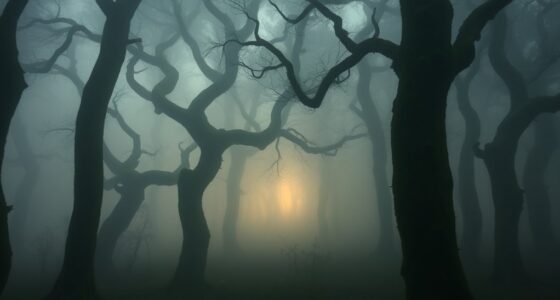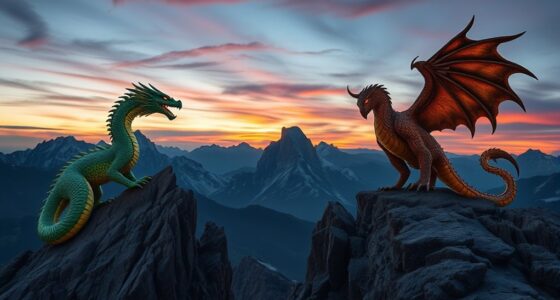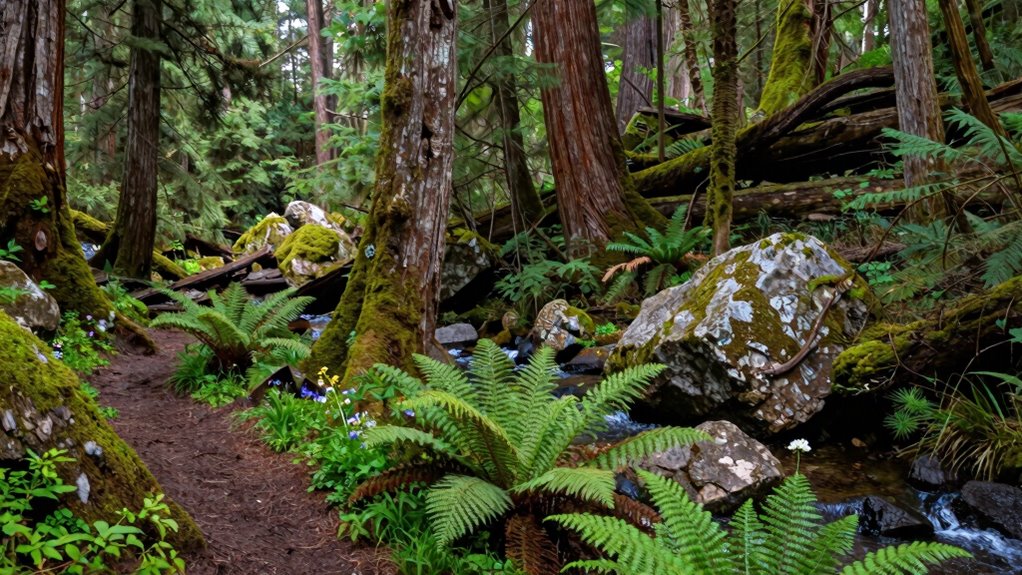

Yes, monster territories can overlap like animal habitats, but these conflicts are often more complex. Unlike animals, which tend to defend clear boundaries for survival, legendary creatures’ overlaps tend to symbolize power struggles, reputation, or spiritual influence. These clashes often lead to epic battles or alliances, reflecting societal values and fears. If you want to discover how these mythic conflicts shape stories and symbolism, keep exploring this fascinating topic.
Key Takeaways
- Mythical creature territories are often nebulous and vast, making overlaps possible and frequently depicted in folklore.
- Overlapping monster territories can lead to conflicts or alliances, similar to animal habitat interactions.
- Folklore portrays boundaries as sacred or fiercely defended, with overlaps causing epic battles or negotiations.
- Overlaps symbolize larger themes of chaos, order, and societal values, reflecting natural and moral struggles.
- Legends use territory conflicts to emphasize respect, strength, and the balance between different powerful beings.
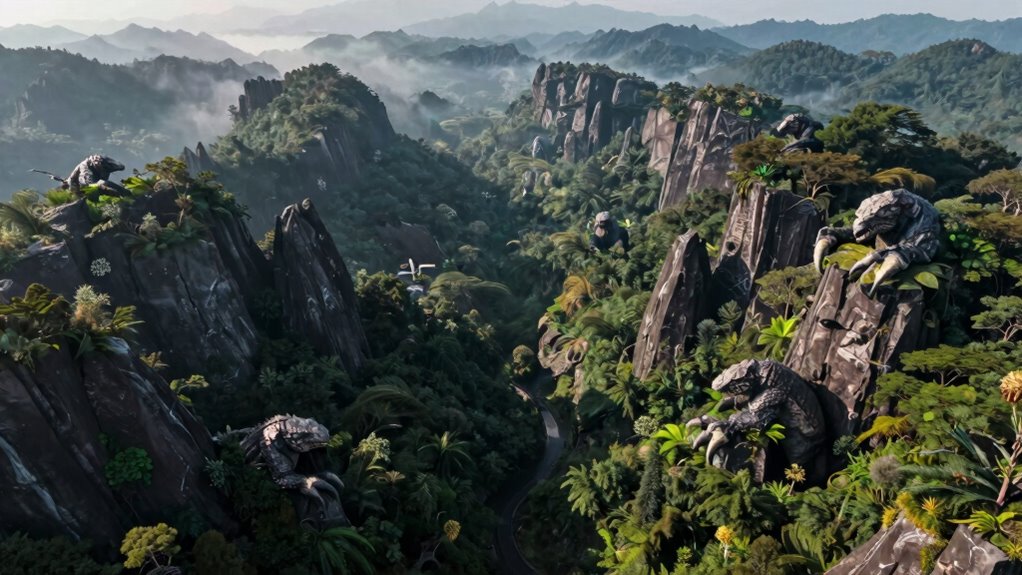
When monster territories overlap, conflicts become inevitable, forcing creatures to navigate shared spaces that can lead to battles for dominance or resources. Unlike animals with well-defined habitats, legendary creature myths often depict monsters that claim vast, nebulous territories, making overlaps more complex. These overlaps aren’t just about physical space—they’re about power, reputation, and survival, all shaped by folklore influence and ancient stories passed down through generations. As you consider these overlapping zones, it’s clear that they’re less like animal habitats and more like mythic battlegrounds where legends are born.
In many folklore traditions, monsters are depicted as territorial guardians, fiercely defending their domains from intruders. These stories are rooted in legend and myth, emphasizing the importance of boundaries and the consequences of crossing them. When these territories overlap, it often sparks conflicts that mirror legendary creature myths, where the stakes are high and the battles are epic. These tales serve as cautionary stories, warning others to respect the boundaries set by powerful beings—whether they’re dragons in European myths or sea serpents in Asian folklore. The folklore influence shapes how we see these overlaps: as arenas of chaos, where the clash of mythic creatures can reshape entire regions. Additionally, the cultural significance of these conflicts often reflects deeper societal values and fears.
You might imagine a world where such overlaps aren’t just conflicts but opportunities for alliances or rivalries. In some stories, creatures might share territory peacefully, negotiating boundaries based on strength or cunning, while others launch fierce battles to expand their influence. These narratives reflect ancient beliefs that territory isn’t just land but a manifestation of a creature’s spiritual power or essence, as seen in legendary creature myths. When two powerful entities collide, the resulting battle often becomes a story that explains natural phenomena or moral lessons, reinforcing cultural values about respect, strength, and the natural order. The idea of mythic symbolism plays a significant role in shaping how these conflicts are understood within cultural contexts. Furthermore, the interactions between monsters often mirror human societal interactions, highlighting themes of cooperation and conflict.
The folklore influence is evident in how these conflicts are sometimes depicted as tests of heroism or divine punishment. Overlapping territories can symbolize chaos that needs to be contained or controlled. You see this in stories where heroes venture into disputed regions, confronting monsters that threaten balance and harmony. These stories often serve to illustrate the importance of respecting boundaries and understanding the significance of territory beyond mere physical space. The mythic nature of these stories highlights that overlaps aren’t merely physical—they’re symbolic of larger struggles between order and chaos, civilization and wilderness. So, in a world where monster territories might overlap like animal habitats, the stories we tell serve as a reminder of the power, danger, and mystery that surround these legendary beings.

Liberty Imports 12 Pack Fantasy Creatures Figurines Set – Cute Plastic Fairy Animals & Mythical Toy Figures, Mini Unicorn Cake Toppers, Party Favors, Imaginative Play for Girls, Kids
FANTASY CREATURES SET: Discover 12 beautifully designed small plastic figurines, including unicorns, fairy animals, and mythical creatures toys…
As an affiliate, we earn on qualifying purchases.
As an affiliate, we earn on qualifying purchases.
Frequently Asked Questions
How Do Monster Territories Compare to Real Animal Habitats?
Monster territories, like animal habitats, can overlap, creating a tangled web of mythical creature domains. You might think of these spaces as territory myths, where boundaries blur and coexistence is common. Unlike real animals, mythical creatures often have flexible borders, allowing multiple species to inhabit the same area. This overlap adds to the mystery, making their territories more like legends than fixed zones, and highlighting the fluidity of their domains.
What Factors Influence Monster Territory Sizes?
You’ll find that factors like resource availability, monster size, and social behavior influence territory sizes. Territory boundaries are often shaped by food, water, and shelter, which can lead to territorial disputes if resources are scarce. Larger monsters typically claim bigger areas, while social monsters might share boundaries more often. Environmental features and rival interactions also play vital roles, making some territories more stable while others frequently overlap or shift.
Are Monster Territories Static or Change Over Time?
Monster territories are not static; they change over time due to mythical boundaries shifting and territorial disputes. You’ll find that as monsters compete, their boundaries expand or contract, reflecting resource availability or social dynamics. These fluctuations are dynamic, driven by environmental or supernatural factors. So, just like with animals, monster territories evolve, making their boundaries fluid rather than fixed, ensuring ongoing conflicts and adaptations within their habitats.
Can Multiple Monsters Coexist Peacefully in Overlapping Territories?
Multiple monsters can coexist peacefully in overlapping territories if they manage their Monster rivalry and avoid conflict. They often establish boundaries through scent marking or vocal signals, aiding in territory defense. When monsters recognize each other’s presence and boundaries, they reduce aggressive encounters. Peaceful coexistence depends on mutual respect, communication, and understanding, allowing monsters to share resources without unnecessary conflict. This balance benefits all involved and maintains harmony within their overlapping territories.
How Do Monster Territories Impact Their Ecosystems?
Monster territories greatly impact their ecosystems by shaping interactions and resource distribution. You’ll notice they use monster communication to signal boundaries and reduce conflicts. When defending their territory, monsters employ strategic defense tactics, like patrols or illusions, to deter intruders. These behaviors help balance ecosystems, ensuring resources aren’t overexploited and fostering diverse habitats where different monsters can coexist or compete, maintaining overall ecological stability.

Schleich Eldrador Creatures – 8" Stone Monster Toy with Crystal Set – Cool Movable Monster Action Figure for Boys and Girls – Fantasy Giant Rock Beast Figurine – Fun Scary Toys – Kids Ages 7+ | 70141
REMOVABLE CRYSTAL HIS IN HAND, POWER IN HIS GRASP – Armed with his powerful gem, the stone golem…
As an affiliate, we earn on qualifying purchases.
As an affiliate, we earn on qualifying purchases.
Conclusion
Imagine walking through a dense forest where two animal territories blend seamlessly, each claiming their space yet sharing the same ground. Just like these animals, monster territories could overlap, creating a complex landscape of coexistence and conflict. Studies show that many real-world habitats do merge, hinting that monsters might do the same. So, next time you picture a lone creature, remember, even the fiercest can share their space, weaving a tangled web of life and territory.

Schleich Eldrador – Lava Snail Figurine – Monster Animal Toys for Boys and Girls – Beast Creature Figures for Ages 7+ | 70851
REALISTIC DETAILS TURN MONSTERS INTO LEGENDS – Beasts so realistic you might think they're alive! Renowned worldwide for…
As an affiliate, we earn on qualifying purchases.
As an affiliate, we earn on qualifying purchases.

Pantheum: Demigods of Olympia Board Game | Greek Mythology Strategy Game for 1–4 Players | Ages 12+ | 45–60 Min Playtime | Great Board Games for Family Night | Base Game
Strategic Greek Mythology Gameplay for Modern Players: Pantheum board game offers a rich, strategic experience inspired by legendary…
As an affiliate, we earn on qualifying purchases.
As an affiliate, we earn on qualifying purchases.