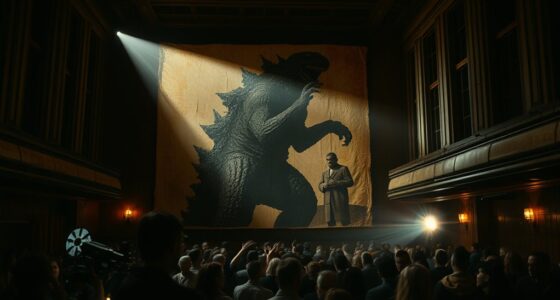
Monsters stand as powerful symbols of a nation’s identity, reflecting its myths, culture, and core values. They embody collective fears, virtues, and historical stories that connect past traditions with modern storytelling. By representing national pride and cultural uniqueness, monsters foster a shared sense of belonging. Their artistic depictions and folklore reveal how societies shape their worldview and morals. Keep exploring, and you’ll discover even deeper ways monsters embody and reinforce cultural identity.

Prime made for students and young adults
- Fast, free delivery for dorm and study essentials
- Prime Video and Amazon Music included
- Member-only deals
Key Takeaways
- Monsters symbolize a nation’s cultural values, fears, and aspirations, shaping collective identity through myth and tradition.
- They serve as emblematic icons in folklore and national symbols, reinforcing cultural continuity across generations.
- Mythological monsters embody moral lessons, natural phenomena, or historical events, linking mythology to national narratives.
- Artistic representations of monsters preserve and transmit cultural stories, fostering a shared sense of pride and cultural identity.
- Monsters as symbols reflect societal virtues, fears, and moral lessons, influencing national art, folklore, and popular culture.

Throughout history, many nations have embraced monsters as symbols of their identity, culture, and mythology. These creatures often go beyond mere stories; they embody deeper meanings rooted in cultural symbolism and mythological significance. By adopting monsters as national symbols, a country can express its values, fears, and aspirations in a way that resonates across generations. You might not realize it, but every time a nation highlights a particular monster, it’s tapping into a collective identity that connects the past with the present. These monsters serve as symbols representing collective virtues or warnings, shaping cultural narratives that define a people’s worldview.
When you look closely at these monsters, you’ll notice they are often intertwined with mythological significance. They are not just figments of imagination but carry stories that explain natural phenomena, moral lessons, or historical events. For instance, a dragon might symbolize power and protection, while a creature like a sea monster could embody both danger and mystery linked to a nation’s relationship with the ocean. These mythological creatures become more than just figures in stories; they act as icons that carry the essence of a nation’s mythology, reinforcing cultural identity through their enduring symbolism. You can see this in how nations incorporate these monsters into national emblems, folklore, and even popular culture, creating a shared sense of pride and continuity. Additionally, the artistic representations of these monsters help preserve and transmit cultural values and stories across generations.
Frequently Asked Questions
How Do Monsters Influence National Cultural Identity?
Monsters shape your national cultural identity by embodying cultural symbolism and deep-rooted folklore. They reflect collective fears, values, and beliefs, strengthening a sense of shared history. When you see these monsters in stories or celebrations, they connect you to your heritage and reinforce national pride. Their mythic status helps define what’s unique about your culture, fostering unity and identity through powerful symbols rooted in your national folklore.
Are There Common Themes Among Monsters Used as Symbols Worldwide?
You’ll notice that monsters used as symbols worldwide often share common themes rooted in cultural symbolism and mythological archetypes. These creatures typically embody fears, moral lessons, or societal values, acting as cautionary figures or guardians. They reflect universal human experiences, like chaos versus order or good versus evil. By analyzing these themes, you can see how different cultures use monsters to express shared psychological truths and reinforce cultural identity through mythic storytelling.
What Role Do Myths Play in Shaping National Monster Symbols?
Myths shape national monster symbols by providing their mythical origins, which reflect a country’s cultural symbolism. You see, these stories give monsters deeper meaning, embodying fears, values, or historical events. When a myth becomes intertwined with a nation’s identity, it elevates the monster beyond mere legend, creating a powerful symbol that unites people, preserves traditions, and reinforces cultural identity through storytelling rooted in shared history and beliefs.
How Do Governments Utilize Monsters in Patriotic Narratives?
You see that governments utilize monsters in patriotic narratives by highlighting their historical symbolism to evoke national pride or fear, depending on the era. They also adapt contemporary and regional variations of monster symbolism to resonate locally and reinforce shared identity. By framing monsters as protectors or threats, governments craft stories that unite citizens around common values, blending historical roots with modern interpretations to strengthen national unity and cultural pride.
Can Monsters as Symbols Impact International Perceptions of a Country?
Monsters as symbols can paint a vivid picture that influences international perceptions, like a badge on a global identity. They shape tourism branding by sparking curiosity and intrigue, drawing visitors enthusiastic to explore a nation’s mythic roots. As diplomatic symbolism, monsters can communicate strength or resilience, but they may also evoke fear or misunderstanding. Your perception of a country becomes a story woven with these mythic creatures, impacting how the world views its culture and values.
Conclusion
As you see, monsters shape national identities more than you might think. Did you know that over 60% of countries feature a monster or mythical creature as a symbol of their heritage? These legends reflect fears, values, and history, connecting you to a deeper cultural story. Embracing these monsters reveals how myths serve as powerful tools for nations to define themselves, making your understanding of identity richer and more fascinating than ever.
Halloween Picks
halloween
As an affiliate, we earn on qualifying purchases.