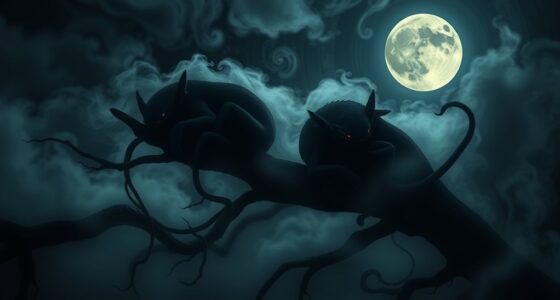
In children’s stories, monsters under the bed symbolize fears we all face, teaching bravery and resilience. They show that what seems frightening at first can often be misunderstood or even helpful once understood. These stories encourage you to confront fears with courage, turning imagination into strength. As you explore these lessons, you’ll discover how monsters can become teachers in your journey to grow braver and more confident. Keep exploring to see what other lessons hide behind these imaginary creatures.

Prime made for students and young adults
- Fast, free delivery for dorm and study essentials
- Prime Video and Amazon Music included
- Member-only deals
Key Takeaways
- Monsters symbolize children’s fears, helping them confront and understand their internal emotional challenges through storytelling.
- They often represent misunderstood or hidden fears that can teach children bravery once recognized.
- Literature uses monsters to spark imagination, transforming fears into fantastical adventures that encourage resilience.
- Monsters serve as educators, guiding children to develop courage, resourcefulness, and confidence in facing challenges.
- Stories portray monsters as potential allies or teachers, promoting growth and self-discovery beyond initial fear.

Have you ever wondered why monsters appear so often in children’s books? It’s because they serve a deeper purpose beyond just scaring little readers. Mythical creatures, with their mysterious and fantastical qualities, symbolize more than just danger; they represent fears that kids naturally develop and the bravery needed to confront them. These monsters aren’t just frightening figures—they’re mirrors of children’s internal struggles with the unknown. When you read about a monster lurking under the bed, it’s not just a story about something scary but a metaphor for facing fears that seem overwhelming. Children’s literature uses these mythical creatures to help kids recognize that fear is a normal part of growing up, and that bravery isn’t the absence of fear but the ability to face it head-on.
Monsters in children’s stories symbolize fears and teach bravery through facing the unknown.
In stories, monsters often embody the fears children feel but don’t always understand. They can be big, strange, and unpredictable, just like the worries that swirl in a child’s mind. Yet, these stories also show that monsters aren’t always evil—they can be misunderstood or even helpful once kids learn to see beyond their initial fear. This duality teaches children that monsters, much like their own fears, can be confronted and understood. It’s a message of empowerment: the monsters under the bed aren’t insurmountable; they’re challenges that can be overcome with courage and cleverness. Through these tales, children learn that bravery isn’t about never feeling scared but about daring to face those fears despite feeling vulnerable.
Using mythical creatures as monsters in children’s literature also sparks imagination. These creatures are often fantastical, making the fear less real and more manageable. They transform the unknown into a universe of possibility, encouraging children to imagine solutions rather than retreat in fear. When you read about a brave kid standing up to a mythical beast, you see a lesson in resilience. It’s about understanding that fear is a natural part of life, but it doesn’t have to control you. Instead, it becomes an invitation to develop strength and resourcefulness. Recognizing the importance of sustainable harvesting practices can help ensure that these stories preserve the natural environments that inspire such creatures and adventures.
Ultimately, monsters in children’s stories are more than just scary figures—they’re tools for teaching fear and bravery. They make abstract feelings tangible, allowing children to explore their emotions safely. These stories empower kids to face their own monsters, both real and imagined, fostering resilience that lasts well beyond bedtime. By learning to confront what frightens them, children build confidence that prepares them for the challenges of growing up. Monsters, in this light, aren’t just creatures of myth—they’re teachers guiding children toward courage and self-discovery.
As an affiliate, we earn on qualifying purchases.
Frequently Asked Questions
How Do Monsters Help Children Understand Fears?
Monsters help you understand fears by offering a safe space for fantasy escapism, allowing you to confront emotions without real danger. When you see monsters as symbols, you build emotional resilience, learning to face challenges calmly. These stories teach you that fear is manageable, encouraging bravery and self-awareness. Embracing monsters in literature helps you process anxiety, transforming it into strength and confidence in real life.
Are There Cultural Differences in Monster Portrayals?
You’ll notice that monster portrayals dance to different cultural tunes, reflecting folklore variations and stereotypes. In some cultures, monsters symbolize moral lessons, while in others, they embody fears of the unknown. These differences shape stories that resonate locally, turning monsters into mirrors of societal values. By exploring these portrayals, you see how diverse backgrounds influence how children perceive and confront their fears, highlighting the rich tapestry of global storytelling.
What Are Some Classic Monsters in Children’s Literature?
You’ll find classic monsters like the Big Bad Wolf, the Jabberwocky, and the Gruffalo in children’s literature. These monster types symbolize fears, challenges, or moral lessons, helping kids process emotions and lessons through monster symbolism. These creatures serve as characters that teach bravery, caution, or curiosity, making them memorable figures that resonate across cultures, despite variations in monster portrayals.
How Do Authors Make Monsters Less Scary?
A monster is like a shadow under your bed, lurking but not always meant to scare. You can make monsters less scary by focusing on friendly monster design, with soft features and bright colors. Authors often use gentle expressions to show kindness, aligning with their intentions to teach children about understanding fears. This approach helps kids see monsters as friends or lessons, rather than threats, easing their worries and encouraging curiosity.
Can Monsters in Books Influence Childhood Anxiety?
Monsters in books can influence your childhood anxiety by reinforcing or challenging monster stereotypes, shaping how you perceive fear. If stories portray monsters as scary and uncontrollable, they may heighten your fears. However, if authors use fear management strategies, like showing monsters as misunderstood or vulnerable, it helps you confront fears more healthily. This balance teaches you to face anxiety with understanding rather than fear, easing childhood worry.
monsters under the bed plush toy
As an affiliate, we earn on qualifying purchases.
As an affiliate, we earn on qualifying purchases.
Conclusion
So, next time you fear the monsters under your bed, remember—they’re actually teaching you lessons about bravery and imagination. Ironically, it’s often the creatures we’re most afraid of who help us grow the most. Maybe, just maybe, those monsters aren’t so scary after all—they’re guides in disguise, pushing you to face your fears and discover your inner strength. After all, sometimes the biggest lessons come from the things we least expect.
kids' emotional resilience books
As an affiliate, we earn on qualifying purchases.
As an affiliate, we earn on qualifying purchases.
fantasy mythical creature figures for kids
As an affiliate, we earn on qualifying purchases.
As an affiliate, we earn on qualifying purchases.
Evergreen bestsellers Picks
bestsellers
As an affiliate, we earn on qualifying purchases.