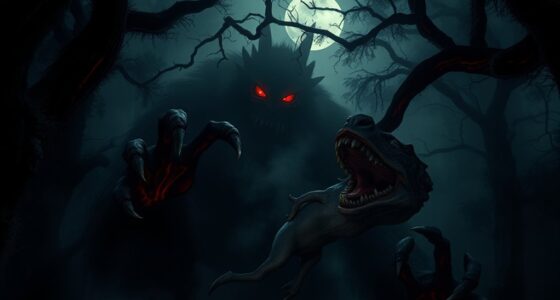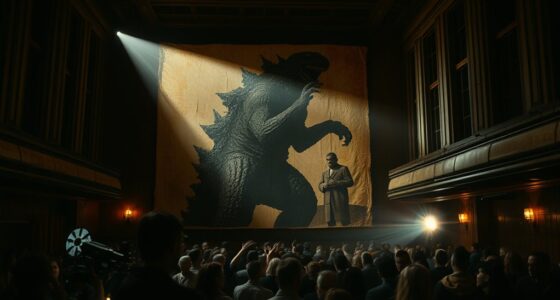
Monsters in Christmas traditions often symbolize the balance between fear and festivity, acting as symbols of obstacles to be overcome or lessons to be learned. They help communities tell stories that reinforce moral values, like kindness, bravery, and generosity. Monsters can be playful or mischievous figures, adding excitement and deepening the holiday spirit. If you continue exploring, you’ll uncover how these creatures shape cultural stories and strengthen community bonds during festive times.
Key Takeaways
- Monsters symbolize the boundary between the known and unknown, adding mystery and excitement to Christmas stories.
- They serve as cautionary figures to teach children moral lessons about behavior and kindness.
- Monsters are integrated into holiday decorations and costumes, blending fear with festivity to foster community spirit.
- They represent obstacles to harmony or good fortune, embodying both danger and mischievous fun in Christmas folklore.
- Monsters reinforce cultural values and morals, helping communities pass down traditions through storytelling and shared celebrations.
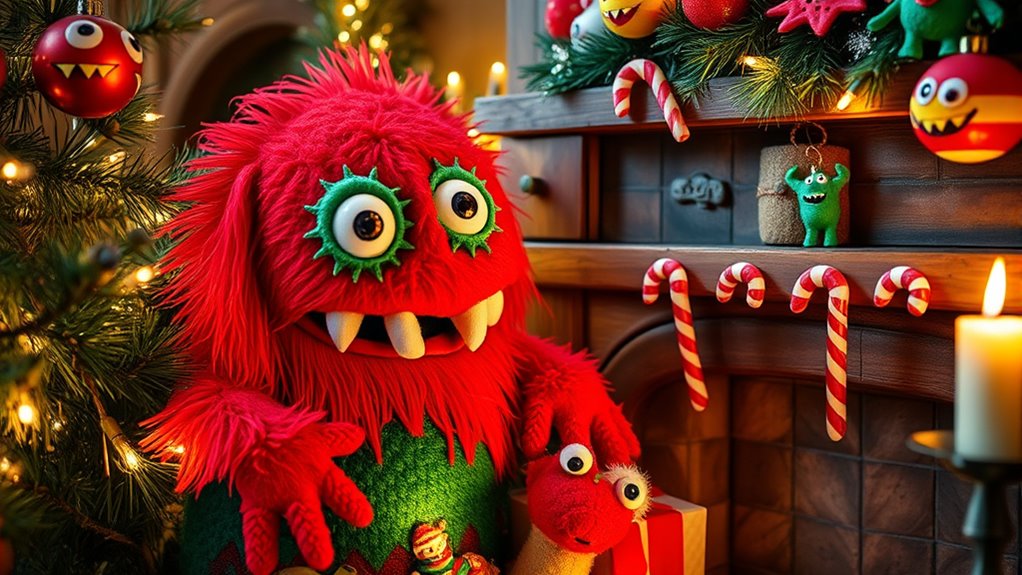
Monsters may seem like figures of fear, but in many Christmas traditions, they play a surprising role in shaping holiday stories and customs. Their symbolism often reflects deeper cultural values, fears, or lessons embedded in holiday folklore. Instead of simply embodying evil or chaos, monsters can represent the boundary between the known and the unknown, serving as a reminder of the importance of kindness, bravery, or community during the festive season.
Monsters symbolize the unknown and teach kindness, bravery, and community during the holiday season.
In holiday folklore, monsters often symbolize the obstacles that must be overcome to achieve good fortune or harmony. For example, some Christmas tales feature monstrous characters as part of moral lessons, where children learn to face their fears or behave well in anticipation of rewards. These monsters are not just frightening; they embody the chaos that needs to be tamed or transformed by festive virtues. By confronting these symbols, communities reinforce the values of resilience, generosity, and compassion, which are central to many holiday traditions.
Furthermore, the integration of monsters into Christmas stories highlights the complex nature of holiday symbolism. In some traditions, monsters serve as cautionary figures, warning against greed, selfishness, or disrespect. Their presence in holiday folklore acts as a reminder that good behavior is essential for a joyful celebration. Conversely, in other stories, monsters can be playful or mischievous, adding humor and excitement to seasonal festivities. This duality reveals how monsters are versatile symbols, capable of embodying both danger and merriment, depending on the cultural context.
You might also notice that in various holiday customs, monsters are incorporated into decorations, costumes, or storytelling. These representations often combine traditional monster imagery with holiday themes, creating a bridge between fear and festivity. For instance, some communities include friendly monster figures in parades or nativity scenes, subtly blending the ominous with the joyful. This fusion enriches holiday folklore by illustrating how societies reinterpret frightening symbols to foster community spirit and shared history.
Additionally, understanding symbolic representations of monsters can help us see how these figures serve to reinforce cultural morals and social cohesion during festive times. Ultimately, monsters in Christmas traditions serve to deepen the symbolism of the season. They remind us that confronting our fears can lead to growth, and that even the most intimidating figures have a place in the stories that bring us together. By understanding their role in holiday folklore, you see how these creatures influence not just stories, but the very way communities celebrate and pass down their values through generations.
Frequently Asked Questions
How Did Monsters Become Part of Christmas Folklore?
You might not realize it, but monsters became part of Christmas folklore through their mythical origins and cultural symbolism. They often represent the darker side of human nature or serve as cautionary figures. Over time, communities integrated these mythical creatures into holiday stories to teach lessons or add excitement. Their presence helps symbolize the duality of good and evil, making festive traditions more engaging and meaningful across different cultures.
Are Monsters Portrayed as Villains or Helpers in Christmas Stories?
In Christmas stories, monsters are usually portrayed as villains, embodying chaos or mischief in holiday folklore. You might see them as obstacles that heroes must overcome, symbolizing disorder that needs to be tamed. While most monster symbolism aligns with villainy, some tales feature monsters as helpers, offering comic relief or unexpected aid. This dual portrayal adds depth and humor to holiday folklore, making monsters versatile characters in festive narratives.
Do Different Cultures Have Unique Monster Traditions for Christmas?
Have you ever wondered if different cultures have unique monster traditions for Christmas? They definitely do! You’ll find that cultural myths and folklore origins shape these customs, like Krampus in Austria, who punishes naughty children, or La Bafana in Italy, a witch-like figure delivering gifts. These traditions reflect local stories and beliefs, making Christmas celebrations richer and more diverse worldwide. Isn’t it fascinating how monsters add depth to holiday lore?
What Are Some Popular Monsters Featured in Christmas Celebrations Worldwide?
You’ll find Christmas monsters like Krampus in Austria, who’s known for punishing naughty kids, and Belsnickel in Germany, a mischievous figure with a whip. In some cultures, Santa’s helpers take on monster-like traits, helping deliver gifts or warning children. These Christmas monsters add excitement and teach lessons, making holiday traditions more engaging. Their roles vary worldwide, but they all bring a sense of magic and mischief to the season.
How Do Monsters Influence Children’s Perceptions of Christmas?
You might find that monster symbolism influences your children’s perceptions of Christmas by blending excitement with childhood fears. Monsters can represent the unknown or mischievous elements, making holiday stories more thrilling. While some kids see monsters as part of festive fun, others may feel uneasy. Understanding these childhood fears helps you reassure them, turning monster symbolism into a playful, memorable part of Christmas that fosters imagination without causing anxiety.
Conclusion
You might be surprised to learn that over 60% of Christmas traditions worldwide include some form of mythical creature or monster. These figures, like Krampus or the Yule Goat, add excitement and mystery to the holiday season. Monsters remind us that Christmas isn’t just about cheer; it’s about embracing the wild, the strange, and the unexpected. So, next time you see a spooky figure, remember, they’ve been part of making Christmas more magical and memorable for centuries.