In video games, monsters inspired by myths transform ancient legends into exciting digital adventures. You’ll encounter creatures that embody themes of power, danger, and mystery, making your experience immersive and meaningful. Developers blend traditional lore with innovative design, creating creatures that feel both familiar and fresh. These myth-inspired monsters deepen cultural stories, evoke strong emotions, and add rich symbolism to game worlds. If you keep exploring, you’ll discover how these legendary creatures shape modern storytelling.
Key Takeaways
- Digital media transforms ancient myths into interactive experiences, making mythical monsters engaging and accessible for modern players.
- Video games blend traditional lore with innovative mechanics, reimagining monsters while preserving cultural symbolism.
- Mythical creatures in games deepen storytelling, offering symbolic meanings that connect players to cultural and historical narratives.
- Reinvented monsters evoke emotional responses, creating immersive worlds that honor and modernize mythological traditions.
- Game design incorporates myth-inspired monsters to challenge players strategically, reinforcing the enduring relevance of ancient legends.

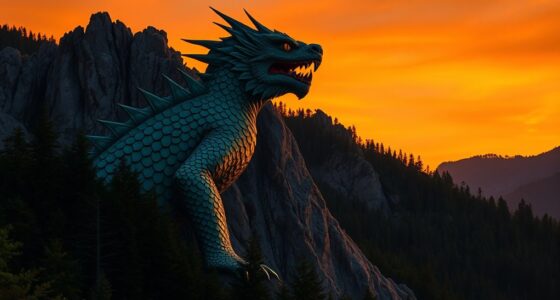
Have you ever wondered why monsters are such a staple in video games? It’s because they tap into our deepest fears and fascinations, transforming ancient myths into interactive experiences. Mythical creatures, with their rich histories and symbolic meanings, provide game designers with a treasure trove of inspiration. When you encounter a dragon, a phoenix, or a griffin in a game, you’re engaging with a creature rooted in centuries of storytelling, but reimagined for modern digital media. These mythical beings serve as more than just enemies; they embody themes of power, danger, and mystery, making your journey more immersive and meaningful. Game design leverages these creatures not only for their visual appeal but also to evoke specific emotions, challenge players, and build worlds that feel both fantastical and believable.
Monsters in games tap into myths, embodying power and mystery to deepen immersion and storytelling.
In designing monsters based on mythical creatures, game developers often blend traditional lore with innovative mechanics. For example, a game might depict a hydra that regenerates heads when attacked, adding a strategic layer to combat. These creatures often symbolize something larger—a guardian, a curse, or a divine test—so their inclusion influences the story and gameplay experience. By creatively adapting these myths, designers can craft monsters that feel familiar yet fresh, giving players a sense of discovery and respect for the mythological roots. The process involves balancing lore accuracy with gameplay needs, ensuring that mythical creatures enhance the narrative without becoming cumbersome or overly complex.
Furthermore, incorporating mythical creatures allows game designers to explore cultural symbolism and storytelling traditions. When you face a kitsune or a chimaera, you’re not just battling a monster; you’re engaging with stories that have traveled through time and across cultures. These creatures often carry layered meanings, and their design can reflect cultural motifs that resonate on a deeper level. This adds depth to the game world, making encounters richer and more authentic. It also provides an educational aspect—players learn about different mythologies while engaging in the game. Good game design recognizes this potential, using mythical creatures to create a sense of wonder, challenge, and cultural appreciation.
Ultimately, the use of mythical creatures in video games isn’t just about creating monsters; it’s about weaving myth into the fabric of interactive storytelling. These beings serve as bridges between ancient legend and modern entertainment, allowing you to experience myths in a way that’s engaging and visceral. Through thoughtful game design, developers reinvent these myths, making them relevant and exciting for new generations of players. So next time you face a mythical beast in a game, remember—you’re part of a long tradition of storytelling, reimagined through the lens of digital media. Additionally, the incorporation of mythological symbolism helps deepen players’ understanding of diverse cultures and their stories.
Frequently Asked Questions
How Do Game Developers Choose Which Myths to Adapt Into Monsters?
You choose monsters based on myth selection and developer inspiration, focusing on myths that resonate with your game’s theme or challenge players. You consider the myth’s cultural significance, uniqueness, and how it can be transformed into engaging gameplay. By blending traditional stories with your creative vision, you craft monsters that feel authentic yet fresh, enthralling players and breathing new life into ancient myths through your game design.
What Cultural Influences Shape Monster Designs in Video Games?
You’re on the right track when recognizing that folk traditions and pop culture heavily influence monster designs. These elements act as a melting pot, blending ancient legends with modern trends to create creatures that resonate with players. Developers draw from cultural symbols, stories, and aesthetics, making monsters feel both familiar and fresh. This cultural fusion guarantees that each game’s monsters reflect diverse influences, turning myth into a visual feast that captivates a global audience.
Are There Ethical Concerns in Depicting Mythological Creatures Digitally?
Yes, there are ethical concerns when depicting mythological creatures digitally. You need to consider cultural sensitivity to avoid stereotypes or misrepresentations that could offend communities. Aim for an ethical portrayal by respecting the origins and significance of these creatures, ensuring your designs honor their cultural roots. By doing so, you promote respectful storytelling and prevent perpetuating misconceptions, making your game more inclusive and culturally aware.
How Do Monsters Evolve With Advancements in Gaming Technology?
Imagine stepping into a virtual reality where monsters evolve seamlessly with your actions. As gaming technology advances, monsters become more realistic through procedural generation, adapting their behaviors and appearances in real-time. You’re no longer confined to static designs; instead, each encounter feels unique. This evolution allows creators to craft complex, dynamic monsters, pushing the boundaries of immersion and storytelling, making every gaming experience more engaging and personalized.
Can Monster Designs in Games Influence Public Perception of Myths?
Your experience with monster designs in games can shape how you perceive myths, but they may also influence public views if they lack myth accuracy and cultural sensitivity. When creators prioritize authentic representations, you’re more likely to develop a respectful understanding of different cultures. However, exaggerated or stereotypical designs can distort myths, leading to misconceptions. So, your perception is directly affected by how well games balance creative design with cultural respect.
Conclusion
As you explore the world of video games, you’ll see how monsters breathe new life into ancient myths, turning legends into immersive experiences. These digital creatures might be fictional, but they remind you that every story has a way of evolving with time. By embracing these monsters, you’re not just playing a game—you’re stepping into a myth’s shoes. After all, if you want to make a splash, you’ve got to think outside the box.