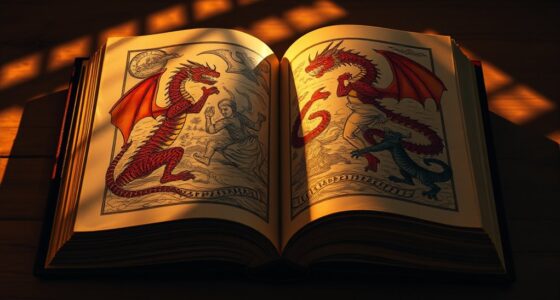
Monsters often symbolize a nation’s identity, reflecting deep-rooted fears, values, and history. They serve as cultural icons influenced by folklore, representing virtues like strength or cautionary tales that embody societal lessons. These figures connect past traditions with modern life, evolving into symbols of pride or resilience. By understanding how monsters embody myth and culture, you’ll discover the powerful roles they play in shaping national stories and identities. Keep exploring to uncover more about these fascinating symbols.
Key Takeaways
- Monsters embody cultural myths and folklore, reflecting a nation’s identity, fears, and societal values across generations.
- They symbolize resilience, power, or societal warnings, reinforcing cultural pride and shared history.
- Monsters evolve from traditional symbols to modern icons, maintaining cultural relevance and national pride.
- They serve as living symbols connecting historical myths to contemporary cultural narratives.
- Mythology and folklore surrounding monsters help shape collective identity and foster cultural continuity.

Many nations embrace monsters as powerful symbols that reflect their cultural identity and history. These creatures often stem from folklore influence, where stories passed down through generations shape the collective consciousness. When you look at a country’s monster, you’re seeing more than just a myth; you’re witnessing a cultural symbolism that encapsulates fears, values, and societal lessons. For example, in Japan, the kitsune—a fox spirit—embodies cunning and mystique, representing both myth and moral lessons rooted deeply in folklore influence. Similarly, in Ireland, the leprechaun symbolizes luck and trickery, serving as a cultural symbol woven into the island’s rich storytelling tradition. These monsters are more than mere stories—they are symbols that carry meaning, connecting people with their history and shared beliefs.
As you explore different nations, you’ll find that monsters often serve as a reflection of the societal values or anxieties of a particular time. In some cultures, monsters symbolize chaos or danger, acting as cautionary figures that warn against societal taboos or natural dangers. In others, they embody resilience or the ability to overcome adversity. For instance, the dragon in Chinese mythology is a symbol of power, strength, and good fortune, representing cultural symbolism that underscores the importance of harmony and balance. These monsters, born from folklore influence, become emblematic of national identity, often used in festivals, art, and storytelling to reinforce cultural pride. They serve as a bridge between the past and present, illustrating how history, myth, and societal values intertwine. Additionally, modern adaptations of these monsters demonstrate how AI safety measures are essential in safeguarding cultural heritage as these symbols evolve and are integrated into contemporary media.
You might also notice how monsters are adopted into modern symbolism, where they continue to evolve and serve new purposes. In some countries, they become mascots or emblems that evoke national pride or resilience. Their stories are adapted, and their symbolism is reinterpreted to fit contemporary narratives. This ongoing evolution highlights how deeply embedded monsters are in a nation’s cultural fabric, acting as living symbols that keep history alive. Whether as protectors, tricksters, or warnings, these monsters embody complex cultural symbolism rooted in folklore influence that continues to resonate today. They remind you of the power of myth to shape identity, forging a shared sense of history that transcends generations. In essence, monsters are more than myths—they are living symbols of a nation’s soul, crafted from stories, fears, and values that define its cultural landscape.
Top picks for "monster national symbol"
Open Amazon search results for this keyword.
As an affiliate, we earn on qualifying purchases.
Frequently Asked Questions
How Do Monsters Influence National Identity Beyond Symbolism?
You see that monsters in folklore do more than symbolize nations; they shape cultural resilience by connecting communities through shared stories and values. By confronting these myths, you reinforce national identity, passing traditions across generations. Monsters challenge you to reflect on your history, fears, and aspirations, strengthening your sense of belonging. This ongoing storytelling keeps your culture alive and adaptable, demonstrating how monsters influence national identity far beyond mere symbolism.
Are There Common Themes Linking Monsters Across Different Cultures?
Think of monsters as universal mirrors reflecting human fears and values. Across cultures, common themes emerge, like the mythical archetypes of chaos, danger, and the unknown. These creatures symbolize cultural symbolism, embodying societal anxieties or moral lessons. You’ll find that despite differences, monsters serve as shared symbols of what societies seek to understand or control, revealing a collective psyche that transcends borders and unites diverse traditions through shared fears and aspirations.
How Do Governments Utilize Monsters for Cultural Diplomacy?
Governments leverage monsters in public diplomacy by using them as tools for cultural branding, showcasing unique national identities. You might see countries promoting mythical creatures or legendary monsters at international events, fostering curiosity and positive perceptions. This strategy helps connect audiences emotionally, making cultural exchange more engaging. By highlighting these monsters, governments create memorable symbols that enhance their global image and encourage cross-cultural understanding and cooperation.
What Role Do Monsters Play in Shaping Modern National Narratives?
Monsters shape your modern national narratives by embodying mythical heritage and reinforcing cultural preservation. They serve as powerful symbols that connect your identity to historical legends and folklore, fostering pride and unity. Through stories, festivals, and media, you see monsters helping your nation celebrate its unique mythic traditions, ensuring these cultural elements endure. They remind you of your roots while also adapting to contemporary stories, keeping your national identity vibrant and dynamic.
Can Monsters as Symbols Impact International Perceptions of a Country?
Monsters as symbols can notably sway international perceptions by sparking curiosity or concern. You might notice how mythical diplomacy uses these creatures to craft cultural branding, shaping a country’s image abroad. When countries showcase monsters rooted in local legends, it creates a compelling, authentic allure. This strategic storytelling influences global opinions, turning mythical monsters into memorable ambassadors that foster fascination, friendship, or even fear, ultimately impacting how nations are viewed on the world stage.
Conclusion
So, as you see, monsters aren’t just spooky legends—they embody your nation’s identity and myths, shaping how you see yourself. Like a QR code linking past and present, these creatures connect history, culture, and collective fears into a powerful symbol. Today, they’re more than just monsters; they’re your nation’s avatar, reminding you that myths, even from the age of the dinosaurs, still influence who you are. Embrace the legend; it’s part of your story.