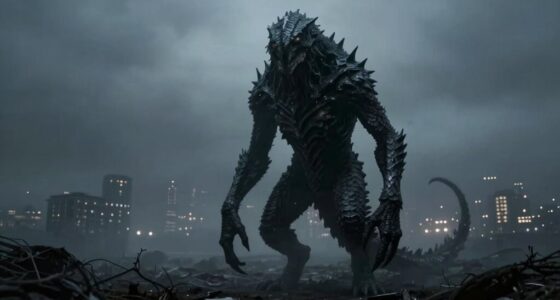
If you’re ranking mythical creatures by fear factor, dragons often top the list with their chaos, fire, and imposing size that evoke primal dread. Vampires come close, symbolizing fear of death, disease, and helplessness, while werewolves evoke terror through their savage transformations and loss of control. These beings embody timeless fears of chaos, mortality, and the beast within. To discover how these creatures compare and what makes each terrifying, keep exploring their dark histories and cultural roots.

Prime made for students and young adults
- Fast, free delivery for dorm and study essentials
- Prime Video and Amazon Music included
- Member-only deals
Key Takeaways
- Dragons evoke primal chaos and destructive power, positioning them as some of the most fearsome creatures in mythology.
- Vampires symbolize fears of death, disease, and helplessness, making them universally terrifying across cultures.
- Werewolves embody primal rage and loss of control, representing the horror of losing human rationality.
- The fear factor varies with modern portrayals, often softening or romanticizing these creatures, but core fears persist.
- Cultural history and symbolism influence rankings, with ancient legends emphasizing primal fears and modern interpretations adding complexity.

Throughout history, mythical creatures have both fascinated and terrified us, often embodying our deepest fears and cultural anxieties. These beings, rooted in ancient legends and passed down through generations, continue to evoke strong emotional responses. Their fear factor isn’t just about their appearance; it’s about what they represent—unknown dangers, moral lessons, or mankind’s darker instincts. As you explore these creatures, you’ll notice how their depictions have evolved from ancient legends to modern interpretations, shaping our perception of what’s truly terrifying.
Take the dragon, for instance. In ancient legends, dragons symbolize chaos and destructive power, often guarding treasure or ancient secrets. Their fiery breath and imposing size inspire awe but also dread. Today, modern interpretations have softened some of these fears, transforming dragons into more heroic or fantastical figures. Yet, the core image of a formidable beast remains, reminding us of primal fears—being overpowered or consumed by chaos. The dragon’s fear factor lies in its embodiment of uncontrollable destruction, a force that threatens both worlds and individuals alike.
Then there’s the vampire, a creature that has haunted folklore for centuries. Originating from ancient legends, vampires symbolize fear of death, disease, and the unknown. They prey on human vulnerability, feeding on life force and instilling terror through their immortality and predatory nature. Modern interpretations have shifted from sinister monsters to seductive antiheroes, but the core fear persists—the idea of losing control over your own life and identity. Vampires tap into universal anxieties about mortality and the fear of being helpless against a seemingly unstoppable force.
The werewolf is another creature with deep roots in ancient legends, symbolizing the primal beast within. In mythology, werewolves often represented the duality of human nature—civilized versus savage. Their transformation under a full moon highlights fears of losing rational control and succumbing to primal instincts. Modern interpretations sometimes romanticize the creature, but the fear of losing human identity during transformation remains potent. The werewolf embodies fears of uncontrollable rage and the dark side lurking beneath the surface, making it a symbol of both physical and psychological terror.
Ultimately, these creatures demonstrate how ancient legends laid the groundwork for modern fears. Their evolving interpretations reflect changing cultural anxieties, yet their core essence—embodying what we most dread—remains unchanged. Whether it’s a dragon’s destructive power, a vampire’s predatory hunger, or a werewolf’s primal rage, these beings continue to rank high on the fear factor, reminding you that some fears are timeless, rooted deep in the collective subconscious.
A new sentence with content evolution and the rest of the sentence.
mythical creature dragon figurine
As an affiliate, we earn on qualifying purchases.
As an affiliate, we earn on qualifying purchases.
Frequently Asked Questions
Are Any Real Animals Believed to Have Inspired These Creatures?
Many mythical creatures have cryptid origins rooted in real animal myths. For example, the Loch Ness Monster may be inspired by large fish or plesiosaurs, while the Chupacabra’s legend could stem from sightings of coyotes or raccoons with mange. These stories often blend fact and imagination, making it easy to see how real animals’ behaviors and appearances influence the creation of legendary beasts.
Which Mythological Creature Has the Most Historical Significance?
You might find it fascinating that the dragon holds the most historical significance among mythical creatures. Its roots run deep in ancient symbolism, representing power, wisdom, and protection across many cultures. As for mythical creature origins, dragons symbolize universal themes of strength and mystery, making them enduring figures in storytelling and art. Their widespread presence highlights their importance in shaping cultural identities and spiritual beliefs throughout history.
How Do Different Cultures Interpret the Same Mythical Beast?
You see, different cultures interpret the same mythical beast through their unique cultural interpretations, which shape its symbolism and meaning. For example, a dragon might represent power and good fortune in Chinese mythology but symbolize chaos and destruction in Western legends. This myth variation reflects each culture’s values and fears, showing how a single creature can embody vastly different themes depending on where you look.
Are Any of These Creatures Considered Benevolent or Protective?
Like gentle giants guarding your dreams, some mythical creatures are benevolent guardians and protective spirits. You’ll find dragons in Chinese culture, revered as symbols of wisdom and good fortune, embodying protection and benevolence. Likewise, guardian lions and Komainu statues stand watch at temple gates, warding off evil spirits. These creatures remind you that not all mythic beings inspire fear—they can serve as steadfast protectors and comforting guardians.
Can Sightings of These Creatures Be Linked to Psychological Phenomena?
You might notice that sightings of these creatures often link to psychological phenomena, like cryptid skepticism or psychological projections. When you see or hear about a creature, your mind may fill in gaps with fears or beliefs, creating a convincing story. These sightings are less about actual creatures and more about how your perceptions and subconscious expectations influence what you interpret as evidence, highlighting the power of psychology over myth.
As an affiliate, we earn on qualifying purchases.
Conclusion
Now that you’ve glimpsed these legendary terrors, remember, fear is a mirror reflecting our deepest anxieties. Whether it’s the shadowy beast lurking in myth or the unknown lurking beyond the veil, these creatures remind us that sometimes, our nightmares have teeth. As you walk through your own fears, keep in mind—every mythic monster is just a story in the dark, waiting for someone brave enough to face the shadows.
As an affiliate, we earn on qualifying purchases.
fantasy creature collectible statues
As an affiliate, we earn on qualifying purchases.
As an affiliate, we earn on qualifying purchases.
Fall Picks
fall essentials
As an affiliate, we earn on qualifying purchases.