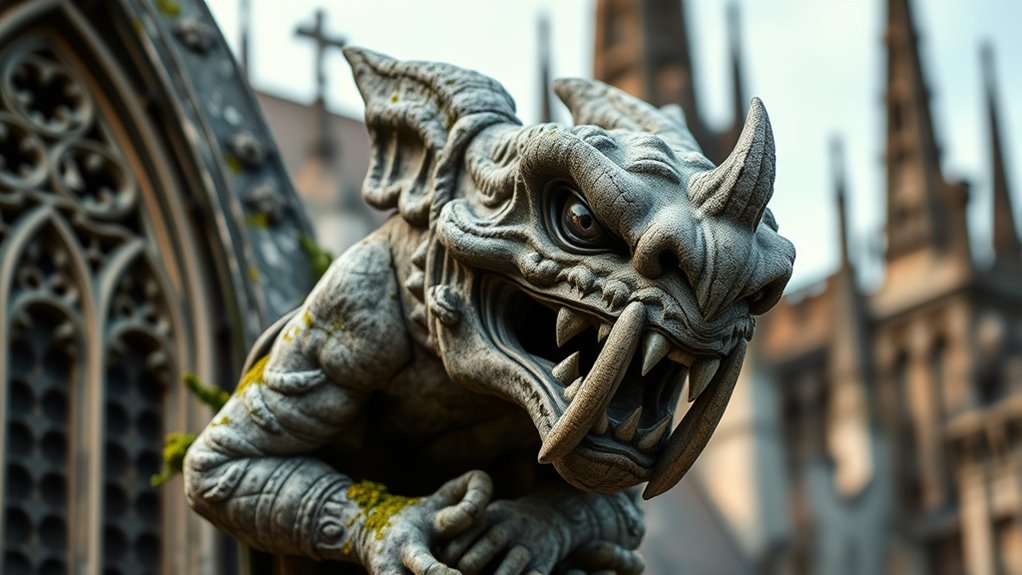

Gargoyles started as functional water spouts on medieval cathedrals, designed to divert rain and protect buildings. Over time, their grotesque features also symbolized guardians and spiritual protectors, reflecting medieval fears and beliefs. Today, they inspire pop culture, appearing in horror films, gothic fashion, and fantasy games with exaggerated, menacing traits. Their evolution blends historical purpose with artistic symbolism, creating iconic figures that continue to spark curiosity and inspiration—there’s much more behind their enduring legacy.
Key Takeaways
- Originally functional water spouts designed to channel rainwater and prevent erosion on medieval buildings.
- Carved with grotesque and protective figures reflecting societal fears and spiritual beliefs of the past.
- Evolved into symbolic guardians, representing protection, mystery, and the uncanny in architecture and folklore.
- Influenced modern pop culture through horror movies, gothic art, and fantasy media, emphasizing their monstrous and mystical traits.
- Serve as lasting symbols of protection and mystery, bridging medieval utility with contemporary storytelling and artistic expression.

Gargoyles have long fascinated both architects and pop culture enthusiasts with their striking appearances and mysterious origins. These stone figures, often perched atop cathedrals and historic buildings, serve more than just decorative purposes; they carry deep historical significance. Originally, gargoyles were designed as water spouts, channeling rainwater away from the structure’s walls to prevent erosion. Beyond their functional role, they became symbolic guardians, believed to ward off evil spirits and protect the sacred spaces beneath them. Over centuries, their grotesque features and menacing expressions transformed into a form of storytelling, reflecting the fears and beliefs of medieval society. Today, you can see their influence in modern reinterpretations, where artists and designers draw inspiration from their haunting forms to create everything from horror movies to gothic-inspired fashion. While some see them as relics of the past, others recognize their enduring appeal as symbols of mystery and protection. Incorporating natural elements into decor can evoke a similar sense of timelessness and intrigue.
You might notice how contemporary pop culture has embraced gargoyles, often depicting them as mystical or menacing characters. From animated series to video games, they are portrayed as creatures with supernatural powers or as guardians of hidden secrets. This shift highlights a broader cultural fascination—what once served as a practical and spiritual purpose now fuels stories of adventure, magic, and the uncanny. Modern reinterpretations often amplify their monstrous features, giving them exaggerated claws, glowing eyes, or even anthropomorphic personalities. These creative adaptations help keep the ancient symbols alive, resonating with new generations who see them as icons of Gothic horror or fantastical worlds. Yet, despite these transformations, the core in essence remains: gargoyles continue to symbolize protection, mystery, and the uncanny.
As an observer, you might find it intriguing how these stone guardians evolved from medieval functional architecture to pop culture symbols. Their enduring presence speaks to their ability to adapt and evoke emotion across centuries. Whether as dark protectors on historic cathedrals or as characters in your favorite horror movie, gargoyles remind you of the human desire to confront fears and mysteries through art and storytelling. Their historical significance is preserved not just in their original purpose but also through their reinterpretations in modern media and design. In essence, they bridge the gap between the ancient and the contemporary, constantly inspiring new interpretations while maintaining their role as protectors of the spiritual and the imaginative.
Frequently Asked Questions
What Materials Were Traditionally Used to Carve Medieval Gargoyles?
You’ll find that medieval gargoyles were traditionally carved from limestone or sandstone, chosen for their workability and durability. When creating these figures, artisans used specific carving techniques to shape the stone, often requiring stone repair over time due to weathering. These techniques allowed detailed expressions and intricate designs, making the gargoyles both functional and artistic. Their material and craftsmanship have helped preserve their iconic appearance through centuries.
How Do Gargoyles Influence Modern Architectural Design?
Gargoyles influence modern architecture like echoes from the past shaping new visions. They inspire design elements that blend functional gargoyle aesthetics with artistic expression, turning functional features into striking modern urban sculptures. You see this in buildings that incorporate grotesque or fantastical motifs, adding character and storytelling. These designs challenge conventional forms, blending historical inspiration with contemporary innovation, making your cityscape more vibrant and memorable.
Are There Any Famous Fictional Characters Inspired by Gargoyles?
You’ll find famous fictional characters inspired by gargoyles, like Marvel’s Gargoyle and Disney’s Hunchback of Notre Dame’s Gargoyles, embodying medieval symbolism and gothic aesthetics. These characters often mirror the mysterious, protective qualities of real gargoyles, blending myth and art. Their spooky, intricate designs evoke gothic themes, making them memorable symbols in pop culture that continue to influence modern storytelling and character design.
What Is the Symbolic Meaning Behind Gargoyle Designs?
You see gargoyle designs as symbols of symbolic protection, spiritual warding, and guarding against evil spirits. They serve as fierce protectors, warding off darkness and evil, while also representing the mysteries of faith and the unknown. Their grotesque forms evoke fear and awe, reminding you of the power of spiritual protection. These striking figures embody the duality of danger and divine safeguarding, inspiring awe and reverence in all who gaze upon them.
How Do Gargoyles Appear in Contemporary Movies and Video Games?
In contemporary movies and video games, you see gargoyles symbolizing mystery, protection, and sometimes menace, reflecting their rich history and symbolic meaning. Modern gargoyle art often emphasizes their intimidating features, blending traditional symbolism with creative flair. You might encounter them as guardians, cursed beings, or dark protectors, which taps into their medieval symbolism of warding off evil. These depictions keep the ancient symbolism alive while adding a fresh, modern twist.
Conclusion
So, next time you see a gargoyle perched high above a cathedral or lurking in a movie, remember—they started as fierce protectors. Now, they’re more likely to guard your curiosity than your city. Ironically, these stone monsters have become beloved icons of pop culture, hiding their medieval origins behind a mischievous grin. Who knew that centuries of guarding churches would turn into a playful symbol of spooky fun? Truly, history’s most surprising transformation.