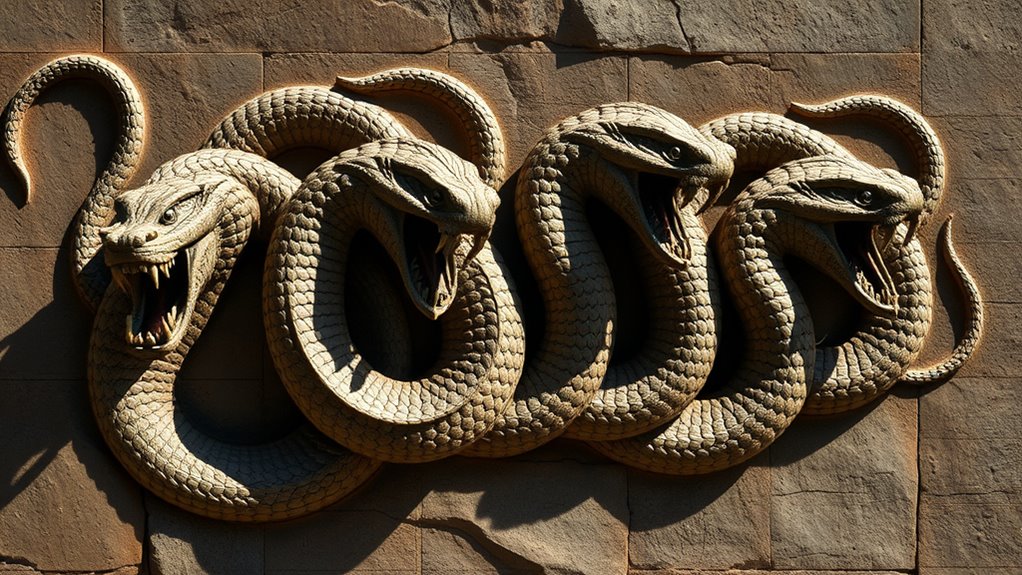

The Hydra of Lerna, with its many heads, symbolizes chaos and problems that multiply when tackled with brute force. When you cut off one head, two more grow back, showing how some challenges worsen if ignored or handled poorly. The myth teaches that solutions require cleverness, resilience, and strategy. If you continue exploring, you’ll see how this powerful symbol reflects real struggles and lessons about overcoming complex obstacles in life.
Key Takeaways
- The Hydra of Lerna is a mythological multi-headed serpent symbolizing chaos and destructive forces in Greek mythology.
- Its regenerative ability—that severed heads grow back—represents complex problems that worsen if approached blindly.
- Hercules’ method of cauterizing necks highlights the importance of strategic, clever solutions over brute force.
- The myth symbolizes inner and societal struggles, emphasizing resilience and adaptability in overcoming challenges.
- The Hydra’s multi-layered threat serves as an allegory for problems that require nuanced, thoughtful responses.

The Hydra of Lerna is one of Greek mythology’s most infamous multi-headed monsters, known for its deadly regenerative ability. When you first learn about this creature, you quickly realize it’s more than just a beast; it embodies powerful mythical symbolism. The Hydra’s many heads symbolize chaos and the destructive forces that threaten order in the world. Its regenerative power—where each severed head sprouts two more—makes it a formidable challenge, representing the idea that some problems only grow worse if you try to ignore or simply cut them down. This aspect of the Hydra’s myth ties into the broader domain of monster mythology, where creatures often reflect human fears, moral lessons, and the unpredictability of nature.
In myth, the Hydra’s many heads serve as a reminder that evil or chaos isn’t always straightforward. You’re encouraged to see these monsters as symbols of complex, intertwined struggles. The myth doesn’t just tell of a beast to be slain; it offers insight into how confronting multi-layered problems requires cleverness and resilience. When Hercules faced the Hydra, he didn’t just hack away at its heads blindly. Instead, he learned that to defeat it, he had to cauterize the necks after cutting off each head—an act that symbolizes a strategic approach to overcoming persistent issues. This cleverness becomes a core lesson in monster mythology, showing that brute force isn’t always enough, especially against entities that can regenerate and adapt.
The myth also illustrates a broader theme: that some monsters are metaphors for inner or societal struggles. The Hydra’s relentless nature can be seen as an allegory for problems that seem to multiply the more you try to solve them. Its mythical symbolism extends to the idea that true victory often requires ingenuity and understanding, not just raw strength. The creature’s regenerative ability challenges you to think beyond the surface, recognizing that what appears to be a straightforward threat can have multiple layers and complexities. In this way, the Hydra exemplifies the rich symbolism found in monster mythology, where each creature carries deeper meanings about human nature and the universe.
Frequently Asked Questions
What Are the Origins of the Hydra Myth?
You might find that the hydra myth originates from ancient Greek mythology, symbolizing challenges and chaos. Hydra symbolism represents a multi-faceted threat, often linked to water and serpents. Its mythical creature origins are rooted in stories about a multi-headed monster that grows back two heads when one is cut off. This myth likely reflects real fears of dangerous creatures or natural phenomena, emphasizing resilience and the need for clever solutions.
How Did Ancient Cultures Depict Multi-Headed Creatures?
Imagine a creature with heads multiplying like stars in the night sky. You see that ancient cultures depict multi-headed creatures through vivid mythical representations, emphasizing chaos, power, or divine mysteries. These depictions serve as cultural symbols, illustrating the fears and values of their societies. Whether carved in stone or painted in murals, multi-headed monsters symbolize resilience against chaos, reminding you of nature’s unpredictability and the enduring human fascination with formidable, layered beings.
Are There Modern Animals Resembling Hydra Features?
You’ll find some modern animals resembling hydra features, especially biological hybrids with regenerative abilities. For example, the hydra itself is a small freshwater organism capable of regenerating entire bodies from mere fragments, making it a biological hybrid of sorts. Additionally, certain salamanders and newts exhibit regenerative abilities that allow them to regrow limbs, mimicking the multi-headed nature of hydras. These creatures showcase nature’s remarkable ability to regenerate and adapt.
What Symbolism Is Associated With the Hydra in Mythology?
Think of the hydra as a symbol of resilience and danger, much like the mythical creature in Greek stories. Its symbolism represents challenges that multiply when you try to confront them, highlighting the mythological significance of perseverance. The hydra embodies the idea that some problems require clever solutions rather than brute force, reminding you that true strength lies in adaptability and strategic thinking amid multi-layered obstacles.
How Has the Hydra Influenced Contemporary Popular Culture?
You’ll see the hydra’s mythical symbolism reflected in pop culture through characters and themes representing resilience and complexity. Movies, video games, and comics often depict multi-headed monsters to symbolize insurmountable challenges or the need for strategic thinking. From Marvel’s Hydra organization to video game enemies, the hydra’s influence remains strong, embodying the idea that defeating one problem often reveals others, echoing its mythological trait of regeneration and endless struggle.
Conclusion
You now see how the Hydra of Lerna embodies the unstoppable chaos of multi-headed monsters. Its regenerative power makes it a nearly indestructible force, a true nightmare come to life. Remember, facing such creatures isn’t just a battle—it’s a clash with nature’s wildest, most terrifying fury. So, next time you hear about multi-headed monsters, think of the Hydra and realize that some monsters aren’t just stories—they’re legends that shake the very ground beneath your feet.