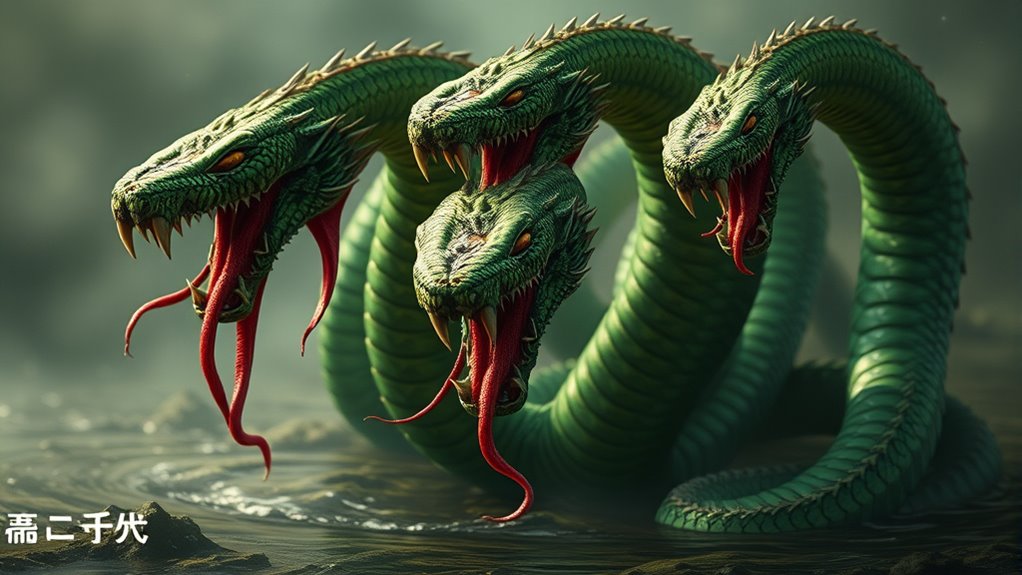

The Lernaean Hydra is a legendary Greek monster with multiple heads that can regrow if severed, making it a symbol of insurmountable problems. Originating from the swamps of Lerna, it represents chaos and endless challenges that require cleverness and strategy to overcome. Hercules famously battled the creature, learning that brute force isn’t enough, and that patience and innovation are key. To discover more about this fascinating myth, keep exploring its deep symbolism and lessons.
Key Takeaways
- The Hydra is a multi-headed Greek monster from Lerna, known for its regenerative ability to regrow severed heads.
- It symbolizes chaos and recurring challenges, requiring clever strategies to overcome rather than brute force.
- Hercules faced the Hydra as one of his Twelve Labors, using fire to cauterize wounds and prevent head regrowth.
- Its mythological roots connect to themes of natural chaos, transformation, and the importance of ingenuity.
- The Hydra’s regenerative heads make it a powerful metaphor for persistent problems that demand strategic solutions.

In Greek mythology, the creature known as the Lernaean Hydra stands out for its terrifying ability to regenerate heads whenever one is cut off. This monster’s regenerative power makes it a formidable foe, symbolizing more than just a monstrous challenge; it embodies complex mythical symbolism rooted in ancient Greek storytelling. As you explore its origins, you’ll see that the Hydra is more than a beast—it reflects themes of resilience and danger that resonate through mythic traditions. Its monster origins trace back to the swamps of Lerna, a mythic region associated with chaos and primal forces. The Hydra was said to have multiple heads—often nine, but sometimes more—each capable of regrowing if severed, making traditional attacks ineffective. This regenerative trait was believed to be a divine gift, bestowed by the monster’s divine or semi-divine lineage, linked to the ancient serpent or dragon archetypes common in mythologies worldwide. Additionally, the Hydra’s mythic symbolism highlights the challenge of confronting problems that continue to recur despite efforts to eliminate them.
Understanding the Hydra’s mythical symbolism reveals that it often represented an insurmountable obstacle, a challenge that required cleverness and bravery to overcome. Its many heads symbolize multiplicity and the difficulty of dealing with problems that seem endless or self-perpetuating. When Hercules faced the Hydra as part of his Twelve Labors, he demonstrated that brute strength alone wouldn’t suffice. Instead, he had to learn to cut off heads and cauterize the wounds to prevent regrowth, a lesson in strategic thinking and perseverance. This mythic symbolism underscores the idea that some problems are not solved with simple force but require ingenuity and patience.
Overcoming endless challenges requires cleverness, patience, and strategic thinking, not just brute strength.
The monster’s origins are deeply embedded in ancient Greek storytelling, where monsters often embodied chaos, natural forces, or moral lessons. The Hydra, in particular, may have roots in older mythic themes, such as the primal chaos of the sea or swamp regions. Its multi-headed form echoes ancient serpent and dragon imagery, common across many cultures, representing chaos, danger, or transformation. In Greek myth, the Hydra’s regenerative ability set it apart from other monsters, emphasizing that some threats are cyclical or impossible to eliminate with straightforward violence. Instead, Hercules’ victory—severing heads and cauterizing wounds—symbolizes the importance of adaptability and resourcefulness in overcoming seemingly endless challenges.
Thus, the Hydra’s mythic symbolism and monster origins combine to craft a story that transcends mere horror. It teaches that resilience, strategic thinking, and understanding the roots of problems are essential in confronting and conquering formidable foes. Its story remains a powerful metaphor for challenges that seem unending, reminding you that often, overcoming such obstacles requires not just strength but wit and patience.
Frequently Asked Questions
What Is the Origin of the Hydra Myth?
You might find that the mythological origins of the hydra trace back to ancient Greek storytelling, where it symbolized chaos and challenge. This creature’s story reflects cultural significance, embodying the struggle against seemingly insurmountable obstacles. As a myth, it served to teach lessons about bravery and ingenuity. The hydra’s enduring presence highlights how myths shape cultural values, offering insight into ancient Greek beliefs and their way of understanding nature and human struggles.
How Did Hercules Eventually Defeat the Hydra?
Imagine facing a mountain that keeps growing taller—Hercules overcomes the hydra by using his hero’s perseverance. He cuts off each head, then burns the stumps to prevent regrowth, symbolizing mythological symbolism of resilience. His clever strategy, combined with help from his nephew Iolaus, allows him to defeat the monster. This victory highlights that true heroism involves persistence, resourcefulness, and the ability to adapt to seemingly insurmountable challenges.
Are There Any Real Animals Resembling the Hydra?
You won’t find real animals that fully resemble the mythical Hydra, but some aquatic animals offer interesting analogs. For example, sea anemones and hydroids have multiple tentacles, mimicking the Hydra’s many heads. Additionally, certain polychaete worms can regenerate lost segments or heads, similar to the Hydra’s regenerative abilities. These aquatic animal analogs inspire mythical creature comparisons, but no real animal matches the complete, regenerating multi-headed nature of the Hydra.
What Symbolic Meanings Does the Hydra Represent?
Think of the hydra as a mirror reflecting your challenges, symbolizing multifaceted struggles that seem to multiply when you try to confront them. In mythological interpretations, it stands for resilience, danger, and the need for clever strategies. The hydra’s regenerating heads remind you that problems often evolve, demanding not just strength but wisdom. Its symbolism teaches you to face adversity with ingenuity and adaptability, turning setbacks into opportunities for growth.
Has the Hydra Appeared in Modern Popular Culture?
You’ll find the hydra symbolism thriving in modern adaptations like movies, video games, and comics, where it often represents an unstoppable challenge or a multi-faced problem. These portrayals highlight the hydra’s legendary regenerative ability, emphasizing resilience and danger. Its recurring presence in popular culture keeps the myth alive, inspiring stories that focus on confronting complex, seemingly endless obstacles, making it a powerful symbol of persistence and threat today.
Conclusion
As you face the Lernaean Hydra, remember its many heads symbolize challenges that seem endless. Each time you cut one down, another grows back, reminding you that obstacles can be persistent and regenerative. But just like Hercules, your perseverance and cleverness can overcome even the toughest problems. The Hydra’s endless heads serve as a symbol of resilience—teaching you that true strength lies in your ability to adapt and keep fighting, no matter how many heads appear.