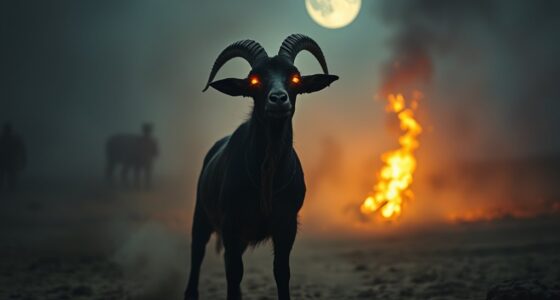
Maritime legends like mermaids, sirens, and sea monsters reveal how different cultures blend myth with reality to express their fears and hopes about the ocean’s vast power. These stories serve as warnings, guardians, or symbols of nature’s unpredictability, reflecting humanity’s fascination with the sea’s mysteries. Their themes of temptation, danger, and respect highlight our enduring connection to the waters. To uncover more about these enchanting myths across societies, keep exploring these timeless tales.

Get school and study supplies delivered free — and shop member deals
- Fast, free delivery on millions of items
- Access to Prime Big Deal Days deals on October 6–7
- Prime Video, Amazon Music and more included
Key Takeaways
- Maritime legends blend myth and reality, symbolizing the ocean’s mysteries, dangers, and cultural significance across different societies.
- Mermaids, sirens, dragons, and sea monsters embody the ocean’s dual nature—nurturing yet perilous—reflecting cultural fears and hopes.
- Legends serve as cautionary tales, warning sailors of unpredictable elements and divine wrath, while also acting as cultural symbols.
- Common themes include temptation, respect for the sea’s power, and mythical guardians, illustrating shared human fascination with oceanic mysteries.
- These stories demonstrate a universal fascination with the ocean, highlighting its role as a source of wonder, danger, and rich storytelling across cultures.

Throughout history, maritime legends have shaped the way different cultures perceive the sea, blending myth and reality into enthralling stories. These tales often revolve around mythical creatures that embody the mysteries and dangers of the ocean, fueling nautical folklore passed down through generations. You might have heard of mermaids, those alluring half-human, half-fish beings that appear in stories from Europe to Asia. In Western traditions, mermaids symbolize both beauty and peril, warning sailors of hidden dangers beneath the waves. Meanwhile, in other cultures, similar creatures such as the siren of Greek mythology serve as warnings about the seductive power of the sea, luring sailors to their doom with enchanting songs. These mythical creatures aren’t just fanciful figures; they reflect the fears and hopes of seafarers who relied on the ocean for survival.
Maritime legends blend myth and reality, featuring creatures like mermaids and sirens that embody ocean’s mysteries and perils.
As you explore different cultural stories, you’ll find that nautical folklore often features legendary beings believed to have control over the sea or influence over sailors’ fates. For example, Chinese legends speak of the dragon king, a powerful aquatic deity ruling over the seas, embodying nature’s formidable force. In Scandinavian tales, sea monsters like the Kraken loom large in sailors’ nightmares, representing the unpredictable and often deadly nature of the ocean. These stories serve as cautionary tales, warning sailors of the unpredictable elements they might face or the wrath of gods and spirits believed to inhabit the waters. Such mythical creatures become symbols of the ocean’s dual nature — both nurturing and destructive. Additionally, the popularity of these legends demonstrates how storytelling helped communities understand and respect the vastness and power of the sea.
You might also discover that many of these stories share common themes: the danger of temptation, the allure of the unknown, and the respect owed to the sea’s power. Nautical folklore often features these mythical beings as tests of bravery or as guardians of hidden treasures beneath the waves. For sailors, these legends weren’t just stories; they were part of a cultural code that helped explain the unexplainable, offering comfort or caution amid the vast, unpredictable ocean. The rich tapestry of myths across cultures shows how humans have always sought to understand their relationship with the sea, projecting their fears and aspirations onto mythical creatures that continue to captivate our imagination today.
In the end, whether it’s mermaids singing sailors to their doom or dragons reigning over the depths, these legends reveal a universal fascination with the mysteries of the sea. They serve as a testament to how nautical folklore reflects the deep connection humans have with the ocean — a source of wonder, danger, and endless stories.
Top picks for "mermaid siren maritime"
As an affiliate, we earn on qualifying purchases.
Frequently Asked Questions
How Do Mermaid Legends Vary Between Coastal Communities?
You’ll notice that mermaid legends vary between coastal communities through regional variations in their stories and cultural symbolism. In some places, mermaids symbolize beauty and allure, while elsewhere, they represent danger or omens. These differences reflect local beliefs, history, and environment, shaping how communities perceive these mythical beings. Your understanding of these legends shows how regional variations influence their roles, making each coastal culture’s mermaid story uniquely meaningful.
Are Siren Myths Connected to Specific Historical Events?
Yes, siren myths are connected to specific historical events, especially through historical sightings and nautical symbolism. Sailors reported mysterious encounters at sea, which fueled stories of sirens luring ships to danger. These legends often symbolized the peril and allure of the ocean, reflecting real fears and experiences. Over time, these stories evolved, blending myth with history, creating a powerful nautical symbolism that persists in maritime lore today.
What Role Do Maritime Legends Play in Local Folklore Preservation?
Maritime legends play a crucial role in preserving local folklore by strengthening cultural identity and passing stories through oral tradition. When you share tales of mermaids, sirens, or sea monsters, you’re keeping traditions alive and fostering community bonds. These legends connect generations, offering a sense of belonging and cultural pride. By actively telling and retelling these stories, you guarantee that maritime folklore remains vibrant and relevant for future generations.
How Have Modern Media Influenced Perceptions of Mermaids and Sirens?
Did you know over 80% of people have seen mermaids or sirens depicted in movies or TV? Modern media has profoundly shaped your perception of these myths. Media portrayal often romanticizes or sensationalizes their stories, leading to widespread myth adaptation. This influences how you view maritime legends, blending fact with fiction. As a result, media plays a vital role in evolving and popularizing these ancient tales for new generations.
Are There Similar Aquatic Myths in Non-Coastal Cultures?
You’ll find that many non-coastal cultures also have mythical aquatic creatures and underwater spirits that mirror mermaids and sirens. For example, in some inland African and Asian traditions, spirits are believed to inhabit lakes and rivers, embodying similar seductive or protective traits. These stories reflect universal themes of water’s mystery and power, showing that aquatic myths aren’t limited to coastal regions but are a global phenomenon rooted in human fascination with water’s depths.
Conclusion
As you explore these maritime legends, remember that they’re more than stories—they’re symbols of our hopes, fears, and mysteries of the unknown. Like the siren’s song, they lure you toward curiosity and reflection. The sea whispers secrets of the depths, reminding you that beneath surface appearances lie truths waiting to be uncovered. Embrace these legends as guiding stars, inspiring you to navigate life’s vast and uncharted waters with wonder and courage.
Halloween Picks
halloween
As an affiliate, we earn on qualifying purchases.