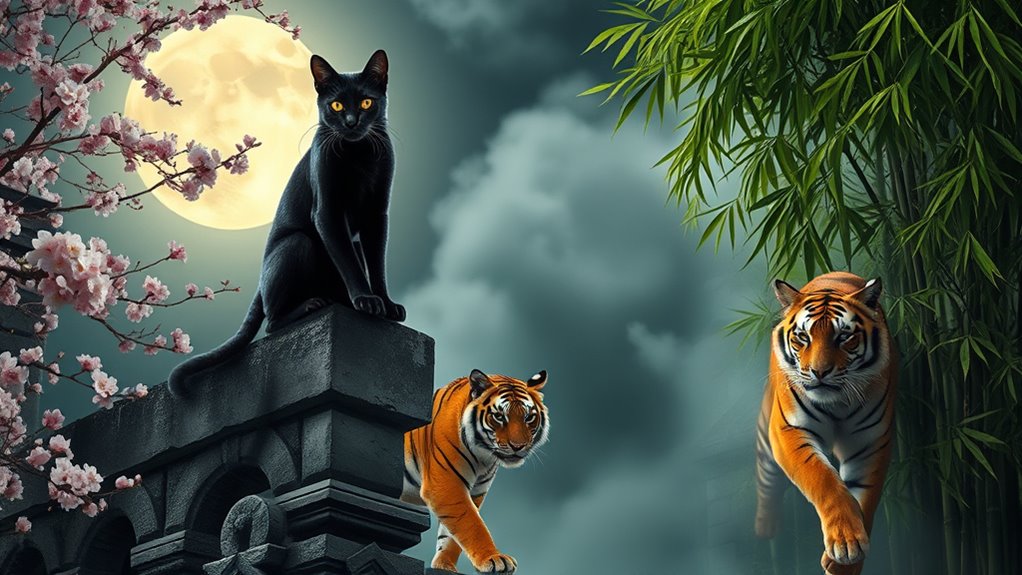

Across cultures, werecat legends connect European fears of witches transforming into cats, symbolizing rebellion and hidden dangers, with Asian myths of tigers and fox spirits embodying transformation and unseen powers. These stories explore themes of duality, mystery, and the supernatural, reflecting societal concerns and spiritual beliefs. Whether as protectors or ominous omens, felines symbolize change and mystery worldwide. If you continue exploring, you’ll uncover even deeper insights into how these shape-shifting creatures mirror our understanding of magic and identity.
Key Takeaways
- European folklore links werecats to witchcraft, shapeshifting, and societal fears of morality, emphasizing cats as both protectors and sinister symbols.
- Asian legends feature tiger spirits and fox spirits that transform or possess humans, representing spiritual change and unseen mystical forces.
- Both traditions use shapeshifting animals to symbolize duality, hidden power, and the mysterious aspects of nature and human nature.
- European myths serve as cautionary tales about crossing social norms, while Asian stories often teach respect and caution toward spiritual and natural forces.
- The universal fascination with werecats reflects themes of transformation, concealment, and the enduring mystery of the unknown across cultures.
Have you ever wondered how different cultures around the world perceive the mysterious phenomenon of werecats? Across the globe, stories of shape-shifting creatures, especially those taking feline form, have fascinated and frightened communities for centuries. These myths often serve as echoes of older folklore symbolism, representing complex ideas about duality, transformation, and hidden power. In many European traditions, the concept of the werecat emerged from shape shifting myths linked to witches and sorcerers. During the Middle Ages, accusations of witchcraft frequently involved women transforming into cats—famously known as witches’ familiars. These stories symbolized fears of the unknown and the supernatural, portraying cats as both protectors and sinister entities. The folklore symbolism in these tales reflects broader societal anxieties about morality, power, and the boundaries between human and animal. The idea of a person capable of shape shifting into a cat symbolized a dangerous fluidity and unpredictability, often associated with malevolent magic or rebellion against societal norms. These legends persisted through centuries, reinforcing the idea that beneath the surface of everyday life lurked a hidden, mutable nature.
Moving eastward, Asian cultures also have rich traditions involving shape-shifting felines, but with different interpretations. In Chinese folklore, the huli jing or fox spirit often takes the form of a beautiful woman or a cunning creature, but some tales feature tiger spirits that can transform or possess human traits. These stories symbolize power, stealth, and the mysterious qualities of nature. In Japan, the bakeneko and nekomata are legendary cats with supernatural abilities, including shape shifting and manipulating their environment. These creatures embody folklore symbolism of transformation and chaos, often acting as omens or messengers from the spirit world. They serve as reminders that the natural world is layered with unseen forces, and that appearances can be deceiving. Interestingly, the development of projector technology has also influenced how these stories are visualized in modern media, often emphasizing their mysterious and transformative qualities. These shape shifting myths reflect cultural attitudes towards animals as both revered and feared, embodying the mysteries of nature’s unpredictable power. The stories emphasize that transformation is a symbol of change, not just physical but spiritual, often linked with lessons about respect, caution, and the acceptance of life’s fluidity.
Across continents, the common thread in werecat lore is how these stories symbolize deeper truths about human nature and society. Whether as witches’ familiars, cunning spirits, or divine messengers, shape shifting myths reveal our fascination with transformation, concealment, and the duality within us all. These tales serve as cultural tools—reminding us of the mysterious symbolism behind feline forms and the enduring allure of change and mystery in folklore worldwide.
Frequently Asked Questions
Are Werecats Considered Supernatural or Spiritual Beings?
Werecats are considered supernatural beings rooted in mythological origins and cultural symbolism. You see, in many traditions, they embody mystical powers and spiritual connections, blurring the line between reality and legend. These creatures often symbolize transformation, protection, or danger, depending on the culture. Their supernatural status reflects deep-seated beliefs and stories that have been passed down through generations, making them enduring symbols of mystery and myth in various societies.
What Are Common Werecat Shape-Shifting Transformations?
You see, common werecat shape-shifting transformations often involve changing from human to feline forms, like a sleek domestic cat or a fierce tiger. These shape-shifting abilities draw from mythical origins, symbolizing power, mystery, or danger. Sometimes, they include partial transformations, like claws or eyes, enhancing their mystique. These transformations highlight their supernatural nature, allowing them to blend into human society or hunt in the wild, depending on the lore.
Do Werecats Have Specific Cultural Taboos or Rituals?
Ever wonder if werecats have their own sacred rules? Yes, they often do. You might find cultural taboos forbidding certain transformations or ritual practices involving their shape-shifting abilities. These customs protect spiritual balance or honor ancestral traditions. Ignoring these taboos can bring misfortune or social rejection. So, respecting these rituals isn’t just about tradition; it’s about honoring the deep-rooted cultural beliefs that shape their lore and identity.
How Do Werecats Interact With Humans Historically?
Historically, you see that werecats often interact with humans through mythological symbolism and folklore, sometimes as protectors or shape-shifters, other times as cunning tricksters. In various cultures, werecat folklore portrays them as both feared and revered, blending myth with reality. These stories reflect societal views and fears, shaping how people perceive these mysterious creatures and their connection to human lives across different regions and eras.
Are There Modern Sightings or Evidence of Werecats Today?
You might think werecats are just legends, but some believe cryptid sightings pop up even today, sparking curiosity and fear. Though no concrete evidence exists, folklore comparisons suggest stories of mysterious feline creatures persist worldwide. These sightings often involve shadowy figures darting through the night, fueling speculation. While skeptics dismiss them as hoaxes or misidentifications, the allure of the unknown keeps the legend alive in modern times.
Conclusion
As you close this journey through werecat legends, you see the shimmering moonlight on a sleek tiger’s fur, wild and untamed. From Europe’s witches to Asia’s mysterious tigers, these stories blur the line between human and beast, blending fear with fascination. You realize that, no matter where you go, the allure of the feline shape-shifter remains—a haunting reminder that beneath our skin, the wild always lurks, waiting to pounce in the shadows of our imagination.