In Spanish folklore, culebre and dragons often symbolize natural forces, spiritual guardians, or chaos, reflecting regional beliefs and cultural values. Legends vary across regions, with some depicting them as protectors of sacred sites, while others portray them as destructive beasts. These stories reveal community views on nature, bravery, and resilience, connecting past myths to local identities. Keep exploring to uncover more about these fascinating creatures and their roles in Spain’s rich mythological tapestry.
Key Takeaways
- Legends depict culebre and dragons as symbols of danger, protection, and natural forces in Spanish folklore.
- Regional variations portray culebre as either guardians of resources or destructive beasts.
- Mythical beings reflect cultural beliefs, embodying chaos, spiritual guardianship, and natural elements.
- Stories emphasize heroism, overcoming chaos, or reverence for these creatures, linking past beliefs to modern identity.
- Legends reveal Spain’s diverse cultural views on nature, spirituality, and the balance between chaos and order.
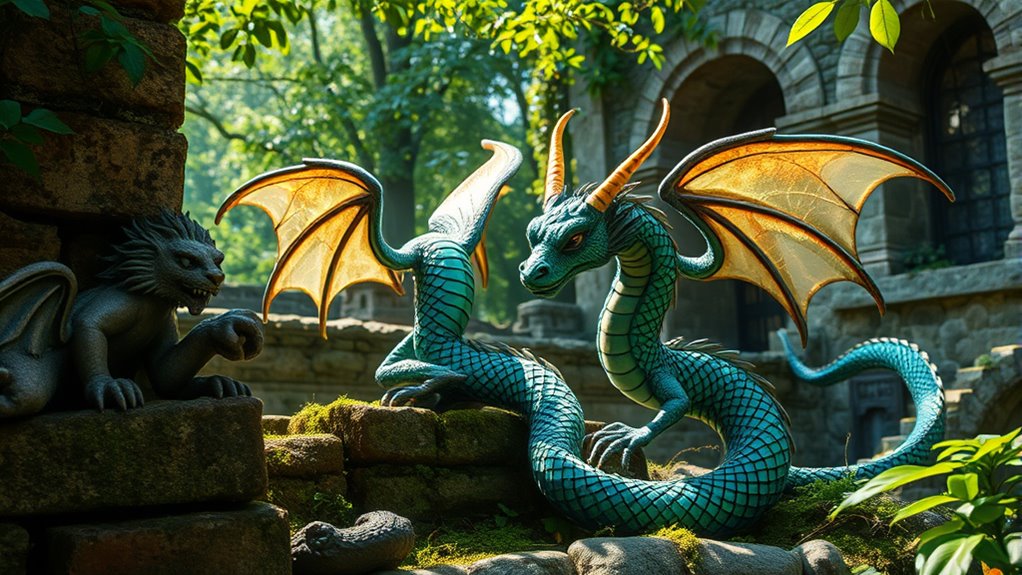
In Spanish folklore, the culebre and dragon legends have captivated imaginations for centuries, weaving tales of mythical creatures that embody both danger and mystery. These stories are not just mere stories; they hold profound mythical symbolism that reflects deeply rooted cultural beliefs and values. You might find that, across various regions, these legendary beings symbolize more than just beasts—they represent forces of nature, spiritual guardians, or even obstacles that challenge heroes. Regional legends often portray the culebre as a cunning serpent or dragon-like creature, embodying chaos or protection, depending on the local context. For example, in some areas, the culebre is seen as a guardian of natural resources, fiercely defending sacred sites or water sources from harm. In others, it symbolizes chaos and destruction, a creature to be defeated to restore peace and order. These contrasting roles highlight the richness of regional legends, revealing how different communities interpret similar mythical beings through their unique cultural lenses. Additionally, the stories often incorporate symbolic meanings that reflect local values and beliefs about the environment and spirituality. You may notice that, in many stories, the culebre or dragon is tied to natural elements like water, mountains, or forests, emphasizing their connection to the environment. These creatures often serve as allegories for natural forces that humans could neither understand nor control, making them powerful symbols within mythic symbolism. In some legends, slaying the dragon or culebre signifies overcoming chaos or evil, symbolizing human resilience and victory over nature’s unpredictability. Conversely, some stories emphasize respect and harmony with these creatures, suggesting that understanding and reverence are the keys to coexistence. This duality reflects the complex relationship people have had with these myths, blending fear, admiration, and reverence into a single narrative. Throughout Spain, regional legends shape how these mythical creatures are perceived. In northern areas, stories might depict the culebre as a protector of the land, guarding it against invaders or evil spirits. In the south, tales often portray them as destructive beasts, requiring brave heroes to confront and tame them. These stories serve as cultural artifacts, preserving local histories, values, and fears. As you explore these legends, you’ll find that they reveal much about the communities that created them—how they view nature, the divine, and the struggle between chaos and order. Ultimately, the mythical symbolism embedded within these regional legends makes the culebre and dragon stories timeless, connecting past beliefs to present-day cultural identities across Spain.
Zonling Dragon Statue Cute Winged Dragons Decor for Home Desk Bookshelf, Unique Gift for Friends and Family, Mini Dragon Figurine Mythical Creature
【Exquisite Design & Detail】This adorable dragon statue features a cute, curious posture with finely crafted details from its…
As an affiliate, we earn on qualifying purchases.
As an affiliate, we earn on qualifying purchases.
Frequently Asked Questions
Are There Any Modern Sightings of Spanish Culebres?
There aren’t any recent cryptid sightings of Spanish culebres, but folklore traditions keep their legend alive. You might find local stories or occasional reports that rekindle interest, yet no verified evidence supports their existence today. These tales continue to fascinate enthusiasts, blending myth and culture. While modern sightings are rare or unconfirmed, the folklore persists as a compelling part of Spain’s mystical heritage.
How Do Spanish Culebres Compare to Other European Dragons?
Like shadows dancing in the twilight, Spanish culebres differ from other European dragons in their cultural significance and regional variations. You’ll find them more serpentine and less fire-breathing, embodying local legends with a mystique rooted in history. While some compare them to their more formidable counterparts, Spanish culebres weave a subtler story, reflecting regional beliefs and folklore, making them unique guardians of their cultural landscapes rather than fierce beasts.
What Symbolic Meanings Are Associated With the Culebre?
You see that the culebre symbolizes mythical symbolism and spiritual significance in local traditions. It often represents protection, wisdom, and the balance between nature and humanity. People believe it embodies supernatural strength and serves as a guardian against evil forces. Its presence in stories highlights its role as a powerful spiritual symbol, reminding you of the importance of harmony with nature and the enduring strength of mythic forces in cultural beliefs.
Are Culebres Featured in Any Spanish Festivals or Traditions?
You’ll find culebres featured prominently in Spanish festivals, where they add excitement to festive parades and traditional dances. Many communities incorporate these mythical creatures into their celebrations to symbolize protection and folklore. It’s easy to get caught up in the lively atmosphere, imagining the culebres dancing alongside performers. These traditions keep the cultural heritage alive, making festivals more vibrant and memorable for everyone involved.
Have Culebre Legends Influenced Spanish Art and Literature?
You’ll find that culebre legends greatly influence Spanish art and literature through symbolic imagery and literary symbolism. Artists and writers often depict these creatures as embodiments of mystery, danger, or transformation. Their mythic qualities add depth and intrigue to stories, inspiring visual art, poetry, and folklore. This cultural influence highlights the culebre’s role as a powerful symbol, enriching Spain’s artistic and literary traditions with mythic resonance and layered meaning.

HEINBOW Steampunk Dragon Statue Gothic Retro Mechanical Gear Sitting Dragon Metallic Look Resin Sculpture for Home Man Cave Decor 12'' High
【Dignified Steampunk Dragon Statue】 This steampunk mechanical dragon looks breathtaking from its mechanical appearance to workmanship details. With…
As an affiliate, we earn on qualifying purchases.
As an affiliate, we earn on qualifying purchases.
Conclusion
As you explore the Spanish culebre and dragon legends, remember they’re more than myths—they’re echoes of ancient fears and dreams, like the whispers of a forgotten dragon guarding secrets. Just as St. George faced his fiery foe, you carry the courage to face your own monsters. These tales remind us that within every legend lies a spark of our shared humanity, waiting to ignite your imagination and inspire your own story of bravery.

The Pilgrimage Road to Santiago: The Complete Cultural Handbook
As an affiliate, we earn on qualifying purchases.
As an affiliate, we earn on qualifying purchases.

Persian Myths & Legends: Tales of Heroes and Legendary Creatures (Collectible Myths and Legends)
As an affiliate, we earn on qualifying purchases.
As an affiliate, we earn on qualifying purchases.