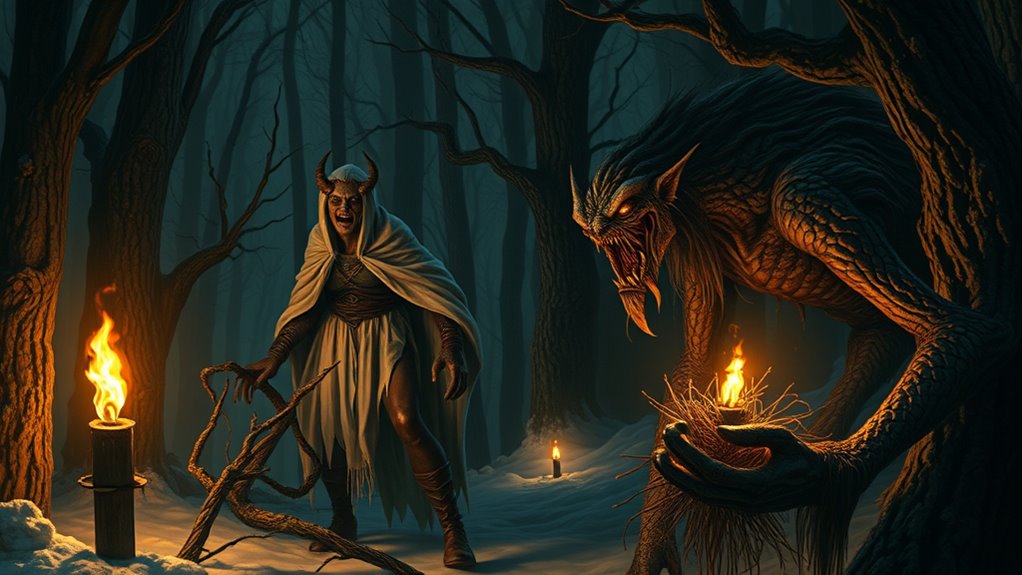
Christmas monsters like Perchta and Gryla come from ancient folklore designed to enforce moral behavior during the holiday season. Perchta appears as a beautiful woman with a monstrous true form, judging and rewarding or punishing people, while Gryla is a giantess known for hunting naughty children. These figures reflect winter’s darker side and serve as cautionary symbols from old traditions. If you want to uncover more about these fascinating holiday horrors, keep exploring their stories and origins.

Prime made for students and young adults
- Fast, free delivery for dorm and study essentials
- Prime Video and Amazon Music included
- Member-only deals
Key Takeaways
- Perchta and Gryla are legendary Christmas monsters rooted in northern European folklore, embodying moral lessons and seasonal fears.
- Perchta appears as a beautiful woman but reveals a monstrous form, judging and punishing the wicked during the twelve days of Christmas.
- Gryla is an Icelandic giantess who hunts misbehaving children, sometimes cooking and eating them, contrasting with the cheerful image of Santa.
- These monsters serve as moral enforcers, reinforcing societal values and adding a darker, supernatural dimension to holiday traditions.
- Their stories reflect winter fears, cultural history, and the importance of discipline, remaining significant in modern Christmas folklore.
Every holiday season, stories of Christmas monsters capture our imagination, blending festive cheer with a touch of the supernatural. These tales stem from deep-rooted northern folklore, where ancient beliefs and traditions intertwine with modern holiday celebrations. You might think of Santa Claus and his jolly demeanor, but across the colder regions of Europe, there’s a darker, more mysterious side to holiday folklore traditions. These stories often feature formidable figures who serve as both disciplinarians and guardians, reminding us that the season isn’t just about joy but also about moral lessons and cultural history.
Holiday folklore reveals darker, guardian spirits that teach morals amid festive cheer.
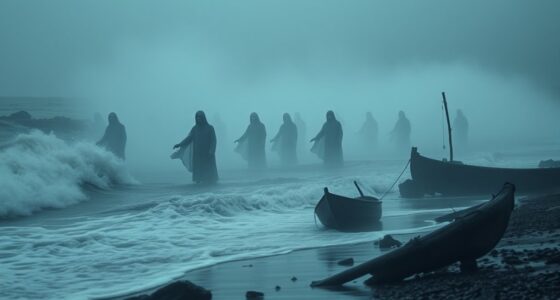
One of the most notable figures is Perchta, a formidable goddess from Alpine and Germanic folklore. In some stories, she appears as a beautiful woman, but her true form is far more intimidating—an eerie, often monstrous figure with a piercing gaze and a tendency to punish the naughty. During the twelve days of Christmas, especially around Epiphany, households would leave offerings to Perchta, hoping to appease her and avoid her wrath. In these traditions, Perchta’s role was to judge children and adults alike, rewarding the good and punishing the wicked. Her connection to winter’s harshness and the mystical domain reflects the fears and respect ancient communities held towards the darker aspects of the season. These holiday folklore traditions serve as cautionary tales, emphasizing the importance of moral behavior and community cohesion. Additionally, understanding the cultural significance behind these monsters helps us appreciate how storytelling reinforced societal values across generations.
Gryla, another chilling figure from Icelandic folklore, embodies the darker side of holiday monsters. She’s often depicted as a giantess with a penchant for punishing naughty children. According to legend, Gryla would descend from the mountains during the Christmas season, hunting for misbehaving kids to cook and eat. Her story is a stark contrast to the cheerful gift-giving Santa we’re familiar with, highlighting how northern folklore often uses monsters to enforce moral behavior during the festivities. Her monstrous image is reinforced through stories told around fires and during winter festivals, serving as a reminder that discipline and good conduct are crucial during the holiday season.
These figures from northern folklore show how holiday traditions are layered with stories of monsters and spirits that embody both the fears and morals of past generations. They remind you that the holiday season isn’t just about celebration but also about respecting old customs, lessons, and the supernatural forces believed to influence the world during winter’s darkest days. Whether Perchta’s stern judgment or Gryla’s fearsome presence, these monsters remain an integral part of holiday folklore traditions, adding a thrilling, sometimes chilling, dimension to the festive season.
As an affiliate, we earn on qualifying purchases.
Frequently Asked Questions
How Did These Christmas Monsters Originate Historically?
You might find that these Christmas monsters originated from medieval folklore rooted in pagan traditions. People created these stories to explain seasonal changes and enforce moral behavior during winter. Over time, the legends evolved, blending pagan symbols with Christian influences, which shaped the terrifying figures like Perchta and Gryla. These monsters served as warnings or reminders of the importance of kindness and discipline during the holiday season.
Are There Modern Celebrations Involving These Monsters?
You might think these monsters are just old stories, but modern folklore keeps them alive through festive costumes and themed events. Today, people celebrate these creatures in parades, Halloween-style parties, and holiday festivals, embracing their spooky charm. These celebrations remind us how tradition evolves, blending history with fun. So, yes, Perchta and Gryla still appear in contemporary festivities, keeping the holiday spirit both eerie and entertaining.
How Do Different Cultures Depict These Christmas Monsters?
You’ll find that different cultures depict these Christmas monsters through unique folklore adaptations and cultural variations. For example, some portray Gryla as a terrifying ogre who punishes naughty children, while others see her as a more humorous figure. Perchta’s image varies from a benevolent protector to a fearsome spirit. These cultural variations reflect local traditions, blending myth and history to keep the legends alive and relevant in modern celebrations.
What Are the Symbolic Meanings Behind These Monsters?
You see that these monsters symbolize various cultural fears and morals. Perchta, for example, represents the importance of virtue and the consequences of misbehavior, while Gryla embodies the chaos of winter and the need for discipline. These creatures serve as symbolic representations of societal values, warning children to behave and highlighting the cultural significance of moral conduct during the holiday season, helping preserve traditions and lessons across generations.
Have Any of These Monsters Influenced Contemporary Holiday Traditions?
Like a spark igniting a flame, these monsters have subtly shaped modern traditions. You’ll notice Gryla’s fierce image influence the mischievous elves’ influence on Santa’s origins, emphasizing discipline and reward. Perchta’s folklore echoes in the emphasis on kindness and reflection during the holidays. These monsters remind you that holiday customs often blend myth with morality, making your celebrations richer and more meaningful.
Gryla Icelandic folklore plush toy
As an affiliate, we earn on qualifying purchases.
As an affiliate, we earn on qualifying purchases.
Conclusion
As you’ve seen, Christmas monsters like Perchta and Grylă bring a dark twist to holiday traditions. Did you know that nearly 60% of people say they enjoy spooky stories during the season? These creatures remind us that even in the cheer, there’s room for a little fright. So, next time you hear a rustle or see a shadow, remember—holiday horrors are just part of the enchanting, mysterious magic that makes Christmas unforgettable.
As an affiliate, we earn on qualifying purchases.
dark Christmas folklore ornaments
As an affiliate, we earn on qualifying purchases.
As an affiliate, we earn on qualifying purchases.
Halloween Picks
halloween
As an affiliate, we earn on qualifying purchases.