
Krampusnacht is an ancient European tradition where Krampus, a horned, beast-like figure, plays Santa’s dark companion. Celebrated on December 5th, towns host parades where people dress as Krampus with frightening masks and costumes, symbolizing punishment for misbehavior. Originally, Krampus represents chaos and retribution, serving as a contrast to Santa’s kindness. Today, these festivities blend myth and modern fun, revealing their rich roots and dark folklore. If you keep exploring, you’ll discover even more about this fascinating tradition.

Prime made for students and young adults
- Fast, free delivery for dorm and study essentials
- Prime Video and Amazon Music included
- Member-only deals
Key Takeaways
- Krampusnacht is celebrated on December 5th, featuring parades where participants dress as Krampus to entertain and frighten spectators.
- Krampus is a horned, beast-like figure embodying chaos, punishment, and the darker side of holiday traditions, serving as Santa’s dark counterpart.
- Originating from Alpine folklore, Krampus historically punished naughty children, contrasting Santa Claus’s reward for the well-behaved.
- Modern celebrations have transformed Krampusnacht into lively festivals worldwide, blending myth with entertainment and cultural heritage.
- The tradition emphasizes moral lessons, reminding children and adults to behave well during the holiday season.
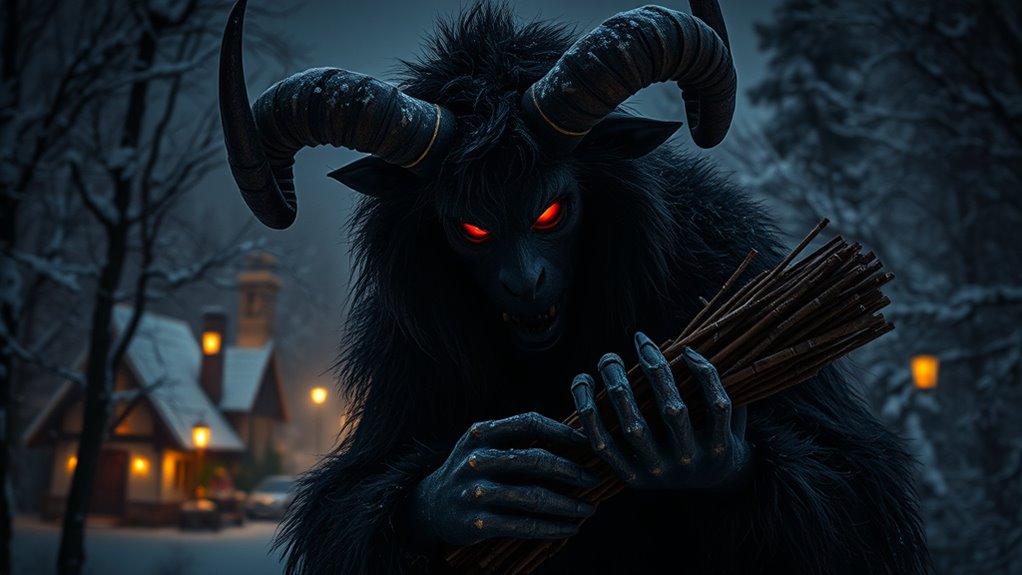
Have you ever wondered about the origins of Krampusnacht, the night when folklore’s most mischievous creature, Krampus, comes to life? This dark, eerie celebration has roots that stretch deep into European evil folklore, blending ancient myths with modern holiday traditions. Unlike the joyful images of Santa Claus that dominate Christmas, Krampusnacht introduces a sinister twist, reminding us that not all holiday stories are about kindness and cheer. Instead, it highlights the duality of the season—celebration and punishment, light and darkness.
Krampus, often depicted as a horned, beast-like creature with a long, snarling tongue and chains rattling around his body, serves as Santa’s dark companion. His origins trace back centuries, mostly in Alpine regions like Austria, Germany, and parts of Switzerland. These areas have long embraced the belief that Krampus acts as a counterbalance to Santa Claus, punishing naughty children who misbehave throughout the year. The evil folklore surrounding Krampus paints him as a creature of chaos and retribution, embodying fears of discipline and the consequences of bad behavior. On Krampusnacht, typically December 5th, towns come alive with celebrations where people dress as Krampus, donning frightening masks and costumes, and parade through streets to terrify and entertain. It’s a night where the boundary between myth and reality blurs, and the dark side of holiday traditions takes center stage.
This tradition might seem frightening, but it also serves a purpose within these communities. It acts as a reminder for children and adults alike to stay on their best behavior, aligning with the broader themes of morality embedded in holiday customs. Over time, Krampusnacht has evolved from a local folk practice into a popular festival celebrated with parades, costumes, and parties worldwide. Despite its origins rooted in evil folklore, today it’s more of a cultural spectacle than a threat. Still, the creature’s frightening appearance and the storied history behind him keep the tradition rooted in its darker, more mysterious past. Understanding the folklore behind Krampus helps us appreciate its cultural significance and the role it plays in seasonal traditions.
As an affiliate, we earn on qualifying purchases.
Frequently Asked Questions
How Did Krampus Become Associated With Christmas Traditions?
You might not realize it, but Krampus became linked to Christmas traditions through centuries of evil folklore and winter rituals. Originally, he was seen as a creature to scare children into good behavior, especially in Alpine regions. Over time, these customs merged with holiday festivities, blending Santa’s joyful image with Krampus’s dark, punishing presence. Today, Krampus’s role in winter rituals adds a thrilling, spooky element to Christmas celebrations worldwide.
Are There Specific Regions Where Krampus Is More Popular?
Imagine walking through snowy alpine villages, where Krampus is more than folklore—he’s a local legend. You’ll find him thriving in Austria, southern Germany, and parts of Switzerland, where regional customs keep his story alive. These folklore variations make Krampus a symbol of winter’s dark side. In these areas, his presence is stronger, with festivals and parades celebrating him, emphasizing his importance in local traditions and cultural identity.
What Materials Are Traditionally Used to Craft Krampus Masks?
You’ll find that traditional Krampus masks are crafted using materials like wood, felt, and fur, reflecting rich folk art and mask making traditions. Artists often carve intricate wooden masks, then add authentic details with leather, wool, and synthetic fur. This craftsmanship allows for striking, expressive features that capture Krampus’s terrifying yet fascinating appearance, making each mask a unique piece of folk art rooted in cultural celebrations of Krampusnacht.
Is Krampus Celebrated Outside European Countries?
Yes, Krampus is celebrated outside European countries through cultural adaptations and international festivals. You’ll find Krampus parades and events in the United States, Australia, and parts of South America, where communities embrace this dark companion with costumes, parades, and themed celebrations. These festivities help spread the legend beyond its traditional roots, allowing people worldwide to experience and appreciate the myth’s dark, festive spirit.
How Has Modern Media Influenced Krampus’s Image?
Modern media has markedly shaped Krampus’s image through pop culture representations and social media influence. You see him portrayed in movies, TV shows, and viral videos, which make him more mainstream and even a bit humorous. Social media amplifies this by sharing creative costumes and stories, blending fear with fun. As a result, Krampus now appears less terrifying and more like a holiday icon, appealing to a broader audience worldwide.
As an affiliate, we earn on qualifying purchases.
Conclusion
As the night falls and the shadows grow longer, you can’t help but wonder: will you encounter Krampus lurking in the darkness, waiting for the brave souls who dare celebrate his night? His dark presence lingers just beyond your reach, reminding you that even in the brightest season, shadows hide secrets. Will you be the next to face his chilling truth, or will you escape unnoticed? The legend’s mystery remains, waiting for you to uncover it.
As an affiliate, we earn on qualifying purchases.
As an affiliate, we earn on qualifying purchases.
Halloween Picks
halloween
As an affiliate, we earn on qualifying purchases.