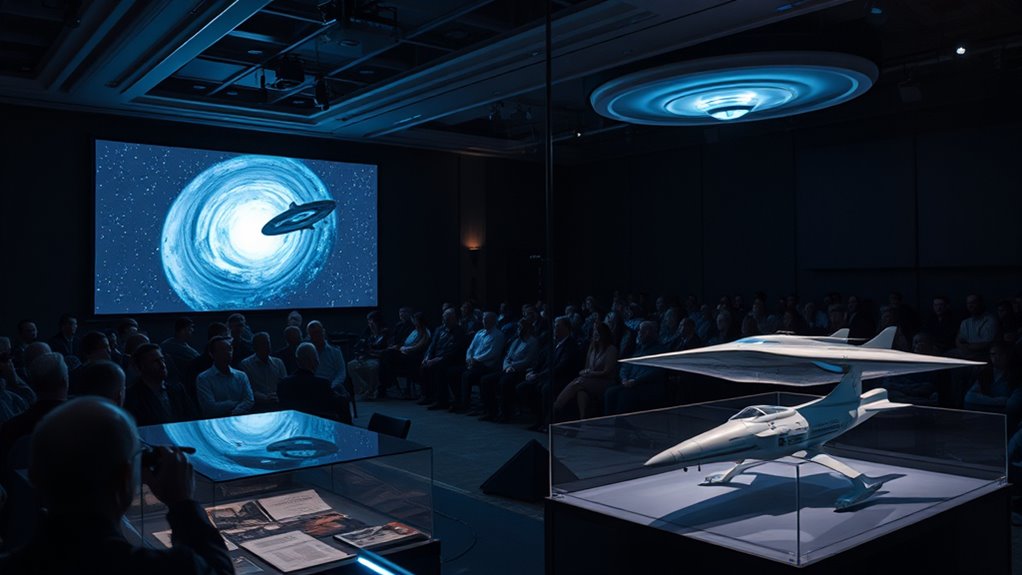

The ufology movement has evolved from secretive government cover-ups like Roswell to a widespread pursuit of transparency about unidentified aerial phenomena. Governments initially withheld information, fueling suspicion and conspiracy theories, but gradual declassifications and media coverage have increased public interest. The movement grows as official acknowledgments lend credibility, even though full disclosure remains elusive. If you want to explore how this journey continues and what may lie ahead, there’s more to uncover.
Key Takeaways
- The Ufology movement evolved from initial secrecy around incidents like Roswell to increased calls for transparency and disclosure.
- Media coverage and pop culture have fueled public interest and skepticism, shaping perceptions of UFO phenomena.
- Government declassification efforts have gradually revealed information, but many details remain classified, maintaining speculation.
- Key events, such as Roswell and whistleblower testimonies, keep the debate alive and bolster the movement’s credibility.
- Growing official acknowledgments of unidentified phenomena have strengthened the movement’s push for full disclosure.
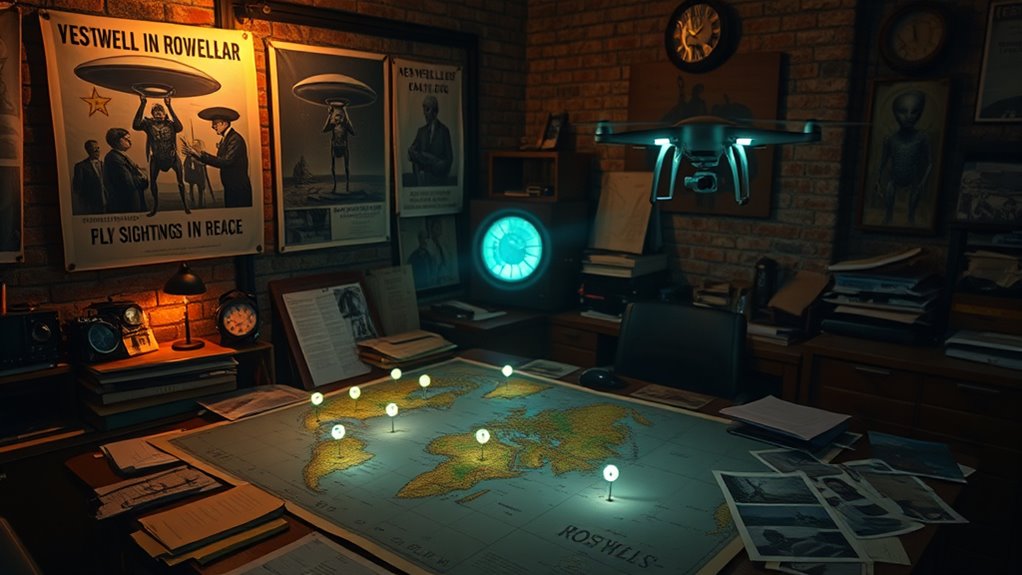
Have you ever wondered why so many people are captivated by the idea of extraterrestrial visitors? The answer lies partly in the complex web of government secrecy and media influence that surrounds UFOs and alien encounters. For decades, governments around the world have kept a tight lid on information related to unidentified flying objects, fueling speculation and conspiracy theories. When official agencies withhold details, it’s easy for your imagination to run wild, filling in the gaps with stories of secret bases, cover-ups, and government collusion with alien entities. This secrecy creates an air of mystery that keeps the public’s curiosity alive and thriving, even when official explanations are scarce or dismissive.
Government secrecy fuels curiosity and conspiracy around UFOs and alien encounters.
Media influence plays a significant role in shaping your perceptions and beliefs about UFOs and the ufology movement. News outlets, documentaries, and popular culture have sensationalized encounters, often emphasizing the mysterious and the unexplained. When you see reports of strange lights, alleged sightings, or whistleblower testimonies, it’s natural to become intrigued or even convinced that extraterrestrial life is visiting Earth. Media coverage can sway public opinion, sometimes amplifying skepticism or, conversely, fueling belief in conspiracy theories. The way stories are framed influences how seriously you take the claims, shaping the narrative around government cover-ups and the possibility of extraterrestrial contact.
Throughout the history of ufology, events like the Roswell incident in 1947 have become emblematic of this tension between secrecy and disclosure. The U.S. government initially dismissed the crash as a weather balloon, but later reports and declassified documents suggest a more complicated story. This incident ignited public fascination and suspicion, leading many to believe that the government was hiding evidence of alien technology. Over time, the narrative evolved as new sightings, leaked documents, and whistleblower testimonies emerged. Despite official denials, such events keep the debate alive, with many people convinced that the truth is being deliberately concealed. Additionally, advancements in declassification processes have gradually revealed more information, although often still leaving questions unanswered.
The ufology movement continues to grow, driven by a mix of genuine curiosity, media portrayal, and suspicions of government secrecy. As more governments release information or acknowledge the existence of unidentified phenomena, the movement’s credibility gains ground. Still, the influence of media and the history of cover-ups make it difficult to accept official explanations at face value. You’re left to navigate a landscape where truth is elusive, and the line between fact and fiction often blurs. The ongoing fascination with extraterrestrial visitors remains a testament to humanity’s desire to explore the unknown and seek answers that may, for now, lie just beyond the reach of government transparency.
Frequently Asked Questions
Are Government Agencies Hiding Secret Alien Contact Information?
Yes, government agencies might be hiding secret alien contact information through classified documents and secret agendas. They often keep such details under wraps to control public perception and national security. While some evidence hints at disclosures or cover-ups, the truth remains elusive. You should stay informed and question official narratives, as the possibility that they’re concealing vital information about extraterrestrial encounters continues to fuel speculation and curiosity.
How Credible Are the Eyewitness Testimonies in Ufology?
A picture is worth a thousand words, and eyewitness testimonies in ufology can be compelling but vary in reliability. You should consider eyewitness reliability and testimonial credibility carefully, as human memory is fallible. Some accounts are vivid and consistent, boosting credibility, while others are suspect. To truly gauge their worth, look for corroborating evidence and evaluate the witness’s background and motives, knowing not all stories hold equal weight.
What Recent Disclosures Have Confirmed Extraterrestrial Life?
Recent disclosures have started to confirm extraterrestrial life through increased government transparency and scientific validation. You can see this in declassified reports and official statements acknowledging unexplained aerial phenomena. These efforts aim to provide credible evidence, moving beyond speculation. While definitive proof remains elusive, ongoing transparency and scientific research suggest that the possibility of extraterrestrial life is gaining recognition within the scientific community and government agencies alike.
Do Ufology Groups Collaborate With Mainstream Scientific Organizations?
You might think ufology groups are partying with scientists, but nope, they rarely cooperate in serious ways. While some intergroup cooperation exists, most mainstream scientists stay skeptical, questioning the credibility of UFO claims. Ufology often operates in its own bubble, making genuine scientific skepticism hard to find. So, if you’re hoping for a UFO-Science collaboration, don’t hold your breath — it’s mostly wishful thinking.
What Impact Has Ufology Had on Popular Culture and Media?
You see how ufology influences popular culture and media through alien symbolism and conspiracy theories. These elements fuel movies, TV shows, and books, creating a fascination with extraterrestrial life. You might notice how conspiracy theories about government cover-ups add mystery and intrigue. This impact keeps UFOs in the public eye, shaping perceptions and inspiring new stories, making extraterrestrial themes a lasting part of entertainment and cultural discussions.
Conclusion
Imagine standing beneath a clear night sky, wondering if those blinking lights are just stars or something more. The ufology movement has grown from whispers of Roswell to a global quest for truth, much like a detective piecing together clues. Despite skepticism, recent government disclosures have pushed us closer to answers. Just as a single star can ignite a whole universe of questions, each discovery fuels your curiosity to keep searching beyond the known.