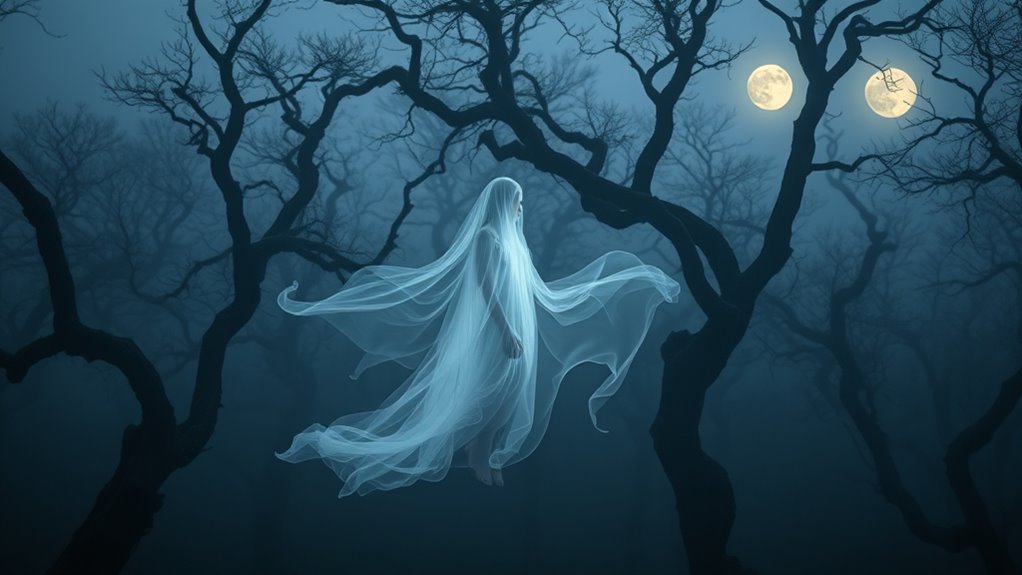
The White Lady is a widespread ghostly figure found in many cultures, symbolizing themes like loss, longing, and justice. In Western legends, she often appears as a tragic bride or woman symbolizing grief and betrayal, serving as moral warnings. In Asian stories, she’s seen as a protective or benevolent spirit tied to ancestral memories. These archetypes reflect deep cultural values and collective fears, offering insight into societal morals. Explore further to uncover the rich stories behind this timeless apparition.
Key Takeaways
- The White Lady archetype symbolizes loss, longing, justice, and unresolved grief across various cultures worldwide.
- In Western folklore, she often represents tragic love, betrayal, and moral lessons through ghostly appearances.
- Asian legends depict the White Lady as a protective or benevolent spirit, embodying spiritual purity and ancestral reverence.
- Across cultures, she serves as a symbol of justice, retribution, or a warning, connecting past tragedies with societal morals.
- The White Lady functions as a universal supernatural figure reflecting human emotions, cultural values, and collective memories.
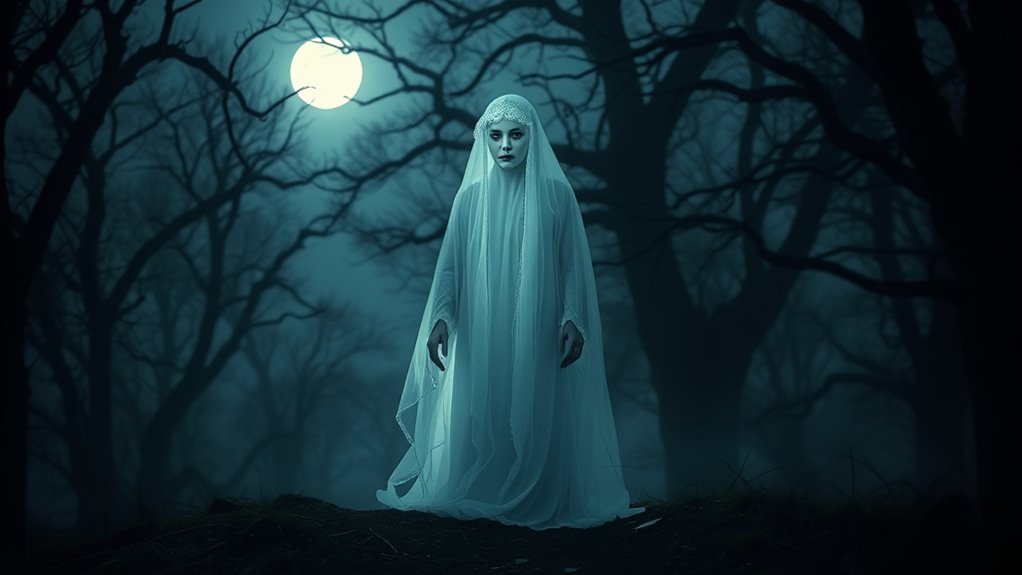
Across many cultures, the haunting image of the White Lady persists as a powerful and mysterious figure. You’ve likely heard stories passed down through generations, woven into historical legends that explain her presence. Whether seen as a tragic victim, a vengeful spirit, or a guardian, her image embodies deep cultural symbolism that resonates with communities worldwide. In these stories, the White Lady often symbolizes themes like loss, longing, or justice, making her a compelling figure that transcends borders and traditions.
The White Lady symbolizes loss, longing, and justice across cultures, embodying timeless themes of tragedy and hope.
You might find that in Western folklore, the White Lady is frequently linked to tragic tales of love and betrayal. In many European legends, she appears as a forlorn bride or a woman who suffered a terrible fate, often mourning her lost love or restless spirit. These stories serve as moral lessons or warnings, rooted in historical legends that have been retold to emphasize the importance of morality or loyalty. Her ghostly presence is seen as an echo of past tragedies, a reminder of the consequences of betrayal or unfulfilled vows. Over time, her image has taken on cultural symbolism as a representation of innocence lost or unresolved grief.
Moving east, you see similar themes but with different cultural nuances. In Asian cultures, legends of spectral women often symbolize spiritual purity or the lingering attachment to loved ones. The White Lady may be viewed as a protective or benevolent spirit, guiding or warning the living. Her appearance in these stories reflects a respect for ancestral spirits and the importance of honoring memory. These legends highlight how cultural symbolism can shape the way a ghostly figure is perceived—sometimes as a warning, sometimes as a protector. The historical legends behind these stories lend them a sense of authenticity and cultural significance, making her a symbol that embodies collective memories and societal values.
Additionally, the cultural symbolism of the White Lady often encompasses themes of justice or retribution, especially in stories where her spirit seeks to right wrongs or deliver warnings to the living. Across these varied traditions, the White Lady’s enduring presence illustrates how collective fears, hopes, and moral lessons are embedded in stories of the supernatural. You see her in haunted castles, remote countryside, and urban legends, always carrying the weight of cultural symbolism rooted in the past. Her ghostly archetype connects histories of tragedy and love, serving as a mirror to human emotions and societal values. Whether as a symbol of mourning, justice, or spiritual protection, the White Lady remains a mesmerizing figure—an enduring emblem of the mysteries that haunt our collective consciousness.
Frequently Asked Questions
What Psychological Factors Contribute to Ghostly Archetypes?
You might find that repressed memories and the collective unconscious shape ghostly archetypes in your mind. When you suppress emotions or experiences, your subconscious creates symbols like white ladies to process unresolved feelings. These archetypes tap into shared cultural symbols stored in the collective unconscious, making them feel universal. This psychological process helps you understand and cope with fears, grief, or guilt that surface through ghostly imagery.
How Do Cultural Differences Influence Ghost Stories’ Themes?
Cultural differences shape ghost stories’ themes through cultural symbolism and storytelling traditions. You’ll notice that in some cultures, ghostly figures symbolize ancestors or moral lessons, while others focus on spirits of the unrested or vengeful entities. These traditions influence how stories are told, what fears they evoke, and the moral messages they convey. Your understanding of these themes deepens when you consider each culture’s unique symbolism and storytelling style.
Are White Lady Legends Linked to Historical Events?
Yes, White Lady legends are often linked to historical events. You see, these stories incorporate historical symbolism, reflecting tragedies or significant moments in local history. Cultural interpretations shape how these legends develop, portraying the White Lady as a ghostly reminder of past injustices or lost loved ones. By understanding these stories, you gain insight into how communities process their history and cultural identity through ghostly archetypes.
How Do Modern Media Portray White Lady Spirits?
Modern media portray white lady spirits as mysterious and haunting figures, often blending tradition with contemporary storytelling. In modern cinematic films, they appear as tragic or vengeful spirits, emphasizing emotional backstories. Social media amplifies these legends through viral videos and personal stories, creating a sense of immediacy and realism. You see these portrayals often, making the white lady archetype more accessible, eerie, and relevant to today’s audiences.
Can White Lady Stories Be Explained Through Folklore Psychology?
You might see white lady stories as symbolic manifestations rooted in the collective unconscious, reflecting collective fears, desires, or unresolved grief. These tales aren’t just folklore; they tap into universal archetypes that resonate across cultures. By understanding them through folklore psychology, you realize they serve as psychological projections, helping you process complex emotions and societal tensions, making these ghostly figures more than mere legends—they’re echoes of shared human experience.
Conclusion
Have you ever wondered why these spectral figures appear so consistently across cultures? The White Lady’s ghostly archetype reminds us that loss, longing, and unresolved stories transcend borders, connecting us through shared fears and hopes. Whether haunting castles or rural roads, these spirits symbolize universal human emotions. So, next time you hear a whisper of a ghostly figure, ask yourself—are they just echoes of our collective memories, or something more mysterious lurking just beyond our understanding?