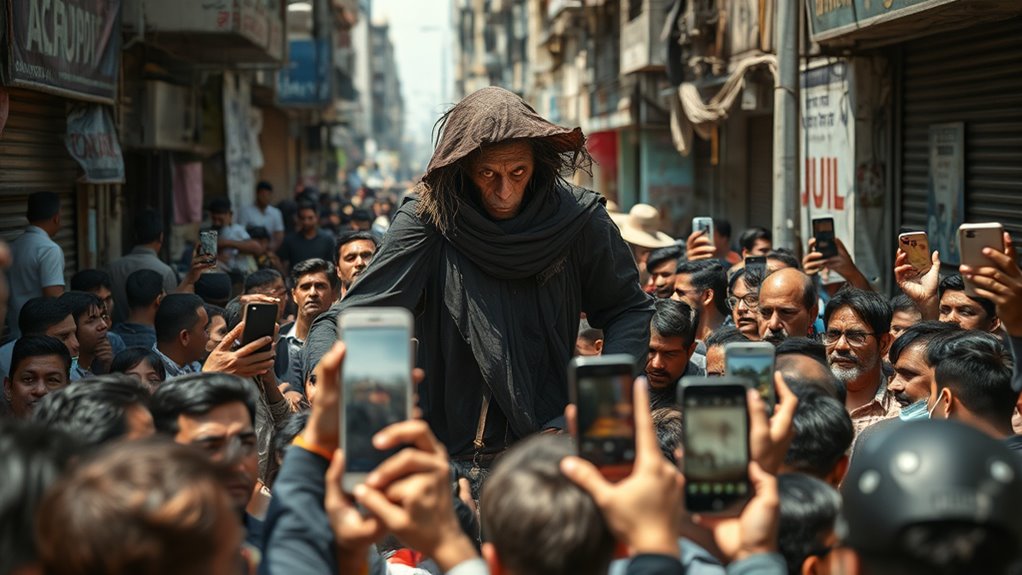

The Monkey Man of Delhi shows how media can turn isolated sightings into widespread panic. When reports first appeared, many people believed in a mysterious creature lurking in neighborhoods. Media sensationalized these accounts, spreading fear through headlines and images. This rapid coverage fueled more sightings and paranoia, creating a powerful urban legend. If you keep exploring, you’ll see how media influence transformed a fleeting fear into a lasting social phenomenon.
Key Takeaways
- Media sensationalized initial sightings of the Monkey Man, transforming isolated reports into widespread urban hysteria.
- News coverage emphasized frightening aspects, fueling public fear and encouraging more sightings.
- Sensational headlines and images blurred fact and fiction, amplifying societal paranoia.
- Media’s persistent coverage sustained the legend despite lack of concrete evidence.
- The case illustrates how media influence can magnify urban legends and shape public perception.
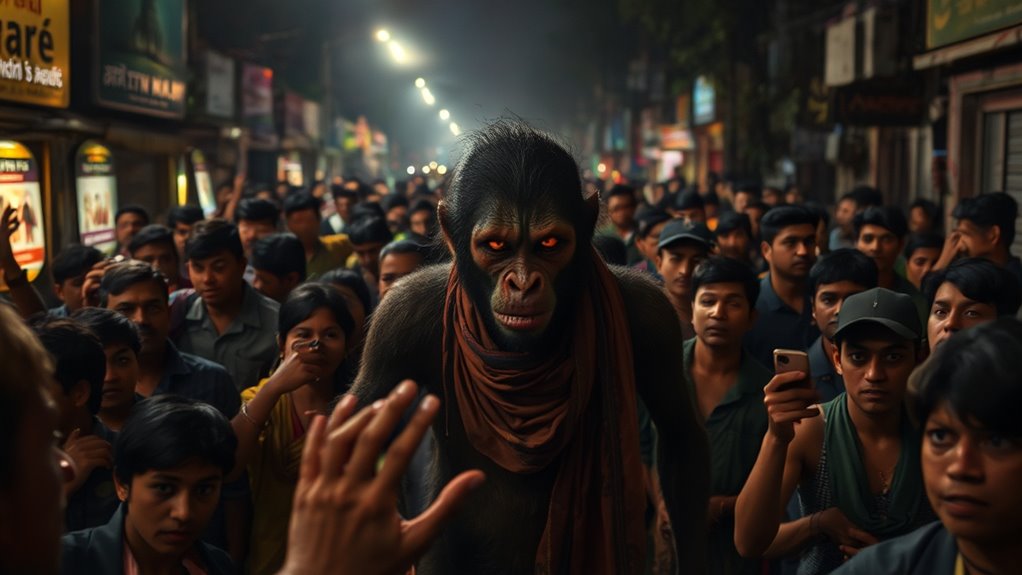
In 2001, residents of Delhi began reporting a mysterious figure known as the Monkey Man, a creature said to be a strange hybrid of monkey and human that appeared suddenly in the city’s neighborhoods. These sightings sparked a wave of fear and curiosity, quickly evolving into one of the most talked-about urban legends in India. As stories spread, you might have found yourself questioning what was real and what was fueled by imagination. The Monkey Man became a symbol of the unknown lurking in familiar places, and the media played a significant role in shaping this growing legend.
Media influence was pivotal in transforming isolated sightings into widespread hysteria. News outlets, enthusiastic for sensational stories, amplified reports of the creature’s terrifying appearances. Television news broadcasts showed images and eyewitness accounts, often without thorough investigation. This coverage turned the Monkey Man from a local anomaly into a national phenomenon almost overnight. As a result, people’s perceptions shifted from skepticism to fear, and the creature’s myth grew larger with each news report. The media’s portrayal created a feedback loop, encouraging more sightings and fueling public panic.
Media coverage fueled fear and turned the Monkey Man into a nationwide legend overnight.
You might have noticed how media coverage often sensationalizes mysterious events, and the Monkey Man case was no exception. Rumors spread rapidly, and social media, even in its early days, started to circulate stories and images that blurred the line between fact and fiction. This influence led many to believe that the creature was an actual entity rather than a case of mass hysteria or misidentification. The media’s role wasn’t just passive reporting; it actively contributed to the urban legend’s persistence. Fear was magnified by images of a sinister-looking figure lurking in shadows, often accompanied by warnings and warnings from authorities. These stories created an environment where skepticism was replaced by paranoia.
Additionally, the public perception was significantly shaped by the way media outlets emphasized the mysterious and frightening aspects of the sightings, often disregarding evidence or lack thereof. The power of media influence in the Monkey Man saga demonstrates how urban legends can be amplified in modern society. It shows how quickly fear can spread when stories are reinforced by repeated coverage and sensational headlines. Even after investigations failed to find concrete evidence of the Monkey Man’s existence, the legend persisted in public consciousness. You might realize that the legend’s endurance owes much to the media’s role in shaping perceptions, turning a series of strange sightings into a cultural phenomenon. This case exemplifies how urban legends are often less about the actual creature and more about societal fears, media influence, and the human tendency to fill gaps in understanding with stories that resonate on a deeper level.
Frequently Asked Questions
Was the Monkey Man Ever Captured or Identified?
You won’t find the Monkey Man ever captured or clearly identified, fueling urban legends and folklore myths around Delhi. Despite numerous sightings and widespread panic, no definitive evidence has surfaced to prove who or what it was. People continue to speculate, but the mystery remains unresolved, making it a fascinating part of local stories. The lack of closure keeps the legend alive, highlighting how myths thrive on uncertainty and fear.
What Psychological Impacts Did the Panic Cause Residents?
You experience significant psychological trauma from the panic caused by urban legends like the Monkey Man. The fear and uncertainty make you anxious, paranoid, and distrustful of your surroundings. The widespread mass hysteria leaves lasting impacts, affecting your mental health and sense of safety. Such episodes highlight how urban legends can instill deep psychological impacts, causing lasting effects even after the immediate threat has vanished.
How Did Local Authorities Respond to the Sightings?
You see, local authorities responded to the Monkey Man sightings by treating them as serious threats to public safety, often deploying police and rescue teams to investigate. They issued warnings and increased patrols, trying to dispel urban legends and reassure residents. Their quick actions aimed to prevent panic from escalating, showing a proactive approach to maintaining order amid the mysterious urban legend that had residents on edge.
Were There Any Similar Incidents in Other Cities?
Like whispers carried on the wind, urban legends ignite fears in other cities too, echoing tales of mysterious creatures lurking in shadows. You’ll find stories of similar incidents, where folklore origins morph into panic, sparking sightings of strange figures or beasts. These legends, born from collective imagination, serve as modern folklore, reminding you how fear often feeds on itself, creating a cycle of mystery and chaos that spreads far beyond Delhi’s borders.
Did the Media’s Coverage Influence Public Fear Levels?
Yes, the media sensationalism amplified public perception of danger, increasing fear levels. When you see alarming headlines and repeated reports, it’s easy to believe the threat is more imminent than it actually is. The media’s focus on sensational details tends to distort reality, making you more anxious and panicked. This heightened public perception fuels mass hysteria, showing how powerful media coverage can influence collective emotions and reactions during such incidents.
Conclusion
So, you see, the Monkey Man of Delhi wasn’t just a fleeting scare but a cosmic prank that shook the city to its core. The media’s frenzy turned a simple rumor into a wildfire of mass panic, making it feel like Delhi faced an invasion from another planet. Remember, sometimes all it takes is a whisper to *unleash* chaos—trust me, you wouldn’t want to be caught in that whirlwind of fear and frenzy.