
The Curse of the Ninth Symphony is a musical urban legend suggesting that composers who finish their ninth might face tragedy or early death. This belief stems from stories of famous composers like Beethoven and Bruckner, although there’s no scientific proof. It’s more about cultural fears and legends than facts, making many composers nervous about reaching that milestone. If you’re curious about how this myth developed and why it persists, you’ll find surprising details ahead.
Key Takeaways
- The “curse” suggests composers often die or face creative decline after completing their ninth symphony.
- Notable examples include Beethoven, who believed his Ninth might be his last, and many others whose deaths followed their ninth.
- The legend is rooted in cultural narratives and tragic stories, not scientific or statistical evidence.
- Some composers, like Shostakovich, defied the superstition by completing their ninth symphonies without negative consequences.
- The myth reflects broader fears about mortality, artistic legacy, and the psychological pressures of reaching creative milestones.
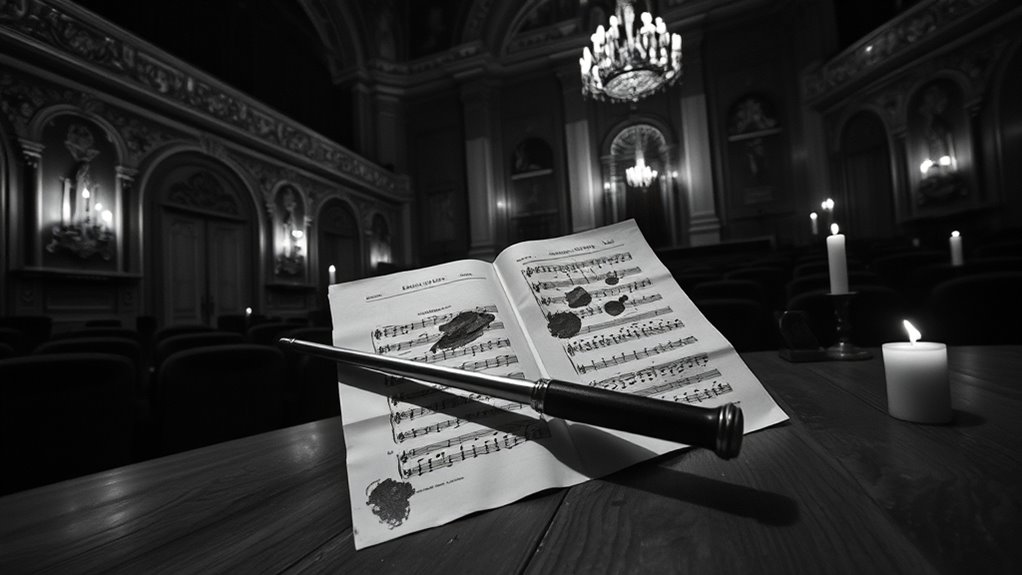
The “Curse of the Ninth Symphony” refers to a superstition that composers who write a ninth symphony rarely live to complete a tenth, often facing premature death or creative stagnation. This belief has haunted many great composers, fueling fears that reaching this milestone signals the end of their creative lives. As you explore this legend, you’ll notice how composer superstitions have influenced many artists’ approaches to symphony completion. Some even delay or abandon their ninth symphonies altogether, hoping to avoid the ominous curse. The superstition isn’t based on any scientific fact but persists because of the tragic stories behind the composers it’s associated with.
Take Beethoven, for example. When he composed his Ninth Symphony, he was already deaf and aware of his declining health. Despite these challenges, his symphony became a masterpiece, yet he reportedly feared it might be his final work. After completing it, Beethoven’s health rapidly deteriorated, and he died a few years later. This tragedy added to the myth, suggesting that crossing the ninth mark could be dangerous or even fatal. Other composers, like Schubert and Bruckner, also faced personal struggles after completing their Ninth Symphonies, which only fueled the legend further.
For many composers, the idea of the curse creates a psychological barrier. You might find yourself hesitating at the idea of reaching the ninth, worried that finishing it could spell an end to your creative journey. Some musicians deliberately avoid completing a ninth symphony, fearing the superstition might come true. Others push through, driven by the desire to prove the myth wrong. Regardless of your approach, the superstition influences how you view the process of symphony completion, often adding a layer of anxiety or superstition that wasn’t there before. Interestingly, some scholars argue that the superstition’s origins are rooted in cultural narratives rather than any actual pattern among composers.
Interestingly, not every composer fell victim to this curse. Shostakovich, for example, completed his Ninth Symphony and went on to compose more works, seemingly unaffected by the superstition. Yet, the legend persists because it taps into human fears about mortality, artistic legacy, and the unknown. The idea that reaching a certain creative milestone might bring bad luck or tragedy continues to resonate, especially among those who pour their lives into their symphonies. Whether you believe in the curse or see it as a mere myth, it remains a powerful story that shapes how many composers approach their symphony writing, often influencing their choices about how and when to finish their works.
Frequently Asked Questions
Which Composers Are Most Famously Associated With the Ninth Symphony Curse?
You should know that Beethoven, Schubert, and Bruckner are most famously associated with the composer superstition of the ninth symphony curse. These symphony legends suggest that reaching a ninth symphony often led to a composer’s decline or untimely death. Many believe this superstition influenced their careers, fueling fears about completing a ninth, and adding an eerie layer to their musical legacy.
Did Beethoven Himself Believe in the Curse of the Ninth Symphony?
You might be surprised to learn Beethoven didn’t believe in the superstition origins of the curse of the ninth symphony. Despite the legend, he was focused on his music and personal beliefs, not superstitions. Beethoven’s own composer beliefs centered on his artistic vision, not fears about composing ninth symphonies. So, he likely didn’t see the curse as a real hindrance, but rather as just an urban legend that grew over time.
Are There Any Ninth Symphonies That Broke the Curse?
You might think the curse is just a myth, but some ninth symphonies defy musical superstition and achieve great success. For example, Shostakovich’s Ninth Symphony, despite fears, was celebrated worldwide. It’s like breaking a superstition’s spell—proving that with talent and determination, you can triumph over perceived curses. These successes show that the so-called curse isn’t an absolute barrier to symphony success, just a superstition waiting to be challenged.
How Did the Myth of the Curse Originate Historically?
You might find that the myth of the curse started as superstitions in music, with composers fearing ninth symphonies would be their last. Historically, it’s a mix of myth vs reality, as many renowned composers, like Beethoven, composed their ninths late in life, fueling the legend. Over time, these stories grew, creating a superstition that a ninth symphony signaled impending tragedy, reinforcing the myth’s grip on musical culture.
Has the Curse Impacted Modern Composers’ Approaches to Ninth Symphonies?
You might notice that modern composers often avoid ninth symphonies due to composer superstitions surrounding the curse. This belief influences their approach, making them more cautious and less likely to take artistic risks with such projects. While some still compose ninth symphonies, many see the curse as a barrier to creative freedom, leading to a reluctance that impacts their willingness to push musical boundaries in these final works.
Conclusion
As you reflect on this centuries-old whisper, you realize the legend gently guides composers’ journeys, like a subtle shadow lurking at the edge of a beautiful garden. It’s not a harsh curse but a delicate reminder to embrace the mystery and humility in your creative pursuits. Sometimes, the most enchanting stories are woven from the softest fears, encouraging you to tread carefully, cherish each note, and let the music quietly inspire your own unique path forward.