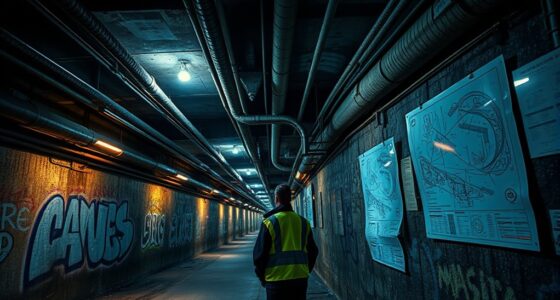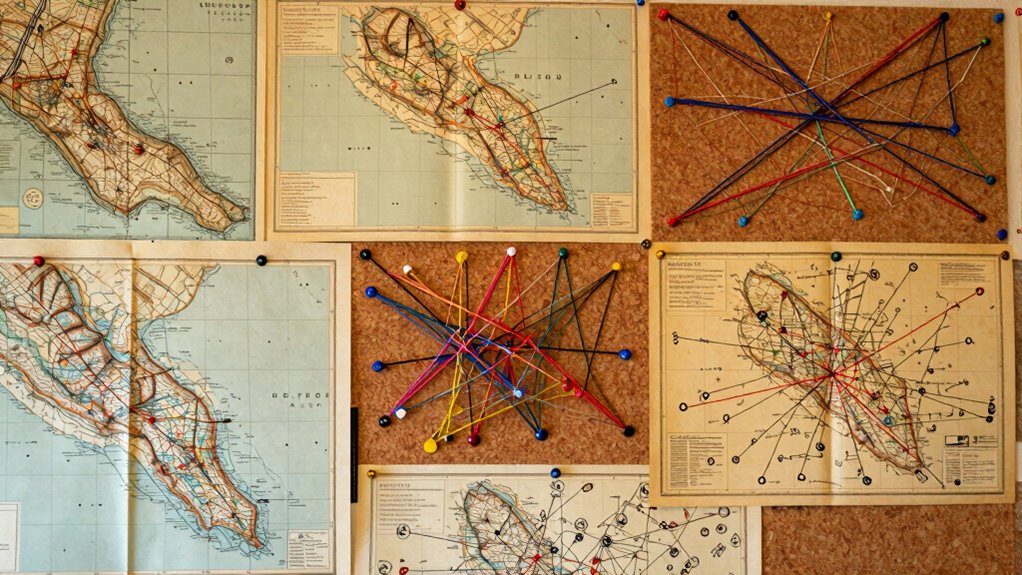

As a creature enthusiast, you can organize sightings and theories with wall maps, pinboards, and conspiracy layouts designed specifically for your passion. Mark locations of confirmed and unconfirmed reports, connect clues using strings, and layer historical sightings to spot patterns. These visual tools help you see the bigger picture, uncover hidden connections, and understand creature behaviors better. Keep exploring — more tips and ideas are waiting to help you take your investigation further.

Prime made for students and young adults
- Fast, free delivery for dorm and study essentials
- Prime Video and Amazon Music included
- Member-only deals
Key Takeaways
- Visualize creature sightings and habitats geographically using interactive wall maps with color-coded pins.
- Organize evidence, theories, and related clues on pinboards with notes, photographs, and string connections.
- Develop detailed conspiracy diagrams linking sightings, legends, and secret histories for complex analysis.
- Enhance understanding of creature distribution and behaviors through pattern recognition and spatial analysis tools.
- Foster engaging, customizable investigations that connect scattered reports into coherent narratives for enthusiasts.
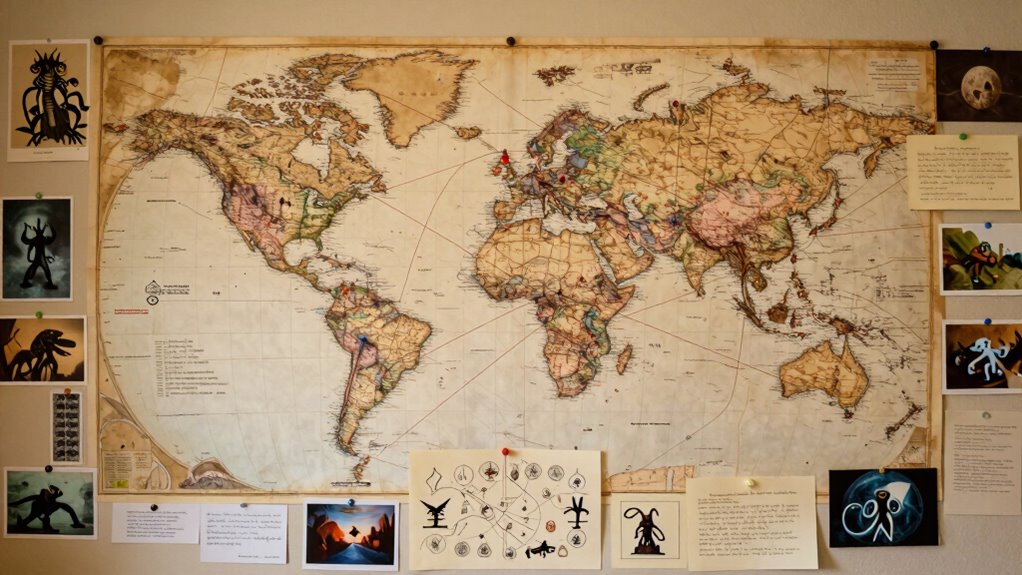
If you’re a creature enthusiast, organizing your collection or theories can be both exciting and overwhelming. Creating a visual layout helps you see the bigger picture and connect the dots between Mythical creature sightings and Legendary creature habitats. Wall maps are perfect for this purpose. You can mark locations where sightings have been reported, whether it’s a remote lake rumored to house a lake serpent or a mountain range tied to Bigfoot activity. Using different colored pins or stickers, you highlight confirmed sightings versus unconfirmed reports, giving you a dynamic overview of where creatures might be lurking. These maps don’t just serve as decoration—they become interactive tools that deepen your understanding of where creatures are believed to dwell and how sightings cluster geographically. Incorporating digital editing tools can enhance these maps with annotations or overlays, making your organization even more precise and customizable. For example, adding layers of historical sightings can reveal patterns over time, providing further insights into creature behaviors.
Pinboards offer another versatile way to organize your theories and evidence. You can pin photographs, newspaper clippings, sketches, or maps alongside notes about each sighting or hypothesis. This tactile approach keeps your ideas tangible and easy to rearrange as your theories evolve. For example, you might pin a blurry photo of an unidentified creature and jot down details about the sighting, then link it via string to a legend about similar sightings in that area. This visual connection helps you see patterns and relationships you might not notice when looking at data in a spreadsheet or digital app. Pinboards are also excellent for tracking reports over time, helping you identify trends or seasonal peaks in Mythical creature sightings. They foster a hands-on approach that can stimulate your imagination and intuition.
Conspiracy layouts take your organization to a more elaborate level. These are larger, more complex diagrams that connect sightings, legends, folklore, and supposed secret histories. They often resemble conspiracy boards with strings linking different clues, locations, and theories. If you’re into the idea that legendary creature habitats are part of a larger hidden ecosystem or conspiracy, this layout allows you to visualize those connections. You might link a sighting in a remote forest to local legends, then connect those to sightings reported decades apart, suggesting a persistent but secret presence. These layouts challenge you to think critically and creatively about how all pieces fit together, encouraging ongoing investigation and hypothesis-building. Incorporating mapping software can help you create more detailed and interactive conspiracy diagrams. Additionally, exploring cryptozoology as a field can provide useful insights and methodologies for your investigations.
Ultimately, whether you prefer maps, pinboards, or conspiracy layouts, each tool enhances your ability to organize, analyze, and deepen your fascination with creatures. They turn scattered reports into a coherent narrative, making your collection more engaging and insightful. As you expand your knowledge, these visual tools keep you grounded in the details while inspiring new theories and discoveries about Mythical creature sightings and Legendary creature habitats.
interactive wall maps for creature sightings
As an affiliate, we earn on qualifying purchases.
As an affiliate, we earn on qualifying purchases.
Frequently Asked Questions
How Do I Choose the Best Map for My Creature Collection?
To choose the best map for your creature collection, consider how it complements your creature display and allows for map customization. Look for a map that offers clear labeling, enough space for your creatures, and easy updates as your collection grows. Opt for one that matches your aesthetic and functional needs, ensuring it enhances your display. A well-chosen map makes managing your creatures more organized and visually appealing.
What Materials Are Best for Durable Pinboards?
Think of your pinboard as a fortress for your creature collection—durable materials are key. Opt for cork or felt as your base for longevity. Use sturdy framing options like wood or metal to protect it from wear. Choose adhesive types like push pins or sewing pins for easy updates. These materials and framing choices keep your creature display resilient, ensuring your collection stays safe and organized for years to come.
How Can I Personalize Conspiracy Layouts for Specific Creatures?
You can personalize conspiracy layouts for specific creatures by incorporating mythical symbolism that highlights their unique traits. Use creature taxonomy to organize their classifications clearly, and add symbols or images that reflect their mythological significance. Customize the layout with colors and labels that resonate with each creature’s lore, making your setup more engaging and insightful. This approach helps you connect mythical symbolism with scientific taxonomy, creating a compelling, personalized display.
Are There Digital Options for Creating Interactive Maps?
Yes, you can create interactive maps using digital options like augmented reality and virtual mapping tools. These technologies let you add layers, labels, and multimedia elements that enhance your experience. With augmented reality, you can explore creature habitats in your environment through your device. Virtual mapping allows you to design detailed, customizable maps online, making it easier to visualize and personalize creature layouts for your projects or fandom activities.
What Are Some Common Mistakes to Avoid With Creature-Themed Layouts?
Don’t bite off more than you can chew when designing creature-themed layouts; it’s easy to clutter your space and lose aesthetic balance. Avoid overcrowding with too many images or info, which can overwhelm viewers. Manage clutter by prioritizing key creatures or themes, and keep elements organized. Remember, simplicity often makes the biggest impact, so focus on clarity and harmony to make your layout both engaging and visually appealing.
As an affiliate, we earn on qualifying purchases.
Conclusion
If you’re a creature enthusiast, combining wall maps, pinboards, and conspiracy layouts can turn your space into a mesmerizing hub of discovery. Did you know that over 60% of creature fans say visual displays boost their engagement and learning? By showcasing your favorite creatures with these tools, you not only fuel your passion but also inspire curiosity in others. So go ahead, create a setup that’s as fascinating as the creatures you love!
As an affiliate, we earn on qualifying purchases.
geographic creature sighting maps
As an affiliate, we earn on qualifying purchases.
As an affiliate, we earn on qualifying purchases.
Fall Picks
fall essentials
As an affiliate, we earn on qualifying purchases.