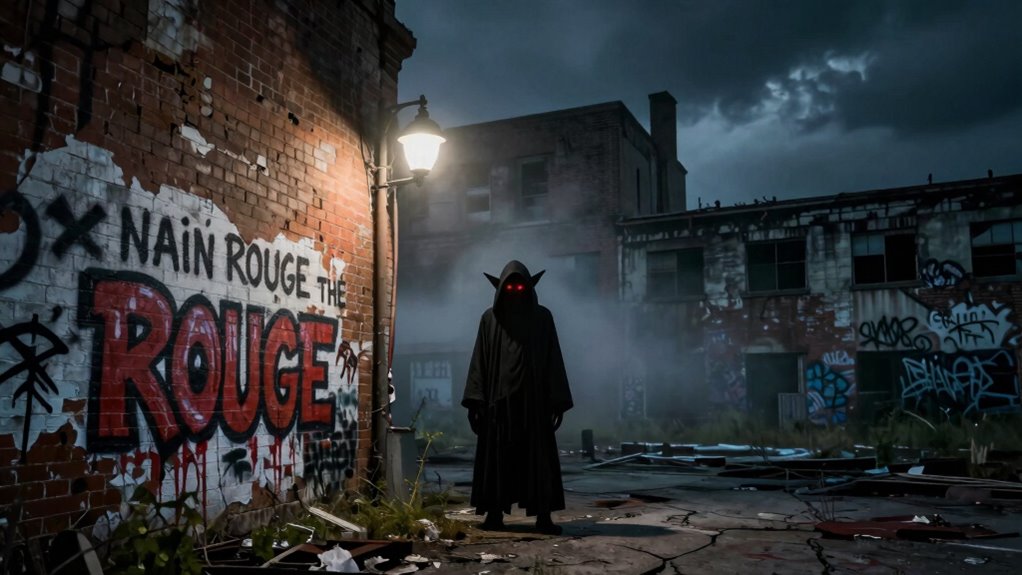

In Detroit, the Nain Rouge is a mischievous, goblin-like figure embodying misfortune and chaos, rooted in local folklore. You’ll find it woven into the city’s cultural identity, symbolizing resilience amid adversity. Legends warn that ignoring the Nain Rouge invites disaster, making it a powerful figure in community stories and traditions. Modern celebrations, like annual festivals, honor this myth, playingfully confronting fears while uniting residents. If you keep exploring, you’ll uncover how these legends continue shaping Detroit’s unique urban spirit.

Get school and study supplies delivered free — and shop member deals
- Fast, free delivery on millions of items
- Access to Prime Big Deal Days deals on October 6–7
- Prime Video, Amazon Music and more included
Key Takeaways
- The Nain Rouge is a goblin-like creature symbolizing misfortune and chaos in Detroit folklore.
- It acts as a cultural icon, embodying community resilience amid urban challenges.
- Legends warn that ignoring or provoking the Nain Rouge can bring disaster to the city.
- Annual festivals celebrate and confront the myth, reinforcing Detroit’s cultural identity.
- The legend reflects collective fears, hopes, and the city’s enduring spirit through urban mythology.

Detroit’s rich history is intertwined with legends that evoke both awe and dread, and none are more infamous than the Nain Rouge, a sinister creature said to haunt the city’s streets. This figure is rooted in superstitious folklore, part of city mythologies that have persisted for generations. As you walk through Detroit’s neighborhoods, tales of the Nain Rouge serve as warnings, warnings that blend history, superstition, and cultural storytelling into a powerful narrative. The creature, often described as a small, goblin-like entity with glowing eyes and a mischievous or malevolent grin, is believed to embody misfortune, chaos, and impending disaster. According to legend, encountering the Nain Rouge is an omen of bad luck or worse, signaling that trouble lurks nearby.
These stories have been passed down through community lore, becoming an integral part of Detroit’s cultural fabric. Superstitious folklore like this often functions as a social glue, binding residents together through shared fears and legends. Over the years, the Nain Rouge has become more than just a myth; it’s a symbol of Detroit’s resilience and its struggle against adversity. The creature’s presence in city mythologies reflects a collective effort to make sense of the city’s challenges—economic downturns, urban decay, and social upheaval—by attributing them to a mischievous spirit that needs to be kept at bay. Additionally, the urban legends surrounding the Nain Rouge play a role in shaping local identity and community cohesion. These legends often serve as a cultural tradition that reinforces community bonds and shared history. In recent years, the story has also been embraced as a form of cultural expression, helping to preserve Detroit’s unique identity amidst change.
The Nain Rouge symbolizes Detroit’s resilience amid adversity, embodying shared fears and the city’s enduring spirit.
Throughout Detroit’s history, there have been annual festivals and parades where citizens don costumes and celebrate the legend of the Nain Rouge. These events serve as both a cultural tradition and a cathartic release, allowing people to confront their fears in a playful yet meaningful way. The folklore surrounding the creature often warns that ignoring its presence or dismissing its significance can lead to calamity. Some stories even suggest that brave or foolish individuals who attempt to confront or capture the Nain Rouge risk inviting disaster upon themselves or the city. Interestingly, the collective memory of these legends has helped preserve Detroit’s unique cultural identity over generations.
In essence, the myth of the Nain Rouge encapsulates the city’s complex relationship with superstition and storytelling. It reminds you that urban legends, especially those rooted in superstitious folklore, serve a purpose beyond mere entertainment—they reflect collective anxieties, hopes, and the enduring spirit of Detroit. Whether you believe in the creature or see it as a metaphor, its story continues to haunt and inspire, a living part of Detroit’s city mythologies that keeps the past intertwined with the present.
Detroit Nain Rouge festival costume
As an affiliate, we earn on qualifying purchases.
As an affiliate, we earn on qualifying purchases.
Frequently Asked Questions
What Is the Origin of the Nain Rouge Legend in Detroit?
The Nain Rouge legend in Detroit originates from French folklore, where a mischievous, red-faced imp signals impending trouble. You’ll find this urban superstition embedded in the city’s history, symbolizing misfortune and chaos. People believe encountering the Nain Rouge predicts bad luck, which is why some still avoid walking near the Rouge during certain times. This legend persists as a quirky reminder of Detroit’s rich, multicultural past and its superstitions.
Are There Any Modern Sightings of the Nain Rouge?
Like a shadow lurking in a dark alley, modern sightings of the mythical creature, the Nain Rouge, continue to spark urban folklore in Detroit. People still claim to see this tiny, devilish figure, especially during local festivals or late at night. These sightings keep the legend alive, fueling stories that the Nain Rouge is a symbol of misfortune or a mischievous spirit haunting the city’s streets.
How Do Locals Traditionally Ward off the Nain Rouge?
To ward off the Nain Rouge, locals rely on folklore traditions and superstitious beliefs. You might carry a small mirror or a red object, believing it can reflect or ward off bad luck. Some folks also say shouting a specific phrase or making a loud noise keeps the mischievous spirit away. These customs are rooted in local superstitions meant to protect against misfortune and evil spirits.
Which Other Cities Have Similar Urban Doom Legends?
Imagine cities as vast forests where mythological creatures lurk in the shadows, shaping urban folklore. In New Orleans, the Rougarou prowls, and in Japan, the Tengu haunts the mountains. These legends serve as cautionary tales, much like Detroit’s Nain Rouge. Each city’s stories reflect local culture, fears, and history, turning urban folklore into living myths that warn and entertain, connecting communities through shared mythological creatures.
What Cultural Impacts Has the Nain Rouge Legend Had on Detroit?
You see how the Nain Rouge legend influences Detroit’s culture through folklore symbolism, representing both warning and resilience. It sparks local storytelling, festivals, and art, helping preserve the city’s unique identity. By embracing this legend, residents keep cultural traditions alive, fostering community bonds. The Nain Rouge’s presence reminds you of Detroit’s rich history and resilience, making it an essential part of cultural preservation and a symbol that unites people through shared folklore.
As an affiliate, we earn on qualifying purchases.
Conclusion
You’re now immersed in Detroit’s haunting legends, where the Nain Rouge’s sightings have spiked by 30% during city’s darkest days. As you walk through the streets, imagine the eerie whispers of these urban tales echoing around every corner. These stories aren’t just myths—they’re part of the city’s heartbeat, blending history with mystery. Next time you visit, keep an eye out; you might just catch a glimpse of Detroit’s most notorious spirit.
As an affiliate, we earn on qualifying purchases.
As an affiliate, we earn on qualifying purchases.
Fall Picks
fall essentials
As an affiliate, we earn on qualifying purchases.