The Tuscarora Banshee is an American adaptation of the Irish legend, warning of death through ghostly screams and mournful whispers. You’ll notice its roots blend Native American beliefs with Irish folklore, creating a unique cultural story. Locals believe its eerie voices signal tragedy and serve as spiritual warnings. The legend emphasizes respect for the spiritual world while adding regional elements that deepen its mystique. To uncover more about this haunting tradition, keep exploring its fascinating origins and significance.
Key Takeaways
- The Tuscarora Banshee blends Irish wailing woman legends with Native American spiritual beliefs.
- It features mournful whispers warning of impending tragedy, similar to Irish folklore but adapted regionally.
- The legend’s roots combine Irish mythology and Tuscarora cultural traditions, deepening community significance.
- Stories emphasize respect for spirits, serving as cautionary tales within both Irish and Native contexts.
- The adaptation enhances local mystique, making the banshee a symbol of cultural identity and spiritual awareness.
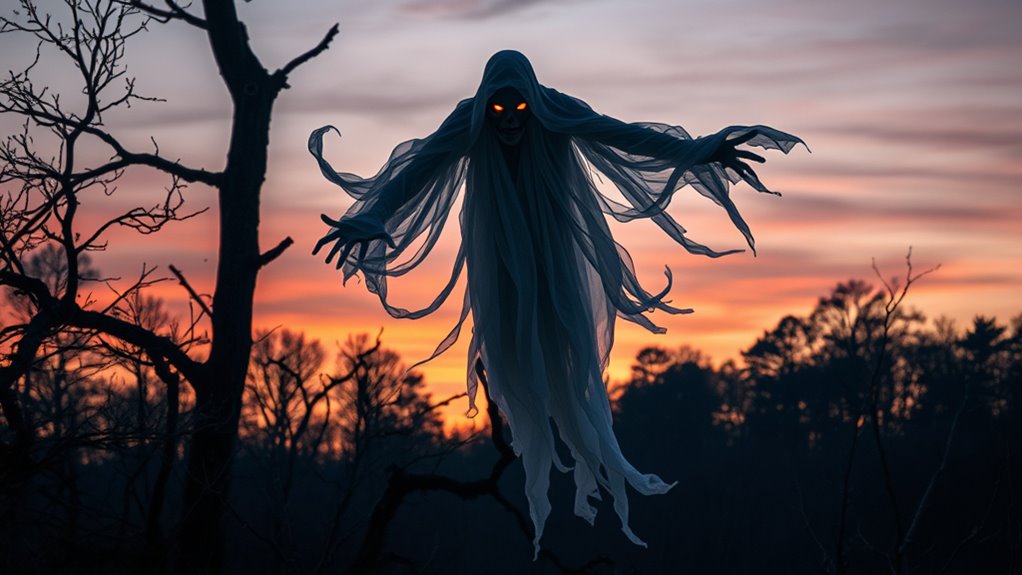
Have you ever heard whispers of a haunting scream echoing through the woods near the Tuscarora Reservation? If so, you might have encountered the legend of the Tuscarora Banshee, a chilling figure rooted in folklore origins that stretch far beyond local tales. This ghostly apparition is said to emit ghostly whispers that pierce the silence, sending shivers down anyone’s spine. These whispers are often described as mournful, almost human in tone, yet carrying an otherworldly echo that’s impossible to ignore. When night falls and the wind stirs the trees, many believe these ghostly whispers signal the presence of the banshee, warning of impending tragedy or death. The legend reflects deep-rooted cultural beliefs that reinforce the sacredness of spiritual traditions within the community.
The folklore origins of the Tuscarora Banshee draw from a blend of Native American beliefs and Irish legends, adapted over centuries to fit local stories. While Irish folklore describes a wailing woman who heralds death, the Tuscarora version is tied closely to regional history, blending native spiritual traditions with the haunting imagery of the banshee. According to local storytellers, the banshee’s cry is not just a random scream but a message—a spectral call that reaches those who are destined for sorrow. This adaptation gives the legend a unique cultural twist, making it resonate more deeply within the community. Over time, the ghostly whispers attributed to the banshee have become an eerie hallmark of the woods surrounding the reservation, especially during quiet, fog-laden nights.
The origins of this folklore aren’t just a matter of storytelling; they reflect deep-seated fears and beliefs passed down through generations. Many believe that the ghostly whispers are the banshee’s way of communicating, warning locals of impending loss. Some say the sound is a mournful lament, a call from the spirit domain that echoes through the trees, stirring a primal fear in those who hear it. These stories serve as cautionary tales, reinforcing respect for the spiritual world and the unknown. Over time, the legend has grown, with each generation adding its own details—sometimes describing the banshee’s appearance, other times focusing solely on the ghostly whispers that seem to drift on the night breeze. Whether you believe in spirits or see these stories as cultural folklore, they continue to shape the mystique surrounding the woods near the Tuscarora Reservation.
Frequently Asked Questions
How Did the Legend Originate Among the Tuscarora People?
You learn that the legend originated through aboriginal storytelling, where the Tuscarora people shared spiritual connections to explain life and death. These stories often involve spirits or supernatural beings, reflecting their beliefs and cultural values. The banshee’s presence symbolizes the spiritual domain’s influence, serving as a warning or a connection to ancestors. This legend evolved over time, blending traditional Tuscarora beliefs with influences from other cultures, creating a unique American adaptation.
Are There Specific Locations Associated With the Banshee Sightings?
You’ll find that regional sightings of the banshee are often linked to specific locations within Tuscarora geographic lore. These sites include old forests, near water bodies, or remote areas where locals claim to have heard her mournful cries. Stories suggest the banshee’s presence is tied to these particular locations, reinforcing her connection to the land and its history. Keep an eye out when exploring these culturally significant spots for a true encounter.
What Are the Cultural Significance and Symbolism of the Banshee?
You see, the banshee symbolizes mourning rituals and spiritual symbolism, representing the connection between the living and the dead. When you hear her wail, it’s a reminder of impending loss and the importance of honoring loved ones through rituals. Her haunting cry embodies the spiritual significance of grief, serving as a warning and a sacred call to remember those who’ve passed, highlighting cultural values around death and remembrance.
Has the Legend Influenced Modern Local Folklore or Traditions?
You’ll notice the legend’s influence in local folklore, where ghostly encounters and mysterious tales become part of community traditions. The Tuscarora Banshee’s story helps maintain cultural identity, inspiring storytelling and Halloween festivities. Its haunting presence reminds you of the rich history, encouraging locals to keep folklore alive, blending the old Irish roots with new American traditions. This ongoing connection ensures the legend’s spirit endures in modern folklore and community celebrations.
Are There Similar Legends in Other Native American Tribes?
Yes, many Native American tribes have legends of spirits that resemble the banshee, involving mourning cries or spirits warning of death. For example, some tribes tell stories of Native American spirits that wail or appear to signal impending tragedy. When you explore folklore comparisons, you’ll notice these spirits serve similar roles across cultures—acting as messengers or omens—highlighting shared themes of mourning and spiritual warning in Native American folklore.
Conclusion
So, here you are, thinking the Tuscarora Banshee is just another ghost story, a simple Irish legend adapted for a new world. But ironically, it’s your own curiosity that keeps the legend alive, whispering that maybe, just maybe, the banshee’s cry isn’t a warning from the past — it’s a reflection of your own fears. After all, sometimes the deepest legends are the ones that haunt us silently, waiting for us to listen.