For families searching for military history books for kids, my best overall pick is World War II History for Kids: 500 Facts, a broad, fact-led starting point for young readers who like short, digestible entries. National Geographic Kids Everything World War I stands out for its photographs, while World War II: An Interactive History Adventure offers a more participatory way to explore the past. The main tradeoff is between quick-reference facts and sustained narratives, with some titles also focusing narrowly on battles, vehicles, or one theater of war. Age, reading confidence, and a child’s tolerance for wartime subject matter should guide the choice as much as topic does. Read on for the full breakdown and a guide to matching a book to the reader.

Prime made for students and young adults
- Fast, free delivery for dorm and study essentials
- Prime Video and Amazon Music included
- Member-only deals
Key Takeaways
- Broad coverage beats narrow focus for a first purchase: World War II History for Kids: 500 Facts offers a wide entry point, while the battle-specific books suit readers who already want a particular campaign or theater.
- Visual appeal varies by purpose: National Geographic Kids titles pair photographs with facts, whereas the military-machines visual history centers attention on equipment rather than the wider human story.
- Reading format changes the experience: The You Choose interactive title invites decisions, while encyclopedias and fact collections work better for browsing and returning to short sections.
- The lineup is heavily weighted toward World War II: World War I and American Revolution titles provide useful alternatives for families seeking a different period.
- Battle-focused books are not interchangeable: Great Battles for Boys: World War II Pacific and Great Battles for Boys: World War II Europe separate by theater, making a child’s specific interest a practical selection test.
| World War II History for Kids: 500 Facts |  | Best for Quick-Fact Browsers | Topic: World War II | Audience: Kids | Fact count: 500 | VIEW LATEST PRICE | See Our Full Breakdown |
| A Visual History of World Military Machines: Legendary Combat Vehicles |  | Best for Vehicle Enthusiasts | Subject: World military machines and combat vehicles | Vehicles covered: Aircraft, submarines, armored vehicles, and stealth bombers | Named examples: Spitfires, U-Boats, and Humvees | VIEW LATEST PRICE | See Our Full Breakdown |
| Brilliant Battle Strategies: Children’s Military and War History Books |  | Best for Strategy-Minded Readers | Subject: Military and war history | Focus: Battle strategies | Audience: Children | VIEW LATEST PRICE | See Our Full Breakdown |
| Legends of War: American Revolution for Kids |  | Best for American Revolution Stories | Topic: American Revolution | Audience: Kids | Historical focus: Lesser-known heroes, battles, and the fight for freedom | VIEW LATEST PRICE | See Our Full Breakdown |
| Historic Battles from World War II for Kids: 15 Battles from Europe and the Pacific |  | Best for Comparing World War II Theaters | Topic: World War II battles | Audience: Children | Number of battles: 15 | VIEW LATEST PRICE | See Our Full Breakdown |
| Great Battles for Boys: World War II Pacific |  | Best for Pacific Theater Battle History | Subject: World War II | Theater: Pacific | Focus: Major battles | VIEW LATEST PRICE | See Our Full Breakdown |
| World War II: An Interactive History Adventure (You Choose: History) | 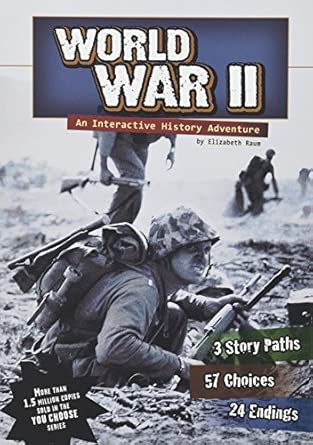 | Best for Choice-Driven Reading | Subject: World War II | Format: Interactive history book | Series: You Choose: History | VIEW LATEST PRICE | See Our Full Breakdown |
| National Geographic Kids Everything World War I: Dig In With Thrilling Photos and Fascinating Facts |  | Best for Photo-Led World War I Learning | Subject: World War I | Audience: Kids | Format: Book | VIEW LATEST PRICE | See Our Full Breakdown |
| World War II: A Visual Encyclopedia of the Second World War |  | Best for Visual Reference Browsing | Topic: World War II | Full subject: The Second World War | Format: Visual encyclopedia | VIEW LATEST PRICE | See Our Full Breakdown |
| National Geographic Kids Everything Battles: Arm Yourself with Fierce Photos and Fascinating Facts |  | Best for Battle-Themed Browsing | Subject: Battles | Publisher brand: National Geographic Kids | Presentation: Photographs and facts | VIEW LATEST PRICE | See Our Full Breakdown |
| Great Battles for Boys: World War II Europe |  | Best for European Theater Battles | Format: Not specified | Subject: World War II | Theater: Europe | VIEW LATEST PRICE | See Our Full Breakdown |
| America in World War II: A History Just for Kids! |  | Best for a Broad, Child-Focused Introduction | Format: Not specified | Subject: World War II | Geographic or national focus: America, according to the title | VIEW LATEST PRICE | See Our Full Breakdown |
| Dive! World War II Stories of Sailors and Submarines in the Pacific |  | Best for Pacific Naval History | Format: Book | Subject: World War II | Setting: Pacific | VIEW LATEST PRICE | See Our Full Breakdown |
| Legends of War: Military History for Kids — WWII |  | Best for True Stories and Unsung Heroes | Format: Not specified | Subject: World War II military history | Audience: Children | VIEW LATEST PRICE | See Our Full Breakdown |
| military history books for kid | Audience | Format | Subject | ASIN |
|---|---|---|---|---|
| World War II History for Kids: | Kids | Not specified in the supplied product data | — | — |
| A Visual History of World Mili | Not specified in the supplied product data | — | World military machines and combat vehicles | — |
| Brilliant Battle Strategies: C | Children | — | Military and war history | — |
| Legends of War: American Revol | Kids | Not specified in the supplied product data | — | — |
| Historic Battles from World Wa | Children | — | — | — |
| Great Battles for Boys: World | Boys, as indicated by the title | Book | World War II | 0997749318 |
| World War II: An Interactive H | — | Interactive history book | World War II | 142963457X |
| National Geographic Kids Every | Kids | Book | World War I | 1426317158 |
| World War II: A Visual Encyclo | Children, as indicated by the series | Visual encyclopedia | — | 1465440275 |
| National Geographic Kids Every | Kids, as indicated by the title | Book | Battles | 1426311001 |
| Great Battles for Boys: World | Boys, according to the title | Not specified | World War II | 0997749326 |
| America in World War II: A His | — | Not specified | World War II | B00ARW8EJK |
| Dive! World War II Stories of | Children, based on the roundup subject | Book | World War II | 054542559X |
| Legends of War: Military Histo | Children | Not specified | World War II military history | B0FCTZHVT7 |
More Details on Our Top Picks
World War II History for Kids: 500 Facts
500 bite-sized facts make this the broadest quick-reference choice among these five books. It suits children who like moving from one topic to another rather than following a single battle from beginning to end. Compared with Historic Battles from World War II for Kids, which centers on 15 battles across two theaters, this book offers a wider fact-focused approach to World War II. That breadth can help a young reader sample the subject, though facts alone may provide less narrative connection between events. The supplied details do not specify reading level, illustrations, or the topics covered, so I would not choose it on the promise of a particular format or depth. It makes the most sense as an accessible starting point or a browse-and-return book, not as a detailed campaign history.
Pros:- Presents 500 facts in a kid-focused format.
- Focuses on World War II rather than military history in general.
- Fact-based structure may suit short reading sessions and casual browsing.
Cons:- The supplied description does not explain how facts are grouped or connected.
- No reading level, illustration details, or historical depth are provided.
- A fact-centered approach may offer less context than a book organized around specific battles.
Best for: Children who enjoy short facts and want a broad, approachable introduction to World War II.
Not ideal for: Readers seeking a continuous story, sustained analysis of a particular campaign, or confirmed details about illustrations and reading level.
- Topic:World War II
- Audience:Kids
- Fact count:500
- Series:History Facts for Kids
- Format:Not specified in the supplied product data
- Reading level:Not specified in the supplied product data
Our verdict“Choose this for a child who prefers many short World War II facts over a sustained account of particular battles.”
A Visual History of World Military Machines: Legendary Combat Vehicles
Military technology takes center stage here, with coverage spanning aircraft, submarines, armored vehicles, and stealth bombers. Named examples such as Spitfires, U-Boats, and Humvees give young readers recognizable machines to follow across different eras and roles. That makes this a different kind of military history choice from World War II History for Kids: 500 Facts, which is specifically framed around the Second World War and short facts. This book’s vehicle focus may draw in children who are more curious about how armed forces move and fight than about a general chronology. The tradeoff is a narrower lens: the supplied description does not promise a full account of wars, battles, or the people involved. The product data also gives no age range or detail about the illustrations, so I would choose it for its subject rather than assume a particular reading experience.
Pros:- Covers several kinds of military vehicles, including aircraft, submarines, and armored vehicles.
- Includes recognizable examples such as Spitfires, U-Boats, and Humvees.
- Offers a technology-centered angle distinct from battle-focused books.
- Published by Fox Chapel Publishing.
Cons:- Vehicle coverage may leave less room for campaigns, political context, and personal stories.
- The supplied data does not specify an age range or reading level.
- The extent and style of the illustrations are not described in the supplied data.
Best for: Children fascinated by combat aircraft, submarines, and armored vehicles who want military history organized around machines.
Not ideal for: Readers looking for a people-centered account of a particular war or a focused guide to World War II battles.
- Subject:World military machines and combat vehicles
- Vehicles covered:Aircraft, submarines, armored vehicles, and stealth bombers
- Named examples:Spitfires, U-Boats, and Humvees
- Publisher:Fox Chapel Publishing
- Audience:Not specified in the supplied product data
- Format details:Not specified in the supplied product data
Our verdict“Pick this for a child whose interest in military history starts with the machines, not with a specific war or battle.”
Brilliant Battle Strategies: Children’s Military and War History Books
Battle strategy is the defining angle of this title, making it the most directly aimed at children curious about how military decisions shape conflicts. That focus sets it apart from A Visual History of World Military Machines, which approaches military history through vehicles and equipment, and from Historic Battles from World War II for Kids, which identifies 15 specific battles across Europe and the Pacific. A strategy-led book may suit a reader who asks why forces chose particular plans, but the supplied description gives no examples of the strategies, conflicts, or teaching approach. That lack of detail makes it hard to judge how much context the book provides or what age group can follow it. I would treat it as a targeted pick for an existing interest in tactics, not as a confirmed all-purpose introduction to military history.
Pros:- Places battle strategy at the center of its subject.
- Is explicitly presented as a children’s military and war history book.
- Offers a distinct alternative to vehicle-focused and battle-by-battle titles.
Cons:- The supplied product data provides no examples of battles or strategies covered.
- No reading level, length, format, or visual details are provided.
- The available description does not establish how the book balances tactics with wider historical context.
Best for: Children already interested in military tactics who want a book centered on battle strategies rather than vehicles or a single set of battles.
Not ideal for: Parents seeking a clearly described age range, named historical examples, or a verified overview of a specific war.
- Subject:Military and war history
- Focus:Battle strategies
- Audience:Children
- Series or collection wording:Children’s Military and War History Books
- Specific conflicts:Not specified in the supplied product data
- Format and length:Not specified in the supplied product data
Our verdict“Consider this for a child who is specifically curious about military strategy, while recognizing that the available details do not reveal its examples or depth.”
Legends of War: American Revolution for Kids
Lesser-known heroes and the American Revolution give this book a narrower historical focus than the World War II titles in this group. Its attention to people, battles, and the fight for freedom may help children approach military history through individual stories rather than a list of facts or equipment. Compared with World War II History for Kids: 500 Facts, it trades broad subject coverage for a single conflict and a stated emphasis on lesser-known figures. That makes it a more specific choice for families studying the Revolution, but the supplied description does not name the heroes or explain how battles and political context are handled. There is also no information about format, length, or reading level. I would choose it for its topic and story angle, while avoiding assumptions about how detailed or illustrated it is.
Pros:- Focuses on the American Revolution, adding a period beyond the World War II titles in this selection.
- Highlights lesser-known historical heroes.
- Covers battles and the fight for freedom.
- Uses a story-oriented angle rather than a stated fact count or vehicle catalog.
Cons:- The supplied data does not identify the heroes or battles covered.
- No format, length, or reading level is provided.
- Its single-conflict focus may not suit children seeking a broad military history survey.
Best for: Families looking for a child-focused American Revolution book that highlights lesser-known heroes alongside battles.
Not ideal for: Readers seeking World War II coverage, a broad survey of military history, or a book with confirmed format and reading-level details.
- Topic:American Revolution
- Audience:Kids
- Historical focus:Lesser-known heroes, battles, and the fight for freedom
- Named figures:Not specified in the supplied product data
- Format:Not specified in the supplied product data
- Length:Not specified in the supplied product data
Our verdict“Choose this for a child studying the American Revolution who would connect with stories of lesser-known people and battles.”
Historic Battles from World War II for Kids: 15 Battles from Europe and the Pacific
Fifteen battles across Europe and the Pacific give this book a defined route through World War II, rather than the broad fact collection offered by World War II History for Kids: 500 Facts. That structure may help a child see the conflict through selected military encounters and compare events in two major regions. It is also more battle-specific than Brilliant Battle Strategies, whose supplied description does not identify any particular conflicts. The clear scope is a strength, but it also limits coverage to 15 battles; readers seeking a broad overview of the war’s people, home fronts, or causes may need another book. The product data does not specify reading level, length, format, or the battles included, so families cannot tell from the available details how much context each account provides.
Pros:- Covers 15 World War II battles.
- Includes battles from both Europe and the Pacific.
- Is explicitly presented in a kid-focused format.
- Belongs to the Historic Battles for Kids series.
Cons:- The selection of battles is not named in the supplied product data.
- The number of battles limits its scope compared with a broad World War II overview.
- Format, length, reading level, and depth of historical detail are not specified.
Best for: Children who want a structured introduction to selected World War II battles in both Europe and the Pacific.
Not ideal for: Readers seeking a full account of World War II beyond battles, or families who need confirmed reading-level and format information before choosing.
- Topic:World War II battles
- Audience:Children
- Number of battles:15
- Regions covered:Europe and the Pacific
- Series:Historic Battles for Kids
- Format and length:Not specified in the supplied product data
Our verdict“Choose this for a child who wants to study selected World War II battles across Europe and the Pacific rather than browse a broad collection of facts.”
Great Battles for Boys: World War II Pacific
Great Battles for Boys: World War II Pacific is the focused pick for young readers who want to study major fighting in the Pacific rather than get a broad survey of the war. Its theater-specific scope gives it a clear contrast with Great Battles for Boys: World War II Europe, which centers on a different set of campaigns, and with the wider-ranging World War II: A Visual Encyclopedia of the Second World War. That focus can help a child follow one region’s battles without switching between theaters, but the supplied information does not identify its age range, illustrations, maps, or exact battles. I would choose it when Pacific campaigns are the main interest, not as a sole introduction to all of World War II. Readers wanting a broader battle sampler may prefer Historic Battles from World War II for Kids.
Pros:- Concentrates on major battles in the Pacific Theater
- Offers a distinct regional focus compared with the Europe-focused companion title
- A direct fit for readers seeking battle-centered military history
Cons:- The available description does not name the battles covered
- No details are provided about maps, photographs, or other visual aids
- A Pacific-only scope leaves other theaters and broader wartime context outside its focus
Best for: Young readers already curious about Pacific Theater battles who want a book centered on that part of World War II.
Not ideal for: Families seeking a broad introduction to both European and Pacific campaigns, or buyers who need confirmed information about age level, maps, or illustrations.
- Subject:World War II
- Theater:Pacific
- Focus:Major battles
- Audience:Boys, as indicated by the title
- Format:Book
- ASIN:0997749318
Our verdict“Choose this for a child focused on Pacific Theater battles; choose a broader World War II title for coverage across regions.”
World War II: An Interactive History Adventure (You Choose: History)
World War II: An Interactive History Adventure suits children who engage more readily when they can make decisions instead of following a single continuous account. Its choice-led structure turns reading into a path through a historical adventure, setting it apart from the reference approach of World War II: A Visual Encyclopedia of the Second World War and the battle-specific focus of Great Battles for Boys: World War II Pacific. That format may encourage rereading, since choices can lead readers through different paths, but the supplied details do not explain how closely each route follows documented events or how much historical background is included. I would pick it for participation and exploration, not as the only source for a systematic account of the war. Readers seeking photos and concise facts may prefer the National Geographic Kids titles.
Pros:- Choice-driven format invites active participation
- Presents World War II as a historical adventure
- Different reading paths may make repeat reading appealing
Cons:- The available description does not detail how choices connect to historical events
- No information is provided about photographs, maps, or reference features
- A branching format may be less useful than a linear book for studying events in sequence
Best for: Children who like branching stories and want to explore World War II through decisions and different reading paths.
Not ideal for: Readers who prefer a linear reference book, or families seeking confirmed details about historical coverage, illustrations, or age guidance.
- Subject:World War II
- Format:Interactive history book
- Series:You Choose: History
- Reading approach:Readers make choices that guide the story path
- Content style:Historical adventure
- ASIN:142963457X
Our verdict“Pick this for an adventurous, interactive introduction, but pair it with a reference title for a more structured account of World War II.”
National Geographic Kids Everything World War I: Dig In With Thrilling Photos and Fascinating Facts
National Geographic Kids Everything World War I is the clearest choice here for a child specifically interested in World War I, with photographs and facts shaping its approach to the subject. That makes it distinct from the lineup’s several World War II titles, including Great Battles for Boys: World War II Pacific, and from National Geographic Kids Everything Battles, whose broader topic is battles rather than this particular war. Photos can give young readers concrete visual context, while fact-led presentation offers a different entry point from an interactive narrative such as World War II: An Interactive History Adventure. The tradeoff is its narrow subject: it is not a general military history survey, and the supplied details do not specify the topics, depth, or number of photographs. Choose it for a World War I interest, not for coverage across multiple conflicts.
Pros:- Focuses specifically on World War I
- Uses photographs to provide visual context
- Presents historical information through facts
- Designed for a kids’ audience
Cons:- Covers one war rather than a range of military history topics
- The available description does not list specific events or themes
- No details are provided about the number or type of photographs
Best for: Kids who want an illustrated, fact-focused introduction to World War I rather than another World War II book.
Not ideal for: Families seeking a broad military history overview, a narrative battle account, or confirmed details about the book’s depth and visual contents.
- Subject:World War I
- Audience:Kids
- Format:Book
- Publisher brand:National Geographic Kids
- Presentation:Photographs and historical facts
- ASIN:1426317158
Our verdict“Choose this for a child seeking a photo-led World War I introduction; look elsewhere for multiple wars or a story-driven account.”
World War II: A Visual Encyclopedia of the Second World War
World War II: A Visual Encyclopedia of the Second World War is the reference-oriented option for children who want to browse a topic rather than follow one battle or a choice-based story. Its placement in DK’s Children’s Visual Encyclopedias series signals a visual reference format, separating it from the focused Pacific campaigns in Great Battles for Boys: World War II Pacific and the interactive paths in World War II: An Interactive History Adventure. That makes it a plausible pick for dipping into World War II topics, but the supplied product data does not name its specific entries, images, or layout. I would favor it over a theater-specific title when broad browsing is the goal, while avoiding assumptions about coverage beyond the title and series information. Children who prefer a narrow battle narrative may find this format less directed.
Pros:- Identified as a visual encyclopedia
- Part of a children’s reference series
- World War II subject suggests broader scope than a single-theater title
Cons:- The available product details do not list specific topics or entries
- No confirmed information is provided about images, diagrams, or layout
- A reference format may be less engaging for readers who want a continuous story
Best for: Children who enjoy browsing a visual reference book and want a World War II title rather than a single-theater battle account.
Not ideal for: Readers who want a guided narrative, a named set of battles, or confirmed details about the encyclopedia’s images and entries.
- Topic:World War II
- Full subject:The Second World War
- Format:Visual encyclopedia
- Series:DK Children’s Visual Encyclopedias
- Audience:Children, as indicated by the series
- ASIN:1465440275
Our verdict“Choose this for visual, browse-at-your-own-pace World War II reference reading; choose a battle-focused book for a more directed account.”
National Geographic Kids Everything Battles: Arm Yourself with Fierce Photos and Fascinating Facts
National Geographic Kids Everything Battles is the broadest battle-themed pick in this group: its supplied description points to photographs and facts about battles, without limiting the book to one war or theater. That separates it from Great Battles for Boys: World War II Pacific, which focuses on major Pacific battles, and from National Geographic Kids Everything World War I, which centers on one conflict. The broader topic may suit a child whose interest is combat across history, but the product information does not say which battles, periods, or regions appear. Compared with the World War II visual encyclopedia, this title signals a battle-centered subject rather than a general war reference. I would choose it for browsing battle facts and images, not for a chronological military history or a detailed study of one campaign.
Pros:- Centers on battles rather than one named war
- Features photographs for visual context
- Includes factual information about battles
- National Geographic Kids branding makes its intended audience clear
Cons:- The available description does not identify which battles are covered
- No details are provided about chronology, regions, or historical depth
- A broad battle focus may offer less context about the wars surrounding each battle
Best for: Kids interested in battles across different historical settings who prefer photographs and concise facts to a single-war account.
Not ideal for: Readers studying a specific conflict or seeking confirmed coverage of particular battles, regions, or historical periods.
- Subject:Battles
- Publisher brand:National Geographic Kids
- Presentation:Photographs and facts
- Audience:Kids, as indicated by the title
- Format:Book
- ASIN:1426311001
Our verdict“Choose this for a child who wants photo-led battle facts across history, not a focused account of one war or campaign.”
Great Battles for Boys: World War II Europe
Great Battles for Boys: World War II Europe suits young readers who want to follow the major battles of the European theater rather than survey every part of the war. Its geographic focus gives it a clearer lane than America in World War II: A History Just for Kids!, whose broader American-history framing may appeal more to readers seeking a general overview. It also pairs naturally with Great Battles for Boys: World War II Pacific for families building a two-book theater-by-theater path. The tradeoff is that the available information does not specify its reading level, illustrations, or which battles it covers, so I would not choose it for a child who needs a highly visual or carefully leveled introduction. Its narrow subject makes it a focused pick, not a complete account of World War II.
Pros:- Keeps its subject focused on major battles in the European theater.
- Offers a clear geographic complement to Great Battles for Boys: World War II Pacific.
- Battle-centered scope can help readers follow the war through specific military events.
Cons:- Provided details do not identify the battles covered or explain how they are presented.
- No reading-level, illustration, or length information is available to guide parents.
- A Europe-only focus leaves out the Pacific theater and broader home-front history.
Best for: Children already curious about major European World War II battles, especially readers who may also read the companion Pacific volume.
Not ideal for: Families seeking a verified age or reading-level match, a picture-heavy introduction, or coverage of both the European and Pacific theaters in one book.
- Format:Not specified
- Subject:World War II
- Theater:Europe
- Focus:Major battles
- Audience:Boys, according to the title
- Series or companion title:Great Battles for Boys: World War II Pacific
- ASIN:0997749326
Our verdict“Choose this for a young reader seeking a focused account of World War II battles in Europe, but check the edition details if reading level or visual format matters.”
America in World War II: A History Just for Kids!
America in World War II: A History Just for Kids! is the most directly child-oriented choice by title, and its framing points toward a broader introduction to the American experience of the war rather than a single battle or service branch. That makes it a useful contrast with Great Battles for Boys: World War II Europe, which narrows its attention to one theater, and Dive! World War II Stories of Sailors and Submarines in the Pacific, which centers on war at sea. The title promises accessibility, but the supplied listing gives no description of its actual topics, format, reading level, or visual approach. I would treat it as a possible starting point, not assume it covers every part of the conflict or matches a particular child’s reading ability without checking the edition.
Pros:- The title explicitly positions the book as a history for kids.
- Its American-history framing differs from theater- or service-specific books in the roundup.
- Could suit readers who want a broader starting point than a book devoted to one battle or military role.
Cons:- No product description or subject details beyond the title were provided.
- Reading level, format, length, and visual content are not specified.
- The title alone does not establish how much of the wider war beyond the American experience is covered.
Best for: Parents seeking a World War II book explicitly presented for children, with an American-history angle rather than a single-battle focus.
Not ideal for: Readers who specifically want Pacific naval stories, detailed European battle coverage, or confirmed information about format and reading level before buying.
- Format:Not specified
- Subject:World War II
- Geographic or national focus:America, according to the title
- Intended audience:Children, according to the title
- Focus:History of America in World War II
- Reading level:Not specified
- ASIN:B00ARW8EJK
Our verdict“Consider it for a child-friendly introduction with an American focus, but verify the book’s contents and format if you need a specific scope or reading level.”
Dive! World War II Stories of Sailors and Submarines in the Pacific
Dive! World War II Stories of Sailors and Submarines in the Pacific gives young history readers a distinct route into the conflict: the people and vessels involved in the Pacific war at sea. That focused subject separates it from Great Battles for Boys: World War II Europe, which centers on land battles in another theater, and from America in World War II: A History Just for Kids!, whose title suggests a wider American-history scope. Stories about sailors and submarines can make naval warfare more approachable than a broad military survey, while the Pacific setting keeps the subject specific. The same narrow lens is its limitation: it is not a general account of World War II, and the supplied details do not confirm reading level, illustrations, or the range of stories included.
Pros:- Focuses specifically on sailors and submarines, a distinct angle among these recommendations.
- Covers the Pacific theater rather than repeating a Europe-centered battle focus.
- Uses stories from the war at sea as its subject, offering a people-centered way into naval history.
Cons:- Its naval and Pacific focus does not provide a broad overview of the entire war.
- The supplied details do not specify reading level or illustration style.
- Readers mainly interested in land battles may find its subject too specialized.
Best for: Children interested in submarines, sailors, and the Pacific theater who would rather follow focused stories than read a general war overview.
Not ideal for: Readers looking for broad coverage of World War II, European battles, or a confirmed picture-heavy or age-leveled format.
- Format:Book
- Subject:World War II
- Setting:Pacific
- Topic:Sailors and submarines
- Approach:Stories from the war at sea
- Audience:Children, based on the roundup subject
- ASIN:054542559X
Our verdict“Pick this for a child drawn to submarines and Pacific naval stories, not as a stand-alone guide to all of World War II.”
Legends of War: Military History for Kids — WWII
Legends of War: Military History for Kids — WWII brings together true stories, battles, and unsung heroes, giving it a story-led profile distinct from Dive! World War II Stories of Sailors and Submarines in the Pacific, which concentrates on naval life and a particular theater. It also appears broader in subject than Great Battles for Boys: World War II Europe, since its description includes both battles and individual figures rather than only major European engagements. That combination may help children connect military events with the people behind them. The tradeoff is that no details are supplied about which stories appear, how the book balances battles with biographies, or its reading level and format. I would choose it for varied true-story material, not for a verified deep account of one campaign.
Pros:- Combines World War II battles with stories about unsung heroes.
- True-story framing can connect military history with individual people.
- Written for children, according to the product description.
- Its mix of people and battles offers a broader angle than a single-service or single-theater focus.
Cons:- The supplied description does not identify the battles or heroes included.
- Reading level, length, and illustration details are not provided.
- The breadth of its stated topics may mean less depth on any one battle or theater.
Best for: Children who engage with World War II through true stories about both battles and lesser-known people.
Not ideal for: Readers who want a documented theater-specific account, a known reading-level match, or detailed information about the book’s format and story selection.
- Format:Not specified
- Subject:World War II military history
- Audience:Children
- Content focus:Battles and unsung heroes
- Story basis:True stories
- Reading level:Not specified
- ASIN:B0FCTZHVT7
Our verdict“Choose it for a child who prefers true stories about people as well as battles, but look elsewhere for a clearly defined campaign or theater study.”
How We Picked
I compared these books by how well they serve young readers learning military history: clarity of presentation, breadth of coverage, visual support, reading format, and the suitability of the subject matter for a child. I also looked at whether a title offers context beyond equipment and battles, since military history can include civilian experiences, geography, and the consequences of conflict. Books built around short facts, photographs, or interactive choices can lower the barrier to entry, while detailed campaign narratives are better for readers ready to follow events over longer stretches.
The ranking favors versatility for the top positions: a broad, approachable introduction is more useful to more families than a book limited to one battle or military subject. Focused titles still earn a place when they serve a clear reader need, such as exploring the Pacific theater, World War I, or combat vehicles. Because ages and reading abilities vary, I treat the suggested roles as choosing aids rather than strict age labels; parents should preview the subject matter and sample pages when possible.
| military history books for kid | Format | Subject |
|---|---|---|
| World War II History for Kids: | Not specified in the supplied product data | — |
| A Visual History of World Mili | — | World military machines and combat vehicles |
| Brilliant Battle Strategies: C | — | Military and war history |
| Legends of War: American Revol | Not specified in the supplied product data | — |
| Historic Battles from World Wa | — | — |
| Great Battles for Boys: World | Book | World War II |
| World War II: An Interactive H | Interactive history book | World War II |
| National Geographic Kids Every | Book | World War I |
| World War II: A Visual Encyclo | Visual encyclopedia | — |
| National Geographic Kids Every | Book | Battles |
| Great Battles for Boys: World | Not specified | World War II |
| America in World War II: A His | Not specified | World War II |
| Dive! World War II Stories of | Book | World War II |
| Legends of War: Military Histo | Not specified | World War II military history |
Factors to Consider When Choosing Military History Books For Kids
Before choosing a title, I would match the book’s format and scope to the child’s reason for being interested. A young reader drawn to photographs may not stay with a dense chronology, while a child who likes strategy may want battles explained in sequence. These broader checks can help avoid buying a book that covers the right war but presents it in the wrong way.
Match the format to the child’s reading habits
Fact collections, illustrated references, narrative accounts, and interactive books ask for different kinds of attention. A child who reads in short bursts may return often to a book organized into brief entries, while a confident reader may prefer a continuous account. Interactive choices can make a history topic feel active, but they are not a substitute for a factual reference when the goal is systematic learning. A common mistake is choosing by subject alone and overlooking whether the child enjoys browsing or following a sustained story. If possible, check a sample spread for text density, headings, and how much explanation accompanies images.
Check the scope before buying
A broad overview gives a child a map of events, but it may not satisfy a reader already focused on one campaign, nation, or type of equipment. A single-theater book can provide greater depth and a more coherent sequence, though it leaves other parts of the war unexplored. Families often assume that a book labeled World War II covers the conflict evenly; titles can instead center on Europe, the Pacific, American participation, or particular battles. Decide whether the child needs an introduction or a focused follow-up. For a first history book, breadth often helps; for a developing interest, a narrow subject can be a better fit.
Treat photographs and illustrations as learning tools
Images can help children understand uniforms, machines, landscapes, and the scale of historical events, but visual richness alone does not guarantee useful context. Look for captions and surrounding text that explain what an image shows and why it matters. Books centered on weapons and vehicles may appeal strongly to some readers, yet offer less attention to civilians, political causes, or life after battle. Consider what the child is curious about and whether you want to broaden that interest as well. If a book includes actual wartime images, preview them for content that may be upsetting to a particular reader.
Think about emotional readiness, not just reading level
A child may read fluently and still find descriptions of combat, loss, or wartime suffering difficult. The same topic can be handled differently across books, so age guidance alone cannot settle the question. Preview a few pages or read together at first, especially when choosing detailed battle accounts or books using archival imagery. Families can also discuss what the book leaves out and distinguish historical explanation from glorification of combat. If the child is curious but sensitive, a fact-led or highly visual overview may feel more manageable than an extended battle narrative.
Look for context beyond weapons and victories
Military history becomes easier to understand when a book explains why a conflict began, who was affected, and what changed afterward. A narrow focus on machines, tactics, or victories can be engaging, but it may leave children with an incomplete picture of war. That does not make specialist books poor choices; it means they work best alongside discussion, maps, or a broader history title. Parents can ask simple questions about civilians, geography, and consequences to extend what the book covers. When choosing one book for a first introduction, favor a title that offers context as well as memorable facts.
Choose a period that opens a path to further reading
This lineup concentrates on World War II, with World War I and the American Revolution as meaningful alternatives. A child’s current classroom unit or family-history interest can make a less common period the more engaging choice. Starting with the most familiar war is not always necessary; a strong personal connection may do more to sustain reading. At the same time, a focused title can make later comparisons harder if the child has no broader timeline. Think of the first book as a starting point, then use the next choice to add another era, perspective, or kind of source.
Frequently Asked Questions
Which kind of military history book works best for a child who loses interest in long chapters?
I would start with a fact collection or a photo-led reference rather than a continuous battle narrative. Short sections let a child stop and resume without losing the thread, and images can provide natural points for discussion. The tradeoff is that brief entries may not explain cause and effect as fully as a sustained account. If the child becomes interested in one event, follow up with a more focused narrative on that subject. A sample page can reveal whether the book’s text is genuinely approachable or simply broken into short headings.
How can I tell whether a battle-focused book is suitable for my child?
Check more than the stated reading level: look at how the book describes injury, death, and the experiences of civilians. Battle narratives can vary in tone and detail, even when they cover the same war. Preview several pages and consider reading the first section together so the child can ask questions. If the book treats strategy and events without dwelling on graphic imagery, it may suit a reader who is curious but sensitive. You can also choose a broader overview first and save a detailed campaign account for later.
Should I choose a World War II book or start with a less-covered period?
Choose based on the child’s current interest, not on the assumption that one period must come first. The lineup has many World War II options, so that era offers a wide choice of formats and levels of focus. The World War I and American Revolution titles are useful if a class project or personal curiosity points elsewhere. A less familiar period can hold attention when it connects to a question the child already has. Whichever era you choose, help build a basic timeline so the book has context rather than sitting as an isolated set of events.
Are books about military vehicles a good first choice for a child interested in tanks and aircraft?
They can be a strong entry point when machines are what sparks the child’s curiosity. A visual vehicle book may offer details that a general war history cannot, making it easier to sustain interest. Its limitation is scope: equipment-focused coverage may say less about the people, decisions, and consequences surrounding its use. Pairing it with a broader history book or discussing where a machine fits in a conflict can fill that gap. The right choice depends on whether the immediate goal is to feed a specific interest or build a wider historical picture.
Is an interactive history book better than a conventional account?
An interactive format can encourage a child to think about choices and consequences, which may be more engaging than reading a straight chronology. It is not automatically more accurate or more complete, though, and the decision paths can simplify events for the sake of participation. A conventional account may provide a steadier explanation of what happened and why. For a reluctant reader, the interactive book can be a useful doorway; for deeper study, it may work best beside a reference or narrative history. Ask whether the child wants to explore possibilities or learn a clear sequence of events.
Conclusion
For the broadest starting point, I recommend World War II History for Kids: 500 Facts as the best overall choice, while families seeking a more visually led introduction should look at National Geographic Kids Everything World War I. The best value depends on fit: a short-section fact book can serve as a reusable reference, while a narrowly focused title makes more sense when it matches a child’s existing interest. For a premium-feeling visual experience, I would choose World War II: A Visual Encyclopedia of the Second World War; for beginners who enjoy participation, try World War II: An Interactive History Adventure. For specific interests, choose A Visual History of World Military Machines for equipment, one of the Great Battles for Boys books for a particular theater, or Legends of War: American Revolution for Kids for a different era. The best match is the book whose scope, format, and treatment of conflict suit the child who will read it.