Chemistry sets for kids range from gooey slime labs to serious 100+ experiment kits, and the right pick depends almost entirely on your child’s age and attention span. National Geographic Amazing Chemistry Set earns my best overall spot for its 100+ experiments, clear instructions, and balance of wow-factor reactions with real science learning. If you’re shopping for a preschooler, Doctor Jupiter My First Science Kit is the safest entry point, while UNGLINGA’s 272-experiment kit wins on sheer volume for families who want maximum replay value per dollar. The biggest tradeoff in this category: kits with flashy tricks often teach less chemistry than plainer sets with structured lab guides. Read on for the full ranked breakdown.

Prime made for students and young adults
- Fast, free delivery for dorm and study essentials
- Prime Video and Amazon Music included
- Member-only deals
Key Takeaways
- National Geographic dominates the category with six of fifteen picks, but its kits vary widely — the Amazing Chemistry Set (100+ experiments) far outpaces the 45-experiment version in depth and replay value.
- Experiment counts are misleading: UNGLINGA‘s 272-experiment kit includes many small variations of the same activity, while National Geographic’s 50-experiment Junior set packs more genuine variety into fewer counted experiments.
- Age ratings matter more than price — kits marked 4+ (Doctor Jupiter My First) use food-safe materials and simple observations, while 8+ kits like Discovery Super Reactions involve real chemical reactions requiring adult supervision.
- Magic-themed sets (National Geographic Magic Chemistry and Science Magic) trade scientific depth for performance appeal, making them better for reluctant scientists than for kids already curious about chemistry.
- Kits under 50 experiments, like the Gross Science Kit and UNGLINGA‘s 70-experiment set, risk being finished in a weekend — refill availability and household-substitution instructions were the deciding factors for long-term value.
| Thames & Kosmos Ooze Labs Chemistry Station Science Experiment Kit |  | Best Lab Station Design | Experiments: 20 | Pieces: 57 | Chemicals: Non-hazardous, borax-free | VIEW LATEST PRICE | See Our Full Breakdown |
| National Geographic Magic Chemistry Set with 10 Tricks for Kids Ages 8-12 |  | Best for Performance-Minded Kids | Experiments: 10 magic tricks | Recommended Age: 8–12 years | Includes: All experiment tools, magic wand, white gloves, illustrated guide | VIEW LATEST PRICE | See Our Full Breakdown |
| UNGLINGA 272 Experiments Science Kit for Kids – Chemistry Set |  | Best Experiment Volume | Experiments: 272 | Includes: Test tubes, measuring spoons, beaker, conical flask, illustrated manual | Material: Tested plastic | VIEW LATEST PRICE | See Our Full Breakdown |
| National Geographic Amazing Chemistry Set – 100+ Science Experiments for Kids Ages 8-12 |  | Best Overall | Brand: Blue Marble / National Geographic | Recommended Age: 8 years and up | Experiments Included: 100+ (15 with included materials, 85+ via bonus guide) | VIEW LATEST PRICE | See Our Full Breakdown |
| Doctor Jupiter My First Science Experiments Kit for Kids Ages 4+ |  | Best for Preschoolers | Recommended Age: 4 years and up | Number of Experiments: 50+ | Safety Standard: ASTM F963-17 compliant | VIEW LATEST PRICE | See Our Full Breakdown |
| National Geographic Junior Chemistry Set with 50 Experiments for Kids |  | Best for Preschool Scientists | Brand: Blue Marble (National Geographic) | Age Range: 4 years and up | Number of Experiments: 50 | VIEW LATEST PRICE | See Our Full Breakdown |
| Doctor Jupiter Ultimate Science Experiments Kit for Kids Ages 8+ |  | Best for Parent-Child Bonding | Brand: Doctor Jupiter | Age Range: 8+ years | Included Experiments: 135+ | VIEW LATEST PRICE | See Our Full Breakdown |
| National Geographic Mega Science Lab with 75 Experiments for Kids 8-12 |  | Best Multi-Subject Science Bundle | Brand: Blue Marble (National Geographic) | Age Range: 8 years and up | Included Experiments: 45 (Earth science, chemistry, science magic) | VIEW LATEST PRICE | See Our Full Breakdown |
| UNGLINGA 150 Experiments Science Kit for Kids | 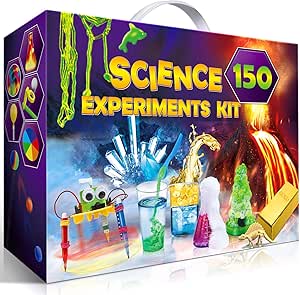 | Best Breadth on a Budget | Brand: UNGLINGA | Age Range: 8 years and up | Number of Experiments: 150 | VIEW LATEST PRICE | See Our Full Breakdown |
| Discovery Super Reactions Science Kit – 66 Experiments STEM Lab for Kids Ages 8+ |  | Best True Chemistry Starter | Brand: Discovery | Recommended Age: 8+ with adult supervision | Total Experiments: 66 | VIEW LATEST PRICE | See Our Full Breakdown |
| National Geographic Science Magic Kit with 100+ Experiments for Kids 8-12 |  | Best for Performance-Minded Kids | Brand: Blue Marble / National Geographic | Age Range: 8 years and up | Experiments: 20 included, 85+ bonus (100+ total) | VIEW LATEST PRICE | See Our Full Breakdown |
| Kuovei Science Kit for Kids – 80 Science Lab Experiments with Scientist Role Play |  | Best Value Role-Play Set | Brand: Kuovei | Number of Experiments: 80 | Recommended Age: 36 months – 12 years | VIEW LATEST PRICE | See Our Full Breakdown |
| National Geographic Gross Science Kit with 45 Experiments for Kids 8-12 |  | Best Hook for Reluctant Scientists | Brand: National Geographic | Experiments Included: 15 kit-based + 30 household (45 total) | Recommended Age: 8-12 years | VIEW LATEST PRICE | See Our Full Breakdown |
| UNGLINGA 70 Lab Experiments Science Kit for Kids – Chemistry Set |  | Best Variety on a Budget | Brand: UNGLINGA | Number of Experiments: 70 | Educational Objective: STEM | VIEW LATEST PRICE | See Our Full Breakdown |
| National Geographic Chemistry Set with 45 Experiments for Kids 8-12 (Stunning Chemistry Set) |  | Best Classic Chemistry Experience | Brand: National Geographic | Set Name: Stunning Chemistry Set | Age Range: 8 years and up | VIEW LATEST PRICE | See Our Full Breakdown |
| chemistry sets for kid | Brand |
|---|---|
| Thames & Kosmos Ooze Labs Chem | — |
| National Geographic Magic Chem | — |
| UNGLINGA 272 Experiments Scien | — |
| National Geographic Amazing Ch | Blue Marble / National Geographic |
| Doctor Jupiter My First Scienc | — |
| National Geographic Junior Che | Blue Marble (National Geographic) |
| Doctor Jupiter Ultimate Scienc | Doctor Jupiter |
| National Geographic Mega Scien | Blue Marble (National Geographic) |
| UNGLINGA 150 Experiments Scien | UNGLINGA |
| Discovery Super Reactions Scie | Discovery |
| National Geographic Science Ma | Blue Marble / National Geographic |
| Kuovei Science Kit for Kids | Kuovei |
| National Geographic Gross Scie | National Geographic |
| UNGLINGA 70 Lab Experiments Sc | UNGLINGA |
| National Geographic Chemistry | National Geographic |
More Details on Our Top Picks
Thames & Kosmos Ooze Labs Chemistry Station Science Experiment Kit
What sets the Ooze Labs Chemistry Station apart from every other kit in this roundup is the physical lab station itself. Rather than scattering beakers across a kitchen table, kids clip printed experiment cards directly onto a dedicated workstation, which keeps the 57 pieces organized and makes each session feel like genuine lab work rather than a one-off craft project. Compared with the National Geographic Amazing Chemistry Set, which offers far more experiments, this kit trades quantity for a more immersive role-play experience with proper vessels like flasks, pipettes, and a petri dish. All chemicals are non-hazardous and borax-free, a real plus for safety-conscious households. The tradeoff is staying power: roughly 20 experiments is modest, and once consumables run out, the station is only useful for DIY activities.
Pros:- Dedicated lab station with clip-on experiment cards keeps everything organized and reusable
- 57 real lab pieces including beakers, flasks, pipettes, and test tubes
- All non-hazardous chemicals with no borax
- 16-page full-color manual explains the science behind each reaction
Cons:- Only about 20 experiments, far fewer than competing kits
- The bulky station takes up permanent counter or shelf space
- Consumable chemicals are limited and not easily replaced
Best for: Parents of kids ages 6–10 who want a self-contained, organized lab setup that makes chemistry feel like real science
Not ideal for: Families seeking long-term experiment variety — the 20 included activities will be exhausted faster than larger kits like the UNGLINGA 272-experiment set
- Experiments:20
- Pieces:57
- Chemicals:Non-hazardous, borax-free
- Includes:Lab station, experiment cards, vessels, syringe, pipette, spatula, petri dish, funnel, manual
- Manual:16-page full-color experiment manual
- Material:Plastic
- Dimensions:11.5 x 5 x 10 inches
- Weight:16 ounces
Our verdict“This pick makes the most sense for families who value an authentic, organized lab experience over sheer experiment count.”
National Geographic Magic Chemistry Set with 10 Tricks for Kids Ages 8-12
This kit solves a specific problem: kids who find straight chemistry boring but love showing off for an audience. Each of the 10 experiments is framed as a magic trick — floating coins, color-changing water, appearing snow — and the bundled magic wand and white gloves turn a science lesson into a performance. Compared with the National Geographic Science Magic Kit elsewhere in this roundup, which packs over 100 experiments, this version is tightly focused on presentation quality, with a guide that explains the real science behind each illusion. That focus is also its limitation: ten tricks can be learned and exhausted within a weekend. Still, for a child who wants to perform rather than just mix, the smaller count matters less than the showmanship built into every activity.
Pros:- Every experiment doubles as a performance-ready magic trick
- Includes magic wand and gloves for full dress-up role play
- Guide explains the real science and techniques behind each illusion
- All tools needed are included, so no hunting for household items
Cons:- Only 10 experiments, the smallest count in this roundup
- Limited replay value once all tricks are mastered
- Not ideal for kids who prefer open-ended exploration over structured performances
Best for: Kids ages 8–12 who love performing for family and friends and want science tricks with theatrical flair
Not ideal for: Buyers prioritizing experiment volume — ten tricks is a fraction of what kits like the UNGLINGA 272-experiment set offers
- Experiments:10 magic tricks
- Recommended Age:8–12 years
- Includes:All experiment tools, magic wand, white gloves, illustrated guide
- Educational Focus:Chemistry presented as magic performance
- Brand Recognition:Award-winning brand (Toy of the Year winner)
- Distribution:Amazon exclusive
Our verdict“Choose this if your child is a natural entertainer who will get more from ten polished tricks than from a hundred loose experiments.”
UNGLINGA 272 Experiments Science Kit for Kids – Chemistry Set
If sheer variety is the priority, this UNGLINGA kit’s 272 experiments dwarf nearly everything else in this lineup — more than double the count of the National Geographic Amazing Chemistry Set and roughly five times the Doctor Jupiter 50+ kit. The range spans volcano eruptions, crystal growing, holographic projection, and rainbow walking water, so it stretches beyond pure chemistry into broader STEM territory. That breadth is both its strength and weakness: unlike the focused Thames & Kosmos Ooze Labs Station, there is no dedicated workstation, so expect kitchen-table setups and cleanup every time. The included child-safe tested-plastic lab tools — test tubes, beakers, conical flask — are genuinely usable, but several experiments call for additional household materials, so the true out-of-box count is lower than advertised.
Pros:- 272 experiments deliver the largest activity count in this roundup
- Includes real kid-sized lab tools like test tubes, beakers, and a conical flask
- Clear illustrated manual keeps multi-step experiments manageable
- Broad mix of chemistry, crystals, and STEM activities sustains interest
Cons:- Many experiments need extra household materials not included
- No lab station or storage system, so setup and cleanup fall on parents
- Some chemical reactions require adult supervision
Best for: Families wanting maximum long-term value and variety for kids who burn through experiments quickly
Not ideal for: Households wanting a fully self-contained kit — many experiments require supplementing with pantry and household items
- Experiments:272
- Includes:Test tubes, measuring spoons, beaker, conical flask, illustrated manual
- Material:Tested plastic
- Type:STEM / Chemistry educational kit
- Activity Examples:Volcano eruptions, crystal growing, holographic projection, rainbow walking water
- Supervision:Adult supervision recommended for some reactions
Our verdict“This is the volume play — best for kids who devour kits and parents who don’t mind supplying vinegar and baking soda.”
National Geographic Amazing Chemistry Set – 100+ Science Experiments for Kids Ages 8-12
This kit earns the top spot because it balances variety, real equipment, and educational depth better than anything else here. The honest framing matters: 15 experiments use included materials (crystal trees, bubbling color-changing solutions), while a bonus guide adds 85 more using common household items. Compared with the UNGLINGA 272 kit, the raw count is lower, but the National Geographic name carries consistently strong instruction quality, and the included real scientific tools — test tubes, beakers, pipettes — are what kids actually reuse long after consumables are gone. Against the National Geographic Magic Chemistry Set, this version is far better for sustained learning rather than one-off performances. The main frustration is that most experiments depend on your pantry, so it works best for households willing to stock basics like vinegar and baking soda.
Pros:- 100+ experiments with a bonus guide of 85 household-item activities
- Real scientific tools including test tubes, beakers, and pipettes
- Strong illustrated instructions from an award-winning brand
- Tools remain useful for DIY experiments after consumables run out
Cons:- Only 15 experiments use included materials; the rest need household items
- Younger children will need adult supervision throughout
- Consumables for the 15 core experiments deplete relatively quickly
Best for: Families with kids ages 8–12 who want a dependable, well-documented kit with genuine lab tools and room to grow
Not ideal for: Anyone expecting 100+ fully self-contained experiments — only 15 use included materials, so frequent pantry trips are required
- Brand:Blue Marble / National Geographic
- Recommended Age:8 years and up
- Experiments Included:100+ (15 with included materials, 85+ via bonus guide)
- Tools Included:Test tubes, beakers, pipettes
- Educational Objective:STEM / Chemistry
- Model Number:NGMEGACHEMAR
- Manufacturer:JMW Sales, Inc.
- UPC:816448026607
Our verdict“The safest all-around pick — a well-made, tool-rich kit that rewards families willing to supplement with kitchen staples.”
Doctor Jupiter My First Science Experiments Kit for Kids Ages 4+
Most kits in this roundup start at age 8, which leaves younger siblings watching from the sidelines. The Doctor Jupiter My First Science Kit closes that gap with 50+ experiments designed for ages 4 and up, favoring tactile, mess-forward activities like dinosaur squishies, oobleck, and perfume making over precise measurements. Compared with the Doctor Jupiter Ultimate Science Kit for ages 8+ in the same roundup, this version swaps chemical reactions for sensory play, which is exactly right for the age group. The step-by-step illustrated manuals are written for shared parent-child sessions, and the kit meets ASTM F963-17 safety standards with a money-back guarantee — reassuring at this age. The tradeoff: closer supervision is required than with older-kid kits, and consumables run dry with repeated use.
Pros:- One of the only kits in this lineup rated for ages 4 and up
- Meets U.S. ASTM F963-17 safety standards with a money-back guarantee
- Step-by-step illustrated manuals designed for parent-child collaboration
- 50+ varied, screen-free activities including volcanoes, oobleck, and perfume making
Cons:- Requires close adult supervision for the youngest users
- Consumable materials run out with repeated use
- Experiments lean toward sensory play rather than real chemistry fundamentals
Best for: Parents of children ages 4–7 who want a safe, supervised introduction to science before graduating to age-8+ kits
Not ideal for: Kids ages 8 and up — the sensory-play experiments will feel babyish next to kits like the National Geographic Amazing Chemistry Set
- Recommended Age:4 years and up
- Number of Experiments:50+
- Safety Standard:ASTM F963-17 compliant
- Includes:Experiment materials, premium equipment, instruction manuals
- Guarantee:100% money-back guarantee
- Activity Examples:Dinosaur squishies, volcanoes, oobleck, perfume making
Our verdict“The clear first-science-kit choice for preschool families, provided a parent is ready to join in.”
National Geographic Junior Chemistry Set with 50 Experiments for Kids
Most chemistry sets on this list start at age 8, which leaves the youngest aspiring scientists out. This kit closes that gap with 50 experiments scaled for ages 4 and up, built around kitchen-safe reactions like baking soda and vinegar. Compared with the Doctor Jupiter My First Science Kit, which also targets the 4+ crowd, this option leans harder into the lab fantasy — kids get over 20 real tools including test tubes and goggles, so it feels like actual chemistry rather than supervised play. The tradeoff is honest: many experiments assume you already have vinegar, baking soda, and food coloring at home, so the box alone won’t run every activity. And an 11-year-old who has outgrown fizzing volcanoes will find the content repetitive. For a first chemistry set, though, this pick makes the most sense for families who want safe, repeatable reactions and a low frustration threshold.
Pros:- Age-appropriate design starting at 4 years old, rare among chemistry sets
- 20+ child-safe lab tools including goggles and test tubes
- Illustrated instructions simple enough for early readers to follow
- Backed by an award-winning brand with a U.S.-based support team
Cons:- Most experiments require household items like vinegar and baking soda that aren’t included
- Content skews basic and will bore older siblings
Best for: Parents of 4-to-7-year-olds who want an age-appropriate first chemistry set with real lab gear
Not ideal for: Families with kids over 8 or anyone expecting a fully stocked chemical kit — most experiments need pantry staples you supply yourself
- Brand:Blue Marble (National Geographic)
- Age Range:4 years and up
- Number of Experiments:50
- Lab Tools Included:20+
- Key Components:Test tubes, goggles, lab tools
- Educational Focus:STEM
- Model Number:NGJRCHEMT
Our verdict“The right first chemistry set for preschool and early-elementary kids, as long as you’re willing to raid the pantry.”
Doctor Jupiter Ultimate Science Experiments Kit for Kids Ages 8+
With 135+ experiments in the box and 90+ bonus activities using household items, this Doctor Jupiter kit delivers more total experiments than nearly anything else here — only the UNGLINGA 272 Experiments Kit exceeds it on paper. What separates this option is intent: the instruction guide is written as a shared experience, walking parents and kids through each step together rather than handing off to independent play. Compared with the Discovery Super Reactions Kit, which focuses tightly on acid-base chemistry, this set spreads across glowing water, underwater volcanoes, and color changes — more variety, less depth on any single concept. The leak-proof chemical bottles are a thoughtful touch, allowing repeat runs without spills. The catch is supervision: many experiments genuinely need an adult present, so this is not a self-entertainment solution, and the bonus experiments still send you hunting for supplies.
Pros:- 135+ included experiments plus 90+ bonus activities for exceptional long-term value
- Leak-proof bottles enable repeat experiments with minimal mess
- Illustrated guide designed for parent-child participation
- Broad experiment variety from chemistry to color-changing reactions
Cons:- Adult supervision required for many experiments
- Bonus experiments depend on household items not in the box
Best for: Parents and caregivers who want to run experiments alongside their 8+ child as a shared weekend activity
Not ideal for: Households looking for independent-play science — many experiments require an adult and additional household items
- Brand:Doctor Jupiter
- Age Range:8+ years
- Included Experiments:135+
- Bonus Experiments:90+ (household items)
- Instruction Type:Step-by-step illustrated guide
- Chemical Storage:Separate leak-proof bottles
- Educational Focus:STEM learning
Our verdict“A great fit for families who treat science as quality time, less so for parents seeking a hands-off activity.”
National Geographic Mega Science Lab with 75 Experiments for Kids 8-12
This isn’t strictly a chemistry set — it’s three kits bundled into one: Earth science, chemistry, and science magic. That breadth is the whole pitch. Where the National Geographic Amazing Chemistry Set goes deep on chemistry alone, the Mega Lab spreads across erupting volcanoes, digging up a real fossil, growing a glow-in-the-dark crystal, and 30 bonus experiments from household items. The real rock, mineral, and crystal specimens add a collectible angle no pure chemistry kit matches, which matters for kids whose curiosity isn’t confined to one discipline. The tradeoff is the flip side of breadth: the chemistry portion is smaller than a dedicated chemistry set at this size, so a kid specifically obsessed with reactions and pH experiments may feel shortchanged. At 5.7 pounds with a substantial footprint, it also assumes you have shelf space for the tools and specimens.
Pros:- Three disciplines in one bundle: chemistry, Earth science, and science magic
- Includes real rock, mineral, and crystal specimens to keep
- High-wow activities like volcano eruptions, fossil digs, and glowing crystals
- Backed by an award-winning brand with responsive U.S. support
Cons:- Chemistry content is diluted compared with dedicated chemistry kits
- Large and heavy at 5.7 pounds, requiring real storage space
Best for: Curious 8-to-12-year-olds with broad scientific interests who want chemistry, geology, and magic tricks from one box
Not ideal for: Kids who only want chemistry — the dedicated chemistry section is a fraction of the total package, and the box is bulky
- Brand:Blue Marble (National Geographic)
- Age Range:8 years and up
- Included Experiments:45 (Earth science, chemistry, science magic)
- Bonus Experiments:30 (household items)
- Total Experiments:75
- Kit Type:Three-in-one bundle
- Item Weight:5.7 pounds
- Model Number:NGMEGASCIKIT
Our verdict“The best pick when one kid wants geology, chemistry, and magic — but pure chemistry fans should choose a dedicated set instead.”
UNGLINGA 150 Experiments Science Kit for Kids
UNGLINGA’s 150-experiment kit sits in a useful middle ground. It offers more experiments than the Discovery Super Reactions Kit’s 66 while keeping genuine lab equipment — test tubes, tools, and safety goggles — that give kids the scientist role-play experience. Unlike the National Geographic Mega Science Lab, which spends its budget on rock specimens and a three-subject bundle, this set stays focused on running lots of hands-on activities across chemistry, physics, and earth science. That makes it the pragmatic choice for a household with multiple kids or a child who burns through experiments quickly and always wants the next one. The compromises are predictable for a kit pushing this many experiments at its size: some activities lean on household items you’ll need to gather, and the materials for any single experiment are lighter-duty than the premium Nat Geo boxes. It’s quantity-first, not wow-first.
Pros:- 150 experiments spanning chemistry, physics, and earth science
- Includes lab tools and safety goggles for realistic role-play
- Well-illustrated step-by-step manual kids can follow independently
- Strong experiment-to-cost ratio for multi-child households
Cons:- Some experiments require additional household items
- Materials and tools are more basic than premium alternatives
Best for: Budget-conscious families or siblings who want maximum experiment count and reusable lab gear without paying for premium extras
Not ideal for: Buyers who want every ingredient included — some experiments require household items, and individual activities are simpler than premium kits
- Brand:UNGLINGA
- Age Range:8 years and up
- Number of Experiments:150
- Subjects Covered:Chemistry, physics, earth science
- Key Components:Experiment tools, materials, safety goggles
- Instruction Type:Illustrated step-by-step manual
- Educational Focus:Creative skills, hands-on STEM
Our verdict“The value play when experiment count matters most — just plan on supplementing with pantry supplies.”
Discovery Super Reactions Science Kit – 66 Experiments STEM Lab for Kids Ages 8+
Where the UNGLINGA 150 kit spreads thin across three sciences, the Discovery Super Reactions kit concentrates on genuine chemistry concepts — acid-base reactions, pH indicators using red cabbage powder, gas reactions that inflate balloons. The 26 guided experiments actually include most of their ingredients in the box (citric acid, baking soda, slime mix, glow paint), which immediately distinguishes it from kits where half the activities send you to the pantry. The remaining 40 DIY bonus experiments do need household items, so the headline number of 66 overstates what works out of the box. Compared with the National Geographic Junior Chemistry Set, this option skews older and more conceptually serious — kids learn why reactions happen, not just that they do. Supervision is non-negotiable, and small ingredient quantities can run dry if a favorite experiment gets repeated weekly.
Pros:- Teaches genuine chemistry concepts including acid-base reactions and pH indicators
- 26 guided experiments include most needed ingredients in the box
- Real lab tools like test tubes and measuring cups for authentic procedure
- Full-color manual pairs steps with science facts for actual learning
Cons:- 40 of the 66 experiments require household items not included
- Included ingredients can run out quickly with repeated use
- Adult supervision required throughout
Best for: 8+ kids ready for real chemistry concepts like pH and acid-base reactions, with a parent available to supervise
Not ideal for: Independent-play seekers and heavy repeaters — adult supervision is required and included ingredients deplete with frequent use
- Brand:Discovery
- Recommended Age:8+ with adult supervision
- Total Experiments:66
- Guided Experiments:26
- Bonus DIY Experiments:40
- Key Ingredients:Citric acid, baking soda, red cabbage powder, slime powder, glow paint
- Included Tools:Test tubes, measuring cups, volcano mold, balloons
- Instruction Type:Full-color instructional manual
Our verdict“The best choice for a kid who wants to understand chemistry rather than just watch it fizz — with a grown-up alongside.”
National Geographic Science Magic Kit with 100+ Experiments for Kids 8-12
This option stands out for blending chemistry with magic performance, which makes it a different animal from pure lab kits like the National Geographic Stunning Chemistry Set. Instead of just mixing powders, kids learn the trick, then perform it for family — a structure that suits a child who loves an audience as much as an experiment. The 20 fully stocked magic experiments arrive with every material included, while the bonus booklet stretches the total past 100 using household staples, giving it real longevity compared with single-theme kits. The tradeoff: the boxed experiments lean on presentation over depth, so a kid who wants serious reaction chemistry will get more from a traditional set. Parents should also expect to supervise, and consumables are single-use for several tricks.
Pros:- All materials included for the 20 core magic experiments
- Bonus booklet adds 85+ household experiments for extended use
- Performance format builds confidence and communication skills
- Backed by a Toy of the Year award-winning brand with U.S. support
Cons:- Several experiments use up consumables after a single run
- Requires adult supervision for younger kids in the 8-12 range
- Magic focus means less rigorous chemistry instruction than lab-style kits
Best for: Kids ages 8-12 who love showing off what they learn and want science that doubles as a party trick
Not ideal for: Families seeking deep, repeatable lab chemistry — the magic framing and single-use consumables limit re-runs
- Brand:Blue Marble / National Geographic
- Age Range:8 years and up
- Experiments:20 included, 85+ bonus (100+ total)
- Theme:Magic + STEM chemistry
- Model Number:NGMEGAMAGIC
- UPC:816448027680
Our verdict“This is the pick for a budding showman who learns best by performing, not for a kid who wants a quiet afternoon of test tubes.”
Kuovei Science Kit for Kids – 80 Science Lab Experiments with Scientist Role Play
Where the National Geographic Science Magic Kit sells a performance, this kit sells the fantasy of being a scientist: goggles, gloves, test tubes, petri dishes, and droppers all come in the box. That full dress-up lab kit is its strongest differentiator — most competitors, including the similarly sized UNGLINGA 70 Experiments kit, provide tools but not the complete costume-and-equipment package. Eighty experiments at this tier, with guidance cards that explain the science behind each step from easy to hard, make it a strong entry point for younger siblings who want to mirror an older child’s lab work. The compromises are real, though: chemicals are stored in sealed bottles that deplete with repeated use, and the 36-month floor on the age rating is optimistic given the reactions involved — plan on a parent running the show for anyone under six.
Pros:- 80 experiments spanning simple to challenging difficulty
- Includes full safety gear: goggles and gloves
- Guidance cards teach the scientific principle behind each activity
- Sealed chemical bottles allow multiple uses before depletion
Cons:- Chemical supplies are finite and not easily refilled
- Needs hands-on adult supervision for younger children
- Build quality and instructions are less polished than premium brands
Best for: Budget-minded parents of kids 6-10 who want maximum experiment count plus authentic lab gear and role-play appeal
Not ideal for: Households wanting a prestigious educational brand or refillable chemistry — materials run out and there’s no support infrastructure behind them
- Brand:Kuovei
- Number of Experiments:80
- Recommended Age:36 months – 12 years
- Educational Objective:STEM / Science
- Included Components:Goggles, gloves, chemical materials, petri dishes, measuring cups, test tubes, droppers, balloons
- Manufacturer Part Number:MYJ886-A
Our verdict“The most complete dress-the-part package on a budget, as long as you accept consumables that fade and help younger kids along.”
National Geographic Gross Science Kit with 45 Experiments for Kids 8-12
Sometimes the barrier to STEM interest isn’t the kit — it’s the kid. This set attacks that problem with a gross-out theme: boiling boogers, glowing worms, and other reactions engineered to make an eight-year-old cackle. Compared with the National Geographic Stunning Chemistry Set, which covers similar polymer and pH science with a straight face, this version trades polish for pure kid-appeal, and that trade works for the right household. The honest catch is the split: only 15 experiments use included materials, while the other 30 require you to raid your pantry. That makes it less of an open-the-box-and-go proposition than the Kuovei 80-experiment kit, and the ick factor is genuinely divisive — plenty of parents will opt out on principle.
Pros:- Gross theme is a proven engagement hook for the 8-12 crowd
- Illustrated guide explains polymers, chemical reactions, and pH science
- 30 bonus experiments extend value using household items
- Backed by an award-winning manufacturer with U.S. support
Cons:- Only 15 of the 45 experiments use included materials
- Theme actively repels some parents and kids
- Supplies deplete quickly on favorite repeat experiments
Best for: Parents trying to spark STEM interest in a kid who finds standard science kits boring
Not ideal for: Squeamish families or gift-givers who want all materials in the box — two-thirds of the experiments need household items
- Brand:National Geographic
- Experiments Included:15 kit-based + 30 household (45 total)
- Recommended Age:8-12 years
- Type:Gross-themed STEM science kit
- Exclusive To:Amazon
- Manufacturer:Blue Marble
Our verdict“A gateway drug to chemistry for kids who need shock value to sit down at the lab table — skip it if anyone at home is easily grossed out.”
UNGLINGA 70 Lab Experiments Science Kit for Kids – Chemistry Set
This kit earns its spot through breadth at an accessible price: 70 experiments spanning erupting volcanoes, crystal growing, balloon rockets, and fruit circuits. Compared with the Kuovei 80-experiments kit, it skips the role-play costume angle but offers slightly more variety in experiment types, and its illustrated manual with a learning guide is genuinely kid-navigable — a meaningful outcome, because independent play depends on a child being able to follow along solo. Like most sets at this tier, it leans on safe, child-friendly ingredients, which is reassuring but limits the wow factor of the reactions; a kid who has already worked through a National Geographic set may find the fizz underwhelming. Also note that several activities pull in household items, and favorite experiments burn through materials fast.
Pros:- 70 experiments spanning chemistry, physics, and engineering builds
- Clear illustrated manual supports independent use by older kids
- Child-safe ingredients give parents peace of mind
- Mix of project types (volcano, crystals, circuits) prevents boredom
Cons:- Some experiments require extra household items not in the box
- Consumables run out quickly when kids repeat favorites
- Milder reactions than premium chemistry-focused sets
Best for: First-time buyers and gift-givers who want the widest experiment variety per dollar without brand-name pricing
Not ideal for: Kids who already own a chemistry set — safer ingredients mean tamer reactions and overlapping activities
- Brand:UNGLINGA
- Number of Experiments:70
- Educational Objective:STEM
- Recommended Age:8 years and up
- Model Number:HZDZKH030
- Ingredients:Safe, child-friendly materials
Our verdict“The smart budget choice for a first science kit, especially for a kid who hasn’t seen flashier reactions elsewhere.”
National Geographic Chemistry Set with 45 Experiments for Kids 8-12 (Stunning Chemistry Set)
Among the five kits here, this is the one that feels most like an actual chemistry set: volcano eruptions, geysers, rockets, and hands-on chemical reactions, all with real fizz and bubble payoff. The kid-friendly illustrated guide goes beyond steps to explain the reactions themselves, which is where it out-educates the UNGLINGA 70 and Kuovei 80 kits — those prioritize quantity of activities over depth of explanation. Blue Marble’s award-winning pedigree and U.S.-based support also mean better recourse if something arrives damaged, a real advantage over budget brands. The honest tradeoff is scale: 45 experiments is half of what UNGLINGA offers, and this is an Amazon exclusive, so there’s no shopping around. Like its siblings, consumables vanish if the volcano becomes a daily ritual.
Pros:- Classic reaction experiments (volcano, geyser, rocket) with strong visual payoff
- Illustrated guide explains the chemistry behind each reaction
- Teaches the scientific process and safe lab practices explicitly
- Award-winning manufacturer with domestic customer support
Cons:- Fewer experiments than competing kits at a similar tier
- Amazon-exclusive availability limits shopping options
- Reactions consume materials, limiting replays of favorites
Best for: Families who want a traditional, reaction-focused chemistry set with genuinely educational instructions rather than a novelty theme
Not ideal for: Buyers chasing maximum experiment count or gross-out/magic hooks — 45 straightforward activities will feel modest and serious by comparison
- Brand:National Geographic
- Set Name:Stunning Chemistry Set
- Age Range:8 years and up
- Experiments:45
- Educational Objective:STEM / Chemistry
- Model Number:NGMEGACHEMX
- UPC:816448029363
- Item Dimensions:8.78 x 3.19 x 11.93 inches
- Item Weight:2.9 pounds
Our verdict“The best pure chemistry education of this batch — pick it when you want real reactions and real explanations, not quantity or gimmicks.”

How We Picked
My ranking logic starts with experiment depth and variety — not the number printed on the box, but how many genuinely different activities a kit contains and whether the manual explains the science behind each one. I weighted instruction quality heavily, because a chemistry set with vague directions frustrates kids and creates safety risks. Age-appropriateness and safety separated the field further: preschool kits were judged on non-toxic materials and simplicity, while 8+ kits were judged on whether reactions actually teach concepts like acids, bases, and pH.
Beyond the box contents, I evaluated replay value — whether experiments are one-and-done or repeatable, and whether refill packs or household substitutions extend the kit’s life. Finally, I considered the role each kit plays: a magic-themed set serves a different buyer than a lab-style station, so instead of ranking purely by quality, I ranked by how well each kit serves its intended family. That’s why a smaller kit can outrank a bigger one when its audience fit is stronger.
Factors to Consider When Choosing Chemistry Sets For Kids
Before choosing a chemistry set, it helps to understand what actually varies between kits and where manufacturers cut corners. These are the factors that shaped my rankings — and the ones most buyers overlook until it’s too late.Match the Kit to the Age, Not the Grade Level
Manufacturers label kits generously, and an ‘8+’ rating often reflects safety precautions rather than intellectual fit. A six-year-old labeled ‘advanced’ by a proud parent will still struggle with measuring liquids and following multi-step directions independently. Conversely, a ten-year-old given a junior kit with color-mixing activities will abandon it within an hour. The sweet spot: choose kits rated one to two years above your child’s current age only if you plan to supervise closely. For ages 4-6, prioritize kits built around observation and mixing rather than chemical reactions. For ages 8+, reaction-based kits with real scientific vocabulary become appropriate and far more engaging.
Decode the Experiment Count Before Buying
The experiment count on the box is the most manipulated number in this category. Some brands count each color variation of slime as a separate ‘experiment,’ inflating a single afternoon activity into twenty claimed experiments. Others count only genuinely distinct activities, making a 45-experiment kit more substantial than a competitor’s 100. Read the manual’s table of contents when possible — if you see ‘Experiment 12: Red Slime’ and ‘Experiment 13: Blue Slime,’ you know how the number was built. A practical rule: assume a kit provides roughly one to two hours of activity per ten genuinely distinct experiments, and buy accordingly.
The Hidden Cost of Consumables
Every chemistry kit eventually runs out of powders, dyes, and test substances, and refill economics vary dramatically between brands. National Geographic and Thames & Kosmos sell replacement supplies or design experiments around common household items like vinegar and baking soda, which extends the kit indefinitely at near-zero cost. Budget brands often use proprietary packets with no refill option, turning the kit into a one-weekend product. Before buying, check whether the manual lists household substitutions — this single feature often determines whether a kit lasts months or days. It’s also worth checking which tools (test tubes, stands, beakers) are durable plastic versus flimsy film, since tools survive after chemicals are gone.
Supervision Requirements and Safety Realities
Even ‘non-hazardous’ kits involve powders that shouldn’t reach eyes, food coloring that stains carpets, and reactions that fizz unexpectedly. The honest tradeoff: kits with genuine chemical reactions — color changes, gas production, temperature shifts — demand an adult present, while truly independent play comes only from mixing-and-observing kits for younger kids. Check whether the kit includes safety goggles and whether instructions specify ventilation needs. Also consider where experiments will happen: a kit requiring a sink, tray, and washable surface is a poor gift for a household that treats the dining table as sacred. Setting expectations about supervision before gifting prevents both disappointment and mishaps.
Theme Kits: Gateway or Dead End?
Magic-themed and gross-themed kits occupy a real niche: they convert kids who claim to hate science into kids begging to perform a trick. The risk is that the theme becomes the product — a child learns the trick but never the chemistry. The best themed kits, like National Geographic’s Magic Chemistry Set, explain the science behind each illusion, turning performance into a teaching hook. Weaker themed kits skip explanations entirely, offering entertainment with no educational residue. If your child is already science-curious, skip the theme and buy a lab-style kit. If you’re winning over a skeptic, a themed kit is a legitimate opening move — just plan a follow-up purchase.
Instruction Quality Determines Everything
A chemistry set is really a manual with supplies attached, and manual quality separates memorable kits from shelf ornaments. Look for step-by-step photo illustrations, expected results described before you start, and a ‘why it works’ section after each experiment. Kits that only list steps leave kids unable to troubleshoot when a reaction fizzles — which kills momentum fast. The best manuals also sequence experiments from simple to complex, building skills gradually. If product listings show sample manual pages, study them: this is the single best predictor of whether the kit gets used twice or twenty times.
Frequently Asked Questions
What age is right to start a chemistry set?
Are chemistry sets for kids actually safe?
Is a bigger experiment count always better value?
What’s the difference between a magic science kit and a regular chemistry set?
Do I need to buy extra supplies to use these kits?
Conclusion
The right chemistry set depends on who’s opening the box. For best overall, the National Geographic Amazing Chemistry Set delivers the best balance of experiment variety, instruction quality, and long-term engagement for the typical 8-12 year old. For best value, the UNGLINGA 272 Experiments Kit offers the most activity per dollar, provided you accept some repetition and thinner instructions. For best for beginners, the Doctor Jupiter My First Science Kit is the clear pick for ages 4-6, with safe materials and simple observation-based activities.
For best premium experience, the Thames & Kosmos Ooze Labs Chemistry Station stands apart with its dedicated lab station format that makes kids feel like real scientists rather than follow-along hobbyists. For specific needs: choose the National Geographic Gross Science Kit for a kid motivated by gross-out humor, the Magic Chemistry Set for a performer who resists traditional science, and the National Geographic Junior Chemistry Set for a 6-8 year old bridging between preschool kits and full reaction chemistry. Whatever you pick, plan to supervise the first few sessions — the shared experiments are where the real learning happens.
Fall Picks
fall essentials
As an affiliate, we earn on qualifying purchases.