For most families, I would start with the Wonder Workshop Dash: its approachable, screen-based coding makes it a strong all-around choice for children ready to build sequences and solve challenges. Learning Resources Botley 2.0 is a standout for screen-free beginners, while the Makeblock mBot2 suits kids who want more advanced programming and room to grow. The main tradeoff is between quick, tactile play and a deeper coding experience that may require more setup, reading, or a compatible device. Age guidance matters, but so do a child’s patience for building and interest in using a screen. Read on for the full breakdown and a guide to matching a robot to your child.

Prime made for students and young adults
- Fast, free delivery for dorm and study essentials
- Prime Video and Amazon Music included
- Member-only deals
Key Takeaways
- Dash is the strongest all-around fit in this lineup for children who can use a compatible device and are ready for guided coding activities; it is less suited to families seeking a screen-free toy.
- Botley 2.0 and the Code & Go Robot Mouse put physical sequencing first, making them better starting points for younger children than kits built around text-based coding.
- mBot2 and VinciBot offer more room for coding progression, but that extra scope can bring a steeper setup and learning curve than beginner-focused robots.
- Build-first options such as the Apitor Robot J and Teach Tech Mech-5 add construction to coding, so buyers should account for patience, assembly time, and small parts.
- The lineup separates into distinct play styles: screen-free command robots, app-led coding companions, buildable STEM kits, and a robot car platform; choosing the right style matters more than choosing the most feature-packed model.
| Ozobot Evo Entry Coding Robot Kit |  | Best for a Long Coding Progression | Recommended age: 5 years and up; listed age range 5–11 | Coding methods: Ozobot Blockly and screen-free Color Codes | Blockly skill levels: 5 | VIEW LATEST PRICE | See Our Full Breakdown |
| Learning Resources Code & Go Robot Mouse Activity Set | 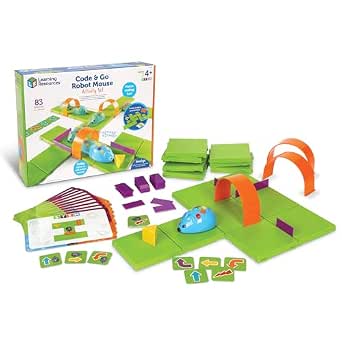 | Best for Young Screen-Free Beginners | Recommended age: 4 years and up | Pieces: 83 | Maze board size: 20 × 20 inches | VIEW LATEST PRICE | See Our Full Breakdown |
| Teach Tech Mech-5 STEM Coding Robot Building Kit for Ages 10+ |  | Best for Mechanical Building and Coding | Recommended age: 10 years and up | Educational focus: Coding, mechanical engineering, construction, problem solving, and STEM | Programming method: Buttons attached to a mechanical coding wheel | VIEW LATEST PRICE | See Our Full Breakdown |
| Apitor Robot J 6-in-1 STEM Coding Robot Building Kit, 480 Pieces |  | Best for Rebuildable App-Controlled Play | Recommended age: 7–12 years | Pieces: 480 | Build options: 6 models | VIEW LATEST PRICE | See Our Full Breakdown |
| Learning Resources Botley the Coding Robot |  | Best Screen-Free Pick for Logic Challenges | Recommended age: 5–8 years | Programming capacity: Up to 80 steps | Coding concepts: Sequencing, loops, and if/then logic | VIEW LATEST PRICE | See Our Full Breakdown |
| Makeblock mBot2 Coding Robot Kit for Kids | 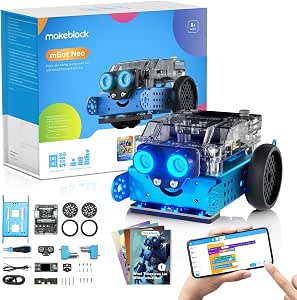 | Best for Growing Into Python | Brand: Makeblock | Model: P1010132 | Recommended age: 8 years and up | VIEW LATEST PRICE | See Our Full Breakdown |
| Wonder Workshop Wonder Pack Coding Robot Bundle for Kids Ages 6–11 |  | Best Accessory Bundle for Creative Play | Brand: Wonder Workshop | Model: WB05 | Age range: 6–11 years | VIEW LATEST PRICE | See Our Full Breakdown |
| Thames & Kosmos My Robotic Pet: Coding Chameleon Robotics Kit |  | Best Screen-Free Coding Robot | Brand: Thames & Kosmos | Model number: 620507 | Recommended age: 8–12 years; adult help recommended for ages 8+ | VIEW LATEST PRICE | See Our Full Breakdown |
| Ozobot Ozo at Home Coding Robot Kit for Kids Ages 5+ |  | Best for Early Coding Progression | Brand: Ozobot | Model: 70101KIT | Recommended age: 5 years and up | VIEW LATEST PRICE | See Our Full Breakdown |
| Wonder Workshop Dash Coding Robot for Kids Ages 6 and Up |  | Best Ready-to-Play App-Coded Robot | Recommended age: 6 years and up | Connectivity: Five apps for Apple iOS, Android, and Fire OS | Functions: Singing, dancing, obstacle navigation, voice commands | VIEW LATEST PRICE | See Our Full Breakdown |
| Makeblock mBot STEM Coding Robot Kit for Kids Ages 8+ | 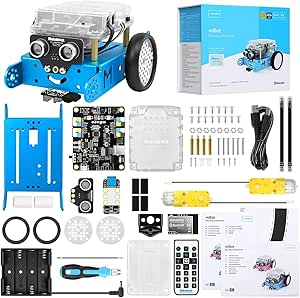 | Best for a First Buildable Coding Robot | Brand: Makeblock | Model: 90053 | Recommended age: 8 years and up | VIEW LATEST PRICE | See Our Full Breakdown |
| VinciBot Coding Robot for Kids Ages 8–12, Scratch and Python STEM Toy |  | Best for Growing from Blocks to Python | Brand: MatataStudio | Recommended age: 8 years and up | Programming languages: Scratch-style block programming and Python | VIEW LATEST PRICE | See Our Full Breakdown |
| Learning Resources Botley 2.0 Coding Robot Activity Set |  | Best Screen-Free Coding Set | Brand: Learning Resources | Model: LER2938 | Set size: 78 pieces | VIEW LATEST PRICE | See Our Full Breakdown |
| ELEGOO UNO R3 Smart Robot Car Kit V4 with Camera |  | Best for Older Arduino Builders | Brand: ELEGOO | Model number: US-EL-KIT-012 | Controller board: ELEGOO UNO R3 | VIEW LATEST PRICE | See Our Full Breakdown |
| Learning Resources Botley the Coding Robot Activity Set | 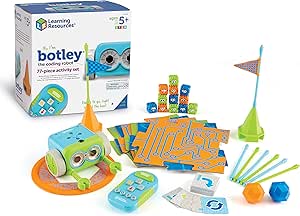 | Best First Coding Robot for Young Children | Brand: Learning Resources | Model: LER2935 | Recommended age: 5 years and up | VIEW LATEST PRICE | See Our Full Breakdown |
| coding robots for kid | Recommended age | Included components | Brand | Model |
|---|---|---|---|---|
| Ozobot Evo Entry Coding Robot | 5 years and up; listed age range 5–11 | Evo robot, Get Started activities, charging cable, five dual-tip color-code markers, zip case | — | — |
| Learning Resources Code & Go R | 4 years and up | Colby robot mouse, 16 maze grids, 22 maze walls, 3 tunnels, 30 double-sided coding cards, 10 double-sided activity cards, cheese wedge, Activity Guide | — | LER2831 |
| Teach Tech Mech-5 STEM Coding | 10 years and up | Assembly parts and English instruction manual | — | TTC-895 |
| Apitor Robot J 6-in-1 STEM Cod | 7–12 years | — | — | — |
| Learning Resources Botley the | 5–8 years | Botley robot, remote programmer, detachable arms, coding cards, tiles, and obstacles | — | — |
| Makeblock mBot2 Coding Robot K | 8 years and up | — | Makeblock | P1010132 |
| Wonder Workshop Wonder Pack Co | — | Dash robot, sketch kit, launcher, gripper, building-brick connectors, USB charging cable | Wonder Workshop | WB05 |
| Thames & Kosmos My Robotic Pet | 8–12 years; adult help recommended for ages 8+ | — | Thames & Kosmos | — |
| Ozobot Ozo at Home Coding Robo | 5 years and up | Ozo at Home robot and charging cable | Ozobot | 70101KIT |
| Wonder Workshop Dash Coding Ro | 6 years and up | Dash robot, two building-brick connectors, USB charging cable | — | — |
| Makeblock mBot STEM Coding Rob | 8 years and up | — | Makeblock | 90053 |
| VinciBot Coding Robot for Kids | 8 years and up | — | MatataStudio | — |
| Learning Resources Botley 2.0 | 5–10 years | Coding robot, remote programmer, 40 coding cards, 6 double-sided boards, and stackable obstacle pieces | Learning Resources | LER2938 |
| ELEGOO UNO R3 Smart Robot Car | 12 years and up | — | ELEGOO | — |
| Learning Resources Botley the | 5 years and up | Botley robot, remote programmer, detachable robot arms, 40 coding cards, 6 double-sided tiles, 27 obstacle-building pieces, and starter guide | Learning Resources | LER2935 |
More Details on Our Top Picks
Ozobot Evo Entry Coding Robot Kit
Ozobot Evo Entry offers a useful bridge between screen-free exploration and device-based coding. Kids can start by guiding the robot with Color Codes and included markers, then move into Ozobot Blockly, which has five skill levels. That gives it more room to grow than the Code & Go Robot Mouse, whose maze-and-button activities are geared toward younger beginners. Access to more than 700 lessons adds variety beyond the starter activities, while the zip case helps keep the small kit together.
The tradeoff is that Blockly needs a compatible device, so this is not a fully screen-free option. It also includes only one robot, limiting shared robot play unless children take turns. I’d choose Evo for a child ready to move between physical coding cues and structured digital lessons, rather than for families seeking a purely unplugged first robot.
Pros:- Combines screen-free Color Codes with Ozobot Blockly.
- Five Blockly skill levels support progression from beginner to advanced activities.
- Access to more than 700 lessons offers a broad range of practice.
- Includes markers, starter activities, a charging cable, and a zip case.
Cons:- Blockly activities require a compatible device.
- Only one robot is included, which limits simultaneous group play.
Best for: Families with children ages 5–11 who want to begin with screen-free coding and later progress to app-based Blockly lessons.
Not ideal for: Families seeking a fully screen-free experience or a multi-robot kit; Blockly requires a compatible device, and the box contains one robot.
- Recommended age:5 years and up; listed age range 5–11
- Coding methods:Ozobot Blockly and screen-free Color Codes
- Blockly skill levels:5
- Lessons:Access to more than 700
- Included components:Evo robot, Get Started activities, charging cable, five dual-tip color-code markers, zip case
- Battery:Lithium-ion
- Dimensions:8.5 x 6.5 x 1.8
- Brand and model:Ozobot Evo Entry Kit
Our verdict“Choose Ozobot Evo Entry if you want a coding robot that can grow from marker-based play into device-based lessons.”
Learning Resources Code & Go Robot Mouse Activity Set
Code & Go Robot Mouse keeps the first coding lessons concrete: children arrange a maze, plan a route with coding cards, and press buttons to send Colby toward the cheese. The 83-piece set gives kids plenty to rearrange, making it a better fit for early sequencing practice than the more advanced Ozobot Evo Entry, which adds device-based Blockly and multiple skill levels. Lights, sounds, and two speeds give feedback without requiring a screen, and the activity cards help adults introduce challenges at a manageable pace.
This set is intentionally focused on younger learners, so children who already understand sequences may outgrow its basic maze format sooner than they would Botley’s loops and if/then activities. It also needs three AAA batteries that are not included. I’d pick it for a first coding toy, not for a child seeking deeper programming concepts.
Pros:- Fully screen-free controls and coding cards make early sequencing hands-on.
- Maze grids, walls, tunnels, and activity cards support repeated route challenges.
- Colby has lights, sounds, and two speeds for clear play feedback.
- Designed for home, classroom, and after-school use.
Cons:- Requires three AAA batteries, which are not included.
- The maze-based programming is less advanced than Botley’s loops and if/then logic.
Best for: Parents, preschool teachers, and homeschoolers introducing children ages 4 and up to sequencing through hands-on maze play.
Not ideal for: Older children or beginners ready for loops, conditional logic, or app-based coding; its core activity is simple route planning.
- Recommended age:4 years and up
- Pieces:83
- Maze board size:20 × 20 inches
- Included components:Colby robot mouse, 16 maze grids, 22 maze walls, 3 tunnels, 30 double-sided coding cards, 10 double-sided activity cards, cheese wedge, Activity Guide
- Robot features:Lights, sounds, two speeds
- Battery requirement:3 AAA batteries, not included
- Screen-free:Yes
- Model:LER2831
Our verdict“Choose Code & Go Robot Mouse for a young child’s first screen-free coding lessons, especially if maze play is likely to hold their attention.”
Teach Tech Mech-5 STEM Coding Robot Building Kit for Ages 10+
Teach Tech Mech-5 makes construction part of the coding lesson: children assemble the robot, then use buttons on a mechanical coding wheel to plan its movements and actions. It can move, rotate, throw, lift, kick, and draw, giving the commands a physical result that differs from the screen-based coding in the Apitor Robot J. Mech-5 is the stronger choice for an older child interested in how a machine works, rather than a collection of interchangeable models or app-controlled play.
The main cost in effort is time: assembly takes several hours and needs careful attention, so this is not ready-to-play out of the box. Its programming is also tied to the coding wheel rather than an app or a broader visual language. Battery-free operation is convenient, but the build-heavy format will suit patient makers better than children who want quick robot action.
Pros:- Building the robot links mechanical engineering with basic coding concepts.
- The coding wheel programs movement, rotation, throwing, lifting, kicking, and drawing.
- Battery-free operation avoids replacing or charging batteries.
- Offers a more mechanical focus than the app-controlled Apitor Robot J.
Cons:- Assembly requires several hours and careful work.
- Programming is limited to the mechanical coding wheel rather than app-based coding.
Best for: Children ages 10 and up who enjoy assembling mechanisms and want coding commands to produce varied physical actions.
Not ideal for: Younger children or anyone looking for a ready-built robot, quick setup, or app-based coding; assembly takes several hours.
- Recommended age:10 years and up
- Educational focus:Coding, mechanical engineering, construction, problem solving, and STEM
- Programming method:Buttons attached to a mechanical coding wheel
- Robot actions:Move forward and backward, rotate 360 degrees, throw, lift, kick, and draw
- Power source:No batteries required
- Included components:Assembly parts and English instruction manual
- Assembly time:Several hours
- Model:TTC-895
Our verdict“Choose Mech-5 for an older child who values building a working mechanism as much as programming its actions.”
Apitor Robot J 6-in-1 STEM Coding Robot Building Kit, 480 Pieces
Apitor Robot J combines construction, robot movement, and app-based coding in one kit. Its 480 snap-together pieces can form six models, so children can change the build instead of repeating the same robot activity. The app offers dual-motor, single-motor, gyro, and path modes, including icon-based coding activities. Compared with the Teach Tech Mech-5, Robot J offers more rebuild options and Bluetooth control; Mech-5, by contrast, stays focused on a single mechanically coded build and does not need batteries.
Robot J is a better fit for kids who already have access to a compatible device and enjoy rebuilding. Its coding and robot controls depend on the Apitor app and Bluetooth, which makes it less suitable for screen-free play. The three AA batteries are also not included, adding a setup requirement before the motors and lights can run.
Pros:- 480 snap-together blocks support six different robot models without screws or tools.
- Four app control modes offer more variety than a single movement style.
- Icon-based coding activities provide an entry point to programming.
- Two motors and multicolor LED lights add movement and visual feedback.
Cons:- Coding and control require the Apitor app and a Bluetooth-compatible device.
- Three AA batteries are required and are not included.
Best for: Children ages 7–12 who like rebuilding models and want to combine block construction with app-guided coding and robot control.
Not ideal for: Families seeking screen-free coding or a kit that works without extra batteries; app access and three AA batteries are required for powered play.
- Recommended age:7–12 years
- Pieces:480
- Build options:6 models
- Control:Bluetooth via Apitor app
- Control modes:Dual-motor, single-motor, gyro, and path
- Motors and lighting:Control module with two built-in motors; two multicolor LED lights
- Battery requirement:3 AA batteries, not included
- Dimensions:12.01 x 8.27 x 2.48 inches
Our verdict“Choose Robot J if rebuilding several models and coding through an app matter more than screen-free play or battery-free setup.”
Learning Resources Botley the Coding Robot
Botley gives screen-free coding more room to develop than the Code & Go Robot Mouse: children can enter up to 80 steps and work with loops and if/then logic, then test commands on obstacle courses or black-line paths. The 45-piece set includes a remote programmer, coding cards, tiles, obstacles, and detachable arms, so play can shift between planning a route and setting up a challenge. That makes Botley a stronger match for children ready to move beyond simple button-press sequencing without moving to an app-based robot like Ozobot Evo Entry.
The remote programmer is part of the process, so this is not a robot children code by drawing or using a tablet. Its recommended age range is 5–8, and older children may want more advanced programming tools. The product data also lists no manufacturer warranty, a drawback for buyers who want warranty coverage.
Pros:- Screen-free activities teach sequencing, loops, and if/then logic.
- Programming capacity of up to 80 steps supports longer command sequences.
- Obstacle-course pieces, tiles, and cards create varied hands-on challenges.
- Offers more logic concepts than the simpler maze-focused Code & Go Robot Mouse.
Cons:- Commands must be entered with the included remote programmer.
- The recommended age range is limited to 5–8 years.
- No manufacturer warranty is listed.
Best for: Families and educators seeking a screen-free coding robot for children ages 5–8 who are ready to practice loops and conditional logic.
Not ideal for: Older children seeking advanced or app-based coding, or buyers who prioritize a manufacturer warranty.
- Recommended age:5–8 years
- Programming capacity:Up to 80 steps
- Coding concepts:Sequencing, loops, and if/then logic
- Play features:Obstacle courses and black-line following
- Included components:Botley robot, remote programmer, detachable arms, coding cards, tiles, and obstacles
- Set size:45 pieces
- Screen-free:Yes
- Warranty:No manufacturer warranty
Our verdict“Choose Botley for a child ready to explore longer screen-free sequences, loops, and conditional logic through physical challenges.”
Makeblock mBot2 Coding Robot Kit for Kids
Scratch-to-Python progression gives the mBot2 a longer learning runway than Dash, which focuses on app-based coding activities. Guided courses and project cards help beginners get started, while 10+ sensors let kids explore line following, obstacle avoidance, and color recognition as their programs become more involved. Bluetooth, USB, and Wi-Fi offer several ways to connect, and up to five hours of playtime supports extended projects between charges.
The tradeoff is setup: children must assemble the robot, and some activities may call for an app or Wi-Fi. Compared with the screen-free Coding Chameleon, the mBot2 is a better fit for children ready to work with digital programming tools, but less suitable for families seeking an unplugged first step.
Pros:- Supports both Scratch and Python for a broader learning path.
- Guided courses, examples, and project cards help beginners get started.
- More than 10 sensors enable varied interactive coding projects.
- Bluetooth, USB, and Wi-Fi control plus up to five hours of playtime.
Cons:- Requires assembly before the first activity.
- Some features and activities may depend on an app or Wi-Fi connection.
Best for: Children around age 8 and up who want to start with Scratch and later explore Python, sensors, and more advanced robot projects.
Not ideal for: Families seeking a ready-to-play robot or a fully screen-free coding activity, since assembly is required and some features may need an app or Wi-Fi.
- Brand:Makeblock
- Model:P1010132
- Recommended age:8 years and up
- Programming languages:Scratch and Python
- Sensors:10+ advanced sensors
- Control methods:Bluetooth, USB, and Wi-Fi
- Playtime:Up to 5 hours per charge
- Expandable modules:30+
Our verdict“Choose the mBot2 for a child ready to progress from visual coding toward Python and sensor-based projects.”
Wonder Workshop Wonder Pack Coding Robot Bundle for Kids Ages 6–11
The Wonder Pack is a strong match for kids who want coding to lead into making things: its sketch kit, launcher, gripper, and building-brick connectors give Dash more ways to interact with a project than the standard Dash set. Compatible apps introduce sequencing, events, loops, and algorithms, while support for iOS, Android, and Fire OS makes it easier to fit into a household with mixed devices. It also offers up to five hours of active play.
Compared with the standard Dash, this bundle adds creative accessories rather than a different coding foundation. That makes it a better choice for varied hands-on activities, but a less direct fit for buyers who only need the robot and core app experience. It is designed for indoor play and has no camera; the mBot2 is a better alternative for sensor-rich programming and a path toward Python.
Pros:- Includes sketch, launcher, gripper, and building-brick accessories for varied activities.
- Apps teach sequencing, events, loops, and algorithms.
- Compatible with Apple iOS, Android, and Fire OS.
- Up to five hours of active play per charge.
Cons:- Indoor use limits where children can play.
- No camera is included.
- The accessory bundle may be more than needed for buyers seeking only basic coding activities.
Best for: Families with children ages 6–11 who want one robot for app-based coding, drawing, launching, gripping, and building-brick projects.
Not ideal for: Buyers who want a compact starter robot without extra accessories, or children who need a camera-equipped robot or outdoor play option.
- Brand:Wonder Workshop
- Model:WB05
- Age range:6–11 years
- Included components:Dash robot, sketch kit, launcher, gripper, building-brick connectors, USB charging cable
- App compatibility:Apple iOS, Android OS, Fire OS
- Coding concepts:Sequencing, events, loops, algorithms
- Battery life:Up to 5 hours of active play
- Camera:Not included
Our verdict“Pick the Wonder Pack if creative accessories matter as much as app-based coding; choose standard Dash for a simpler robot set.”
Thames & Kosmos My Robotic Pet: Coding Chameleon Robotics Kit
For families who want coding without a tablet, the Coding Chameleon uses physical colored action cards to set up movements and responses. Its color and infrared sensors, RGB lights, and moving tongue give those instructions visible results, while Wild and Pet modes offer interaction beyond programming. The 48-page manual also connects assembly with robotics and biomimicry, giving the build a learning purpose rather than making it only a construction task.
Compared with Ozobot Ozo at Home, which moves from color-code activities toward Blockly, this kit keeps the coding method screen-free. That simplicity comes with less scope for app-based progression, and assembly for ages 8–12 may need adult help. Batteries are recommended but not listed among the included parts, so families should plan for that separately.
Pros:- Colored action cards enable screen-free programming.
- Color and infrared sensors support responsive behavior.
- Coding, Wild, and Pet modes offer different ways to interact.
- The 48-page manual covers assembly, robotics, and biomimicry.
Cons:- Assembly may require adult help for the recommended age group.
- Recommended batteries are not listed among the included components.
- Physical action cards offer less digital programming progression than Ozobot Ozo at Home.
Best for: Children ages 8–12 who enjoy building a character robot and learning basic sequencing through hands-on, screen-free cards.
Not ideal for: Families seeking app-based coding progression, a ready-built robot, or a kit that clearly includes its recommended batteries.
- Brand:Thames & Kosmos
- Model number:620507
- Recommended age:8–12 years; adult help recommended for ages 8+
- Length:15 inches
- Sensors:Color sensor and infrared sensor
- Lighting:RGB LEDs
- Play modes:Coding, Wild, Pet
- Coding method:Physical colored action cards
- Manual:48 pages
Our verdict“Choose the Coding Chameleon for hands-on, screen-free coding and character play, not for app-based coding lessons.”
Ozobot Ozo at Home Coding Robot Kit for Kids Ages 5+
Ozo at Home makes a clear first step for young learners: its 27 guided activities start with color codes and hands-on materials, then introduce Ozobot Blockly on a computer or tablet. That lets a child begin with visible, screen-free instructions before moving toward block-based programming. Magnetic tiles, a two-sided board, and engineering challenges also give families different ways to practice sequencing, logic, loops, and problem-solving without relying on a single activity format.
Compared with the Coding Chameleon, Ozo at Home offers a more direct route from physical coding to a screen-based tool; the Chameleon is better for children who want to build a larger character robot. The Ozo’s activities are designed to be completed in order, which gives beginners structure but can feel restrictive to children who want to jump between challenges. Blockly also requires a computer or tablet.
Pros:- Includes 27 guided activities across several learning formats.
- Moves from screen-free color coding to Ozobot Blockly.
- Introduces sequencing, logic, loops, problem-solving, and engineering design.
- Combines magnetic tiles, a two-sided board, and engineering challenges.
Cons:- Blockly programming requires a computer or tablet.
- The activity sequence is designed to be completed in order.
Best for: Children ages 5 and up who benefit from guided, hands-on activities that gradually introduce block-based coding.
Not ideal for: Families without access to a computer or tablet for Blockly, or children who prefer to skip between activities rather than follow a planned progression.
- Brand:Ozobot
- Model:70101KIT
- Recommended age:5 years and up
- Activities:27
- Learning formats:Mystical Forest Mat, Blank Magnetic Board, Color Codes, Ozobot Blockly, engineering challenges
- Programming:Color codes and Ozobot Blockly
- Included components:Ozo at Home robot and charging cable
- Dimensions:9 x 7.5 x 2 inches
Our verdict“Choose Ozo at Home for a structured first coding path that grows from hands-on color codes into Blockly.”
Wonder Workshop Dash Coding Robot for Kids Ages 6 and Up
Dash suits children who want an interactive robot without a building step: it arrives ready to use and can sing, dance, avoid obstacles, and respond to voice commands. Five compatible apps introduce concepts including sequencing, loops, algorithms, and variables, giving families several app-based ways to approach coding. Support for Apple iOS, Android, and Fire OS also makes it a flexible pick for households with different devices.
Compared with the Wonder Pack, standard Dash provides the core robot experience but skips the sketch kit, launcher, and gripper. That is a simpler starting point for app-based play, though kids seeking more hands-on creative accessories may prefer the bundle. Unlike the mBot2, Dash does not offer the listed Scratch-to-Python path; it is better suited to younger beginners than to children aiming for text-based coding. It is intended for indoor use and has no camera.
Pros:- Requires no assembly before play.
- Five apps introduce sequencing, loops, algorithms, and variables.
- Sings, dances, avoids obstacles, and responds to voice commands.
- Works with Apple iOS, Android, and Fire OS and offers up to five hours of active play.
Cons:- Designed for indoor use.
- No camera is included.
- Does not list Python support like the Makeblock mBot2.
Best for: Children around age 6 and up who want an immediately playable robot with app-guided coding activities and no assembly.
Not ideal for: Older children seeking a Scratch-to-Python progression, families wanting drawing and launcher accessories, or buyers who need a camera or outdoor-use robot.
- Recommended age:6 years and up
- Connectivity:Five apps for Apple iOS, Android, and Fire OS
- Functions:Singing, dancing, obstacle navigation, voice commands
- Battery life:Up to 5 hours of active play
- Power source:Rechargeable lithium-ion battery, included
- Camera:None
- Included components:Dash robot, two building-brick connectors, USB charging cable
- Weight:0.7 kg
- Warranty:1 year against manufacturer defects
Our verdict“Pick standard Dash for ready-to-play app coding, while the Wonder Pack is the better fit for children who want extra creative accessories.”
Makeblock mBot STEM Coding Robot Kit for Kids Ages 8+
mBot’s short assembly and hands-on coding make it a strong fit for kids who want to see how a robot is put together, not just send commands to a ready-made one. After assembly, children can explore line following and obstacle avoidance, then move from Scratch to Arduino as their skills grow. Compared with Botley 2.0, mBot involves electronics and programming platforms rather than screen-free route sequencing, so it offers a more direct path into robotics projects. Its compatibility with a large range of add-on modules also leaves room to expand. The tradeoff is that the kit is less ready to play straight out of the box: the robot needs four AA batteries and the remote needs a CR2025, neither included. It suits curious builders more than children looking for a device-free coding activity.
Pros:- Combines robot assembly with introductions to electronics and programming.
- Scratch and Arduino support a progression from visual blocks to text-based coding.
- Line-following and obstacle-avoidance functions give early programs visible results.
- Compatible with more than 100 electronic modules and 500 parts.
Cons:- Four AA batteries for the robot and a CR2025 for the remote are not included.
- Coding depends on compatible apps or software, unlike screen-free Botley 2.0.
- The included description lists a robot kit but does not specify a broad set of build challenges or physical activity pieces.
Best for: Children around age eight and up who want to build a robot, start with Scratch, and later explore Arduino or add-on electronics.
Not ideal for: Families seeking screen-free coding or a ready-to-run kit, since mBot needs assembly, batteries, and compatible apps or programming tools for coding.
- Brand:Makeblock
- Model:90053
- Recommended age:8 years and up
- Programming platforms:Scratch and Arduino
- Robot batteries:4 AA batteries, not included
- Remote controller battery:CR2025, not included
- Compatible add-ons:100+ electronic modules and 500+ parts
Our verdict“Choose mBot for a child ready to build and program a reusable robot, but pick Botley 2.0 for screen-free coding without app setup.”
VinciBot Coding Robot for Kids Ages 8–12, Scratch and Python STEM Toy
VinciBot’s range of coding activities makes it the most varied pick here for children who want more than route programming. It supports Scratch-style blocks and Python, with activities spanning drawing, music, dancing, and light effects; eight sensors and preset modes let a child begin exploring before writing code. That gives it a broader creative mix than Makeblock mBot, whose clearest learning path centers on building, electronics, and robot-car functions. VinciBot also works with LEGO bricks and TECHNIC motors, making it appealing to kids who like combining robotics with construction. Its tradeoff is that some learning materials sit on the company website, and the product details do not identify which third-party electronic modules are compatible. Families should also expect a more screen-based experience than Botley’s device-free approach.
Pros:- Supports both Scratch-style block programming and Python.
- Eight sensors and preset modes offer ways to explore before coding.
- Activities include drawing, music, dancing, and light effects.
- Can connect with LEGO bricks and TECHNIC motors.
Cons:- Some coding and tutorial resources are accessed through the Vinci.MatataStudio website.
- The description does not specify which third-party electronic modules are compatible.
- Its app- and tutorial-based learning is less suitable for families seeking screen-free play like Botley 2.0.
Best for: Ages 8–12 who want one robot for creative projects and a gradual move from block coding into Python.
Not ideal for: Families who want fully offline coding or a clearly documented list of compatible third-party electronics.
- Brand:MatataStudio
- Recommended age:8 years and up
- Programming languages:Scratch-style block programming and Python
- Sensors:8
- Battery capacity:1500 mAh
- Runtime:Over 4 hours per charge
- Preset modes:Line following, precision drawing, and IR remote control
- Included coding cases:17
- Compatibility:LEGO bricks, TECHNIC motors, and third-party electronic modules
Our verdict“Pick VinciBot for a child who wants creative coding projects and a path toward Python, rather than a simple screen-free robot.”
Learning Resources Botley 2.0 Coding Robot Activity Set
Botley 2.0 keeps coding physical and device-free: children enter command sequences with a remote programmer, then watch the robot tackle routes they build from boards and obstacles. The 78-piece set gives families more included activity materials than the basic Botley set, while features such as object sensing, 45-degree turns, lights, and sounds add ways to vary challenges. Compared with Makeblock mBot, this is not a build-and-program electronics kit; its strength is teaching sequencing through play without an app or computer. That makes it especially approachable for younger children, though the remote still mediates every command and does not provide the Scratch-to-Python progression found in VinciBot. The listed age range extends to ten, but older children seeking open-ended coding may outgrow its command-based format.
Pros:- Coding activities require no app or personal device.
- Includes 78 pieces, including boards, coding cards, and stackable obstacles.
- Challenges can progress from simple routes to multi-step sequences.
- Object sensing, lights, sounds, music, and 45-degree turns add variety.
Cons:- Commands must be entered with the included remote programmer rather than written in a coding language.
- The manufacturer lists no warranty.
- It offers less room for electronics and software exploration than mBot or VinciBot.
Best for: Families with children ages 5–10 who want hands-on sequencing challenges without a phone, tablet, or computer.
Not ideal for: Older beginners seeking Scratch, Python, electronics, or a robot they can program through an open-ended coding environment.
- Brand:Learning Resources
- Model:LER2938
- Set size:78 pieces
- Recommended age:5–10 years
- Included components:Coding robot, remote programmer, 40 coding cards, 6 double-sided boards, and stackable obstacle pieces
- Features:Screen-free coding, object sensing, lights, sounds, music, 45° turns, and 16 secret code combinations
- Warranty:No manufacturer warranty
Our verdict“Choose Botley 2.0 for screen-free route coding with plenty of included challenge pieces, but choose mBot for electronics and programmable software.”
ELEGOO UNO R3 Smart Robot Car Kit V4 with Camera
ELEGOO’s camera-equipped car is aimed at older kids who want to build a more technical project and control it through Arduino IDE. The FPV camera adds a distinctive remote-viewing element, while line-tracking and ultrasonic sensors give programs concrete tasks to handle. Compared with Makeblock mBot, this kit is positioned for ages 12 and up and leans more heavily on Arduino customization, rather than offering Scratch as an entry point. Its rechargeable battery is included, avoiding mBot’s separate battery purchases, and the app or IR remote provides control options before a child writes custom code. The tradeoff is a higher setup burden: assembly and wiring may call for adult help, and customization requires Arduino IDE. This is a better fit for a patient older learner than a young child seeking quick, guided coding play.
Pros:- Camera and Wi-Fi module support live FPV video.
- Line-tracking and ultrasonic sensors enable tracking and obstacle avoidance.
- Can be controlled with the ELEGOO app or IR remote.
- Includes a rechargeable 2000 mAh lithium-ion battery and Arduino IDE examples.
Cons:- Assembly and programming may require adult guidance for first-time builders.
- Customizing the robot requires Arduino IDE programming.
- Its recommended age of 12 and up makes it less accessible than Botley 2.0 or mBot for younger children.
Best for: Teens or experienced young builders who want Arduino assembly, sensor-based robot-car projects, and live camera video.
Not ideal for: Younger children, first-time builders without adult support, or families seeking block-based or screen-free coding.
- Brand:ELEGOO
- Model number:US-EL-KIT-012
- Controller board:ELEGOO UNO R3
- Camera and Wi-Fi module:ESP32-WROVER-based
- Sensors:Line-tracking and ultrasonic
- Control methods:ELEGOO app and IR remote
- Battery:2000 mAh rechargeable lithium-ion
- Recommended age:12 years and up
- Dimensions and weight:8 x 7 x 6 inches; 1.23 kg
Our verdict“Choose ELEGOO for an older learner ready for Arduino and camera-based robot projects, not for a child who needs a simple first coding robot.”
Learning Resources Botley the Coding Robot Activity Set
Original Botley is a straightforward first step into coding logic for children who are not ready for apps or text-based programming. A remote programmer, coding cards, tiles, and obstacle pieces turn commands into a physical route; object detection, black-line following, and looping commands give kids several ideas to test. Like Botley 2.0, it keeps screens out of the activity, but this set has 77 pieces and adds detachable robot arms, while Botley 2.0 lists features such as 45-degree turns and music. The original’s simple arrow-button remote suits early learners, though it still requires children to enter each sequence through the controller. Five AAA batteries are also needed across the robot and remote, and none are included. Choose it for basic sequencing practice, not for a longer-term path into Scratch or Arduino.
Pros:- Screen-free coding needs no phone or tablet.
- Includes coding cards, double-sided tiles, obstacle pieces, and a challenge guide.
- Supports object detection, black-line following, and looping commands.
- Simple arrow buttons make the remote programmer approachable for young beginners.
Cons:- Requires three AAA batteries for the robot and two for the remote, none included.
- Programming is limited to commands entered on the remote rather than a coding language.
- Compared with Botley 2.0, the listed feature set does not include 45-degree turns or music.
Best for: Families with children around age five who want an approachable, screen-free introduction to sequencing, loops, and problem solving.
Not ideal for: Older children looking for block-based software, Python, electronics projects, or a kit that includes batteries.
- Brand:Learning Resources
- Model:LER2935
- Recommended age:5 years and up
- Coding method:Screen-free remote programmer
- Included components:Botley robot, remote programmer, detachable robot arms, 40 coding cards, 6 double-sided tiles, 27 obstacle-building pieces, and starter guide
- Robot batteries:3 AAA batteries, not included
- Remote programmer batteries:2 AAA batteries, not included
- Number of pieces:77
Our verdict“Choose original Botley for a young child’s first device-free coding challenges, but move to mBot or VinciBot when software coding becomes the goal.”
How We Picked
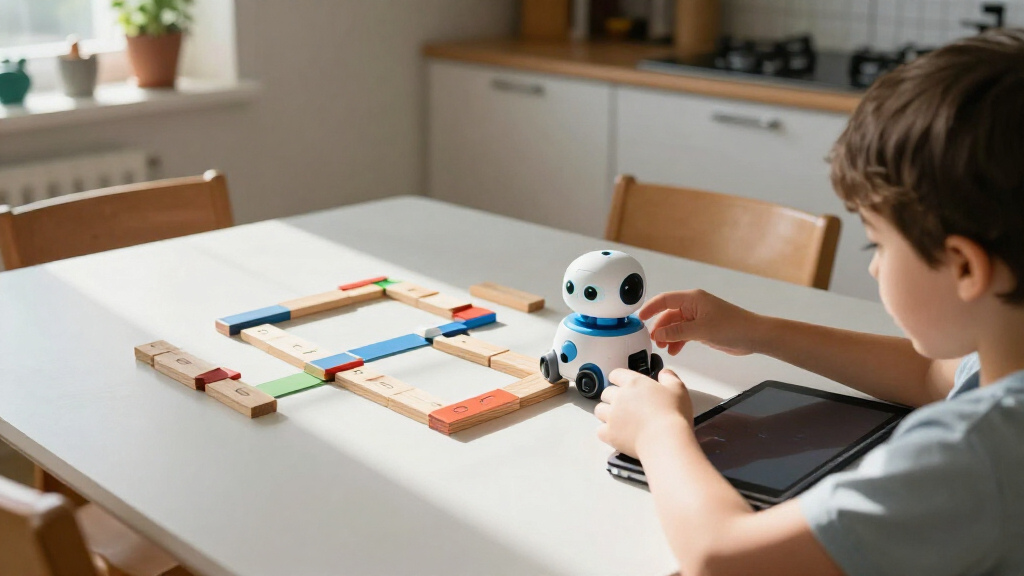
I ranked these coding robots for kids by how well each product connects a child’s likely starting level with a clear next step. I looked at the coding approach—such as physical command buttons, drawn lines, app-based blocks, or more advanced programming—alongside age fit, ease of getting started, and how much adult help a child may need. I also weighed whether the robot offers meaningful hands-on play, whether building is part of the experience, and how well its design can hold a child’s interest as skills develop.
The order favors approachable learning with room to progress, not the longest feature list. That puts versatile, accessible options ahead of kits that depend on more assembly, setup, or coding knowledge, while still giving advanced and build-focused choices a place for the right family. Closely related products, including multiple Botley options and the two mBot kits, are judged by their specific kit format and intended experience rather than treated as interchangeable. I also considered practical fit: a screen requirement, a build-heavy format, or a narrow age range can be a real drawback even when the coding concept is appealing.
Factors to Consider When Choosing Coding Robots For Kids
Before choosing from this roundup, I would match the robot to the way a child likes to learn—not just the age printed on the box. The right choice depends on whether they want to press commands, use a tablet, draw routes, or build a machine before programming it.
Choose a Coding Style Your Child Will Actually Use
Coding toys can teach similar ideas through very different interactions, and that difference often decides whether a child returns to the robot. Physical command buttons make sequences visible and easy to change, while line-drawing approaches connect coding to a familiar creative activity. App-based block coding can introduce loops, events, and more complex logic, but it assumes the child is comfortable following instructions on a screen. A common mistake is buying the most advanced coding method before checking whether the child enjoys that format. If you are unsure, begin with the style that feels like play to them, then prioritize products that offer a path to harder challenges.
Treat Age Guidance as a Starting Point, Not a Skill Test
Age ranges are useful clues about reading demands, small parts, and expected patience, but children of the same age can approach coding toys very differently. A confident younger child may enjoy a guided app, while an older beginner may prefer physical commands that let them focus on logic rather than reading. Check whether instructions are visual, whether an adult needs to set up an app, and how much troubleshooting a child can manage alone. Avoid choosing solely by an older age recommendation in the hope that a product will last longer; a frustrating first experience can outweigh extra features. Look for a manageable first activity and a clear way to increase difficulty after the basic commands make sense.
Decide Whether Building Is Part of the Fun
Some robots arrive ready for coding, while construction kits make assembly part of the learning experience. Building can add a rewarding engineering layer for children who enjoy following diagrams and testing mechanisms, but it also lengthens the path to the first successful program. Consider how much adult help is available and whether the child enjoys careful, multi-step projects. Small components and detailed assembly can be a poor match for a child who wants immediate movement and feedback. If quick coding play is the priority, favor a ready-to-use robot; if the child likes making and modifying machines, a buildable kit may hold attention longer.
Check Device, App, and Setup Requirements Before Buying
A robot that relies on an app may need a compatible phone or tablet, an account, or time for initial pairing, so check the requirements rather than assuming it will work with any household device. Screen-free models avoid that dependency, though they may offer fewer ways to extend the coding experience. Think about where the robot will be used, too: a small floor area, smooth surface, or need for a clear route can affect whether a child can play independently. If device access is shared, ask whether the child will have reliable time with it. A simple setup that fits your household can be more useful than a broader feature set that is difficult to access.
Look for Progression, Not Just a Long Feature List
A good learning path gives a child an easy first win and then introduces harder ideas at a sensible pace. Extra sensors, programming languages, or build options matter only if the child is ready to use them and the activities explain how. Compare what the child can do after learning the basic commands with what they can do at the start; that gap is a useful sign of whether the robot can grow with them. Do not assume that supporting a more advanced language automatically makes a toy educationally better for a beginner. For a first robot, clear progression and independent experimentation usually matter more than the maximum level of complexity.
Match the Robot to the Play Space and Family Routine
Movement-based robots need enough open space to follow routes, turn, or avoid obstacles, while a compact coding activity may work better on a table or a clear patch of floor. Consider whether the play area has rugs, clutter, or surfaces that could disrupt movement, and whether small parts can be stored between sessions. Some children prefer short challenges they can finish in one sitting; others are happy to build a project over several sessions. A kit that fits the family’s routine is more likely to be used than one that requires a large setup each time. Before choosing, picture the actual place and time the robot will be used—not an ideal playroom.
Frequently Asked Questions
Should I choose a screen-free coding robot or one that uses an app?
I would choose screen-free play when the child is new to sequencing or the family wants coding activities without a device. Physical commands can make cause and effect easy to see, and they avoid app setup and compatibility checks. An app-based robot is a better fit when the child is ready for visual blocks, more varied challenges, or a gradual move toward advanced coding. Neither format is automatically better; the key question is whether the child will enjoy the interaction enough to keep experimenting. If you are undecided, consider whether a screen is already part of the child’s learning routine and whether they can use one independently.
Can one coding robot suit both a younger beginner and an older sibling?
It can, but look for a product with activities that scale rather than assuming one set of instructions will suit both children. A younger beginner may need short, visible sequences, while an older sibling may want loops, more complex routes, or open-ended programming. Shared play works best when the older child can extend a challenge without taking over the controls. Check whether the robot supports different difficulty levels or ways to create new tasks, and whether both ages can participate hands-on. If the age and skill gap is wide, two simpler learning paths may be more satisfying than one compromise pick.
Is a buildable coding robot a better choice than a ready-to-use robot?
A buildable robot is a strong choice for a child who enjoys construction, following diagrams, and seeing how a machine works. It can combine engineering and coding, but assembly adds time and may call for adult support before the first program runs. A ready-to-use robot gives quicker access to coding and is often a better match for children who want immediate feedback. Think about the child’s patience and the family’s available project time, not just the number of parts or functions. If building is likely to feel like a chore, a simpler robot may teach more because the child will spend more time experimenting with code.
What should I check before buying an app-based robot as a gift?
Check the supported devices and operating systems, whether the app is required for core play, and whether setup needs an account or an internet connection. Also confirm that the recipient will have regular access to a compatible phone or tablet; a shared device can limit independent play. App instructions and reading demands matter if the child will be using the robot without an adult. For a gift, include enough time for setup and make sure the robot can be used in the recipient’s available space. If device access is uncertain, a screen-free option removes a major source of friction.
When does it make sense to choose a more advanced coding robot?
A more advanced model makes sense when the child has already enjoyed basic commands and is asking for harder problems, more control, or ways to modify what the robot does. Look for a clear bridge from beginner activities to advanced programming rather than relying on a list of supported features. The child should be willing to read instructions, debug mistakes, and spend time setting up a project. For a first coding toy, complexity can create frustration before the core ideas feel rewarding. If the child is ready, an advanced option can extend the learning path; if not, an accessible robot with room to progress is often the safer match.
Conclusion
My best overall recommendation is Wonder Workshop Dash for families seeking an approachable, app-led robot with room for coding challenges. For the best beginner fit, I would choose Botley 2.0 when screen-free commands are the priority; the Code & Go Robot Mouse is another simple route for early sequencing practice. The best value-style pick is a basic, activity-focused option such as Botley the Coding Robot for families who want a direct introduction without a build-heavy project. For a best premium or advanced learning path, consider Makeblock mBot2 or VinciBot, depending on the child’s interest in app-based or more advanced coding. Choose Apitor Robot J or Teach Tech Mech-5 for a child who wants construction alongside programming, and the ELEGOO UNO R3 Smart Robot Car Kit for a more technical, build-and-code project. The right pick is the one that matches the child’s preferred play style, available device access, and readiness for setup.