
For a strong all-around introduction, I’d start with Treasury of Greek Mythology, which pairs familiar stories with an illustrated, story-first approach; D’Aulaires’ Book of Greek Myths is a richer classic for readers ready to spend more time with Greek legends. For short reading sessions, 10-Minute Stories From Greek Mythology offers a more manageable route through the Iliad and Odyssey, while History & Mythology For Kids stands out for families seeking several traditions. The main choice is between an accessible retelling, a detailed reference-style book, and a broader survey of myths from different cultures. Age, reading stamina, illustration style, and how much historical context your child wants can all change the best fit. Read on for my full comparison of all 15 mythology books for kids and recommendations by reader type.
Key Takeaways
- Treasury of Greek Mythology and D’Aulaires’ Book of Greek Myths represent two different strengths: an illustrated story-led introduction versus a classic collection with a stronger sense of depth and tradition.
- 10-Minute Stories From Greek Mythology suits children who need shorter reading sessions, while books centered on broad story collections may work better for readers who enjoy settling into longer episodes.
- Several titles focus on Greek mythology, so families seeking wider cultural coverage should look first at History & Mythology For Kids, National Geographic Kids Everything Mythology, or the Norse and Celtic activity book.
- Interactive activities and fact-heavy formats can help curious readers stay involved, but they may interrupt the flow for children who mainly want a continuous story.
- The list includes overlapping D’Aulaires title entries; check the exact edition and format before buying to avoid choosing the same work twice.
| Greek Mythology for Kids: All Greek Gods & Mysteries in an Illustration-Packed Adventure with Epic Stories & Fun Facts |  | Best for Visual Beginners | Subject: Greek mythology | Featured topics: Greek gods and mysteries | Format: Children’s book | VIEW LATEST PRICE | See Our Full Breakdown |
| Mythology: The Gods, Heroes, and Monsters of Ancient Greece |  | Best for a Broad Greek Myth Overview | Subject: Ancient Greek mythology | Featured figures: Gods, heroes, and monsters | Content approach: Engaging storytelling and overview | VIEW LATEST PRICE | See Our Full Breakdown |
| Treasury of Greek Mythology: Classic Stories of Gods, Goddesses, Heroes & Monsters |  | Best for Classic Story Collections | Subject: Greek mythology | Content type: Classic story collection | Featured figures: Gods, goddesses, heroes, and monsters | VIEW LATEST PRICE | See Our Full Breakdown |
| Interesting Facts and Myths for Curious Readers: Fascinating Stories and Facts About Mythologies |  | Best for Exploring Multiple Mythologies | Subject: Various mythologies | Content: Stories and facts | Audience stated in description: Kids, teens, and adults | VIEW LATEST PRICE | See Our Full Breakdown |
| Norse and Celtic Mythology for Kids: Interactive Tales of Vikings, Druids, Gods, Heroes, and Mythical Creatures with Activity Labs for Kids Ages 8–14 |  | Best for Hands-On Norse and Celtic Learning | Subjects: Norse and Celtic mythology | Stated age range: 8–14 | Content: Interactive tales | VIEW LATEST PRICE | See Our Full Breakdown |
| D’Aulaires’ Book of Greek Myths |  | Best Illustrated Greek Mythology Classic | Subject: Greek mythology | Content: Retellings of ancient myths | Illustrations: Illustrated | VIEW LATEST PRICE | See Our Full Breakdown |
| 10-Minute Stories From Greek Mythology – The Iliad and The Odyssey: Timeless Legendary Tales to Inspire Kids of All Ages |  | Best for Short Reading Sessions | Subject: Greek mythology | Featured works: The Iliad and The Odyssey | Story format: Brief retellings | VIEW LATEST PRICE | See Our Full Breakdown |
| Weird But True! Know-It-All Greek Mythology |  | Best for Trivia-Loving Kids | Subject: Greek mythology | Content style: Facts and quirky trivia | Focus: Myths and legends | VIEW LATEST PRICE | See Our Full Breakdown |
| The Book of Mythical Beasts and Magical Creatures | 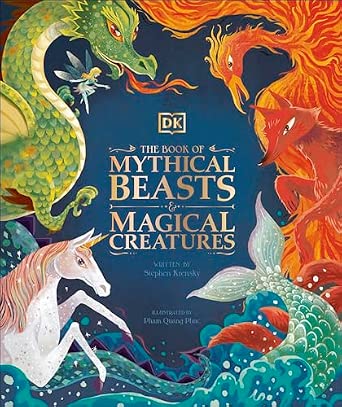 | Best for Mythical Creature Fans | Subject: Mythical beasts and magical creatures | Cultural scope: Different cultures | Content: Stories and facts about creatures | VIEW LATEST PRICE | See Our Full Breakdown |
| National Geographic Kids Everything Mythology |  | Best World Mythology Overview | Subject: Mythology from around the world | Content: Facts, photos, and stories | Topics: Gods, goddesses, and mythical creatures | VIEW LATEST PRICE | See Our Full Breakdown |
| D’aulaire’s Book of Greek Myths | | Best for Shared Reading | Subject: Greek mythology | Content: Collection of myths | Illustrations: Beautifully illustrated | VIEW LATEST PRICE | See Our Full Breakdown |
| Ultimate Greek Mythology: Adventurous Stories, Fun Facts, Amazing History, and Beyond! |  | Best for Facts Alongside the Myths | Subject: Greek mythology | Content: Stories, fun facts, and history | Story focus: Ancient Greek legends | VIEW LATEST PRICE | See Our Full Breakdown |
| Mythology (75th Anniversary Illustrated Edition): Timeless Tales of Gods and Heroes |  | Best Gift-Style Illustrated Edition | Subject: Mythology | Edition: 75th anniversary illustrated edition | Content: Tales of gods and heroes | VIEW LATEST PRICE | See Our Full Breakdown |
| History & Mythology For Kids: Explore Timeless Tales, Characters, History, & Legendary Stories from Around the World – Egyptian, Greek, Norse & More: 4 books |  | Best Multi-Book World Mythology Set | Format: Collection of four books | Audience: Kids | Subjects: History and mythology | VIEW LATEST PRICE | See Our Full Breakdown |
| Mythology Stories for Kids: Ancient Tales for Young Explorers |  | Best for Exploring Multiple Traditions | Audience: Young readers | Content: Ancient mythology stories | Named traditions: Greek, Norse, Celtic, and Egyptian | VIEW LATEST PRICE | See Our Full Breakdown |
| mythology books for kid | Subject | Content | Audience |
|---|---|---|---|
| Greek Mythology for Kids: All | Greek mythology | Stories and fun facts | — |
| Mythology: The Gods | Ancient Greek mythology | — | — |
| Treasury of Greek Mythology: C | Greek mythology | — | — |
| Interesting Facts and Myths fo | Various mythologies | Stories and facts | — |
| Norse and Celtic Mythology for | — | Interactive tales | — |
| D’Aulaires’ Book of Greek Myth | Greek mythology | Retellings of ancient myths | Readers of all ages |
| 10-Minute Stories From Greek M | Greek mythology | — | Kids of all ages |
| Weird But True! Know-It-All Gr | Greek mythology | — | Readers interested in mythology |
| The Book of Mythical Beasts an | Mythical beasts and magical creatures | Stories and facts about creatures | Young readers and mythology enthusiasts |
| National Geographic Kids Every | Mythology from around the world | Facts, photos, and stories | Young readers |
| D’aulaire’s Book of Greek Myth | Greek mythology | Collection of myths | Children and adults |
| Ultimate Greek Mythology: Adve | Greek mythology | Stories, fun facts, and history | — |
| Mythology | Mythology | Tales of gods and heroes | — |
| History & Mythology For Kids: | — | Tales, characters, history, and legendary stories | Kids |
| Mythology Stories for Kids: An | — | Ancient mythology stories | Young readers |
More Details on Our Top Picks
Greek Mythology for Kids: All Greek Gods & Mysteries in an Illustration-Packed Adventure with Epic Stories & Fun Facts
I’d choose this as a welcoming first step for a child who wants Greek myths told with visual appeal and quick facts alongside the stories. Its colorful illustrations may help younger readers keep track of gods and legendary events, while the story-and-fact format offers more variety than a straight collection of tales. Compared with Treasury of Greek Mythology, which is presented as a classic-story collection, this title puts more emphasis on illustration and bite-sized information. The tradeoff is depth: the available description does not promise detailed historical context or sustained analysis, so older readers seeking richer background may outgrow it. No age range is specified, which also makes it harder to judge whether its reading level fits a particular child.
Pros:- Pairs Greek mythology stories with colorful illustrations.
- Includes fun facts to add variety beyond the main tales.
- Designed to make Greek gods and myths accessible to children.
Cons:- The description does not indicate much depth for older or advanced readers.
- No specific age range or reading level is provided.
Best for: Children beginning to explore Greek mythology who respond well to illustrated stories and short factual additions.
Not ideal for: Older readers looking for detailed mythology, historical context, or a clearly stated age and reading-level guide.
- Subject:Greek mythology
- Featured topics:Greek gods and mysteries
- Format:Children’s book
- Content:Stories and fun facts
- Illustrations:Colorful illustrations
- Stated age range:Not specified
Our verdict“Choose this for a visually engaging first introduction to Greek myths, but look elsewhere for deeper explanations or a defined reading level.”
Mythology: The Gods, Heroes, and Monsters of Ancient Greece
This is the pick I’d favor when a young reader wants a wider tour of Greek gods, heroes, and monsters rather than an especially visual or activity-led book. Its broad subject coverage gives families a way to explore several kinds of mythic figures in one place, and the description emphasizes engaging storytelling. Compared with Greek Mythology for Kids, it appears less reliant on colorful illustrations and fun-fact extras, so it may suit readers who are content to follow the narratives. That same tradeoff can make it less inviting for children who need strong visual support. The description also gives little detail on historical context or modern interpretations, so I would not pick it as a reference for deeper cultural study.
Pros:- Covers gods, heroes, and monsters across Greek mythology.
- Uses storytelling to introduce the myths.
- Offers a broad overview rather than focusing on a single character or tale.
Cons:- The available description indicates limited detailed illustration.
- Modern interpretations receive little focus.
- The description does not specify a target age range or reading level.
Best for: Confident young readers and families seeking a story-led overview of Greek gods, heroes, and monsters in one book.
Not ideal for: Children who rely on detailed illustrations, or readers seeking substantial historical context and modern interpretations.
- Subject:Ancient Greek mythology
- Featured figures:Gods, heroes, and monsters
- Content approach:Engaging storytelling and overview
- Historical focus:Greek mythology and history
- Illustration detail:Description notes limited detailed illustrations
- Stated age range:Not specified
Our verdict“Pick this for a broad, narrative-led introduction to Greek mythology if illustrations and modern context are not priorities.”
Treasury of Greek Mythology: Classic Stories of Gods, Goddesses, Heroes & Monsters
I’d steer readers toward this title when they want a collection centered on classic Greek myths and a range of familiar mythic figures. Its story-collection approach distinguishes it from Mythology: The Gods, Heroes, and Monsters of Ancient Greece, which is described more broadly as an overview: this one is framed around bringing multiple tales together. That makes it a natural choice for reading stories in sequence or returning to favorites, rather than using the book as a richly illustrated guide. The main tradeoffs are visual and contextual. The provided details say it lacks illustrations or visual aids and offers limited historical background, so children who learn best through pictures—or want to understand the myths’ cultural setting—may prefer a different pick.
Pros:- Collects stories about gods, goddesses, heroes, and monsters.
- Offers a story-centered way to encounter classic Greek myths.
- Covers a range of figures rather than one myth or hero.
Cons:- The provided description notes no illustrations or visual aids.
- Historical context is limited.
- The scope is confined to Greek mythology.
Best for: Families and young readers who want a collection of classic Greek stories featuring a varied cast of mythic figures.
Not ideal for: Visual learners seeking illustrations, or readers who want substantial historical background or mythology beyond Greece.
- Subject:Greek mythology
- Content type:Classic story collection
- Featured figures:Gods, goddesses, heroes, and monsters
- Coverage:Multiple Greek myths and legends
- Illustrations or visual aids:Description indicates none
- Historical context:Limited
Our verdict“Choose this for a Greek-myth story collection, but favor a more visual or context-rich book if those matter to your child.”
Interesting Facts and Myths for Curious Readers: Fascinating Stories and Facts About Mythologies
For a child whose curiosity stretches beyond Greek gods, this book stands apart from the Greek-only choices such as Treasury of Greek Mythology. Its stated coverage spans various mythologies and mixes stories with facts, which can help a family sample different traditions rather than staying with one culture. That breadth is its strongest reason to make this list—and its central compromise. The description warns that explanations may be brief and sources are not detailed, so it is better suited to sparking questions than supporting in-depth research. Compared with the more focused Greek titles, it may offer less room to build familiarity with one mythology’s characters and stories. I’d choose it for browsing and discovery, not as a detailed study guide.
Pros:- Covers a range of mythologies rather than only Greek traditions.
- Combines stories with factual material.
- Aims to suit curious readers across several age groups.
Cons:- Explanations may be too brief for in-depth learning.
- The description indicates limited sourcing.
- Broad coverage may leave less space for detail on any one mythology.
Best for: Curious children, teens, and families who want to sample stories and facts from more than one mythology.
Not ideal for: Readers focused on detailed Greek mythology study or those who need thorough explanations and clearly identified sources.
- Subject:Various mythologies
- Content:Stories and facts
- Audience stated in description:Kids, teens, and adults
- Coverage:Multiple mythologies and stories
- Explanation depth:May be brief
- Sources:Description indicates limited sourcing
Our verdict“Pick this for a broad, curiosity-led sampler of mythologies, not for a detailed guide to Greek myths.”
Norse and Celtic Mythology for Kids: Interactive Tales of Vikings, Druids, Gods, Heroes, and Mythical Creatures with Activity Labs for Kids Ages 8–14
This is the clearest choice here for children who want to move beyond Greek myths and do something with what they read. The Norse and Celtic focus fills a different niche from Greek Mythology for Kids, while the activity labs give readers a hands-on element missing from the story-and-fact descriptions of the Greek titles. Its stated ages 8–14 also gives families a more concrete guide to intended readers than several books in this lineup. The tradeoff is fit: younger children may find the material too advanced, and readers who specifically want Greek gods and legends will need another book. Because it covers two traditions and includes activities, it makes the most sense for a child ready to explore mythology through both tales and participation.
Pros:- Introduces both Norse and Celtic mythology.
- Includes activity labs to add hands-on learning.
- Names a target age range of 8–14.
- Covers Vikings, Druids, gods, heroes, and mythical creatures.
Cons:- The stated material may be too advanced for younger children.
- It does not focus on Greek mythology.
- The activities may not appeal to readers who want stories only.
Best for: Readers ages 8–14 who are interested in Norse and Celtic legends and enjoy activities alongside stories.
Not ideal for: Younger children who need simpler material, or buyers specifically seeking a book about Greek mythology.
- Subjects:Norse and Celtic mythology
- Stated age range:8–14
- Content:Interactive tales
- Activities:Activity labs
- Featured topics:Vikings, Druids, gods, heroes, and mythical creatures
- Intended audience:Children
Our verdict“Choose this for an activity-friendly introduction to Norse and Celtic myths for ages 8–14, rather than a Greek mythology read.”
D’Aulaires’ Book of Greek Myths
I’d choose D’Aulaires’ Book of Greek Myths for families who want one substantial introduction to Greek gods, heroes, and legendary events rather than a collection of quick facts. Its detailed retellings and illustrations give the stories room to make sense, making it a richer read-aloud or reference choice than 10-Minute Stories From Greek Mythology. That depth is also the main tradeoff: the longer narratives may ask more patience from very young children, while the brief-story collection is easier to dip into. The focus stays on classic Greek mythology, not modern interpretations or myths from many cultures. I’d rank it ahead of lighter picks for readers ready to spend time with the stories, but not for children who need short, simplified sessions.
Pros:- Detailed retellings give classic Greek myths room to develop.
- Illustrations help bring gods, heroes, and events to life.
- Can support both shared reading and independent exploration.
- Educational appeal extends to adults reading alongside children.
Cons:- Some narratives may be too detailed for very young children.
- Its Greek focus offers less cultural range than National Geographic Kids Everything Mythology.
- Does not offer modern interpretations of the myths.
Best for: Families seeking illustrated, detailed Greek myth retellings to read together with elementary-age children or revisit as a reference.
Not ideal for: Very young readers who need brief, simple stories, or families looking for mythology from several cultures in one book.
- Subject:Greek mythology
- Content:Retellings of ancient myths
- Illustrations:Illustrated
- Story depth:Detailed narratives
- Audience:Readers of all ages
- ISBN-10:0440406943
Our verdict“Choose this for an illustrated, in-depth Greek mythology classic, but pick a shorter or broader book for younger children or multi-culture coverage.”
10-Minute Stories From Greek Mythology – The Iliad and The Odyssey: Timeless Legendary Tales to Inspire Kids of All Ages
When a child is more likely to finish a story in one sitting, I’d favor 10-Minute Stories From Greek Mythology over the longer retellings in D’Aulaires’ Book of Greek Myths. Its brief format makes classics such as The Iliad and The Odyssey approachable for a quick bedtime read or a first taste of Greek legend. That convenience comes at the expense of depth: children who want fuller context or more developed narratives may outgrow it sooner. The description also gives no detail about illustrations or physical format, so I wouldn’t choose it specifically for visual appeal. It earns a distinct place here as the concise option, not as the strongest pick for a lasting, detailed mythology reference.
Pros:- Brief stories suit short reading sessions.
- Introduces children to classic tales including The Iliad and The Odyssey.
- Simple retellings lower the barrier for new mythology readers.
Cons:- Retellings may lack the depth older readers want.
- The description provides no specific information about illustrations or format.
- Its Greek focus is narrower than National Geographic Kids Everything Mythology.
Best for: Parents and caregivers who want short Greek myth readings for busy evenings or children beginning to explore legendary stories.
Not ideal for: Older or advanced readers seeking detailed versions of the myths, or buyers prioritizing illustrated storytelling.
- Subject:Greek mythology
- Featured works:The Iliad and The Odyssey
- Story format:Brief retellings
- Reading length:Designed for approximately 10-minute stories
- Audience:Kids of all ages
- ISBN:B0BZ32FHG4
Our verdict“Pick this for quick, accessible introductions to Greek legends; choose D’Aulaires’ for greater narrative detail.”
Weird But True! Know-It-All Greek Mythology
For a child who prefers surprising facts to long retellings, Weird But True! Know-It-All Greek Mythology offers a different entry point from D’Aulaires’ Book of Greek Myths. Its quirky trivia and engaging facts can spark questions about Greek legends without asking readers to follow extended narratives. I’d place it above story collections for casual browsing, but below detailed retellings for children who want to understand a myth from beginning to end. The subject is limited to Greek mythology, and the description does not promise deep historical analysis, so it is better as an entertaining fact-led companion than a broad cultural survey. This is the pick for curious browsers who like to collect odd details, not for readers seeking a structured, in-depth account.
Pros:- Quirky facts offer an accessible alternative to long narratives.
- Combines entertaining material with educational content.
- Works well for readers who like browsing and sharing discoveries.
Cons:- Does not provide detailed historical analysis.
- Covers Greek mythology rather than a range of world traditions.
- Fact-led content may not satisfy readers who want complete story arcs.
Best for: Curious school-age readers who enjoy browsing unusual facts and want an entertaining introduction to Greek mythology.
Not ideal for: Children looking for full-length myth retellings, deeper historical context, or stories from several mythological traditions.
- Subject:Greek mythology
- Content style:Facts and quirky trivia
- Focus:Myths and legends
- Audience:Readers interested in mythology
- ISBN-10:1426331894
- Format details:Not specified in the supplied product information
Our verdict“Choose this for a trivia-minded child who wants Greek myth facts, not a replacement for a detailed story collection.”
The Book of Mythical Beasts and Magical Creatures
If a child’s favorite part of mythology is the creatures rather than the gods’ family trees, I’d steer them toward The Book of Mythical Beasts and Magical Creatures. Its cross-cultural subject makes it broader in creature coverage than Weird But True! Know-It-All Greek Mythology, which stays with Greek myths and trivia. The illustrations and stories give young readers an inviting way to explore legendary beings, but this is a focused creature guide, not a full survey of mythologies or a scientific account of animals. Children hoping for extended tales about gods and heroes may find its scope too narrow. I’d rank it for visual browsing and creature-led curiosity, while readers who want myths from many cultures in a wider context may prefer National Geographic Kids Everything Mythology.
Pros:- Explores mythical creatures from different cultures.
- Illustrations offer a visual entry point for young readers.
- Pairs stories with information about legendary beings.
- Its creature focus stands apart from Greek-only myth collections.
Cons:- Concentrates on beasts and magical creatures rather than mythology as a whole.
- Does not provide detailed scientific information.
- May be too narrow for children seeking gods, heroes, and complete myth cycles.
Best for: Young readers drawn to legendary creatures and families who want illustrated material spanning mythical beings from different cultures.
Not ideal for: Children seeking detailed stories about gods and heroes, scientific animal information, or a broad guide to entire mythologies.
- Subject:Mythical beasts and magical creatures
- Cultural scope:Different cultures
- Content:Stories and facts about creatures
- Illustrations:Illustrated
- Audience:Young readers and mythology enthusiasts
- ISBN-10:146549975X
Our verdict“Pick this for an illustrated, cross-cultural creature guide, but choose National Geographic Kids Everything Mythology for a wider mythology overview.”
National Geographic Kids Everything Mythology
National Geographic Kids Everything Mythology is my pick for children whose interest reaches beyond Greek gods and heroes. Its coverage of mythology from around the world, paired with photos, facts, and stories, gives it a broader educational role than D’Aulaires’ Book of Greek Myths, which offers greater depth within Greek tradition. That breadth is useful for comparing cultures and discovering unfamiliar figures, but it also means advanced readers may not get the extended treatment they want for any one myth. The photo-and-fact approach suits younger readers who like varied material, though children seeking a single, immersive story collection may prefer a focused retelling. I’d rank it highest for range and visual variety, not for close study of one mythology.
Pros:- Introduces mythologies from around the world.
- Combines photos, facts, and stories for varied reading.
- Covers gods, goddesses, and mythical creatures.
- Offers broader cultural range than Greek-focused books in this lineup.
Cons:- Coverage may be too brief for advanced readers.
- A broad scope leaves less room for detailed treatment of individual myths.
- Readers seeking a continuous story collection may prefer D’Aulaires’ Book of Greek Myths.
Best for: Elementary-age readers who want an illustrated introduction to gods, goddesses, creatures, and myths from multiple cultures.
Not ideal for: Advanced readers seeking detailed analysis or families who want a sustained collection of Greek myth retellings.
- Subject:Mythology from around the world
- Content:Facts, photos, and stories
- Topics:Gods, goddesses, and mythical creatures
- Audience:Young readers
- ISBN-10:1426314981
- Format details:Not specified in the supplied product information
Our verdict“Choose this as a visually varied starting point for world mythology, but pick a focused retelling for greater depth in one tradition.”
D’aulaire’s Book of Greek Myths
D’aulaire’s Book of Greek Myths is my pick for families who want one illustrated collection that can hold the attention of both children and adults. Its engaging storytelling and artwork make ancient Greek characters easier to follow and remember, while the cultural insights add more than a sequence of adventures. Compared with Ultimate Greek Mythology, this book leans more on story and illustration than on fun facts and historical notes; readers seeking explicit context may prefer that alternative. The tradeoff is that the historical background here is limited, and the simplified presentation may leave older or more advanced readers wanting greater depth. I rank it highly for shared reading, but not as a substitute for a detailed study of Greek history.
Pros:- Engaging storytelling makes traditional myths approachable
- Beautiful illustrations support visual interest and recall
- Cultural insights add context beyond the plot
- Appeals to children and adults alike
Cons:- Provides limited detailed historical context
- Simplified treatment may not satisfy older or advanced readers
Best for: Families looking for an illustrated Greek-myth collection to read and discuss with children and adults together
Not ideal for: Older readers seeking detailed historical context or a more advanced analysis of ancient Greek culture
- Subject:Greek mythology
- Content:Collection of myths
- Illustrations:Beautifully illustrated
- Audience:Children and adults
- Approach:Engaging storytelling
- Additional content:Cultural insights
Our verdict“Choose this for illustrated family reading of Greek myths, but pick Ultimate Greek Mythology if fun facts and historical notes matter more.”
Ultimate Greek Mythology: Adventurous Stories, Fun Facts, Amazing History, and Beyond!
Ultimate Greek Mythology suits curious kids who want background information alongside legendary adventures. The combination of stories, fun facts, and historical insights gives young readers several ways into the subject, rather than relying on narrative alone. Compared with D’aulaire’s Book of Greek Myths, this title foregrounds facts and history more clearly, while D’aulaire’s is the stronger fit for illustration-led shared reading. That wider mix is also the tradeoff: the coverage may feel broad rather than detailed, so it is less suited to a child looking for a focused, in-depth account of one myth or period. The available description does not specify age guidance or format, which makes it harder to judge fit for a particular reader. I’d choose it for variety, not specialist study.
Pros:- Combines entertaining stories with informational material
- Fun facts give curious readers extra points of interest
- Includes historical insights
- Focuses on Greek legends and culture
Cons:- Broad coverage may not provide depth on individual topics
- Description does not specify age range or format
Best for: School-age readers who enjoy pairing myth stories with bite-sized facts and historical context
Not ideal for: Readers seeking a detailed, sustained study of a particular Greek myth or historical period
- Subject:Greek mythology
- Content:Stories, fun facts, and history
- Story focus:Ancient Greek legends
- Cultural focus:Ancient Greek culture
- Approach:Informative and entertaining
- Age range:Not specified in the provided description
Our verdict“Pick this for a varied mix of Greek myths and facts; choose D’aulaire’s instead if illustration-led storytelling is the priority.”
Mythology (75th Anniversary Illustrated Edition): Timeless Tales of Gods and Heroes
Mythology (75th Anniversary Illustrated Edition) stands apart as the edition for families drawn to illustrated presentation and classic tales of gods and heroes. Its anniversary edition framing gives it a collector-minded appeal that the more child-directed History & Mythology For Kids set does not emphasize. But the description offers little information about which mythologies or stories appear, how extensively they are illustrated, or how accessible the text is for younger readers. That uncertainty matters in a kids’ roundup: the edition may suit a child already interested in mythology, but parents cannot use the provided details to gauge reading level. I rank it below the more clearly youth-focused options for a first introduction, while its illustrated format and classic-story focus make it an appealing choice when presentation is part of the appeal.
Pros:- Illustrated edition gives the book a visual focus
- Centers timeless stories of gods and heroes
- Anniversary edition framing may appeal to collectors
- Offers a different presentation from multi-book children’s sets
Cons:- Provided description does not specify the stories or cultures covered
- Reading level and suitability for younger children are unclear
- Content depth is not described
Best for: Families seeking an illustrated, anniversary-edition mythology book for a child who already enjoys gods and heroes
Not ideal for: Parents choosing a first mythology book who need clear age guidance, cultural coverage, or details about reading difficulty
- Subject:Mythology
- Edition:75th anniversary illustrated edition
- Content:Tales of gods and heroes
- Presentation:Illustrated
- Intended appeal:Mythology enthusiasts and collectors
- Specific cultures:Not specified in the provided description
Our verdict“Choose this as an illustrated keepsake for a mythology-minded child, but favor History & Mythology For Kids when broad cultural coverage is the goal.”
History & Mythology For Kids: Explore Timeless Tales, Characters, History, & Legendary Stories from Around the World – Egyptian, Greek, Norse & More: 4 books
History & Mythology For Kids is the clearest choice here for families who want children to encounter more than Greek myths. The four-book collection names Egyptian, Greek, and Norse traditions, with additional cultures suggested by its “and more” scope. Compared with Mythology Stories for Kids, it foregrounds both history and legendary characters, and its four-book format offers a broader set of material than a single collection. The drawback is that a multi-culture approach can trade depth for range, and the description gives no age guidance or detail about how the books divide their subjects. That makes it harder to know whether the content will suit a particular child. I rank it highest for breadth, not for a tightly focused introduction to one tradition.
Pros:- Includes four books in one collection
- Names Egyptian, Greek, and Norse traditions
- Combines history, characters, and legendary stories
- Offers wider cultural range than Greek-only options
Cons:- No specific age range is provided
- Complexity may vary across subjects
- Breadth may come at the expense of depth on individual traditions
Best for: Families and educators seeking a multi-book introduction to Egyptian, Greek, Norse, and other mythologies
Not ideal for: Readers who want one in-depth Greek mythology book or need a clearly stated age range and reading level
- Format:Collection of four books
- Audience:Kids
- Subjects:History and mythology
- Named traditions:Egyptian, Greek, and Norse
- Additional coverage:Other ancient cultures
- Content:Tales, characters, history, and legendary stories
Our verdict“Choose this set for broad cultural coverage across several books, but pick D’aulaire’s Book of Greek Myths for a more focused Greek-story experience.”
Mythology Stories for Kids: Ancient Tales for Young Explorers
Mythology Stories for Kids is aimed at young readers whose interest extends beyond a single pantheon. The description names Greek, Norse, Celtic, and Egyptian stories, making this a straightforward way to sample several traditions in one collection. Compared with the four-book History & Mythology For Kids set, this title presents itself as a story collection rather than a multi-book history-and-mythology package. That may suit children eager for tales, but the description gives little detail about content, format, length, or the level of historical context, so buyers have less basis for judging how substantial the book is. I’d choose it for broad story appeal, not as a carefully specified learning resource. Its cultural range is attractive, but the limited product information is a real buying drawback.
Pros:- Introduces stories from several mythological traditions
- Includes Greek, Norse, Celtic, and Egyptian material
- Designed to engage young readers
- Story-focused presentation may appeal to children interested in legends
Cons:- Description gives little detail about the stories included
- Format and length are not specified
- Historical context and reading level are unclear
Best for: Young readers who want to sample Greek, Norse, Celtic, and Egyptian tales in one story-focused collection
Not ideal for: Parents who need clear information about book length, format, reading level, or historical detail before choosing
- Audience:Young readers
- Content:Ancient mythology stories
- Named traditions:Greek, Norse, Celtic, and Egyptian
- Additional coverage:Other cultures
- Approach:Story-focused
- Format:Not specified in the provided description
Our verdict“Choose this for a young reader curious about several myth traditions, but favor History & Mythology For Kids if a defined multi-book structure matters.”

How We Picked
I compared these books by asking what a child and caregiver need from a mythology title: stories that are understandable without flattening the myths, a format that matches the child’s reading stamina, and enough visual or factual support to make unfamiliar names and relationships easier to follow. I also considered cultural range, age cues, whether the book favors narrative, reference material, or activities, and how naturally it can support independent reading or reading together.
The ranking reflects usefulness for the broadest set of young readers first, then gives more specialized titles a place when they serve a clear need. Story-led, illustrated books rise for families wanting an inviting first encounter; short-story and activity formats rank well for specific attention or engagement needs; reference-heavy and adult-oriented editions suit older or more self-directed readers. I also account for tradeoffs: a Greek-focused book may offer more depth in one tradition, while a wider survey gives less room to each myth.
| mythology books for kid | Subject |
|---|---|
| Greek Mythology for Kids: All | Greek mythology |
| Mythology: The Gods | Ancient Greek mythology |
| Treasury of Greek Mythology: C | Greek mythology |
| Interesting Facts and Myths fo | Various mythologies |
| Norse and Celtic Mythology for | — |
| D’Aulaires’ Book of Greek Myth | Greek mythology |
| 10-Minute Stories From Greek M | Greek mythology |
| Weird But True! Know-It-All Gr | Greek mythology |
| The Book of Mythical Beasts an | Mythical beasts and magical creatures |
| National Geographic Kids Every | Mythology from around the world |
| D’aulaire’s Book of Greek Myth | Greek mythology |
| Ultimate Greek Mythology: Adve | Greek mythology |
| Mythology | Mythology |
| History & Mythology For Kids: | — |
| Mythology Stories for Kids: An | — |
Factors to Consider When Choosing Mythology Books For Kids
Before choosing a title, I’d match the book to the way the child actually likes to read, not just to an age label. The factors below help separate an inviting first collection from a book better suited to research, repeated browsing, or a focused interest in one tradition.
Choose Story Depth That Fits Reading Stamina
A child who enjoys chapter books may be ready for longer retellings with multiple characters and connected events, while a newer reader may prefer one myth at a time. Short formats can make it easier to read a story before bed or finish a section independently, but they may simplify plot and context. Longer collections give myths room to develop, though children can lose track of names if they read only occasionally. A common mistake is treating a high page count as proof that a book is too advanced; illustrations, layout, and chapter breaks matter just as much. If you are unsure, sample a page or two and look for clear transitions between characters and events.
Decide Between One Tradition and a Wider Survey
Greek mythology dominates many children’s shelves, so a focused Greek collection can be a good match when a child already loves its gods, heroes, or monsters. A broader book may introduce Egyptian, Norse, Celtic, and other traditions, helping readers compare how different cultures explain the world. The tradeoff is depth: a survey has limited space for each story, while a single-tradition book can build a more connected picture. Avoid assuming that one book can represent every tradition fully. For a child with a specific cultural or family interest, choose a title that gives that tradition room rather than relying on a quick overview.
Look at How Images Support the Text
Illustrations can help children distinguish characters and settings, especially when many gods share similar names or family ties. A highly visual book may invite browsing even before a child is ready to read every story, while a text-led edition can suit older readers who want more space for the narrative. Artwork also sets a tone: comic, dramatic, or traditional images can shape how a child imagines a myth. Do not choose by cover art alone; check whether illustrations appear throughout the book or only in occasional sections. If your child relies on pictures to follow a story, sparse artwork may make a dense collection harder to use.
Check Whether the Book Is for Reading or Reference
Some mythology books are designed to be read from beginning to end, while fact collections and encyclopedic formats work better for dipping in and out. A reference-style book can answer a child’s quick questions and encourage browsing, but it may not create the same sustained narrative experience as a story collection. Activity prompts can make myths more participatory, though they may distract a reader who wants uninterrupted tales. Consider how the book will be used at home, in a classroom, or for a project before choosing. A child who asks frequent factual questions may value clear labels and organized entries more than a continuous plot.
Match the Retelling’s Tone to Your Child
Myths can include danger, rivalry, loss, and frightening creatures, and children respond differently to those elements. A playful presentation may make unusual stories easier to approach, while a more traditional retelling can preserve a serious or dramatic mood. Neither style is automatically better; the right choice depends on what the child enjoys and what the caregiver wants to discuss. Read a sample passage when possible, since a title’s age range cannot tell you exactly how intense its language or scenes feel. If a child is sensitive to peril, choose a gentler retelling and be ready to talk through unfamiliar ideas.
Confirm the Edition and Avoid Duplicate Purchases
Classic mythology titles can appear in multiple editions, with differences in layout, illustrations, introductions, or supplemental material. Similar or repeated title listings can also make it easy to buy the same work twice, especially when an apostrophe or subtitle changes between listings. Check the author, publisher, format, and edition details rather than relying on the title alone. This matters most when comparing a child-friendly edition with an illustrated anniversary or adult-oriented version. If the book is a gift, confirm whether the family already owns a familiar classic before choosing another edition of it.
Frequently Asked Questions
Which mythology book should I choose for a child who has never read myths before?
I’d begin with a story-led book that uses clear language and illustrations, rather than a dense reference work or an edition aimed at adult readers. Treasury of Greek Mythology is a strong starting point for families comfortable with a Greek focus, while a broader children’s survey may suit a child curious about several cultures. Short sections can also make the first read less demanding. Check a sample for sentence length and how clearly it introduces unfamiliar names. If the child is unsure about myths, read the first story together before buying a more extensive collection.
Are Greek mythology books better than books covering several cultures?
Neither approach is better for every child. A Greek-focused book can give more room to recurring characters, family relationships, and connected legends, which helps readers build familiarity. A multi-culture book offers a wider first look and can prompt useful comparisons, but each tradition may receive less space. If the child has already read several Greek myths, broadening the scope may be more rewarding than buying another similar collection. If Greek stories are new and especially appealing, a focused title can provide a more coherent introduction.
How can I tell whether a mythology book is suitable for a sensitive child?
Check a sample story rather than relying only on the age recommendation, because retellings vary in how directly they present danger, conflict, and loss. Look for a playful tone or gentle wording if the child tends to be unsettled by intense scenes. Short stories can also make it easier for an adult to preview each myth before reading it aloud. Some children enjoy discussing frightening creatures when an adult provides context; others may prefer a less dramatic version. A quick read-together session can reveal more than a description on the cover.
Should I choose an illustrated storybook or a mythology fact book?
Choose an illustrated story collection if the goal is to help a child follow characters and enjoy myths as narratives. A fact-focused book is a better match for readers who like browsing, looking up specific creatures, or collecting unusual details. Some children benefit from both, but buying two formats at once is not necessary if you are still learning what holds their interest. Think about whether the child asks for a story at bedtime or searches for answers during the day. That habit is a useful guide to which format will get more use.
How do I avoid buying a duplicate or the wrong edition of a classic?
Compare author and edition details, not just the displayed title, since classic works may appear with different subtitles, illustrations, or anniversary branding. The D’Aulaires title appears twice in this roundup with slightly different punctuation, so treat those entries as potentially overlapping rather than separate stories. Check whether the edition is illustrated, abridged, or intended for a younger audience. If the book is for a child who already owns a classic collection, inspect the contents before choosing another version. A different format or a book from another myth tradition may add more variety.
Conclusion
For the best overall choice, I’d begin with Treasury of Greek Mythology for a story-first illustrated introduction. D’Aulaires’ Book of Greek Myths is my pick for a child ready for a classic with more scope, while 10-Minute Stories From Greek Mythology makes the most sense for beginners who benefit from shorter sessions. For readers who want facts and browsing, consider National Geographic Kids Everything Mythology or Weird But True! Know-It-All Greek Mythology; for a wider cultural starting point, look at History & Mythology For Kids or the Norse and Celtic activity title. I’d choose by reading style and cultural focus first, then verify the edition—especially for the repeated D’Aulaires listing—before making the final pick.