The Oilliphéist symbolizes Ireland’s wild spirit and rich mythic imagination, embodying the land’s power, danger, and transformation. It connects you to Ireland’s cultural heritage, where legends serve as living stories passed through generations to preserve identity and ecological respect. This serpent reflects the deep bond between mythology and nature, inspiring cultural pride and environmental stewardship. If you keep exploring, you’ll discover even more about how this legendary creature shapes Ireland’s cultural and natural landscape.
Open a free Amazon Business account
Business pricing, bulk buying and tax-exempt orders.
As an affiliate, we earn on qualifying purchases.
Key Takeaways
- The Oilliphéist symbolizes Ireland’s mythic spirit, embodying power, danger, and transformation in Irish folklore.
- It reflects Ireland’s cultural connection to nature, serving as a guardian of mythic landscapes and ecological reverence.
- The serpent’s myth reinforces cultural memory, preserving legends of legendary battles and Irish identity.
- Folklore surrounding the Oilliphéist fosters environmental respect and highlights Ireland’s natural heritage.
- The serpent myth integrates cultural and ecological conservation efforts, emphasizing Ireland’s commitment to its mythic and natural legacy.
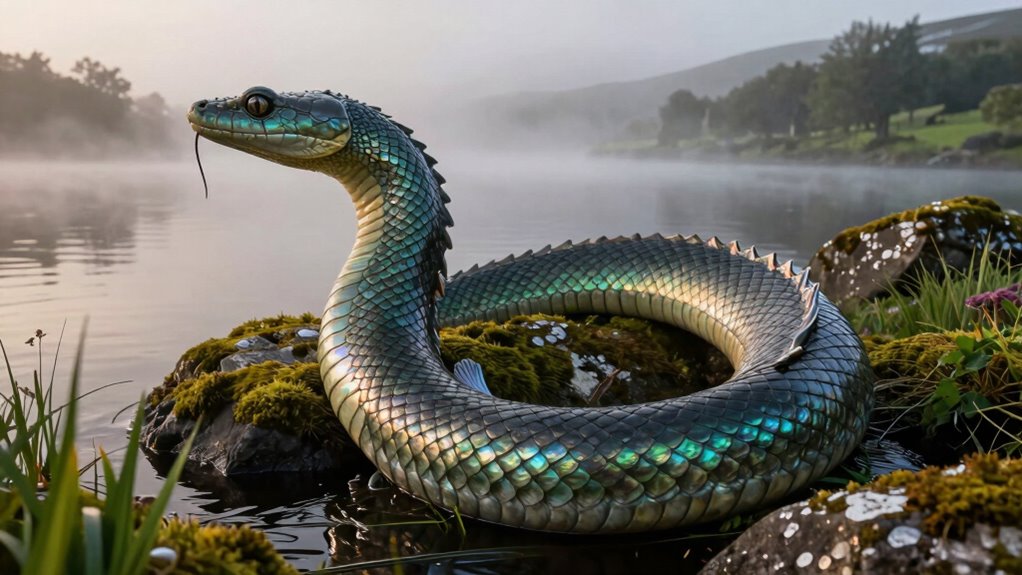
Across Ireland’s rich tapestry of folklore, the Oilliphéist stands out as a vivid symbol of the island’s ancient serpentine imagination. You’re drawn into a world where mythical symbolism breathes life into stories that have persisted for generations. The Oilliphéist isn’t just a creature of legend; it embodies the deep-rooted cultural conservation of Irish myth, representing fears, mysteries, and the landscape’s wild spirit. As you explore these stories, you realize how crucial they are in preserving Ireland’s identity, connecting modern life to a long history of storytelling that honors the land’s mystical past.
The Oilliphéist embodies Ireland’s mythic spirit, linking ancient fears, stories, and the land’s wild, mystical essence.
In Irish mythology, serpents often symbolize power, danger, and transformation. The Oilliphéist, with its formidable presence and legendary battles, captures this essence perfectly. When you hear tales of its lair beneath lakes or mountains, you understand that the serpent is more than a monster — it’s a vessel of cultural memory. These stories serve as a conduit for passing down values, cautionary lessons, and the awe of nature’s untamed force. Through mythic symbolism, the Oilliphéist becomes a mirror reflecting Ireland’s relationship with the natural world and its desire to protect the stories that define it.
You also notice that the stories surrounding the Oilliphéist play a significant role in cultural preservation. They are living traditions, handed down through oral histories, festivals, and local legends. By keeping these stories alive, communities maintain a connection to their ancestors’ beliefs and fears. You see how the serpent’s myth is woven into the fabric of Irish culture, ensuring that future generations understand and appreciate their heritage. The Oilliphéist stands as a tribute to Ireland’s commitment to safeguarding its mythic landscape, serving as a reminder that legends are essential to cultural identity. Additionally, these stories often emphasize the importance of environmental storytelling as a way to foster respect for Ireland’s natural environment.
As you explore further, you realize that the legend of the Oilliphéist also functions as a form of environmental storytelling. It encourages respect for the land’s hidden depths and mysterious waters. This mythic symbolism isn’t just about fear; it’s about reverence for the natural world and understanding its power. You notice how biodiversity and conservation efforts are intertwined with these stories, highlighting the importance of protecting Ireland’s natural heritage. Through these stories, you see how Irish folklore helps safeguard the environment by embedding respect and awe into the cultural consciousness. The Oilliphéist, thus, embodies more than myth — it’s a cornerstone of Ireland’s ongoing effort to conserve its ancient cultural and natural heritage.
As an affiliate, we earn on qualifying purchases.
Frequently Asked Questions
Are There Any Physical Remains of the Oilliphéist in Ireland?
There are no physical remains of the mythical creature, the oilliphéist, in Ireland. This creature holds deep cultural symbolism, representing chaos and power in Irish mythology. You won’t find fossilized remains or artifacts, as it’s purely a legendary being. Instead, the oilliphéist exists in stories and local traditions, embodying Ireland’s rich narrative of serpents and mythical creatures that continue to inspire cultural imagination today.
How Old Are the Earliest Mentions of the Oilliphéist?
The earliest mentions of the mythical creature, the oilliphéist, date back to Irish legends from around the 11th or 12th century. As a symbol of Ireland’s cultural mythology, it embodies themes of chaos and protection. You’ll find references in ancient folklore, highlighting its role as a powerful serpent figure. Its stories have persisted through generations, reinforcing its significance as a timeless part of Ireland’s cultural symbolism.
Do Similar Serpent Legends Exist in Other Celtic Cultures?
Did you know that serpent legends appear in many Celtic cultures? In Celtic mythology, serpent symbolism often represents rebirth, protection, or chaos. Similar stories exist across regions, like the Welsh dragon or the Scottish sea serpent. These legends reflect shared themes of nature’s power and transformation, illustrating how Celtic societies used serpent imagery to symbolize life’s mysteries and spiritual journeys, highlighting their deep connection to mythical serpent symbolism.
Has Any Scientific Evidence Supported the Existence of the Oilliphéist?
There’s no scientific evidence supporting the existence of the Oilliphéist, a mythical creature deeply rooted in Irish legend and cultural symbolism. While some may speculate about sightings or fossils, these stories remain folklore rather than scientific fact. As a cultural symbol, the Oilliphéist embodies Ireland’s rich mythological tradition, but it’s important to see it as a mythic representation rather than a real creature supported by scientific proof.
How Has Modern Irish Culture Incorporated Serpent Symbolism?
Modern Irish culture incorporates serpent symbolism through mythic symbolism and cultural reinterpretation, reflecting Ireland’s rich storytelling traditions. You’ll see serpents in art, literature, and festivals, often symbolizing rebirth, healing, or protection. These symbols connect contemporary Ireland with its mythic past, blending ancient stories with modern meanings. By embracing serpent imagery, Irish culture keeps its mystical heritage alive, reminding you of the deep-rooted symbolic significance of serpents in Irish history and identity.
As an affiliate, we earn on qualifying purchases.
Conclusion
So, next time you hear of the Oilliphéist or other legendary serpents, remember they aren’t just tales—they’re echoes of Ireland’s collective imagination. These stories challenge you to see beyond the surface, to understand how myth reflects fears, hopes, and identity. Don’t dismiss them as mere stories; instead, embrace their deeper meaning. They remind you that sometimes, what we fear or revere reveals more about ourselves than about the creatures themselves.
Irish cultural heritage souvenirs
As an affiliate, we earn on qualifying purchases.
As an affiliate, we earn on qualifying purchases.
Ireland myth and legend storytelling kit
As an affiliate, we earn on qualifying purchases.
As an affiliate, we earn on qualifying purchases.
Labor Day sales Picks
labor day deals
As an affiliate, we earn on qualifying purchases.