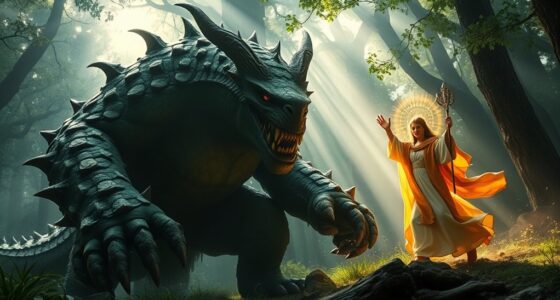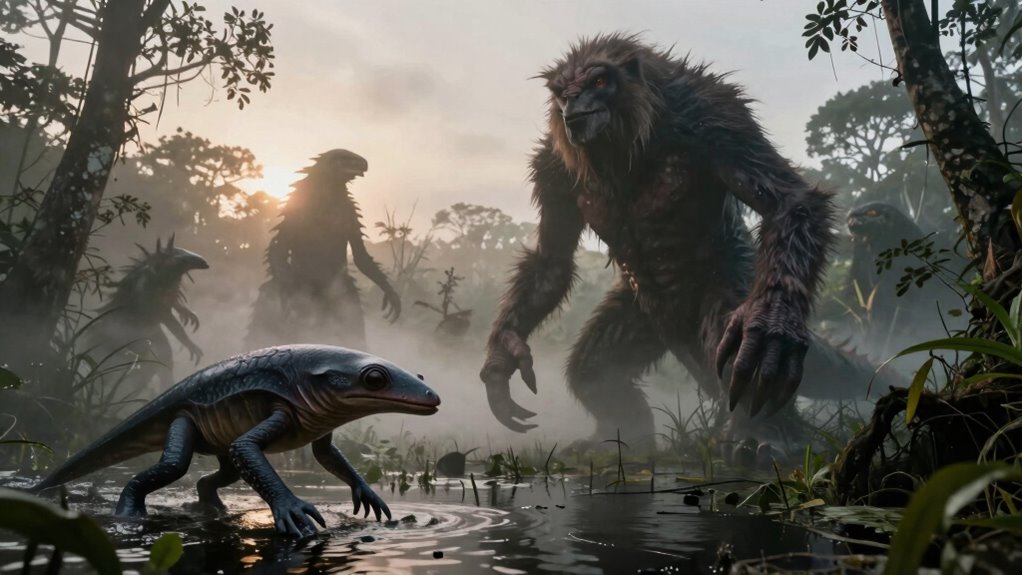

You’ll see that the Mapinguari and Bunyip are more than just spooky legends—they reflect deep connections between communities and their wild environments. The Mapinguari, from the Amazon, symbolizes ecological fragility and biodiversity, while the Bunyip highlights water safety and indigenous knowledge in Australia. These monsters embody fears, ecological truths, and respect for nature’s mysteries, offering insight into how legends preserve environmental awareness. To explore how these stories reveal the fragile balance of wild landscapes, keep exploring further.
Open a free Amazon Business account
Business pricing, bulk buying and tax-exempt orders.
As an affiliate, we earn on qualifying purchases.
Key Takeaways
- Regional monsters like Mapinguari and Bunyip symbolize local ecological knowledge and serve as warnings about environmental dangers.
- These creatures reflect cultural myths rooted in indigenous stories, embodying fears and ecological truths of their respective landscapes.
- Mapinguari highlights rainforest ecological fragility, while Bunyip emphasizes water source importance and aquatic habitat threats.
- Such legends preserve ecological awareness, promoting respect for biodiversity and environmental conservation efforts.
- Regional monsters embody human relationships with wilderness, representing mysteries, ecological concerns, and cultural identities of their regions.
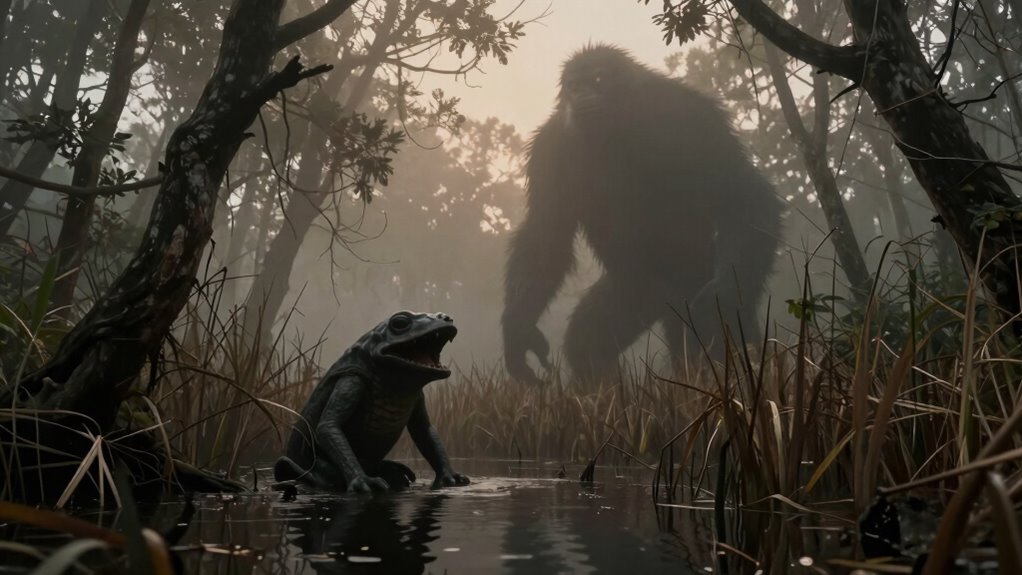
Across the world’s wild landscapes, you’ll find legendary monsters that embody local fears, myths, and natural wonders. These creatures, known as cryptids, often have intriguing origins rooted in ancient stories, cultural beliefs, or misunderstood encounters with wildlife. Take the Mapinguari, for example. This beast from the Amazon rainforest is said to be a giant, sloth-like creature with a ferocious reputation. Its cryptid origins are shrouded in mystery, blending indigenous legends with tales of unknown animals lurking in the dense jungle. While stories differ, many believe that sightings of the Mapinguari serve as warnings about the fragile balance of the rainforest ecosystem. Its presence hints at larger ecological impacts, as such creatures—real or myth—highlight the importance of preserving biodiversity. The creature’s supposed existence might even be a response to the ecological disruptions caused by deforestation or habitat loss, acting as a symbol of the forest’s resilience or vulnerability. Additionally, the stories surrounding these monsters often reflect a deep understanding of local ecosystems, emphasizing the interconnectedness of wildlife and cultural heritage.
In Australia, the Bunyip has long haunted the dreams of Indigenous communities and explorers alike. Its cryptid origins trace back to Aboriginal mythology, where it’s described as a mysterious aquatic beast lurking in swamps, billabongs, and rivers. The tales of the Bunyip often serve as cautionary stories to keep children away from dangerous waters, but they also reflect a deep connection to the environment. Some researchers suggest that sightings of the Bunyip could be based on real animals like the platypus or exaggerated encounters with other native species. Ecologically, the Bunyip’s legends emphasize the importance of water sources in the Australian landscape and warn of the potential dangers lurking beneath the surface. These stories, whether rooted in fact or folklore, underscore how regional monsters act as cultural markers that preserve ecological awareness and respect for the natural world. Ultimately, understanding these legends helps shed light on how indigenous communities interpret and safeguard their environment.
Across different wild landscapes, these monsters serve more than just spooky stories—they embody the complex relationship between humans and their environment. Whether it’s the cryptid origins of the Mapinguari or the ecological implications of the Bunyip, these legends remind you of the delicate balance needed to maintain healthy ecosystems. They act as cultural reflections of natural fears, ecological changes, and the mysteries still hidden within remote wildernesses. By studying these monsters, you gain insight into how different communities interpret the natural world, often blending myth with ecological truths. Ultimately, these creatures aren’t just stories; they are echoes of the wild landscapes’ untamed beauty and enduring mysteries.
biodiversity educational books for kids
As an affiliate, we earn on qualifying purchases.
As an affiliate, we earn on qualifying purchases.
Frequently Asked Questions
Are There Scientific Explanations for These Legendary Creatures?
There are no solid scientific explanations for these legendary creatures, as they often fall into cryptid classification. You can see how folklore evolution shapes stories over time, blending real animals with myth. Many sightings might be misidentifications or cultural tales passed down through generations. While intriguing, these creatures lack concrete evidence, making them fascinating parts of regional folklore rather than scientifically validated beings.
How Do Local Cultures Interpret These Monsters Differently?
You sense the stories shift as you explore into local cultures, each interpreting these monsters through cultural symbolism rooted in mythological origins. These creatures embody fears, morals, or spiritual beliefs unique to each community, transforming them into guardians, warnings, or symbols of nature’s power. Their interpretations linger in whispers and legends, revealing how deeply these beings are woven into the identity and worldview of those who believe in them, sparking mystery and reverence.
Have Any Physical Evidence Ever Been Found?
You won’t find concrete physical evidence like cryptid footprints or definitive proof from eyewitness testimonies that confirm these monsters’ existence. Most reports remain anecdotal, with footprints often explained away as animal tracks or natural formations. Eyewitness testimonies vary greatly and lack scientific validation, making it unlikely that any verified physical evidence exists. These creatures stay rooted in myth and local legend rather than proven reality.
What Are the Origins of These Regional Monster Stories?
You might wonder where these stories began. Mythical folklore and cultural symbolism fuel regional monster tales, shaping them over generations. Their origins often stem from ancient fears, local legends, and encounters with unfamiliar wilderness. These stories serve as warnings or explanations for mysterious phenomena. As you explore, remember that while no physical evidence exists, their power lies in the cultural fabric they weave, deepening your connection to wild landscapes and their mysteries.
Are There Modern Sightings or Encounters Documented?
You might find reports of cryptid sightings or encounters in folklore traditions, but concrete evidence remains elusive. Many enthusiasts share stories online, claiming to have seen strange creatures in remote areas, yet these accounts lack scientific verification. While these sightings fuel local legends and keep folklore traditions alive, most remain unconfirmed, blending myth and mystery. If you pursue these stories, expect a mix of adventure and skepticism.
water safety equipment for swimming
As an affiliate, we earn on qualifying purchases.
As an affiliate, we earn on qualifying purchases.
Conclusion
As you explore the wild landscapes teeming with legends like the mapinguari and bunyip, remember these monsters aren’t just stories—they’re the heartbeat of the land’s untamed spirit. These creatures embody the wild’s mystery and power, guarding secrets older than time itself. So, next time you venture into the wilderness, keep your eyes open and your imagination wild—because you’re stepping into a domain where the unknown is more astonishing than you ever dared to dream, a true paradise of myth and mystery.
As an affiliate, we earn on qualifying purchases.
As an affiliate, we earn on qualifying purchases.
Pool season Picks
robotic pool cleaners
As an affiliate, we earn on qualifying purchases.