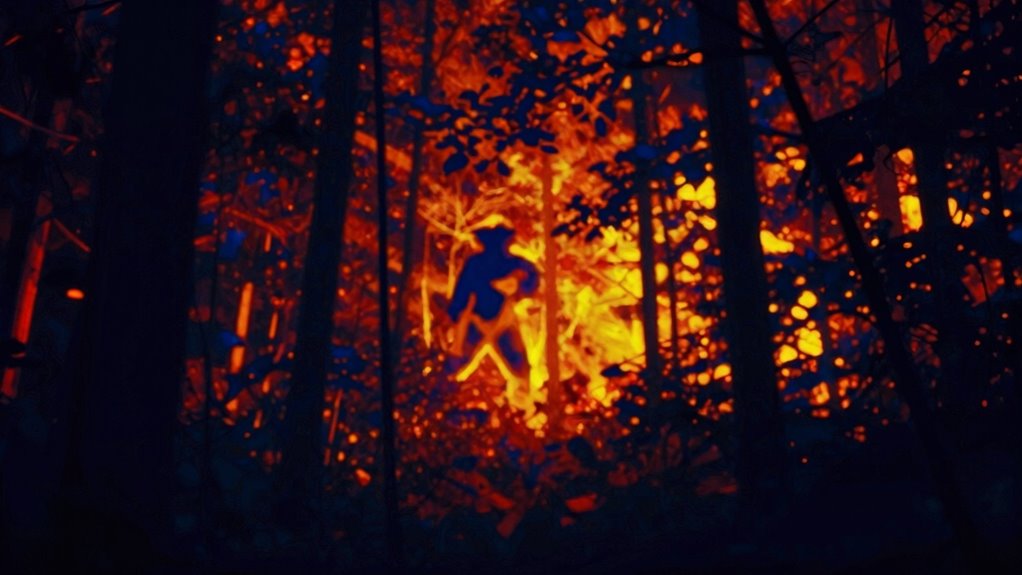

Thermal imaging can help you spot heat signatures in darkness and dense foliage, improving your chances of finding elusive cryptids. It reveals movements and shapes hidden from your naked eye, especially in remote terrain. However, it’s not foolproof—you’ll get false positives from animals, rocks, or environmental heat. Weather, terrain, and resolution limit its effectiveness. To truly understand what it can and can’t do, exploring further will give you a clearer picture.
Listen free for 30 days with Audible
Thousands of audiobooks and originals — cancel anytime.
As an affiliate, we earn on qualifying purchases.
Key Takeaways
- Thermal imaging detects heat signatures, but cannot definitively identify cryptids, leading to potential false positives.
- Environmental factors like dense foliage, weather, and terrain can hinder or obscure thermal detection.
- High-quality devices are costly and may have limited resolution, affecting detection accuracy for small or distant targets.
- Overreliance on thermal imaging without corroborating methods increases risk of misinterpretation.
- Understanding technology limits helps set realistic expectations and improves detection reliability.
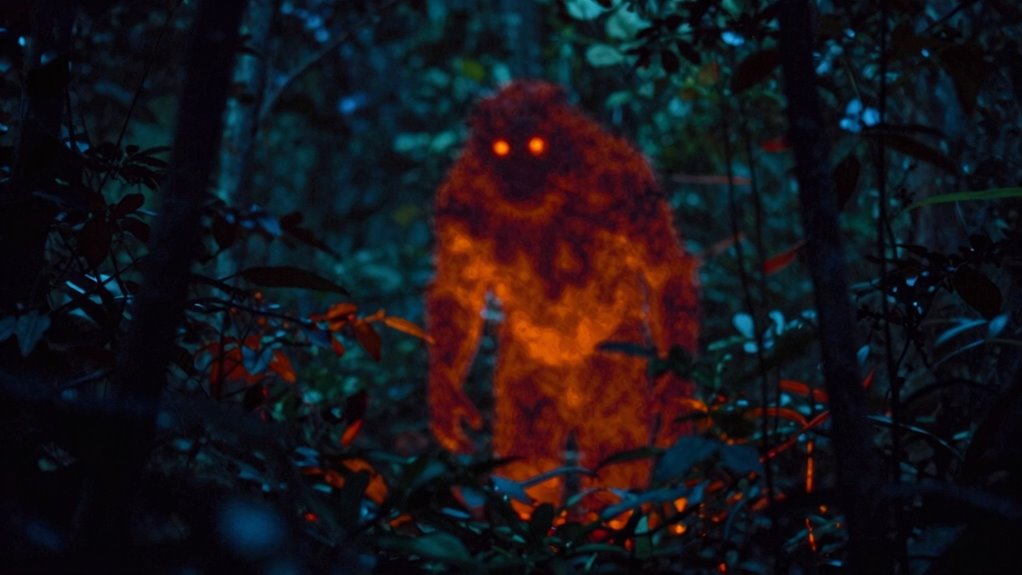
Thermal imaging has become a powerful tool in the ongoing search for cryptids, offering a new way to detect elusive creatures that often evade traditional methods. This technology allows you to see heat signatures, making it possible to spot living beings in complete darkness or dense foliage where they might otherwise remain hidden. When conducting wildlife detection, thermal imaging can reveal movements and shapes that are invisible to the naked eye, increasing your chances of locating mysterious creatures lurking in remote or difficult terrain. However, it’s essential to understand the technology’s limitations to avoid overestimating its capabilities.
One of the main challenges is that thermal imaging detects heat, not specific animals or cryptids. This means other warm objects—like animals, humans, or even warm rocks or plants—can produce similar heat signatures. This makes it tricky to differentiate between cryptids and common wildlife or environmental features, leading to potential false positives. You might see a heat signature and assume it’s something extraordinary when, in reality, it’s just a familiar animal or temperature anomaly. This makes it important to weigh the technology’s limitations and capabilities with other observation methods, like sound detection or traditional visual spotting, to verify your findings.
Another key point to deliberate is the technology’s limitations in certain environments. Dense forests, thick underbrush, or foggy conditions can interfere with thermal imaging’s effectiveness because heat signatures may be obscured or diffused. Similarly, rapid temperature changes or weather conditions like rain can reduce image clarity, making it harder to identify potential cryptids. If you’re in an area where terrain is dense or weather is unpredictable, thermal imaging might not provide the reliable results you hope for. It’s a useful tool, but not foolproof. Additionally, environmental factors like wind or humidity can further affect the accuracy of thermal readings, underscoring the need for multiple detection strategies. Being aware of technological limitations helps set realistic expectations and avoids overreliance on a single method. Recognizing how environmental conditions impact thermal imaging is crucial for interpreting results correctly and avoiding false alarms.
Furthermore, the cost and resolution of thermal imaging devices can also limit your search. High-quality, precise thermal cameras tend to be expensive, and lower-end models may not offer the resolution needed to distinguish small or distant creatures. This means you could miss subtle heat signatures or misinterpret larger ones. While thermal imaging expands your ability to detect cryptids, it’s no substitute for experience, patience, and a good understanding of wildlife detection techniques. Additionally, environmental factors like temperature fluctuations can further complicate readings, emphasizing the importance of combining multiple detection methods for better accuracy.
thermal imaging camera for wildlife detection
As an affiliate, we earn on qualifying purchases.
As an affiliate, we earn on qualifying purchases.
Frequently Asked Questions
Can Thermal Imaging Detect Mythical Creatures Like Bigfoot?
Thermal imaging can’t reliably detect mythical creatures like Bigfoot because they’re not scientifically proven to exist. While it’s useful for paranormal detection and spotting warm-blooded animals, it can’t distinguish between real creatures and other heat sources. If you’re searching for a mythical creature, thermal imaging might show a heat signature, but it won’t confirm a sighting of a genuine cryptid. So, don’t rely solely on this tech for paranormal detection.
How Accurate Is Thermal Imaging in Low-Light Conditions?
In low-light conditions, thermal imaging is quite accurate if it has high infrared resolution. You’ll see heat signatures clearly, even in total darkness. However, the accuracy depends on factors like distance and environmental conditions. If the device has poor infrared resolution, it might miss subtle heat signatures. So, for reliable detection, choose thermal equipment with good infrared resolution to guarantee your heat signature readings are precise.
Are There Any Known Thermal Imaging False Positives With Cryptids?
Yes, thermal imaging can produce false positives with cryptids due to sensor limitations and environmental interference. You might see heat signatures from animals, rocks, or vegetation that mimic cryptid shapes, especially in foggy or rainy conditions. These factors can cause your thermal camera to misidentify objects, making it tricky to distinguish real cryptids from natural heat sources. Always consider environmental factors, and don’t rely solely on thermal data.
What Are the Limitations of Thermal Imaging for Wildlife Research?
You can’t see the forest for the trees without understanding thermal imaging limits. Thermal resolution can be a bottleneck, making small or distant animals hard to detect accurately. Equipment cost is another hurdle, often high for quality devices. While thermal imaging helps spot warm-blooded wildlife, it struggles in dense foliage, extreme weather, or when animals are stationary. Remember, even the sharpest eyes have their blind spots in nature’s vast theater.
Can Thermal Imaging Differentiate Between Animals and Cryptids?
You can’t reliably differentiate between animals and cryptids using thermal imaging alone. Infrared resolution affects how detailed the thermal signature appears, which impacts identification accuracy. Cryptids may have thermal signatures similar to known animals, making it difficult to tell them apart based solely on temperature. To improve identification, you need additional data like size, movement, and context, since thermal imaging primarily shows heat patterns rather than specific species.
handheld thermal scope for cryptid hunting
As an affiliate, we earn on qualifying purchases.
As an affiliate, we earn on qualifying purchases.
Conclusion
While thermal imaging can be a helpful tool in cryptid investigations, it’s not foolproof. Remember, many thermal cameras have a detection range limited to a few dozen meters, and environmental factors can distort readings. Notably, a 2021 study showed that thermal cameras detected only 60% of known wildlife in challenging conditions. So, don’t rely solely on tech—combine it with traditional methods to increase your chances of uncovering the truth.
infrared thermal camera for outdoor use
As an affiliate, we earn on qualifying purchases.
As an affiliate, we earn on qualifying purchases.
high resolution thermal imaging device
As an affiliate, we earn on qualifying purchases.
As an affiliate, we earn on qualifying purchases.
Flea & tick season Picks
flea and tick prevention
As an affiliate, we earn on qualifying purchases.



![Terence Tao Explains 6 Essential Mathematical Concepts [Video]](https://whatifmonsters.com/wp-content/uploads/2026/09/terence-tao-explains-6-essential-mathematical-concepts-video-featured-260x140.jpg)