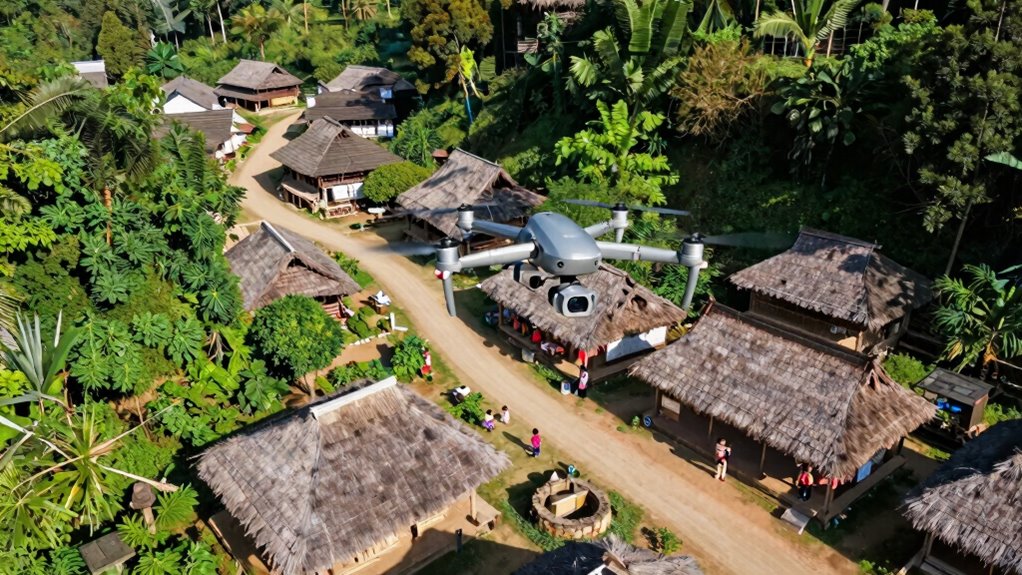
When drones see everything, your cultural stories face new challenges. They reveal the unknown openly, which can change how myths evolve and influence perceptions of sacred sites. Privacy may vanish, making communities modify rituals or hide traditions out of fear. While drones can help preserve heritage by recording sites and stories, they might also distort authenticity and shift narrative power. Keep exploring these changes, and you’ll discover how technology shapes the future of folklore even more.
Key Takeaways
- Drones alter storytelling by revealing hidden traditions and landscapes, making folklore more accessible yet potentially less mysterious.
- Surveillance blurs boundaries, causing communities to modify or hide cultural practices to avoid scrutiny.
- Documented stories risk losing authenticity as recorded traditions may be influenced or altered by constant observation.
- The perception of drones as protectors or threats influences how communities interpret and adapt their folklore.
- The future of folklore depends on balancing technological recording with efforts to preserve cultural authenticity and identity.

Throughout history, folklore has shaped how communities interpret mysterious or unexplained phenomena, and today, drones are sparking new stories and beliefs rooted in modern myth. As these flying devices become more common, they reveal a new layer to how we comprehend the world around us—one filled with intrigue, suspicion, and sometimes fear. You might wonder how stories evolve when the unknown is no longer hidden but captured openly by cameras and sensors. With drones constantly watching, they bring a surveillance element that changes how people perceive their environment and cultural narratives, blurring the boundaries between myth and reality. This shift can erode the sense of personal privacy, making you question what is truly private anymore. As stories circulate about drone sightings—whether they’re seen as benevolent guardians or invasive spies—the cultural fabric of communities begins to change. Traditional customs, rituals, or sacred sites risk being overlooked or misunderstood when viewed through a lens of constant surveillance. This threatens the preservation of cultural heritage, as the stories that once protected and celebrated local identity might be drowned out by fears of intrusion and loss of anonymity. Cultural preservation efforts can be impacted, as communities grapple with balancing technology’s benefits and its risks to their traditions. Additionally, the technological capabilities of drones can influence how stories are spun and understood, often amplifying fears or hopes in ways that shape cultural perceptions. Furthermore, the rapid advancement of technology often leaves communities struggling to adapt their narratives and practices in response to these new tools. On the other hand, some see drones as tools that can help preserve culture. They can document endangered traditions, historic sites, or remote landscapes that might otherwise fade away. Yet, the very act of recording can also alter the stories themselves. When communities become aware of being watched, they may modify their behaviors or rituals, consciously or unconsciously, to avoid scrutiny. This creates a tension between sharing and safeguarding cultural practices and the risk of eroding their authenticity. You might find yourself caught between embracing the benefits of technology and safeguarding the essence of your community’s identity. As folklore adapts to this new reality, it’s vital to reflect on how stories are told and preserved in a world where eyes—both human and mechanical—are everywhere. Moreover, the influence of modern technology on traditional storytelling can reshape cultural narratives in unpredictable ways. Ultimately, the way you interpret and protect your cultural narratives will determine whether folklore remains a living tradition or becomes a relic of the past, overshadowed by the omnipresent gaze of drones.
drone camera for cultural preservation
As an affiliate, we earn on qualifying purchases.
As an affiliate, we earn on qualifying purchases.
Frequently Asked Questions
How Do Folklore Stories Influence Drone Technology Development?
Folklore stories influence drone technology development by inspiring designs with mythical symbolism and emphasizing cultural narratives of protection, surveillance, or freedom. You might see developers incorporate legendary motifs to humanize drones or address ethical concerns rooted in cultural stories. These narratives shape how drone technology evolves, ensuring it aligns with societal values and fears, ultimately blending mythology with modern innovation to create devices that resonate culturally and ethically.
Are There Legends About Drones in Different Cultures?
Yes, legends about drones exist in various cultures, serving as modern symbols in mythical narratives. In some societies, drones symbolize watchful spirits or divine messengers, reflecting cultural symbolism around surveillance and protection. These stories transform technology into myth, blending old-world symbolism with new-world innovation. As you explore different cultures, you’ll find these legends echoing fears, hopes, and moral lessons, making drones more than machines—they become part of the cultural mythos.
How Might Drone Surveillance Alter Traditional Storytelling Practices?
Drone surveillance can profoundly alter traditional storytelling practices by impacting cultural preservation and narrative adaptations. You might find that stories are influenced or even shaped by the constant drone presence, leading to new legends or modifications of old myths. As you adapt narratives, you could emphasize themes of surveillance or privacy, transforming folklore into modern allegories. This evolving storytelling reflects how technology reshapes cultural identity and the way communities transmit their history.
Can Folklore Help People Resist Drone Surveillance?
They say “where there’s a will, there’s a way,” and folklore can be your form of mythical resistance against drone surveillance. You can preserve cultural traditions through stories, songs, and symbols that confound or evade drone detection. Folklore acts as a shield, helping communities maintain identity and resist oppressive observation. It keeps cultural preservation alive, turning ancient wisdom into modern resistance against the watchful eye.
What Are the Ethical Dilemmas Linking Folklore and Drone Usage?
You face ethical dilemmas when linking folklore and drone usage, especially around privacy concerns and cultural preservation. Drones can threaten personal privacy by capturing intimate details, risking exploitative surveillance. At the same time, folklore can serve as a tool to resist or critique these practices, helping communities preserve their cultural identity amidst technological intrusion. Balancing technological advancement with respect for privacy and cultural heritage becomes essential in steering through these dilemmas.
privacy protection drone accessories
As an affiliate, we earn on qualifying purchases.
As an affiliate, we earn on qualifying purchases.
Conclusion
As drones quietly watch over us, folklore gently shifts its dance, weaving new stories from unseen eyes. Instead of fading away, these tales might just find new life in the whispers of the wind, softly reminding us of our roots while embracing the future. So, as we navigate this changing landscape, let’s cherish the magic of stories that softly adapt, guiding us through the dawn of a world where tradition and technology gently intertwine.
remote sensing drone for heritage sites
As an affiliate, we earn on qualifying purchases.
As an affiliate, we earn on qualifying purchases.
As an affiliate, we earn on qualifying purchases.