
TL;DR

Prime made for students and young adults
- Fast, free delivery for dorm and study essentials
- Prime Video and Amazon Music included
- Member-only deals
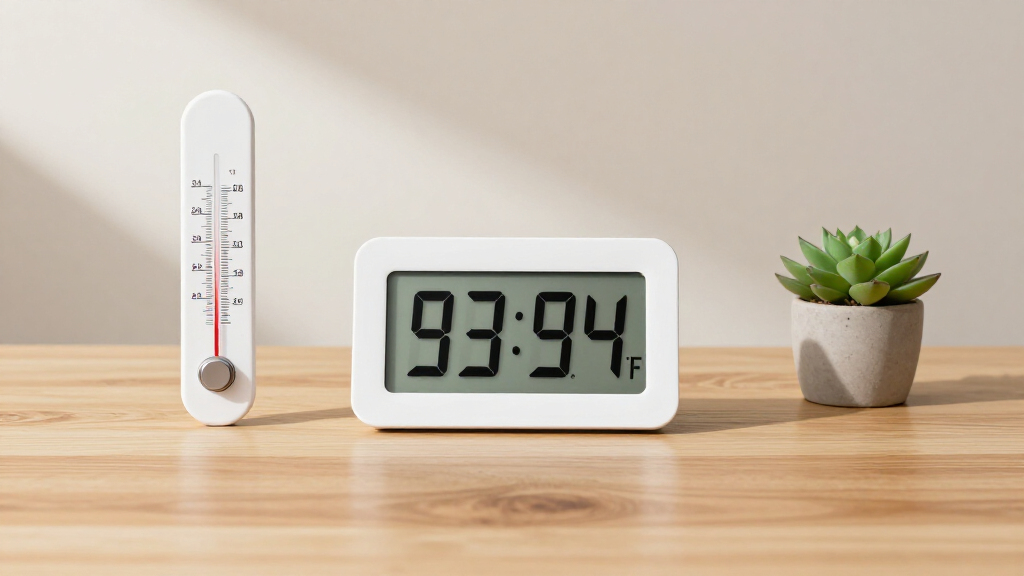
A market-based prediction indicates the maximum temperature on July 24, 2026, will be between 93 and 94°F. This forecast is based on recent trading activity in a temperature prediction market. The accuracy of this prediction remains uncertain, and weather officials have not confirmed this forecast.
Recent activity in a temperature prediction market indicates that the maximum temperature on July 24, 2026, is expected to be between 93 and 94°F. You can see the future temperature prediction for July 5, 2026 for a related forecast. However, official weather forecasts from meteorological agencies have not confirmed this estimate, and the prediction remains speculative at this stage.
The prediction comes from active trades in a market that allows participants to bet on future weather conditions, similar to other market-based weather forecasts. According to data from the Kalshi platform, nine recent trades suggest a high probability that the maximum temperature on July 24, 2026, will fall within the 93-94°F range. These trades reflect the collective expectations of market participants, not official meteorological forecasts.
Weather agencies such as NOAA and the National Weather Service have not yet issued specific forecasts for that date, and their predictions are typically based on climate models, historical data, and current atmospheric conditions. It is important to note that market-based predictions are probabilistic and can be influenced by various factors, including trader sentiment and market liquidity.
While the market activity indicates a consensus around this temperature range, it is not a definitive forecast. For more on long-term weather predictions, see future temperature predictions. The actual weather on July 24, 2026, could differ significantly due to the inherent uncertainty in long-term weather prediction.
Implications of Market-Based Temperature Predictions
This prediction illustrates how market mechanisms can be used to gauge expectations of future weather conditions, providing an alternative perspective to traditional forecasts. Stakeholders such as farmers, event organizers, and energy providers can consider potential temperature ranges for planning purposes. However, reliance on market data should be cautious and supplemented with official scientific forecasts.
The use of prediction markets for long-term weather forecasting raises questions about their accuracy and reliability, as they are still relatively new tools in this domain. The outcomes of such markets could influence future approaches to incorporating probabilistic data into decision-making processes across various sectors.
As an affiliate, we earn on qualifying purchases.
Background on Weather Prediction Markets and Long-Term Forecasts
Prediction markets like Kalshi enable participants to buy and sell contracts based on future weather outcomes, aggregating collective expectations. These markets reflect crowd-sourced probabilities but are inherently speculative, influenced by trader sentiment.
Long-term forecasts for specific dates years in advance are generally based on climate models and historical data. These scientific predictions typically do not specify precise day-to-day temperatures so far ahead, making market predictions an additional, unconfirmed data point.
Forecasts beyond a week are subject to increased uncertainty, and predictions for specific days several years in advance are highly speculative. Market activity provides useful insights but should not replace official meteorological forecasts.
“The recent trades suggest a high probability that the maximum temperature on July 24, 2026, will be between 93 and 94°F, but this is based on market sentiment, not scientific prediction.”
— a Kalshi spokesperson
As an affiliate, we earn on qualifying purchases.
Unconfirmed Nature of Long-Term Temperature Predictions
It remains uncertain how accurate the market-based prediction will be, as no official meteorological forecast has been issued for July 24, 2026. The prediction is derived from trading activity, which can be influenced by factors unrelated to actual weather conditions, such as trader sentiment or market dynamics.
Forecasts for specific dates several years into the future are inherently uncertain due to the complexity of atmospheric systems. The actual temperature on that date could differ significantly from the market prediction.
Experts advise viewing such long-term predictions as speculative rather than definitive forecasts.
As an affiliate, we earn on qualifying purchases.
Monitoring Official Forecasts and Market Activity
Official weather forecasts are expected to be issued closer to the date, although predictions several years in advance will remain uncertain. Market activity may continue to evolve, reflecting changing trader expectations.
Further analysis combining scientific models and market data will be necessary to evaluate the reliability of such predictions. Stakeholders should rely primarily on official weather updates and consider market predictions as supplementary information.
Forecast models may provide more clarity in the coming months, but for now, the temperature prediction for July 24, 2026, remains speculative and unconfirmed.
As an affiliate, we earn on qualifying purchases.
Key Questions
How reliable are prediction markets for long-term weather forecasts?
Prediction markets aggregate trader expectations and can reflect collective sentiment, but they are inherently speculative. Their reliability for long-term forecasts is limited and should be considered supplementary to scientific models.
Has any official forecast been issued for July 24, 2026?
No, meteorological agencies like NOAA have not issued specific forecasts for that date. Predictions for such a distant future are typically based on climate models, which do not specify exact day-to-day temperatures.
What factors influence long-term temperature predictions?
Long-term predictions depend on climate models, historical climate data, current atmospheric trends, and sometimes market sentiment. The inherent complexity of climate systems makes precise predictions challenging beyond short timeframes.
Can the market prediction be trusted over official forecasts?
Market predictions can provide useful insights into collective expectations but are not substitutes for official forecasts from meteorological agencies, which are based on scientific data and models.
What should I do if I am planning an event on July 24, 2026?
It is advisable to wait for official weather forecasts closer to the date. Relying solely on market predictions for planning purposes is risky due to their speculative nature.
Source: kalshi
Fall Picks
fall essentials
As an affiliate, we earn on qualifying purchases.