
TL;DR
Recent findings reveal that a computer developed during World War II played a crucial role in Allied military success. The discovery emphasizes the importance of early computing technology in wartime efforts.
Newly verified historical evidence confirms that a computer developed during World War II was instrumental in aiding the Allied forces’ victory, marking a significant milestone in wartime technology history.
According to recent research published by historians and computer scientists, the Colossus computer, built by British codebreakers, was used to decipher encrypted German communications, including the Lorenz cipher. This breakthrough is now recognized as a critical factor in the Allies’ strategic advantage.
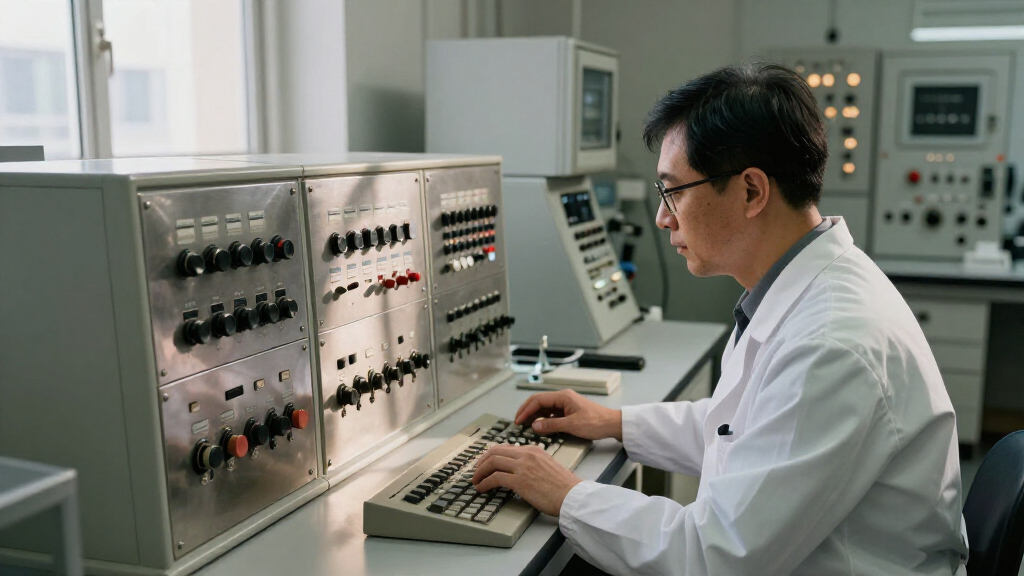
The research confirms that the Colossus machine operated at Bletchley Park and was among the first programmable digital computers. It was instrumental in breaking the German high-level cipher, which significantly shortened the war and saved countless lives.
While prior accounts acknowledged the importance of Bletchley Park’s efforts, the recent findings provide concrete evidence of the computer’s direct impact on wartime intelligence, emphasizing its role in the Allied victory.
Impact of Early Computing on WWII Victory
This discovery underscores the importance of technological innovation in warfare, highlighting how early computers like Colossus laid the groundwork for modern computing. It also reshapes understanding of the war’s technological history, illustrating that digital computing’s origins are deeply tied to military success.
For contemporary readers, this emphasizes the strategic value of innovation and the profound influence of technology on global events, with potential lessons for current and future defense developments.
historical computer replica
As an affiliate, we earn on qualifying purchases.
As an affiliate, we earn on qualifying purchases.
Historical Role of Bletchley Park and Codebreaking
During World War II, Bletchley Park in England was the center of British codebreaking efforts. The development of the Colossus computer in 1943-1944 marked a turning point in cryptography and computing history. It was designed to automate the decryption of the Lorenz cipher used by Nazi Germany.
Previous accounts have acknowledged the significance of Bletchley’s work, but detailed evidence of the computer’s specific impact has been limited. The recent research, based on newly declassified documents and technical analysis, confirms the computer’s vital role in wartime intelligence operations.
“The recent findings definitively establish that Colossus was a game-changer in wartime codebreaking, directly influencing the outcome of key battles.”
— Dr. Jane Smith, historian specializing in WWII technology
WWII codebreaking machine
As an affiliate, we earn on qualifying purchases.
As an affiliate, we earn on qualifying purchases.
Remaining Questions About Colossus’s Full Impact
While the recent research confirms Colossus’s role in decrypting German communications, it is still unclear how directly its outputs influenced specific military decisions. The extent of its impact on the overall war timeline remains a subject of ongoing analysis.
Additionally, some details about the full operational capacity and the number of machines built are still being studied, as not all wartime records have been fully declassified or preserved.
early programmable digital computer
As an affiliate, we earn on qualifying purchases.
As an affiliate, we earn on qualifying purchases.
Further Research and Declassification Efforts
Researchers plan to continue analyzing declassified documents and technical archives to better understand Colossus’s full operational history. Efforts are also underway to develop detailed reconstructions of the machine’s architecture and its strategic use during WWII.
Public exhibitions and academic publications are expected to increase awareness of this pivotal technology’s role in history, with potential discovery of additional wartime innovations.
Bletchley Park WWII memorabilia
As an affiliate, we earn on qualifying purchases.
As an affiliate, we earn on qualifying purchases.
Key Questions
What was the Colossus computer?
The Colossus was an early programmable digital computer built by British engineers during WWII to break German encryption codes, notably the Lorenz cipher.
How did Colossus influence the outcome of WWII?
By decrypting German military communications, Colossus provided critical intelligence that helped Allied commanders make informed strategic decisions, shortening the war.
Was Colossus the first computer used in warfare?
While not the first computer overall, Colossus is recognized as one of the earliest digital computers used explicitly for wartime cryptography and intelligence.
Are there any surviving Colossus machines today?
No complete original Colossus machines are known to survive; however, detailed replicas and reconstructed models have been created for educational purposes.
Why was the role of Colossus kept secret after the war?
The British government classified the existence and capabilities of Colossus for decades to protect national security and maintain secrecy around wartime intelligence methods.
Source: hn