
TL;DR

Get school and study supplies delivered free — and shop member deals
- Fast, free delivery on millions of items
- Access to Prime Big Deal Days deals on October 6–7
- Prime Video, Amazon Music and more included
A solar eclipse is happening today, with visibility limited to certain areas. This event is part of the ongoing eclipse cycle and offers a rare viewing opportunity. Details about timing and location are confirmed, but some specifics remain uncertain.
A solar eclipse is happening today, observable in specific regions around the world. This event, part of the ongoing eclipse cycle, is confirmed by astronomical authorities and is expected to last several minutes in affected areas. You can learn more about the solar eclipse here. The eclipse provides a rare opportunity for viewers to witness a celestial phenomenon that occurs only a few times each year. Check out the interactive map for the eclipse to plan your viewing.
The eclipse is primarily visible in parts of North America, South America, and some regions of Africa and Europe, depending on local weather conditions. According to the NASA Eclipse Website, the peak of the eclipse will occur around midday local time in the regions with the best viewing conditions. The event involves the Moon passing between the Sun and Earth, temporarily blocking the Sun’s light. Find out when is the solar eclipse happening in your area.
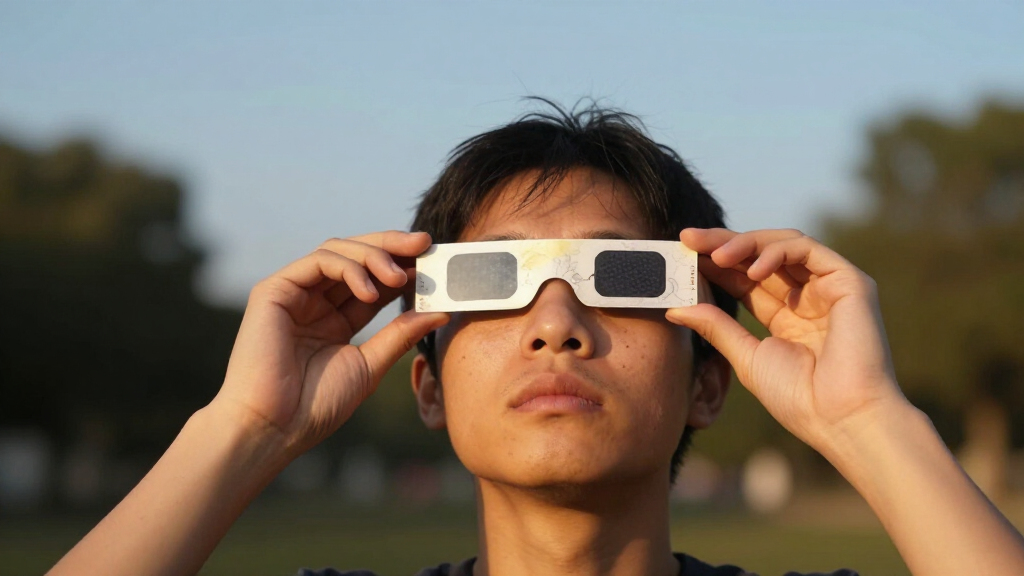
Observers are advised to use proper eye protection, such as eclipse glasses, to view the event safely. The eclipse’s duration varies by location but typically lasts from a few seconds to several minutes. While the exact timing differs, the maximum eclipse in the most affected regions is expected around 12:30 p.m. UTC.
Why Today’s Eclipse Is an Important Astronomical Event
This solar eclipse offers a unique chance for amateur astronomers and the general public to observe a rare celestial alignment. Eclipses are valuable for scientific research, including studying the Sun’s corona and testing solar observation instruments. Additionally, the event has cultural and educational significance, often inspiring increased interest in astronomy and space science.
Scientists also use eclipses to improve understanding of solar phenomena and to calibrate observational tools. Public engagement during such events can boost awareness about solar health, space weather, and the importance of scientific research.
As an affiliate, we earn on qualifying purchases.
Recent and Upcoming Solar Eclipses in the Cycle
This eclipse is part of the current Saros cycle, which repeats approximately every 18 years. The last similar eclipse occurred in 2008, and the next one is expected in 2026. Historically, solar eclipses have been observed and recorded for centuries, with modern technology enabling detailed study and widespread public viewing.
The last major eclipse visible in major cities was in August 2017, which drew millions of viewers across the United States. Today’s eclipse is less widespread but still significant for those in the path of totality or partial viewing areas. The phenomenon is predictable thanks to centuries of astronomical calculations, and experts have been preparing for this event for months.
“I’ve been waiting for this eclipse for months. It’s a rare sight, and I plan to view it safely with proper glasses. It’s a reminder of how small we are in the cosmos.”
— John Carter, amateur astronomer in California
As an affiliate, we earn on qualifying purchases.
Remaining Unknowns About the Eclipse’s Visibility and Duration
While the timing and general visibility areas are confirmed, details such as exact viewing times and the duration of the maximum eclipse can vary slightly depending on local weather conditions and geographic specifics. Some regions may experience cloud cover or other weather-related issues that could obscure the event. Additionally, the precise scientific measurements of solar phenomena during the eclipse are still being analyzed and will be available in the coming days.
As an affiliate, we earn on qualifying purchases.
Upcoming Eclipses and How to Prepare for Future Events
The next significant solar eclipse will occur in 2026, visible across parts of the Arctic, Greenland, Iceland, and Spain. Astronomers recommend planning ahead to view future eclipses, including acquiring proper eye protection and checking local viewing conditions. Public events and live streams are also expected to be available for regions outside the eclipse path.
Scientists will continue analyzing data collected today to improve understanding of solar activity and eclipse-related phenomena. Observatories and space agencies will publish detailed findings in the coming weeks.
solar observation safety equipment
As an affiliate, we earn on qualifying purchases.
As an affiliate, we earn on qualifying purchases.
Key Questions
Where can I see the eclipse today?
The eclipse is visible in parts of North America, South America, Africa, and Europe, depending on your location. Check local astronomical societies or online eclipse maps for specific viewing areas and times.
How can I view the eclipse safely?
Use approved eclipse glasses or viewers that meet international safety standards. Never look directly at the Sun without proper eye protection, as it can cause serious eye damage.
What causes a solar eclipse?
A solar eclipse occurs when the Moon passes between the Sun and Earth, blocking out the Sun’s light either partially or completely in certain areas.
Will there be a total eclipse today?
In some regions along the path of totality, a total eclipse will occur, lasting a few minutes. In other areas, only a partial eclipse will be visible.
When is the next eclipse after today?
The next significant eclipse will be in 2026, with different visibility regions. Future eclipses are scheduled approximately every 6 to 18 months, depending on the cycle.
Source: google-trends
Halloween Picks
halloween
As an affiliate, we earn on qualifying purchases.