
Exorcisms have been linked to shifts in cryptid activity, with reports suggesting these rituals can influence sightings or behaviors. Cultural beliefs, rituals, and symbolic artifacts may alter environments or perceptions, potentially impacting cryptids. Psychological factors like mass hysteria and confirmation bias also play roles. While scientific evidence remains limited, some cases hint that spiritual practices might affect cryptid presence. If you’re curious about specific examples and theories, you’ll discover how these phenomena intertwine in the full story.
Key Takeaways
- Some case studies report a decrease in cryptid sightings following exorcism rituals, suggesting potential influence.
- Ritual symbolism and ancient artifacts are believed to dispel negative energies associated with cryptid activity.
- Psychological effects of exorcisms, such as heightened suggestibility, may alter perceptions of cryptid encounters.
- Environmental impacts from ritual activities, like noise and pollution, can disrupt local ecosystems and cryptid habitats.
- Scientific evidence remains limited, with many cases attributing cryptid activity fluctuations to psychological and environmental factors.

Angelica, Cut, Dried Herb, 1 Oz 100% Natural – No Additives or Preservatives
Common Names: Common Names: Angelica, Archangel, Masterwort
As an affiliate, we earn on qualifying purchases.
As an affiliate, we earn on qualifying purchases.
Historical Accounts of Exorcisms in Haunted and Cryptid-Rich Areas
Throughout history, numerous reports describe exorcisms performed in areas believed to be haunted or home to cryptids. These accounts often link ancient artifacts and mythical symbolism to the rituals, suggesting a deep cultural connection. You might find that ancient relics, such as carved stones or talismans, are used in exorcisms to ward off malevolent spirits or cryptid influences. These artifacts embody mythical symbolism, representing protective forces or divine power, which are believed to drive away evil entities. Such practices highlight how cultural myths and legends influence exorcism rituals, especially in regions with a history of cryptid sightings. The intertwining of ancient artifacts and mythical symbolism underscores the cultural importance placed on spiritual protection, shaping how communities respond to mysterious or haunted areas.

Hand-Painted Protection Talisman Stone – Ancient Forest Sigil Replica for Horror Fans, 3D Printed Mystical Rune Rock, Supernatural Mystery Prop Decor
🌲 Iconic Horror Design: A meticulously crafted replica inspired by the forest talismans used in the hit supernatural…
As an affiliate, we earn on qualifying purchases.
As an affiliate, we earn on qualifying purchases.
Notable Cases Linking Rituals to Changes in Cryptid Sightings
Numerous reports suggest that performing specific rituals or exorcisms can influence cryptid activity in certain areas. These cases often hinge on cryptid psychology, where the creature’s behavior appears linked to human actions and beliefs. For example, in a notable case, a community performed a series of exorcisms accompanied by ritual symbolism aimed at dispelling negative energies. Following these rituals, sightings of the cryptid decreased markedly, suggesting a possible connection. Such instances imply that ritual symbolism might impact the environment or collective consciousness, affecting cryptid activity. While skeptics view these as coincidental, believers argue that ritual actions can alter the perceived presence or behavior of cryptids, highlighting the importance of understanding how human rituals and cryptid psychology intertwine in these notable cases.

Official Cryptid Research Team | Cryptids Folklore Mothman Adjustable Printed Baseball Hat, Black
Official Cryptid Research Team – A cool Mothman design for spectral hunters and paranormal investigators. A funny cryptids…
As an affiliate, we earn on qualifying purchases.
As an affiliate, we earn on qualifying purchases.
Psychological Explanations for Apparent Correlations
Many psychological factors can explain why people perceive a link between rituals and cryptid sightings, even when no direct cause-and-effect exists. One key factor is mass hysteria, where collective anxiety amplifies perceptions of cryptid activity after rituals like exorcisms. The placebo effect also plays a role; if you believe an exorcism will influence cryptid behavior, you may interpret ambiguous events as confirmation. Additionally, cognitive biases, such as confirmation bias, lead you to notice and remember only sightings that support your beliefs. Finally, heightened emotional states during rituals can increase suggestibility, making you more prone to misinterpreting natural phenomena as cryptid encounters. These psychological dynamics help explain why correlations emerge even without any real influence from exorcisms.

Home Cleansing & Smudging Kit with White Sage, Palo Santo, Abalone & Stand, Smudge Feather & Guide – Smudge Kit with Sage Smudge Sticks
🌙 At Blue River Sage, we work very hard to make sure the quality of our sage is…
As an affiliate, we earn on qualifying purchases.
As an affiliate, we earn on qualifying purchases.
Cultural Beliefs and Their Role in Cryptid Encounters
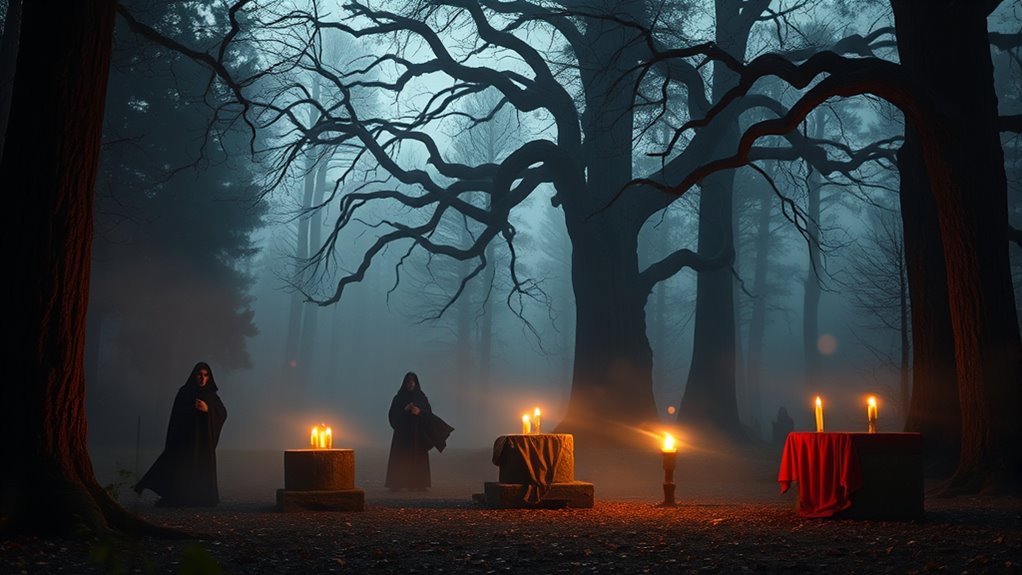
Your cultural beliefs shape how you interpret cryptid encounters, often coloring what you see or hear. Rituals practiced in various societies can influence cryptid behavior, making them more likely to appear or act in certain ways. Ultimately, your perceptions are deeply affected by these shared beliefs, which can alter the entire experience.
Cultural Interpretations Shape Encounters
Cultural beliefs deeply influence how people interpret and respond to cryptid encounters. Your perception of these beings often depends on local folklore, mythologies, and symbols. These perceptions shape whether you see cryptids as dangerous monsters or spiritual guardians. For example, cryptid symbolism varies widely—some cultures view them as omens, while others see them as messengers. Ritual significance also plays an essential role; rituals can influence how encounters unfold or are remembered. To deepen your understanding, consider these factors:
- How local legends frame cryptids’ nature and purpose
- The role of symbolism in shaping emotional responses
- Ritual practices that influence perceptions during sightings
- Cultural context that determines whether cryptids are feared or revered
Your cultural background fundamentally colors every cryptid encounter you experience.
Rituals Influence Cryptid Behavior
Rituals rooted in cultural beliefs can profoundly shape how cryptids behave during encounters, often serving as a form of communication or influence. When you perform specific rituals, you may invite supernatural interference that alters a cryptid’s actions or presence. Ritual symbolism plays a key role, as certain objects, gestures, or words are believed to control or appease these mysterious beings. These practices can trigger cryptid responses aligned with cultural expectations, making encounters more predictable or meaningful. In some cases, ritual actions are seen as a way to ward off or attract cryptids, relying on symbolic gestures that tap into collective subconscious beliefs. Understanding these rituals helps explain why cryptid behavior varies across cultures and how these practices may influence their activity during encounters.
Beliefs Impact Perception Dynamics
Beliefs deeply influence how people interpret cryptid encounters, shaping both perception and reaction. These cultural beliefs can create powerful perception shifts, often driven by supernatural influence, that alter what you believe you’ve seen. Your cultural background determines whether you see a cryptid as a monster, a guardian, or a spirit. This perception filtering affects how you respond and interpret the event. To understand this dynamic, consider:
- Cultural narratives that frame cryptids as supernatural beings or omens.
- Societal fears and superstitions that amplify perceived threats.
- Community stories that reinforce certain cryptid behaviors or appearances.
- Personal beliefs that shape how you process ambiguous encounters.
These factors demonstrate how perception shifts, driven by cultural context, profoundly impact cryptid encounter interpretations.
Scientific Perspectives on the Impact of Spiritual Rituals

You might wonder how spiritual rituals influence the environment or people’s well-being. Scientific studies suggest that these practices can cause real environmental changes or trigger biological and psychological responses. Exploring these effects helps us understand how rituals impact both the physical world and individual health.
Rituals and Environmental Changes
Though spiritual rituals are often viewed solely through a cultural or religious lens, scientists are increasingly examining their tangible effects on the environment. Rituals often involve specific locations, objects, or symbols, which can influence local ecosystems. For example, urban legends sometimes attribute cryptid activity to ritual sites, emphasizing their ritual significance. These practices can lead to:
- Altered land use, affecting local flora and fauna
- Changes in soil composition from offerings or rituals
- Noise and activity disturbances, impacting wildlife behavior
- Potential pollution from ritual materials or waste
Such environmental modifications may inadvertently influence cryptid activity, either attracting or repelling creatures. These effects highlight how rituals, beyond their symbolic meaning, can produce measurable ecological changes linked to urban legends and cryptid sightings.
Biological and Psychological Effects
Spiritual rituals can produce measurable biological and psychological effects that influence individuals and communities alike. These effects often involve neurological responses, such as changes in brain activity, and evoke powerful emotional responses. During exorcisms, you might experience heightened adrenaline or calmness, impacting your perception and behavior. These reactions can alter your sense of reality and influence cryptid activity indirectly. Understanding these effects helps explain why rituals seem to sway environmental phenomena.
| Effect Type | Description |
|---|---|
| Neurological Effects | Changes in brain activity, perception, and awareness |
| Emotional Responses | Feelings of fear, relief, or hope during rituals |
| Community Impact | Collective psychological shifts affecting the environment |
Modern Reports of Exorcisms and Cryptid Activity Fluctuations
Recent reports indicate that both exorcisms and cryptid sightings are experiencing notable fluctuations, often aligning with local events or seasonal changes. These patterns seem linked to urban legends and folklore adaptations, which influence public perception. You might notice a spike in cryptid activity after televised exorcisms or during festivals honoring local legends.
- Increased sightings during certain moon phases, fueling folklore narratives.
- Exorcisms tied to areas with longstanding urban legends about mysterious creatures.
- Seasonal shifts correlating with reports of cryptid activity, possibly tied to mythic stories.
- Community-driven reports rising after media coverage of exorcisms, reinforcing folklore adaptations. These fluctuations suggest a complex relationship between cultural storytelling and perceived cryptid activity, often shaped by collective beliefs.
Challenges in Differentiating Between Myth and Reality
As reports of exorcisms and cryptid sightings increase, distinguishing between genuine phenomena and folklore becomes more challenging. Paranormal skepticism often questions whether these events are real or simply stories fueled by imagination or cultural myths. Without clear evidence, scientific validation remains elusive, making it difficult to separate fact from fiction. You might see a cryptid encounter as a genuine encounter or a misinterpretation of natural phenomena. The lack of empirical proof fuels doubt and complicates efforts to verify claims. This ambiguity hampers your ability to confidently categorize sightings as either myth or reality. Ultimately, the challenge lies in balancing open-mindedness with scientific rigor, recognizing that many stories may be rooted in tradition while still considering the possibility of unexplained phenomena.
Potential Mechanisms for Spiritual Influence on Cryptid Behavior

One plausible explanation for cryptid behavior involves the influence of spiritual or supernatural forces, which some believe can shape or manipulate these creatures’ actions. This influence may occur through mechanisms like spiritual resonance, where certain energies align to affect cryptid activity. Additionally, energy modulation plays a role, where exorcisms or spiritual rituals may disrupt or enhance these energies. Key mechanisms include:
- Alteration of local spiritual resonance, disturbing cryptid patterns.
- Disruption of energy fields that cryptids rely on for navigation or communication.
- Amplification or dampening of spiritual signals affecting cryptid awareness.
- Influence of ritual-induced energy shifts on cryptid behavior, potentially causing erratic actions or withdrawal.
These processes suggest that spiritual practices could directly impact cryptid activity by manipulating unseen energy systems.
Frequently Asked Questions
Are There Documented Scientific Studies Confirming Exorcisms Influence Cryptid Activity?
You might wonder if scientific validation or empirical research confirms that exorcisms influence cryptid activity. Currently, there’s no solid scientific evidence or peer-reviewed studies supporting this link. Most claims are anecdotal or based on folklore, lacking rigorous research. While some believe exorcisms could impact cryptid behavior, the scientific community remains skeptical due to the absence of empirical data proving any causal relationship.
How Do Cultural Variations Affect Beliefs About Exorcisms and Cryptid Encounters?
Imagine beliefs as a tapestry woven with cultural beliefs and ritual practices. Your perspective on exorcisms and cryptids is shaped by these threads, which vary across regions. Different cultures see exorcisms as powerful safeguards or mysterious rituals, influencing how encounters are perceived. These cultural variations act like lenses, coloring your beliefs and interpretations, making cryptid encounters feel more real or fantastical based on the traditions and rituals you trust.
Can Exorcisms Unintentionally Increase Cryptid Sightings or Activity?
You might wonder if exorcisms could unintentionally increase cryptid sightings through spiritual interference. Ritual consequences suggest that performing an exorcism might stir up unseen energies, possibly attracting cryptids or causing more activity. When you disrupt spiritual or energetic balances, you risk unintended effects, like heightened cryptid activity. So, while exorcisms aim to banish negative entities, they could inadvertently trigger more encounters, highlighting the importance of caution and understanding in such rituals.
What Role Do Local Legends Play in Attributing Cryptid Changes to Exorcisms?
Legends act like the roots of a mighty tree, grounding beliefs in supernatural folklore and shaping how you interpret cryptid activity. When exorcisms happen, local legends often influence people to see changes as legend attribution, linking mysterious sightings to spiritual battles. This connection fuels the mythos, making cryptid activity seem more intense or supernatural, even if no real change occurs. Your perception is deeply intertwined with these stories, shaping your understanding of the unknown.
Are There Specific Cryptids More Susceptible to Spiritual Interventions Than Others?
You might notice that some cryptids appear more susceptible to spiritual interventions due to their perceived spiritual vulnerabilities. Creatures linked to local legends often exhibit higher cryptid susceptibility, making them more prone to exorcisms or spiritual influence. While not all cryptids respond the same way, those with stronger ties to spiritual or supernatural themes tend to be more affected by spiritual vulnerabilities, potentially altering their activity or presence.
Conclusion
As you explore these stories, remember that the line between myth and reality can be as thin as a spider’s web. While exorcisms might seem to sway cryptid activity, it’s often our beliefs shaping what we see. Whether these rituals truly influence mysterious creatures or simply stir our imagination, one thing’s clear: the mind is a powerful tool, capable of weaving reality into whatever pattern you choose to believe.