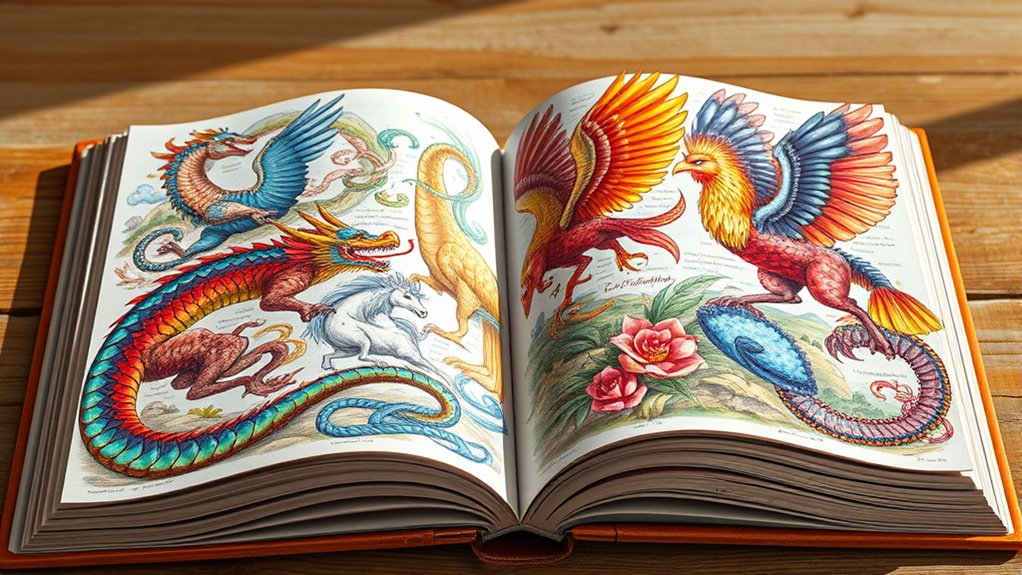

Searching for the best illustrated encyclopedias of mythical creatures? The top picks include the Encyclopedia of Mythical Creatures – Greek and Roman Mythology for its comprehensive coverage, and the Global Mythology edition for its wide scope. These books excel at blending detailed illustrations with rich lore, but they differ in focus and depth. Choosing the right encyclopedia depends on whether you want a broad overview or a deep dive into specific mythologies. Keep reading for a detailed comparison that will help you find the perfect fit for your interests and budget.

Prime made for students and young adults
- Fast, free delivery for dorm and study essentials
- Prime Video and Amazon Music included
- Member-only deals
Key Takeaways
- The best encyclopedias balance detailed artwork with accurate mythological information, not just visual appeal.
- Scope varies widely—from narrow focus on Japanese Yokai to broad global mythologies—so consider your area of interest.
- Higher-priced options tend to offer more comprehensive content and higher-quality illustrations, but cheaper books can still provide great value.
- Some encyclopedias are better suited for beginners with simplified explanations, while others cater to serious enthusiasts with in-depth entries.
- Size and layout influence ease of use; compact guides are portable but may sacrifice detail, while larger books offer richer content.
| Encyclopedia of Mythical Creatures – Taoism, Chinese & Korean Mythology |  | Best for Cultural Depth and Artistic Detail | Coverage Area: Taoism, Chinese, Korean mythology | Illustrations: Detailed and authentic | Focus: Mythological creatures from East Asia | VIEW ON AMAZON | See Our Full Breakdown |
| Encyclopedia of Mythical Creatures – Mesopotamian & Persian Mythology |  | Best for Ancient Cultures and Historical Context | Coverage: Mesopotamian & Persian mythology | Illustrations: Detailed and historically informed | Focus: Ancient legendary beasts and spirits | VIEW ON AMAZON | See Our Full Breakdown |
| Encyclopedia of Mythical Creatures – Norse and Viking Mythology |  | Best for Norse Mythology Fans & Visual Learners | Coverage Area: Norse and Viking mythology | Illustrations: Vivid visual representations | Focus: Legendary beasts and spirits from Scandinavia | VIEW ON AMAZON | See Our Full Breakdown |
| Encyclopedia of Mythical Creatures – Slavic & Eastern European Mythology |  | Best for Regional Folklore and Cultural Stories | Coverage: Slavic & Eastern European mythology | Illustrations: Beautiful and storytelling-enhancing | Focus: Mythical beings and folklore | VIEW ON AMAZON | See Our Full Breakdown |
| Encyclopedia of Mythical Creatures – Celtic & British Isles Mythology |  | Best for Folklore Research and Cultural Appreciation | Coverage: Celtic & British Isles mythology | Illustrations: Beautiful and context-rich | Focus: Legendary beasts, monsters & spirits | VIEW ON AMAZON | See Our Full Breakdown |
| Encyclopedia of Mythical Creatures – Greek and Roman Mythology: An Illustrated Bestiary of Legendary Beasts, Monsters & Spirits from Ancient Worlds |  | Best for Classic Mythology Enthusiasts | Coverage: Greek and Roman mythological creatures | Illustrations: Detailed, historically inspired artwork | Educational focus: Provides historical context | VIEW ON AMAZON | See Our Full Breakdown |
| Encyclopedia of Mythical Creatures – Continental European Mythology: An Illustrated Bestiary of Legendary Beasts, Monsters & Spirits from Ancient Worlds |  | Best for European Mythology Buffs | Coverage: European mythological creatures | Illustrations: Vivid, culturally representative artwork | Sources: Limited historical sourcing | VIEW ON AMAZON | See Our Full Breakdown |
| Encyclopedia of Mythical Creatures – Global Mythology: An Illustrated Bestiary of Legendary Beasts, Monsters & Spirits from Around the World |  | Best for Global Mythology Explorers | Coverage: Mythical creatures worldwide | Illustrations: Diverse and colorful | Historical detail: Variable, sometimes limited | VIEW ON AMAZON | See Our Full Breakdown |
| Encyclopedia of Mythical Creatures – Yokai & Japanese Mythology: An Illustrated Bestiary of Legendary Beasts, Oni & Spirits from Ancient Civilizations |  | Best for Japanese Mythology and Yokai Enthusiasts | Coverage: Japanese yokai, oni, spirits | Illustrations: Authentic, detailed artwork | Cultural focus: Japanese mythology | VIEW ON AMAZON | See Our Full Breakdown |
| The Book of Mythical Beasts and Magical Creatures |  | Best for Casual Mythology Readers and Young Enthusiasts | Coverage: Mythical beasts and magical creatures | Illustrations: Limited or simple visuals | Content style: Narrative and engaging stories | VIEW ON AMAZON | See Our Full Breakdown |
| illustrated encyclopedias of mythical creature | Illustrations | Coverage | Customer Ratings | Focus |
|---|---|---|---|---|
| Encyclopedia of Mythical Creat | Detailed and authentic | — | Not available | Mythological creatures from East Asia |
| Encyclopedia of Mythical Creat | Detailed and historically informed | Mesopotamian & Persian mythology | — | Ancient legendary beasts and spirits |
| Encyclopedia of Mythical Creat | Vivid visual representations | — | — | Legendary beasts and spirits from Scandinavia |
| Encyclopedia of Mythical Creat | Beautiful and storytelling-enhancing | Slavic & Eastern European mythology | — | Mythical beings and folklore |
| Encyclopedia of Mythical Creat | Beautiful and context-rich | Celtic & British Isles mythology | Not available | Legendary beasts, monsters & spirits |
| Encyclopedia of Mythical Creat | Detailed, historically inspired artwork | Greek and Roman mythological creatures | Not available | — |
| Encyclopedia of Mythical Creat | Vivid, culturally representative artwork | European mythological creatures | Not available | — |
| Encyclopedia of Mythical Creat | Diverse and colorful | Mythical creatures worldwide | Not available | — |
| Encyclopedia of Mythical Creat | Authentic, detailed artwork | Japanese yokai, oni, spirits | Not available | — |
| The Book of Mythical Beasts an | Limited or simple visuals | Mythical beasts and magical creatures | Not available | — |
More Details on Our Top Picks
Encyclopedia of Mythical Creatures – Taoism, Chinese & Korean Mythology
This volume stands out for its rich coverage of East Asian mythological creatures, offering detailed descriptions and stunning illustrations that deepen understanding of Taoist, Chinese, and Korean legends. While it excels in cultural authenticity, it falls short in technical details or historical context, unlike the more geographically broad ‘Global Mythology’ encyclopedia. Its focus on artistic presentation makes it ideal for enthusiasts seeking visual richness and cultural insight, but less suitable for those wanting comprehensive historical analysis. The lack of customer reviews and technical specs highlights its niche appeal. If you value beautiful illustrations that tell stories, this pick is perfect; for those seeking detailed historical timelines, it might not suffice.Pros:- Rich, detailed coverage of Taoist, Chinese, and Korean mythological creatures
- Beautiful, culturally authentic illustrations enhance storytelling
- Educational resource for enthusiasts of East Asian folklore
Cons:- Lacks technical specifications or historical background details
- No customer reviews or ratings available
Best for: Mythology lovers interested in East Asian cultural depictions and artwork
Not ideal for: Readers seeking a broad overview of world mythologies or detailed historical context
- Coverage Area:Taoism, Chinese, Korean mythology
- Illustrations:Detailed and authentic
- Focus:Mythological creatures from East Asia
- Educational Use:Yes
- Customer Ratings:Not available
Our verdict“This encyclopedia is ideal for those seeking artful, culturally specific mythological content with a focus on East Asian legends.”
Encyclopedia of Mythical Creatures – Mesopotamian & Persian Mythology
This bestiary offers a comprehensive look at Mesopotamian and Persian mythical beings, providing both detailed descriptions and historical insights that enrich understanding of ancient civilizations. Compared with the Norse-focused ‘Norse and Viking Mythology,’ it emphasizes cultural background, making it a go-to for history buffs. However, it doesn’t include price info and is limited to specific regions, which may narrow its appeal. Its detailed narratives and illustrative style make it ideal for serious mythology enthusiasts, but casual readers might find it somewhat dense. If you want a deep dive into ancient Middle Eastern legends, this book excels; for a more varied global perspective, consider alternatives.Pros:- Thorough coverage of Mesopotamian and Persian mythological creatures
- Rich illustrations support storytelling and learning
- Provides valuable historical context for ancient myths
Cons:- Limited to specific mythologies, not broad in scope
- No pricing information available
Best for: History and mythology enthusiasts interested in Mesopotamian and Persian legends
Not ideal for: Readers seeking a broad, overview-style mythology encyclopedia covering multiple regions
- Coverage:Mesopotamian & Persian mythology
- Illustrations:Detailed and historically informed
- Focus:Ancient legendary beasts and spirits
- Educational Value:High
- Price Info:Not provided
Our verdict“This pick is best suited for those focused on ancient Middle Eastern mythologies and their cultural backgrounds.”
Encyclopedia of Mythical Creatures – Norse and Viking Mythology
This volume excels in covering Norse and Viking mythological creatures, offering vivid descriptions and visual representations that bring the legends alive. Unlike the more mythologically broad ‘Global Mythology’ encyclopedia, it narrows its focus for enthusiasts of Scandinavian legends. Its visuals are strong, but it suffers from a lack of detailed historical context and the absence of images or diagrams in the raw data, which may limit its usefulness for those seeking comprehensive background. This book is ideal for visual learners and Norse mythology fans, but less suited for readers wanting an extensive historical or cultural analysis. If your interest lies specifically in Viking legends, this is a compelling choice.Pros:- Comprehensive coverage of Norse and Viking creatures
- Vivid visual representations enhance understanding
- Engages mythology enthusiasts with detailed descriptions
Cons:- Lacks detailed historical context
- No included images or diagrams in raw data
Best for: Fans of Viking mythology and visual storytelling
Not ideal for: Readers seeking broad mythological coverage or detailed historical background
- Coverage Area:Norse and Viking mythology
- Illustrations:Vivid visual representations
- Focus:Legendary beasts and spirits from Scandinavia
- Content Depth:Moderate
- Historical Context:Limited
Our verdict“Perfect for those fascinated by Norse legends and visual storytelling, but less ideal for in-depth historical analysis.”
Encyclopedia of Mythical Creatures – Slavic & Eastern European Mythology
This bestiary offers extensive coverage of Slavic and Eastern European mythical beings, with detailed descriptions supported by beautiful illustrations that bring folklore to life. Compared with the more geographically focused ‘Celtic & British Isles’ volume, it broadens regional storytelling but remains specialized. Its focus on folklore makes it ideal for those interested in cultural narratives, yet it doesn’t provide specific price info and is limited to mythological topics, which may exclude casual readers. This book is excellent for folklore researchers and enthusiasts seeking regional authenticity, but less suitable for those wanting a general mythology overview. If regional stories fascinate you, this is a valuable resource.Pros:- Comprehensive coverage of Slavic and Eastern European mythical creatures
- Beautiful, storytelling-supportive illustrations
- Educational resource for folklore enthusiasts
Cons:- No specific price information
- Limited to mythology and folklore topics
Best for: Folklore enthusiasts and regional mythology researchers
Not ideal for: Casual readers looking for a broad or general mythology encyclopedia
- Coverage:Slavic & Eastern European mythology
- Illustrations:Beautiful and storytelling-enhancing
- Focus:Mythical beings and folklore
- Educational Use:Yes
- Price Info:Not provided
Our verdict“Ideal for those interested in regional folklore and mythological storytelling from Eastern Europe.”
Encyclopedia of Mythical Creatures – Celtic & British Isles Mythology
This volume shines in covering Celtic and British Isles legendary creatures, providing detailed descriptions and historical context that appeal to folklore researchers and cultural enthusiasts. It surpasses broader encyclopedias like the ‘Global Mythology’ volume in regional depth but may be too specialized for casual readers who prefer a general overview. Its beautiful illustrations add to the reading experience, yet the absence of customer ratings and the narrow focus could limit its appeal for those seeking a more diverse mythology collection. If you’re passionate about Celtic legends or regional folklore, this book offers valuable insights; if you prefer a broader scope, consider other options.Pros:- Thorough coverage of Celtic and British mythical creatures
- Beautiful illustrations support folklore storytelling
- In-depth historical and cultural context
Cons:- No customer ratings available
- Content may be too specialized for casual readers
Best for: Folklore researchers and cultural enthusiasts focused on Celtic and British legends
Not ideal for: Casual readers looking for a general mythology encyclopedia or broad cultural overview
- Coverage:Celtic & British Isles mythology
- Illustrations:Beautiful and context-rich
- Focus:Legendary beasts, monsters & spirits
- Educational Value:High
- Customer Ratings:Not available
Our verdict“Best suited for folklore scholars and enthusiasts passionate about Celtic and British legends.”
Encyclopedia of Mythical Creatures – Greek and Roman Mythology: An Illustrated Bestiary of Legendary Beasts, Monsters & Spirits from Ancient Worlds
This encyclopedia stands out for its thorough coverage of creatures from Greek and Roman traditions, with detailed descriptions and stunning illustrations that bring ancient myths to life. Unlike the broader scope of Global Mythology, it offers deep dives into specific legendary beings, making it ideal for those passionate about classical antiquity. However, its focus is narrow, excluding mythologies outside the Greco-Roman world, which limits its appeal for enthusiasts seeking a wide-ranging global perspective. The lack of customer ratings or price information means I can’t assess its value compared to more comprehensive collections. This pick is best suited for readers focused on classical mythology or students of ancient cultures who want detailed, historically contextualized entries.
Pros:- Deep, detailed descriptions of Greco-Roman mythical creatures
- Beautiful, historically inspired illustrations
- Educational resource for mythology students
Cons:- Limited to Greek and Roman mythology, excluding other cultures
- No price or customer ratings available
- Lacks broader cultural context outside ancient Europe
Best for: Classical mythology enthusiasts and students interested in Greco-Roman legends
Not ideal for: Readers seeking a broad international mythological overview or modern mythologies, as it concentrates solely on Greek and Roman creatures
- Coverage:Greek and Roman mythological creatures
- Illustrations:Detailed, historically inspired artwork
- Educational focus:Provides historical context
- Scope:Limited to ancient European myths
- Price:Not specified
- Customer ratings:Not available
Our verdict“This encyclopedia is perfect for those focused on classical mythology but less suitable for global mythology fans.”
Encyclopedia of Mythical Creatures – Continental European Mythology: An Illustrated Bestiary of Legendary Beasts, Monsters & Spirits from Ancient Worlds
This volume offers a rich survey of European mythological beasts, making it an excellent counterpart to the Global Mythology collection, which covers a wider array of cultures. Its detailed descriptions and vivid illustrations help bring the diverse traditions of European countries into focus. Unlike the Yokai & Japanese Mythology book, which specializes in Japanese spirits, this encyclopedia covers a broader regional spectrum but doesn’t provide extensive historical sources, which might be a drawback for scholars. The scope is narrower than the global collection, but its focus on European legends makes it ideal for regional mythology enthusiasts. If you want a solid overview of European mythical creatures, this resource offers depth without overwhelming.
Pros:- Extensive coverage of European mythical creatures
- Beautiful, culturally rich illustrations
- Informative for mythology enthusiasts interested in regional legends
Cons:- Lacks detailed historical sources for entries
- Limited to European mythology, excluding other regions
- No mention of user reviews or pricing info
Best for: European mythology fans seeking detailed regional mythic bestiary
Not ideal for: Readers looking for a global or Asian-specific perspective, as it limits itself geographically
- Coverage:European mythological creatures
- Illustrations:Vivid, culturally representative artwork
- Sources:Limited historical sourcing
- Scope:Regional focus on Europe
- Price:Not specified
- Customer ratings:Not available
Our verdict“Ideal for those interested in European mythic traditions but less suited for global mythology exploration.”
Encyclopedia of Mythical Creatures – Global Mythology: An Illustrated Bestiary of Legendary Beasts, Monsters & Spirits from Around the World
This comprehensive collection surpasses many others in breadth by including creatures from Asian, African, American, and European mythologies, making it a compelling choice for those interested in world-wide legends. Its detailed descriptions and diverse illustrations make it a valuable educational tool. Compared with the Yokai & Japanese Mythology book, which focuses solely on Japanese spirits, this global bestiary offers a wider range but sometimes lacks in detailed historical context for certain entries. Its broad scope makes it excellent for curiosity-driven readers or educators seeking a global perspective, though it may sacrifice some depth for variety. Overall, this is a versatile pick for mythology lovers wanting a panoramic view of legendary creatures worldwide.
Pros:- Extensive coverage of worldwide mythical creatures
- Beautiful, diverse illustrations
- Educational for learners of all ages
Cons:- Lacks detailed historical context for some entries
- No customer ratings or pricing info available
- Potentially superficial for those seeking deep cultural insights
Best for: Global mythology enthusiasts and educators seeking a broad overview
Not ideal for: Readers wanting in-depth coverage of specific cultures or mythologies, as the entries are more general
- Coverage:Mythical creatures worldwide
- Illustrations:Diverse and colorful
- Historical detail:Variable, sometimes limited
- Scope:Global, multi-cultural
- Price:Not specified
- Customer ratings:Not available
Our verdict“Perfect for broad-minded mythology fans wanting a comprehensive global overview, even if some details are simplified.”
Encyclopedia of Mythical Creatures – Yokai & Japanese Mythology: An Illustrated Bestiary of Legendary Beasts, Oni & Spirits from Ancient Civilizations
This pick excels in its focused coverage of Japanese mythological beings, including yokai, oni, and spirits, with captivating illustrations that deepen understanding. Compared with the Global Mythology collection, it offers a more detailed look into Japan’s rich mythic tradition, making it ideal for fans of Asian folklore. However, it lacks detailed author or publication information, which could be a concern for those seeking scholarly rigor. Its narrow focus limits its usefulness for those seeking a worldwide perspective, but for anyone interested specifically in Japanese legends and spirits, this book hits the mark with clarity and visual appeal. It’s best suited for enthusiasts of Japanese culture or mythology students specializing in East Asian legends.
Pros:- Comprehensive coverage of Japanese mythical creatures
- Beautiful, culturally authentic illustrations
- Great for enthusiasts and students of East Asian folklore
Cons:- Lacks detailed author or publication info
- Limited to Japanese mythos, not suitable for broader mythological interests
- No pricing or user reviews available
Best for: Japanese mythology enthusiasts and cultural scholars
Not ideal for: Readers wanting a broad, international mythological overview, as it concentrates solely on Japan
- Coverage:Japanese yokai, oni, spirits
- Illustrations:Authentic, detailed artwork
- Cultural focus:Japanese mythology
- Scope:East Asian legends
- Price:Not specified
- Customer ratings:Not available
Our verdict“This book is perfect for those focused on Japanese mythic beings, but less fitting for global mythology collections.”
The Book of Mythical Beasts and Magical Creatures
This book offers an engaging overview of mythical beasts from various cultures, making it accessible for newcomers and younger readers. Unlike the detailed, illustration-rich encyclopedias like the Global Mythology or Greek and Roman Mythology, it provides more simplified descriptions and fewer visuals, which may appeal to those new to mythology but less so for serious collectors or enthusiasts craving in-depth images. Its focus on the myths and stories surrounding creatures rather than detailed historical or cultural context makes it a more narrative-driven resource. If you’re seeking a lively introduction or a book that sparks curiosity, this is a good choice; for detailed research, it falls short.
Pros:- Engaging, easy-to-read content
- Great for beginners and young readers
- Provides interesting stories behind myths
Cons:- Lacks detailed illustrations
- Limited to mythological rather than factual creatures
- Less suitable for advanced enthusiasts or researchers
Best for: Young readers and casual mythology enthusiasts seeking an engaging introduction
Not ideal for: Serious students or collectors wanting comprehensive, illustrated coverage of mythical creatures
- Coverage:Mythical beasts and magical creatures
- Illustrations:Limited or simple visuals
- Content style:Narrative and engaging stories
- Scope:Various cultures, general overview
- Price:Not specified
- Customer ratings:Not available
Our verdict“Best suited for newcomers or young readers interested in myths, but not ideal for serious collectors seeking detailed visuals.”

How We Picked
These encyclopedias were evaluated based on several key factors: the accuracy and depth of mythological content, quality and clarity of illustrations, breadth of covered cultures or themes, user-friendliness, and overall value for the price. We prioritized books that provide a balanced combination of visual appeal and educational substance. Rankings reflect a mix of comprehensive coverage, visual quality, and suitability for different types of readers—from casual enthusiasts to serious scholars. Books that excel in one area but compromise on others were weighed accordingly, ensuring our top picks are well-rounded options for a variety of interests.| illustrated encyclopedias of mythical creature | Focus | Scope |
|---|---|---|
| Encyclopedia of Mythical Creat | Mythological creatures from East Asia | — |
| Encyclopedia of Mythical Creat | Ancient legendary beasts and spirits | — |
| Encyclopedia of Mythical Creat | Legendary beasts and spirits from Scandinavia | — |
| Encyclopedia of Mythical Creat | Mythical beings and folklore | — |
| Encyclopedia of Mythical Creat | Legendary beasts, monsters & spirits | — |
| Encyclopedia of Mythical Creat | — | Limited to ancient European myths |
| Encyclopedia of Mythical Creat | — | Regional focus on Europe |
| Encyclopedia of Mythical Creat | — | Global, multi-cultural |
| Encyclopedia of Mythical Creat | — | East Asian legends |
| The Book of Mythical Beasts an | — | Various cultures, general overview |
Factors to Consider When Choosing Illustrated Encyclopedias Of Mythical Creatures
Choosing the right illustrated encyclopedia of mythical creatures involves considering several important factors. Beyond just the artwork, you want a book that offers accurate, well-researched information, especially if you’re a serious fan or scholar. The scope of mythologies covered can vary, so think about whether you prefer a broad global overview or a focus on specific cultures. Size and layout matter too—smaller guides are portable but might lack detail, while larger volumes provide richer content but are less convenient to handle. Price is another consideration, as high-quality illustrations and comprehensive content often come at a premium. Lastly, consider your experience level; some books are designed for beginners, others for advanced readers seeking in-depth lore.Scope of Mythologies Covered
Deciding whether you want a book that covers multiple cultures or focuses on a specific tradition influences your choice significantly. Broader books like Global Mythology offer a wide lens but may sacrifice depth for breadth, making them ideal for general interest. Conversely, specialized encyclopedias like Norse Mythology or Yokai & Japanese Mythology provide detailed insights into a single tradition, suited for dedicated enthusiasts. Consider what mythologies fascinate you most and select accordingly to avoid an overly superficial or overly narrow focus.
Content Depth and Accuracy
The quality of information varies; some encyclopedias prioritize storytelling and lore, while others emphasize historical and cultural accuracy. Books aimed at casual readers often simplify complex mythologies, which can be helpful for beginners but frustrating for serious collectors. For in-depth study, look for titles that cite sources or include scholarly commentary. Be wary of overly glossy books that prioritize visuals over factual detail—balance is key.
Illustration Quality
Since these are illustrated encyclopedias, the visual component is vital. High-resolution, artistically compelling images enhance the experience but also increase production costs. Consider whether the illustrations are authentic representations based on historical art or more imaginative interpretations. Some books feature full-color, detailed artwork, while others rely on sketches or simplified graphics. Think about how the visual style aligns with your personal taste and whether it adds educational value.
Size and Layout
The physical dimensions impact usability. Larger volumes typically contain more illustrations and detailed entries but can be cumbersome to handle or store. Compact guides are more portable and easier to browse casually, though they might have less comprehensive content. Layout design also matters—clear headings, indexes, and accessible typography make a difference in how easily you can find information. Prioritize a layout that suits your reading habits and space constraints.
Price and Value
Pricing can range from affordable paperbacks to expensive collector’s editions. Cheaper options might lack the depth or quality of illustrations found in premium books, but they can still serve as good starting points. Consider whether the content and artwork justify the price—sometimes investing in a higher-priced book pays off in longevity and richness. Also, look for editions that include additional features like maps, cultural context, or author notes, which enhance value.
Experience Level
Some encyclopedias are designed with newcomers in mind, offering straightforward explanations and accessible language. Others target seasoned myth enthusiasts with detailed lore, scholarly annotations, and extensive bibliographies. Reflect on your familiarity with mythologies and choose a book that matches your reading level. Beginners should look for guides that introduce concepts gradually, while advanced readers can seek more comprehensive, detailed volumes.
Frequently Asked Questions
Is it better to buy a broad or specialized mythical creatures encyclopedia?
If you’re new to mythologies or prefer a wide overview, a broad book like Global Mythology makes sense, offering diverse stories in one volume. However, if you have a specific interest—such as Japanese Yokai or Norse legends—specialized encyclopedias provide deeper, more detailed information. The choice depends on your curiosity level and how much depth you desire in a particular mythology. Consider starting broad and then investing in specialized editions as your interests grow.
How important are the illustrations compared to the written content?
In illustrated encyclopedias, visuals are a key feature, but they should complement accurate, engaging text. High-quality illustrations can bring mythical creatures to life and aid memory retention, especially for visual learners. Still, the written content’s accuracy and richness determine the educational value. A well-balanced book balances stunning visuals with thorough, well-researched descriptions, ensuring you get both aesthetic pleasure and factual knowledge.
Should I prioritize size or content depth when choosing a book?
This depends on your main use case. If you want a portable guide for casual browsing or travel, a smaller, more manageable book makes sense. But if your goal is comprehensive study or collection, a larger volume with detailed entries and extensive illustrations will serve you better. Keep in mind that larger books often come with higher price tags and require more storage space, so weigh convenience against content richness.
Are more expensive books worth the investment?
Generally, higher-priced encyclopedias tend to feature superior artwork, more extensive content, and better production quality. They are often designed for serious enthusiasts or collectors who value accuracy and visual detail. However, this does not mean that budget options lack value; many affordable books still provide solid overviews and attractive illustrations. Consider your budget alongside your specific needs—sometimes a mid-range book offers the best balance of quality and affordability.
Can these books be useful for children or students?
Many illustrated encyclopedias are suitable for younger audiences or students if they feature simplified language and engaging visuals. Some editions are explicitly aimed at beginners, making mythologies accessible and fun. However, more detailed or scholarly books may be better suited for older readers or those with a specific academic interest. Always check the reading level and content warnings before purchasing for younger audiences.
Conclusion
For casual readers or beginners, a compact, visually appealing encyclopedia like The Book of Mythical Beasts and Magical Creatures offers a great entry point. Serious enthusiasts seeking comprehensive detail and high-quality artwork should consider the Encyclopedia of Mythical Creatures – Greek and Roman Mythology or the Global Mythology edition. Collectors and scholars will find value in premium editions with scholarly annotations, while those interested in specific cultures should pick specialized titles like Norse Mythology or Yokai & Japanese Mythology. Ultimately, your choice depends on your focus, budget, and how deeply you want to explore the fascinating world of mythical creatures.
As an affiliate, we earn on qualifying purchases.Fall Picks
fall essentials