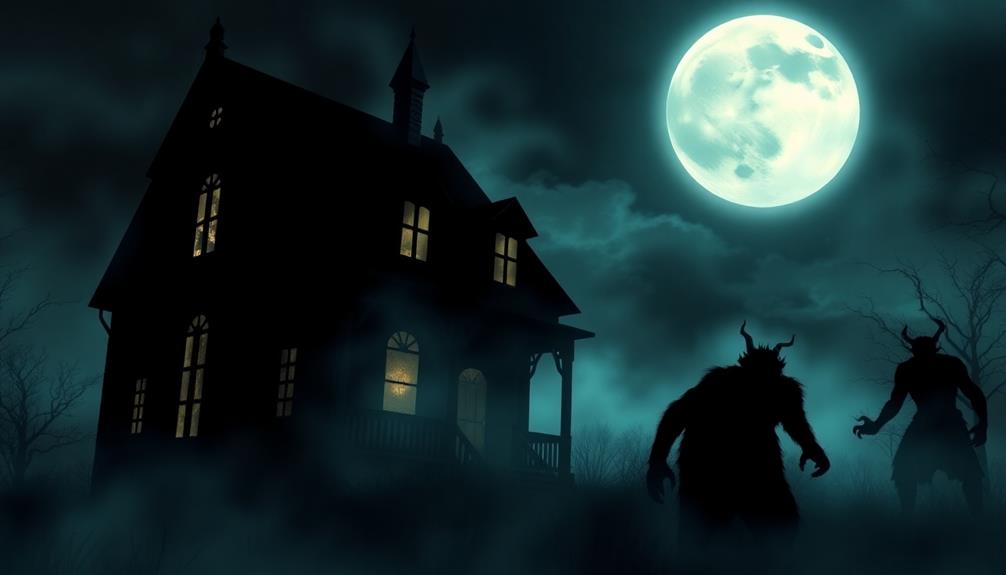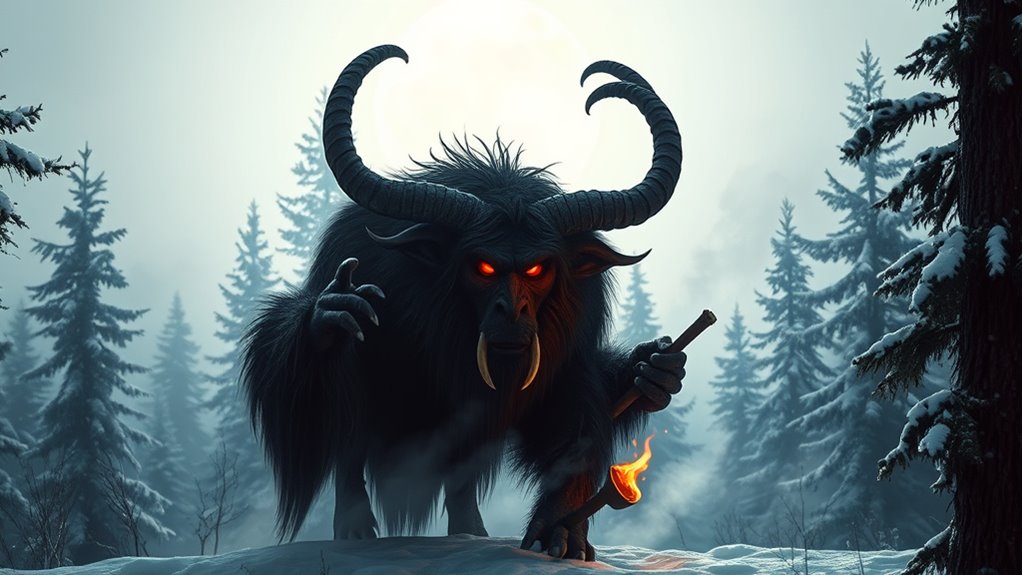

Krampus is a dark, horned creature from European folklore that acts as Santa’s sinister counterpart. Originating from ancient myths blending pagan rituals and Christian influences, he embodies fear and moral punishment for naughty children during winter. Today, celebrations feature lively parades with people dressed as Krampus, showcasing his frightening appearance with chains, bells, and shaggy fur. If you want to uncover how this terrifying figure transformed into a festive tradition, keep exploring the fascinating story behind Krampusnacht.
Listen free for 30 days with Audible
Thousands of audiobooks and originals — cancel anytime.
As an affiliate, we earn on qualifying purchases.
Key Takeaways
- Krampusnacht is an annual European tradition celebrating Krampus, Santa’s dark, horned companion who punishes naughty children.
- The legend blends pagan folklore and Christian influences, portraying Krampus as a beast-like figure with chains and bells.
- Festivities feature parades, costumes, and processions where participants dress as Krampus and march alongside St. Nicholas.
- Originally a moral warning rooted in myth, modern celebrations focus on community fun and spectacle.
- Krampus symbolizes moral retribution, warning of consequences for bad behavior during the Christmas season.
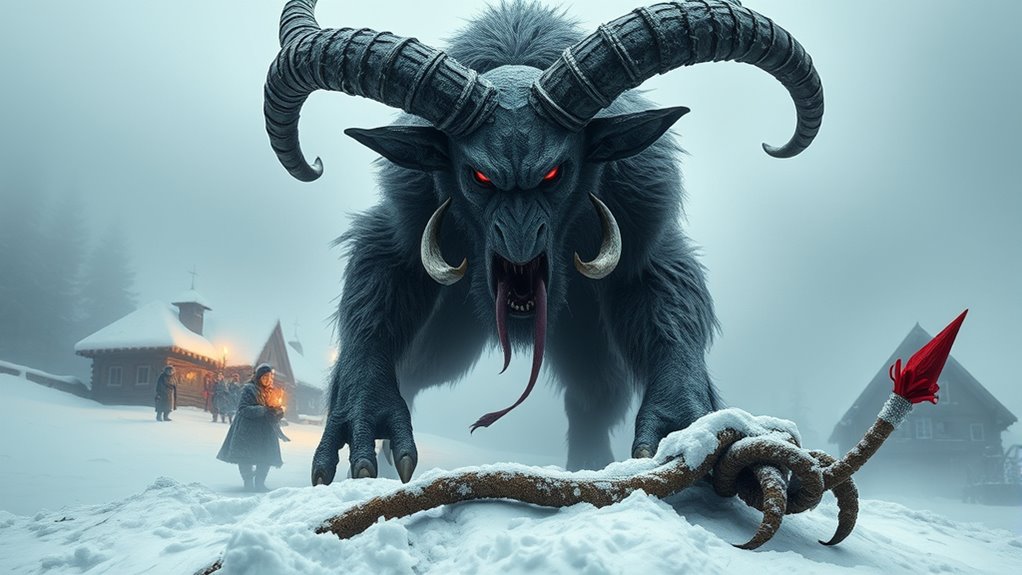
Have you ever wondered where the chilling tradition of Krampusnacht comes from? Its roots trace back to ancient mythological origins that blend pagan rituals and folklore. Long before it became a festive event, early communities believed in supernatural beings that judged people’s behavior during the winter season. These mythical origins link closely to mythic figures who embodied both fear and morality, warning villagers to stay on the right path. Over centuries, these stories evolved, blending Christian influences with older pagan customs. That’s how Krampus, a horned, beast-like creature, emerged as Santa’s dark companion—an entity tasked with punishing naughty children. His frightening appearance, with chains, bells, and a menacing expression, echoes the mythological themes of retribution and moral consequence. Today, Krampusnacht is celebrated in many European countries, especially Austria and Germany, where locals honor these ancient origins through elaborate festivities. But modern celebrations have transformed the dark folklore into lively, community-centered events filled with costumes, parades, and lively music. As you participate in these celebrations, you might see people dressed as Krampus, sporting shaggy fur, horns, and snarling masks, all paying homage to the mythic creature’s origins. These modern festivities often include processions through towns, where groups of Krampus impersonators march alongside St. Nicholas, creating a striking contrast of good versus evil. While the mythological origins depict Krampus as a fearsome enforcer of moral conduct, today’s celebrations tend to focus more on fun and spectacle. People of all ages partake, turning the dark legend into a playful, sometimes humorous tradition rooted in community spirit. The shift from frightening myth to festive event shows how stories evolve over time, adapting to cultural changes while preserving their core symbols. Many see Krampusnacht as a way to connect with history, blending myth with modern celebration. It’s a night where ancient fears are transformed into shared experiences, reinforcing community bonds and celebrating winter’s darker side. Understanding the mythological themes behind Krampus enhances appreciation for these festivities, showing how storytelling influences cultural traditions. So, when you see images of Krampus during these events, remember the mythological origins that shaped his fierce image, and appreciate how modern celebrations keep this dark legend alive, blending history, folklore, and fun into a unique winter tradition. This tradition reminds us that stories from the past can take on new life, becoming part of contemporary culture while still honoring their mythical roots.
As an affiliate, we earn on qualifying purchases.
Frequently Asked Questions
How Did Krampus Become Associated With Christmas Traditions?
You might not realize it, but Krampus became associated with Christmas folklore because he’s seen as Santa’s dark companion, representing the darker side of holiday traditions. Originally from Alpine regions, he’s believed to punish naughty children, balancing Santa’s role of rewarding the good. Over time, this creepy figure evolved into a part of Christmas celebrations, adding a spooky twist that contrasts Santa’s joyful image and deepens the holiday’s cultural folklore.
Are There Modern Celebrations Honoring Krampusnacht Worldwide?
Did you know over 50 countries celebrate Krampusnacht with festive events? You can see people wearing elaborate Christmas costumes and participating in holiday parades that feature Krampus figures. Modern celebrations often include parades, costume contests, and themed parties, making the tradition lively and fun. If you’re interested, you might even find local events or festivals that embrace Krampus as part of holiday festivities worldwide.
What Are the Origins of Krampus’ Terrifying Appearance?
You might wonder about the origins of Krampus’ terrifying appearance. As a mythical creature rooted in folklore origins, Krampus’s frightening look combines elements like horns, a long tongue, and shaggy fur to evoke fear and chaos. These features likely stem from ancient pagan traditions meant to ward off evil spirits and symbolize the darker side of winter. His terrifying visage serves to remind children of the consequences of misbehavior.
How Does Krampus Compare to Other Holiday Folklore Figures?
You notice that Krampus stands out among holiday folklore figures because of his terrifying appearance and dark cultural symbolism. Unlike Santa, who represents joy and generosity, Krampus embodies the mythical origins of punishment for misbehavior. His frightening look and role as a punisher contrast sharply with more benign figures like Santa or the Christmas elves. This comparison highlights how different cultures use folklore to convey moral lessons and societal values during the festive season.
Are There Any Historical Records of Krampus-Related Punishments?
You won’t find many concrete medieval records of Krampus-related punishments, as folklore enforcement was often oral and symbolic. However, stories suggest that Krampus was used to scare children into good behavior, similar to medieval punishments like public shaming or corporal punishment. These tales served as moral lessons, reinforcing social norms through fear of this dark companion, making Krampus a symbolic enforcer in holiday folklore.

Fun Costumes Adult Krampus Costume | Red Robed Christmas Solstice Demon of Folklore Outfit with Hooded Robe, Mask with Beard, Chain – Small, Red
- Festive Hooded Robe: Luxurious crushed velvet with faux fur trim
- Rusty Chain Accessory: 80-inch plastic chain for authentic look
- Menacing Mask and Horns: Latex mask with beard and horn holes
As an affiliate, we earn on qualifying purchases.
As an affiliate, we earn on qualifying purchases.
Conclusion
As you explore the legend of Krampusnacht, remember he’s like a shadow lurking behind Santa’s jolly facade, reminding us that even in cheer, there’s a darker side. His story warns us to stay good, or face a wild figure with horns and chains. So, next time you see twinkling lights and hear sleigh bells, think of Krampusnacht—his presence is as silent and unexpected as a whisper in the night, lurking just out of sight.
As an affiliate, we earn on qualifying purchases.
As an affiliate, we earn on qualifying purchases.
Baby shower & registry season Picks
baby registry must-haves
As an affiliate, we earn on qualifying purchases.